
Lighting has evolved far beyond simple illumination. Today’s smart homes and creative spaces demand more than just brightness—they call for mood, rhythm, and personalization. Programmable LED strips and static light strings represent two ends of the modern lighting spectrum. One offers dynamic control, color shifting, and automation; the other delivers simplicity, reliability, and affordability. But which is better for your needs? And more importantly, are customizable lights truly worth the extra cost and complexity?
The answer depends on how you use your space, your technical comfort level, and your long-term goals. This article breaks down the key differences between programmable LED strips and static strings, evaluates their pros and cons, and helps you determine whether investing in customizable lighting pays off.
Understanding the Basics: What Sets Them Apart
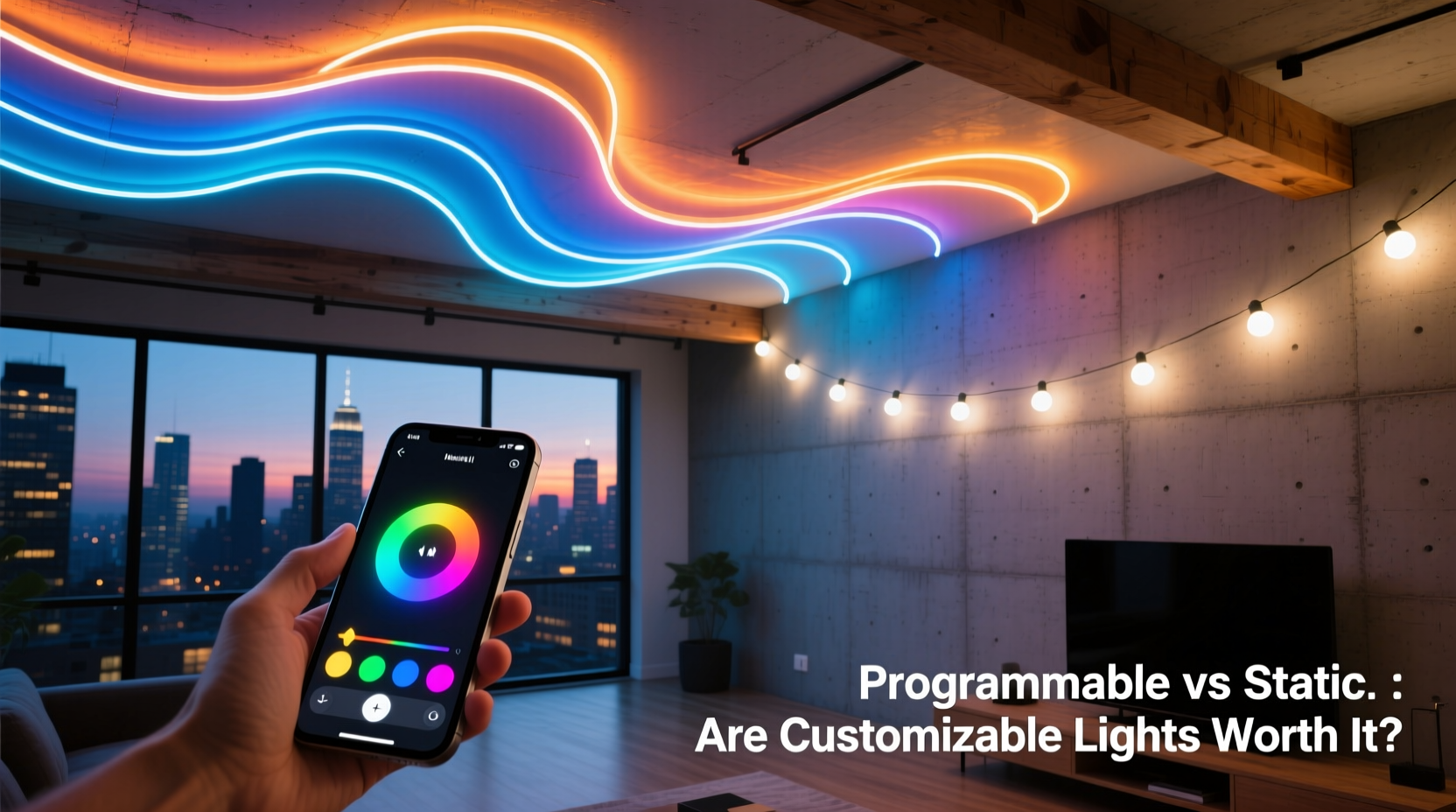
At first glance, both programmable LED strips and static light strings may look similar—flexible lines of small LEDs designed to enhance ambiance. However, their functionality, design, and user experience diverge significantly.
- Static LED strings consist of fixed-color or single-color-changing bulbs wired in series. They typically plug into a wall outlet and operate with a basic remote or switch. Think holiday lights or bedroom fairy lights—simple, predictable, and easy to install.
- Programmable LED strips, on the other hand, use addressable LEDs (like WS2812B or SK6812 chips), allowing each individual diode to be controlled separately via software. These strips connect to microcontrollers (such as Arduino, ESP32, or Raspberry Pi) or smart hubs and can display complex patterns, animations, music synchronization, and scene transitions.
This fundamental difference shapes everything from installation to daily use. Static strings are “set and forget.” Programmable strips invite interaction, customization, and integration with home automation systems.
Performance Comparison: Features That Matter
To assess value, we need to compare both types across critical performance categories. The table below summarizes key differences:
| Feature | Programmable LED Strips | Static Light Strings |
|---|---|---|
| Color Options | Millions of colors, RGB/RGBW support | Limited (single color, warm/cool white, or preset rainbow) |
| Control Method | App, voice, music sync, coding, automation | Remote control or manual switch |
| Custom Patterns | Yes (waves, chases, strobes, gradients) | No (preset only, if any) |
| Installation Complexity | Moderate to high (requires controller, power supply, configuration) | Low (plug-and-play) |
| Lifespan | 30,000–50,000 hours | 20,000–30,000 hours |
| Energy Efficiency | High (adjustable brightness per segment) | Moderate (fixed output) |
| Smart Home Integration | Yes (via Home Assistant, Alexa, Google Home) | Rarely (unless Wi-Fi enabled model) |
| Cost (per meter) | $8–$20 (plus controller/hub) | $2–$6 |
The data shows that while programmable strips outperform static strings in versatility and intelligence, they come at a higher entry cost and learning curve. For users who prioritize ease and budget, static strings remain a practical choice. But for those seeking immersive experiences or tech integration, programmable options deliver tangible advantages.
Real-World Use Case: A Gamer’s Setup Transformation
Consider Mark, a remote worker and casual gamer living in a studio apartment. He initially used warm-white static string lights around his desk for ambient lighting. While pleasant, the setup felt flat—especially during evening gaming sessions.
After researching lighting upgrades, Mark installed addressable LED strips behind his monitor, along the ceiling perimeter, and under his desk. Using an ESP32 microcontroller and open-source software like WLED, he programmed different scenes:
- Focus Mode: Cool white (6500K), low brightness during work hours.
- Gaming Mode: RGB pulse synced to system audio, reacting to explosions and music.
- Relax Mode: Slow color fade in soft blues and purples after 9 PM.
- Party Mode: Flashing rainbow effects triggered via voice command.
The transformation was immediate. Not only did his space feel more dynamic, but friends noticed the atmosphere during virtual hangouts. More importantly, Mark reported improved mood regulation—using calming colors to wind down and energizing tones to start the day.
This case illustrates how programmable lighting transcends decoration. It becomes an interactive element of lifestyle design, influencing emotion, productivity, and social experience.
“Lighting isn’t just about visibility—it’s about environment shaping. Programmable LEDs give users unprecedented control over their emotional and cognitive space.” — Dr. Lena Torres, Environmental Psychologist & Lighting Researcher, MIT Media Lab
Is the Customization Worth the Investment?
The question of value hinges on three factors: purpose, frequency of use, and willingness to engage with technology.
If your goal is occasional accent lighting—say, draping lights above a bed or along a patio railing—static strings are likely sufficient. They’re inexpensive, widely available, and require zero setup time. You get soft glow and charm without complexity.
But if you want lighting that adapts—responds to music, changes with the time of day, or enhances entertainment—you’re paying not just for lights, but for an experience. Programmable strips function more like smart devices than traditional bulbs. Their value compounds over time through reuse, reprogramming, and integration.
Moreover, many DIY enthusiasts repurpose programmable strips across projects—under-cabinet kitchen lighting, art installations, or even wearable tech. Their modular nature supports creativity beyond initial installation.
Still, the upfront cost can be daunting. A full programmable setup might include:
- LED strip (5 meters): $60
- Power supply (5V 10A): $30
- Microcontroller (ESP32): $12
- Connectors, wires, diffusers: $20
- Total: ~$120+
Compare that to a 10-meter static string set for $25, and the gap is clear. However, spread over five years of daily use, the programmable system averages less than $7 per month—with increasing utility.
Step-by-Step Guide to Choosing the Right Option
Follow this decision framework to determine which lighting type suits your situation best:
- Define Your Purpose
Are you decorating for ambiance, enhancing productivity, creating visual effects, or building a smart home ecosystem? Write down your primary use cases. - Assess Technical Comfort
Are you comfortable downloading apps, configuring Wi-Fi devices, or writing simple code? If not, stick with static or app-controlled models first. - Budget Realistically
Include all components—not just the strip. Power supplies and controllers are essential for programmable systems. - Measure Your Space
Calculate total length needed. Remember: programmable strips often lose voltage over distance and may require mid-power injection. - Test Before Committing
Purchase a short segment or starter kit. Try setting up a basic animation or schedule to gauge satisfaction. - Plan for Expansion
If you think you’ll add more lights later, choose a scalable platform (e.g., WLED or Home Assistant) rather than closed ecosystems.
This methodical approach prevents buyer’s remorse and ensures your lighting aligns with actual needs—not just novelty appeal.
Common Pitfalls to Avoid
Even experienced users make mistakes when upgrading to customizable lighting. Here are frequent issues and how to avoid them:
- Underpowered Supplies: Using a weak power adapter causes flickering or burnout. Always calculate wattage (watts/meter × total length) and add a 20% safety margin.
- Poor Diffusion: Bare LED strips appear pixelated. Use silicone diffuser covers or mount inside aluminum channels for smooth, professional-grade glow.
- Ignoring Heat Management: Long runs in enclosed spaces can overheat. Ensure ventilation or reduce brightness settings.
- Overcomplicating Control: Don’t assume you need MQTT, Node-RED, and API integrations right away. Start with mobile apps, then scale complexity as needed.
- Skipping Planning: Measure twice, cut once. Most programmable strips can only be cut at designated points (usually every 3–6 inches).
Frequently Asked Questions
Can I mix programmable LED strips with static strings?
Yes, but they must be on separate circuits and power supplies. You won’t be able to control them together unless using a unified smart hub that supports both types. Visually, mixing them works well—for example, static warm-white overhead with dynamic RGB accents below.
Do programmable LEDs last longer than static ones?
Generally, yes. High-quality addressable LEDs are built with better thermal management and drivers, often rated for 50,000 hours versus 25,000 for cheaper static sets. However, lifespan heavily depends on usage patterns, heat exposure, and power stability.
Are programmable lights safe to leave on overnight?
When properly installed with adequate power and cooling, they are safe. Use UL-certified power supplies, avoid covering strips with fabric or insulation, and enable automatic shutoff timers in your control software for added safety.
Checklist: Ready to Upgrade to Customizable Lighting?
Before purchasing, ask yourself these questions:
- ✅ Do I want lighting that changes based on mood, activity, or time of day?
- ✅ Am I willing to spend 1–2 hours setting up and configuring the system?
- ✅ Do I already use smart home platforms (Alexa, Google Home, Home Assistant)?
- ✅ Will I use advanced features like music sync, sunrise simulation, or automation?
- ✅ Can I invest $80+ for a reliable, expandable setup?
If you answered “yes” to three or more, programmable LED strips are likely worth it for you.
Final Verdict: When Customization Pays Off
Programmable LED strips aren’t for everyone—but they’re transformative for the right user. They turn passive lighting into an active part of your environment, enabling expression, efficiency, and engagement. Whether you're designing a home theater, boosting workspace energy, or simply enjoying the joy of colorful animations, the ability to personalize every aspect of light adds depth to daily life.
Static strings still have their place. They’re ideal for renters, temporary decor, or anyone who prefers simplicity. But if you value adaptability, tech integration, or creative freedom, the upgrade to programmable lighting is not just justified—it’s inspiring.
The true measure of worth isn’t just cost per lumen. It’s impact per moment. When your lights respond to your music, calm your mind before sleep, or celebrate a win with a burst of color, you’re no longer just illuminating a room. You’re enhancing lived experience.




 浙公网安备
33010002000092号
浙公网安备
33010002000092号 浙B2-20120091-4
Comments
No comments yet. Why don't you start the discussion?