
The holiday season transforms homes into glowing sanctuaries of warmth and cheer. At the heart of this transformation are Christmas lights—those twinkling strands that drape rooftops, wrap trees, and line windowsills. But not all lights are created equal. Today, homeowners face a pivotal decision: Should they go with classic static color lights or embrace the dynamic possibilities of programmable LEDs? The answer isn’t just about brightness or energy use—it’s about emotion, atmosphere, and the kind of magic you want to create.
Static color lights have graced porches for generations, offering timeless elegance. Programmable LEDs, on the other hand, bring motion, rhythm, and interactivity to the season. Choosing between them depends on your style, budget, technical comfort, and how much \"wow\" factor you’re aiming to deliver. Let’s explore both options in depth to determine which truly adds more magic to your holidays.
The Allure of Static Color Christmas Lights
Static color lights are the traditional workhorses of holiday decor. They emit a consistent hue—typically warm white, cool white, red, green, blue, or multicolor—and maintain that glow without change. Their simplicity is their strength. These lights are easy to install, widely available, and instantly recognizable as part of the holiday aesthetic.
Many people associate static lights with nostalgia. The soft, unwavering glow of warm white bulbs on a pine tree evokes memories of childhood Christmases. There’s a quiet dignity in their consistency—the steady flicker mimicking candlelight, creating a calm and inviting ambiance.
From a practical standpoint, static lights are generally less expensive than their programmable counterparts. They require no apps, controllers, or Wi-Fi connections. Plug them in, string them up, and enjoy. This makes them ideal for renters, those on a tight budget, or anyone who values hassle-free decorating.
The Rise of Programmable LED Christmas Lights
Programmable LED lights represent the next evolution in holiday illumination. Unlike static lights, these can change colors, flash, pulse, chase, fade, and even sync to music—all controlled via remote, smartphone app, or built-in settings. Most operate using RGB (red, green, blue) LEDs, which combine to produce millions of colors.
The appeal lies in customization. Want your roofline to transition from icy blue to deep red like a winter aurora? Done. Would you like your front yard display to dance in time with “Jingle Bell Rock”? With programmable LEDs, it’s possible. These lights turn your home into a canvas, allowing seasonal themes, special effects for parties, or even personalized light shows for neighbors.
They also offer greater energy efficiency. LEDs consume up to 80% less power than incandescent bulbs and last significantly longer—often 25,000 to 50,000 hours. While the upfront cost is higher, long-term savings on electricity and replacement make them a smart investment for frequent decorators.
“Programmable lighting lets families express their personality through light. It’s no longer just decoration—it’s storytelling.” — Daniel Reeves, Lighting Designer & Holiday Display Consultant
Comparing Key Features: A Practical Breakdown
To understand which option adds more magic, we need to compare them across several dimensions. Magic isn’t just visual—it’s emotional, practical, and experiential. The table below outlines key differences to help inform your decision.
| Feature | Static Color Lights | Programmable LED Lights |
|---|---|---|
| Color Options | Fixed (single or multi-color strands) | Millions of colors, customizable per bulb |
| Effects | Steady, twinkle, or basic flash | Fade, chase, strobe, music sync, custom patterns |
| Installation Ease | Very easy – plug and play | Moderate – may require controllers or apps |
| Energy Use | Moderate (if LED), high (if incandescent) | Low – highly efficient LEDs |
| Lifespan | 1,000–5,000 hours (incandescent); 25,000+ (LED) | 25,000–50,000 hours |
| Cost | $5–$20 per strand | $15–$50+ per strand (with controller) |
| Customization | Minimal | High – zones, timing, animations |
| Ambiance | Cozy, traditional, serene | Dramatic, lively, immersive |
The data shows a clear trade-off: static lights win on simplicity and affordability; programmable LEDs dominate in versatility and visual impact. But magic isn’t just about specs—it’s about what resonates with you and your space.
When Static Lights Create More Magic
There are moments when less is more. Consider a softly lit living room with a real tree adorned in vintage ornaments. Warm white static lights enhance the scene without distracting from it. Their unchanging glow supports the mood rather than commanding attention.
In formal or minimalist decor, static lights blend seamlessly. Cool white strings along architectural lines highlight structure without overwhelming it. Multicolor static strands on an outdoor tree can evoke cheerful tradition without appearing chaotic.
For older neighborhoods or historic districts, local guidelines may discourage flashy displays. In such cases, static lights align better with community standards while still contributing to seasonal spirit.
Moreover, for elderly relatives or individuals sensitive to flashing lights (such as those with epilepsy or sensory processing conditions), static lighting offers a safer, more comfortable experience.
Real Example: The Quiet Porch That Stole the Season
In suburban Vermont, Mary Thompson opted for nothing but warm white static LED lights on her front porch and evergreen wreaths. No blinking, no color changes—just gentle illumination. Neighbors remarked that her home felt like a peaceful retreat amid increasingly loud holiday displays. One wrote in the local newsletter: “Walking past Mary’s house feels like receiving a hug from Christmas itself.”
Her approach proved that magic doesn’t require movement or complexity. Sometimes, it’s found in stillness.
When Programmable LEDs Shine Brightest
Now imagine a suburban driveway where the bushes pulse in rainbow waves, the roofline dances to Mariah Carey’s “All I Want for Christmas Is You,” and animated snowflakes drift down the garage wall. This is where programmable LEDs come alive—not just as lights, but as entertainment.
Families with children often find that programmable lights amplify excitement. Kids love choosing color themes, setting up sequences, or hosting “light show nights” for friends. For extroverted decorators, these systems offer creative fulfillment akin to digital artistry.
Community events benefit greatly from programmable setups. A neighborhood contest, charity fundraiser, or public display gains visibility when lights move and synchronize. Social media shares spike when videos of synchronized light shows go viral—extending holiday joy beyond physical boundaries.
Advanced systems allow scheduling (e.g., turning on at dusk, off at midnight), voice control via Alexa or Google Assistant, and integration with smart home ecosystems. This level of automation enhances convenience and ensures your display runs flawlessly, even when you’re away.
Step-by-Step Guide: Setting Up Your First Programmable Light Display
- Choose Your System: Decide between addressable (individually controllable) or non-addressable (zone-based) strips. Addressable offers more precision but costs more.
- Purchase Compatible Components: Ensure lights, controller (e.g., Wi-Fi-enabled hub), and power supply match voltage and protocol (e.g., WS2812B).
- Plan Your Layout: Sketch where lights will go—rooflines, trees, fences—and measure lengths needed.
- Install Safely: Use clips, not nails. Keep connections elevated and weatherproofed. Avoid overloading circuits.
- Connect and Power: Attach lights to controller, plug into outlet. Test for continuity and brightness.
- Download App & Pair: Install manufacturer app (e.g., Twinkly, Luminode), connect to Wi-Fi, and sync lights.
- Create Effects: Design scenes—color gradients, chases, music sync—and schedule daily operation times.
- Enjoy and Share: Invite neighbors, post videos online, and adjust settings throughout the season.
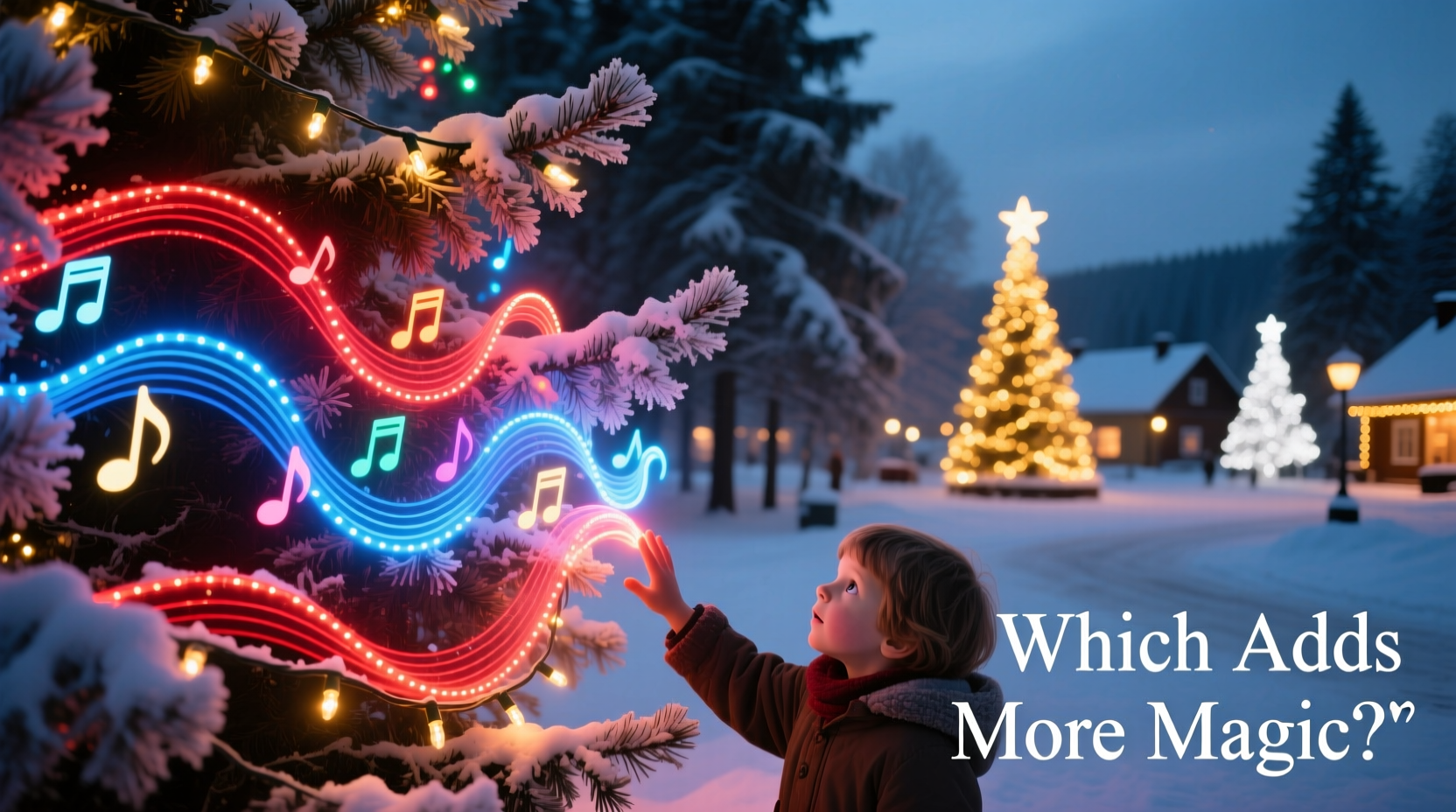
Which Adds More Magic? It Depends on Your Vision
So, which type of light brings more magic? The answer is deeply personal.
If your ideal holiday is intimate, reflective, and rooted in tradition, static color lights will likely resonate more. Their consistency provides emotional grounding—a visual anchor in a fast-moving world. They say, “This is Christmas as I remember it,” and for many, that’s the greatest magic of all.
But if you thrive on creativity, technology, and shared experiences, programmable LEDs unlock new dimensions of wonder. They invite interaction, inspire awe, and transform your home into a destination. They say, “Christmas is alive, evolving, and full of surprises”—and that, too, is magical.
The most impactful displays often blend both. Use static warm whites inside for comfort, and programmable colors outside for spectacle. Or keep your tree classic while adding subtle animated icicles along the eaves. Balance is key.
Checklist: Choosing the Right Lights for Your Home
- ✅ Define your holiday theme: traditional, modern, playful, or theatrical?
- ✅ Assess your budget: Are you investing long-term or seeking temporary decor?
- ✅ Consider installation skill: Are you comfortable with apps and wiring?
- ✅ Think about audience: Who will see the lights—family, neighbors, passersby?
- ✅ Evaluate maintenance: Can you store delicate components safely each year?
- ✅ Check electrical capacity: Do outdoor outlets support multiple strands?
- ✅ Review HOA rules: Are there restrictions on light types or run times?
Frequently Asked Questions
Can I mix programmable LEDs with static lights?
Yes, absolutely. Many decorators use static lights for foundational illumination (e.g., tree core or railing outlines) and add programmable strands for accents (e.g., curtain edges or signage). Just ensure separate power sources to avoid interference.
Are programmable lights harder to store?
Slightly. Because they often include controllers, connectors, and delicate wiring, they require more careful coiling and compartmentalized storage. Use labeled bins and avoid bending sharp angles to preserve longevity.
Do programmable lights use more electricity?
No. Despite their advanced features, programmable LEDs are still highly energy-efficient. In fact, because they use LED technology and can be scheduled to run only part of the night, they often consume less power than older incandescent static sets left on for hours.
Conclusion: Illuminate Your Own Kind of Magic
The debate between programmable LED and static color Christmas lights isn’t about which is objectively better—it’s about which aligns with your heart. Magic isn’t measured in lumens or animation frames; it’s felt in the gasp of a child seeing the first bulb light up, in the quiet moment when a passerby pauses to smile, in the warmth that radiates from a home dressed in light.
Whether you choose the enduring charm of static hues or the dazzling innovation of programmable brilliance, what matters most is intention. Thoughtful lighting—no matter the type—creates connection, joy, and memory. So consider your space, your story, and your spirit. Then light it up your way.




 浙公网安备
33010002000092号
浙公网安备
33010002000092号 浙B2-20120091-4
Comments
No comments yet. Why don't you start the discussion?