
When it comes to holiday decorating, few elements capture attention like Christmas lights. A well-lit home can become a neighborhood landmark, drawing families in cars bundled with hot cocoa and awe. But not all light displays are created equal. The real decision point—especially for those aiming to impress—is whether to go with programmable or fixed sequence Christmas light patterns. Each has its strengths, but the choice ultimately shapes the experience guests have when they see your display.
Fixed sequence lights offer simplicity and reliability, while programmable systems unlock dynamic, choreographed shows set to music. Understanding the differences—and how each affects visual appeal, effort, and guest perception—is key to making the right call for your holiday vision.
The Core Difference: What Sets Them Apart
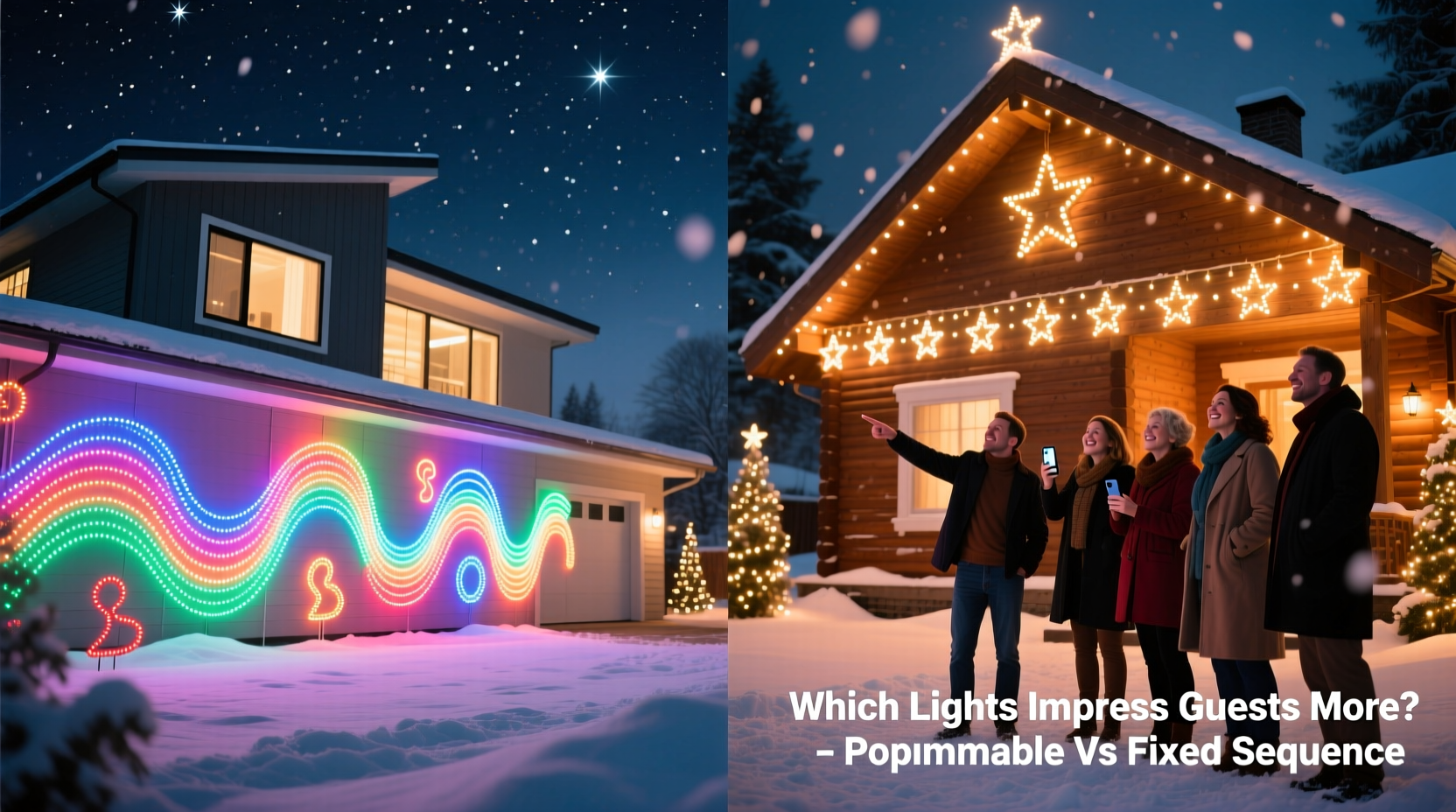
At first glance, both types of lights serve the same purpose: illuminating your space with festive cheer. However, their functionality diverges sharply.
Fixed sequence lights operate on a pre-determined pattern. These are typically mass-produced strands where bulbs blink, fade, or chase in a single repeating rhythm. You plug them in, and they perform the same show every time—no variation, no customization.
Programmable lights, usually found in smart LED formats (like RGB or Wi-Fi-enabled strips), allow users to control brightness, color, speed, and sequencing through apps or controllers. Some can sync with music, respond to motion, or follow seasonal themes you design yourself.
This distinction isn’t just technical—it’s experiential. Fixed sequences deliver charm through consistency; programmable setups deliver wonder through surprise.
Visual Impact: Which One Wows Guests More?
Impressing guests hinges on emotional resonance. A static flicker might evoke nostalgia, but a synchronized light show often triggers amazement. Let’s break down how each performs in real-world settings.
- Fixed Sequence Lights: Best suited for traditionalists. Their charm lies in predictability—steady twinkles on a pine garland, gentle chases along rooflines. They create ambiance without overwhelming. Ideal for homes aiming for elegance over spectacle.
- Programmable Lights: Designed for drama. With millions of color combinations and motion effects, they enable storytelling through light. Imagine red and green waves pulsing to \"Jingle Bell Rock,\" or snowflake patterns gently cascading down a tree. These displays generate reactions—pointing, photos, even social media shares.
A study by the National Retail Federation found that 68% of consumers enjoy driving around to view holiday lights, with 41% specifically seeking out “high-tech” or musical displays. This suggests a growing appetite for innovation during the season.
“People don’t just want to see lights—they want to feel the holiday spirit. Programmable systems turn passive viewing into an immersive experience.” — Daniel Reyes, Lighting Designer & Holiday Display Consultant
Comparison Table: Key Features at a Glance
| Feature | Fixed Sequence Lights | Programmable Lights |
|---|---|---|
| Pattern Control | None – factory-set only | Full customization via app/controller |
| Color Options | Single or dual-color (e.g., warm white, multicolor) | Millions of colors (RGB/RGBW) |
| Music Synchronization | Not possible | Yes – via Bluetooth, Wi-Fi, or FM transmitter |
| Setup Complexity | Plug-and-play – minimal effort | Moderate to high – requires planning and tech setup |
| Cost (per strand) | $5–$15 | $20–$60+ |
| Guest Reaction | Appreciation, mild delight | Excitement, social sharing, repeat visits |
Real Example: Two Neighbors, Two Approaches
Consider two homes on the same block: the Millers and the Garcias.
The Millers use classic fixed-sequence C7 bulbs along their roofline and porch railings. The lights alternate between steady-on and slow chase modes. It’s tasteful, warmly lit, and consistent year after year. Neighbors comment, “They always look so cozy.”
The Garcias, meanwhile, invested in a programmable system using addressable LEDs. Their display includes animated snowstorms, color-shifting trees, and a full 3-minute show synced to Mariah Carey’s “All I Want for Christmas Is You,” broadcast on a low-power FM frequency. Cars line up weekly. Local news featured them last December. Their yard isn’t just seen—it’s experienced.
Both homes are admired. But only one becomes a destination.
This contrast illustrates a broader truth: fixed sequences maintain tradition; programmable lights create moments.
Step-by-Step Guide: Choosing and Setting Up Your System
Deciding between these options doesn’t have to be overwhelming. Follow this timeline to make an informed choice based on your goals and resources.
- Assess Your Goals (Week 1): Ask: Do you want subtle charm or bold impact? Are you decorating for family or aiming to attract visitors? Write down your top three objectives.
- Evaluate Budget and Time (Week 2): Fixed lights cost less and take hours to install. Programmable systems may require $300+ and 10–20 hours for setup and programming. Be realistic about what you can sustain.
- Test a Small Section (Week 3): Buy one strand of each type. Install them on a small section of your home. View them at night from the street. Note which feels more aligned with your vision.
- Choose Based on Results (Week 4): If simplicity wins, go fixed. If you’re excited by possibilities, choose programmable. Consider mixing both—use programmable for centerpieces (tree, entryway) and fixed for perimeter lighting.
- Install and Refine (November): For programmable lights, map out zones, label wires, and test connectivity before final mounting. Use controller software to build sequences gradually. For fixed lights, ensure uniform spacing and secure connections.
- Gather Feedback (Early December): Invite a few neighbors to preview your display. Ask open-ended questions: “What stood out?” “How did it make you feel?” Adjust based on responses.
Common Pitfalls and How to Avoid Them
Even well-intentioned displays can fall flat. Here are frequent mistakes and how to sidestep them:
- Overloading circuits: Programmable lights draw more power when running complex animations. Use outdoor-rated extension cords and avoid daisy-chaining more than three strands.
- Inconsistent timing: Fixed sequence lights from different brands may blink out of sync. Stick to one manufacturer per zone.
- Poor visibility: Place key elements where they’re easily seen from the sidewalk or road. Avoid hiding programmable features behind dense shrubs.
- Ignoring maintenance: Check connections mid-season. Moisture and temperature shifts can loosen fittings. A quick inspection prevents blackouts on peak viewing nights.
Checklist: Ready for Your Light Display?
Use this checklist to ensure success, regardless of your choice:
- ☐ Measured total linear footage needed for coverage
- ☐ Selected bulb type (C7, C9, mini, rope) based on durability and brightness
- ☐ Determined power source locations and outlet access
- ☐ Purchased weatherproof connectors and surge protectors
- ☐ For programmable: downloaded required app and tested device compatibility
- ☐ Created backup plan for rain/snow disruptions
- ☐ Scheduled at least two test runs before public debut
- ☐ Shared showtime details with neighbors (if using music/audio)
Frequently Asked Questions
Can I mix programmable and fixed sequence lights?
Yes—and many top displays do exactly that. Use programmable lights for dynamic features like trees, wreaths, or window outlines, and fixed sequences for ambient rooflines or railings. Just ensure voltage compatibility and separate circuits if needed.
Do programmable lights last longer than fixed ones?
Not necessarily. Lifespan depends more on build quality and usage than programmability. However, high-end programmable LEDs are often built with better materials and may last 25,000–50,000 hours versus 15,000–20,000 for basic fixed strands. Always check manufacturer ratings.
Are programmable lights worth the extra cost?
For those who enjoy creativity and technology, yes. The ability to change themes annually (e.g., winter wonderland one year, Santa’s workshop the next) adds long-term value. Families with children also report higher engagement and lasting memories. For minimalist decorators, the added expense may not justify the return.
Final Verdict: What Impresses Guests Most?
If your goal is to leave a lasting impression, **programmable lights win**—but only when thoughtfully executed. A chaotic, overly busy programmable display can feel jarring. Conversely, a clean, elegant fixed sequence arrangement can radiate sophistication.
The deciding factor isn’t the technology itself, but the intention behind it. Guests are most impressed by displays that reflect care, creativity, and a sense of celebration. Programmable lights simply offer more tools to express those qualities.
That said, the “wow” moment doesn’t come from blinking speed or color count. It comes from alignment—between your vision, your audience, and the story you’re telling with light.
“The best holiday displays aren’t the brightest—they’re the ones that make people stop, smile, and remember being young at Christmas.” — Lydia Tran, Urban Landscape Architect
Take Action This Season
Your home has the potential to become more than a residence—it can be a beacon of joy during one of the year’s most meaningful seasons. Whether you choose the timeless rhythm of fixed sequences or the dazzling potential of programmable patterns, commit to doing it with heart.
Start small if needed. Sketch a plan. Test one idea before scaling up. And above all, enjoy the process. The lights you hang today could become someone else’s cherished memory tomorrow.




 浙公网安备
33010002000092号
浙公网安备
33010002000092号 浙B2-20120091-4
Comments
No comments yet. Why don't you start the discussion?