
As holiday seasons come around, one of the most visible traditions is the display of Christmas lights. From modest porch outlines to full yard spectacles, these lights bring cheer—but they also require management. A key component in maintaining an efficient, safe, and visually appealing lighting setup is the timer. Yet many homeowners face a recurring question: should they use a programmable or manual Christmas light timer? The answer isn’t just about convenience—it impacts safety, energy use, consistency, and long-term effort.
This guide dives into both types of timers, comparing their functionality, reliability, and real-world performance. Whether you're decorating for the first time or upgrading your current system, understanding the differences can save you time, reduce stress, and even lower your electricity bill.
Understanding Manual Timers
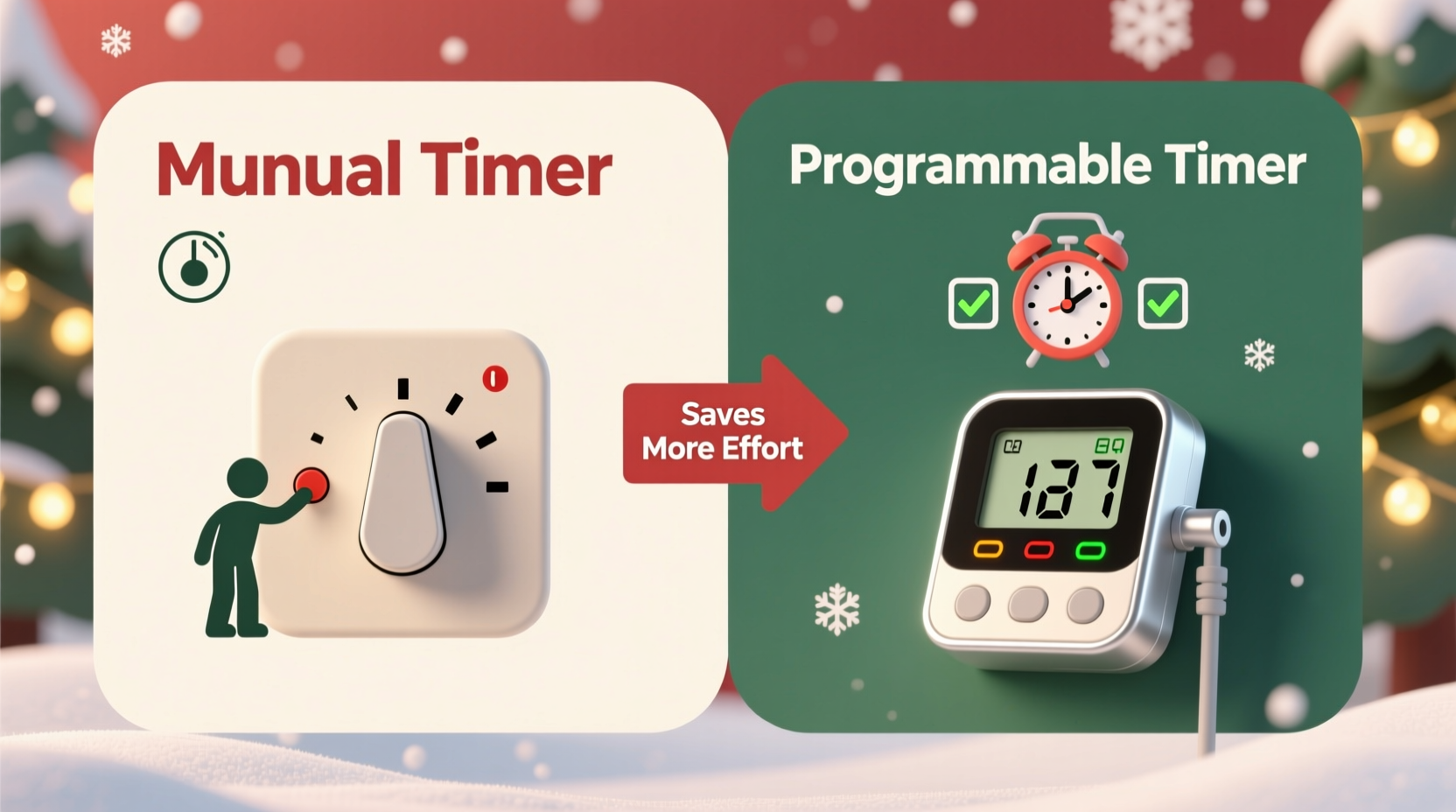
A manual timer is a simple mechanical device that operates on a rotating dial with 15- or 30-minute increments across a 24-hour period. Users physically push down tabs to set when the connected lights should turn on and off. These timers are often found in hardware stores and are typically the most affordable option.
Manual timers do not require Wi-Fi, batteries, or smartphone apps. They plug directly into an outdoor-rated electrical outlet, and the light string plugs into the timer. Once set, the timer cycles power based on the physical positions of the tabs. For example, if you want your lights on from 5 PM to 10 PM every day, you’d depress the tabs corresponding to those hours.
The appeal of manual timers lies in their simplicity. They’re durable, immune to software glitches, and don’t depend on internet connectivity. However, this simplicity comes at a cost—particularly in flexibility and precision.
The Rise of Programmable Timers
Programmable timers represent the modern evolution of holiday automation. These digital devices allow users to set exact on/off times, create multiple daily schedules, and in some cases, sync with sunrise and sunset times. Many models offer seven-day programming, meaning you can have different schedules for weekdays and weekends.
High-end versions connect via Wi-Fi and integrate with smart home systems like Alexa, Google Home, or Apple HomeKit. This enables remote control through smartphone apps. Imagine turning your lights on while you’re still at work or adjusting the schedule from bed without stepping outside.
Some programmable models even feature geofencing—automatically turning lights on when your phone detects you’re within a certain radius of home. Others include randomization modes to simulate occupancy when you're away, adding a layer of home security.
“Smart timers eliminate the guesswork and repetition involved in seasonal lighting. They adapt to changing daylight and user habits far better than mechanical alternatives.” — Daniel Reeves, Electrical Systems Consultant
Comparing Effort: Setup, Maintenance, and Daily Use
The core of this discussion is effort reduction. Let’s break it down by phase: initial setup, ongoing maintenance, and seasonal adjustments.
Initial Setup
Manual timers are quick to install but require precise handling. You must rotate the dial to the current time and then press down the appropriate tabs. Mistakes are common—especially in low light—and correcting them means resetting the entire cycle. There's no “undo” button.
Programmable timers take longer initially. You may need to download an app, connect to Wi-Fi, and navigate menus. But once configured, many remember settings year after year. Some even allow you to save multiple profiles (e.g., “Holiday Lights,” “Porch Lamp”) for reuse.
Ongoing Maintenance
Manual timers demand regular attention. If daylight saving time changes or winter days grow shorter, you’ll need to manually adjust the on/off windows to keep your display looking intentional. Forget to do so, and your lights might come on at noon or stay off during peak evening viewing hours.
In contrast, programmable timers with auto-dimming or astronomical clock features calculate local sunrise and sunset times automatically. No input required. Even without internet, many high-end digital timers use built-in GPS or location data to adjust daily.
Seasonal Adjustments
At the end of the season, both types require unplugging and storage. However, programmable timers often store their configuration in memory. When you plug them in next year, they retain the last used settings or prompt you to restore a saved profile. Manual timers reset completely each time—they offer no memory function.
Detailed Comparison: Key Features Side by Side
| Feature | Manual Timer | Programmable Timer |
|---|---|---|
| Initial Cost | $5–$10 | $15–$40+ (smart models higher) |
| Ease of Setup | Simple but error-prone | More complex initially, easier long-term |
| Daily Operation | Fully automatic once set | Fully automatic, adaptive options |
| Adjustment for Daylight Changes | Manual weekly/monthly tweaks needed | Automatic with advanced models |
| Remote Access | None | Yes, with Wi-Fi models |
| Memory Function | No | Yes – retains settings |
| Durability | High – mechanical parts, no firmware | Moderate to high – depends on build quality |
| Energy Efficiency | Depends on accurate scheduling | Higher – prevents overuse with precision |
Real-World Example: The Johnson Family’s Holiday Upgrade
The Johnsons live in Denver and have maintained a large Christmas light display for over a decade. Initially, they used a manual timer purchased from a local hardware store. Each year, they spent evenings adjusting the tabs as daylight changed. By early December, the lights were coming on too early, sometimes during dinner prep, drawing complaints from neighbors about glare.
In 2022, they upgraded to a Wi-Fi-enabled programmable timer. Using the companion app, they set a schedule that turned lights on 15 minutes after sunset and off at 11 PM Sunday through Thursday, extending to midnight on weekends. The timer adjusted automatically as days shortened. During a week-long trip, they remotely activated the lights to deter potential burglars.
By the end of the season, they estimated they saved nearly 10 hours of manual adjustment and reduced energy consumption by 22% due to tighter control. The initial investment paid for itself in effort and peace of mind.
Step-by-Step: Choosing and Installing the Right Timer
Selecting the best timer involves evaluating your needs, budget, and technical comfort. Follow this timeline to make an informed decision.
- Assess Your Display Needs: How many light strings? Are they spread across multiple outlets? Consider whether you need one timer per outlet or a centralized smart hub.
- Determine Your Budget: Manual timers cost under $10; smart programmable ones range from $20–$60. Factor in long-term savings from reduced labor and energy.
- Check Outlet Ratings: Ensure your timer supports the total wattage of your lights. Overloading causes overheating and fire hazards.
- Decide on Connectivity: Do you want remote access? Voice control? If yes, choose a Wi-Fi model compatible with your ecosystem (Alexa, Google, etc.).
- Install Indoors First: Test the timer inside using a lamp before deploying it outdoors. Verify timing accuracy and app connectivity.
- Weatherproof the Setup: Use an outdoor-rated enclosure or cover to protect the timer from snow and rain. Elevate it off the ground.
- Label and Store Properly: At season’s end, unplug, label cords, and store the timer with its instructions. Smart timers benefit from being kept in anti-static bags.
FAQ: Common Questions About Christmas Light Timers
Can I use a manual timer with LED Christmas lights?
Yes, most modern manual timers are compatible with LED lights. However, very low-wattage LED strings may not provide enough load to trigger older mechanical switches. If your lights flicker or fail to turn on consistently, consider switching to a digital or smart timer designed for low-power devices.
Do programmable timers work during power outages?
Most retain their settings during short outages thanks to internal backup batteries. After prolonged outages, Wi-Fi models may lose network connection and require reconfiguration. Manual timers reset completely and must be reprogrammed each time power returns.
Are smart timers worth the extra cost?
For occasional decorators, a manual timer may suffice. But for anyone with large displays, travel plans, or a desire for precision and automation, smart timers deliver significant value. The ability to adjust schedules remotely, automate based on sunset, and integrate with other smart devices often justifies the higher price.
Final Recommendation: Where Effort Meets Efficiency
When weighing programmable versus manual Christmas light timers, the verdict on effort-saving leans decisively toward programmable models—especially those with smart capabilities. While manual timers serve a purpose for basic setups, they demand repeated intervention, lack adaptability, and offer no long-term memory.
Programmable timers, particularly Wi-Fi-enabled ones, reduce annual setup time, prevent lighting errors, enhance security, and optimize energy use. The initial learning curve is offset by years of reliable, hands-off operation. For households that value consistency, safety, and convenience, the upgrade is not just practical—it’s transformative.
Consider this: the average homeowner spends 3–5 hours per season adjusting, troubleshooting, and resetting manual timers. Over five years, that’s 15–25 hours of effort saved with a single programmable unit. That time could be spent with family, enjoying the lights instead of managing them.
Checklist: Choosing Your Ideal Timer
- ☐ Determine total wattage of your light display
- ☐ Choose between mechanical, digital, or smart programmable
- ☐ Verify compatibility with LED or low-energy bulbs
- ☐ Confirm outdoor rating (weather resistance)
- ☐ Test indoors before permanent installation
- ☐ Enable auto-sunset features if available
- ☐ Label and store safely after the season
“The right timer doesn’t just control lights—it controls workload. Automation shifts focus from maintenance to enjoyment.” — Lila Tran, Smart Home Integration Specialist
Take Action This Season
This holiday season, rethink how you manage your lights. If you're still wrestling with a clunky manual timer, now is the time to upgrade. Invest in a programmable solution that pays back in saved hours, improved aesthetics, and greater peace of mind. Your future self—standing outside in the snow, trying to fix a frozen dial—will thank you.




 浙公网安备
33010002000092号
浙公网安备
33010002000092号 浙B2-20120091-4
Comments
No comments yet. Why don't you start the discussion?