
The glow of Christmas lights is more than seasonal decoration—it’s a language of celebration. For many homeowners, the goal isn’t just to mark the holidays but to spark admiration, draw visitors, and become the talk of the neighborhood. But when it comes to making a lasting impression, not all light displays are created equal. The debate between programmable and static Christmas light setups is at the heart of modern holiday decorating. One offers reliability and simplicity; the other delivers spectacle and storytelling. So, which approach truly impresses neighbors more?
The answer depends on what kind of impression you want to make—cozy charm or jaw-dropping performance. While both types have their place, understanding their strengths, limitations, and real-world impact can help you decide where to invest your time, energy, and budget.
The Allure of Static Light Displays
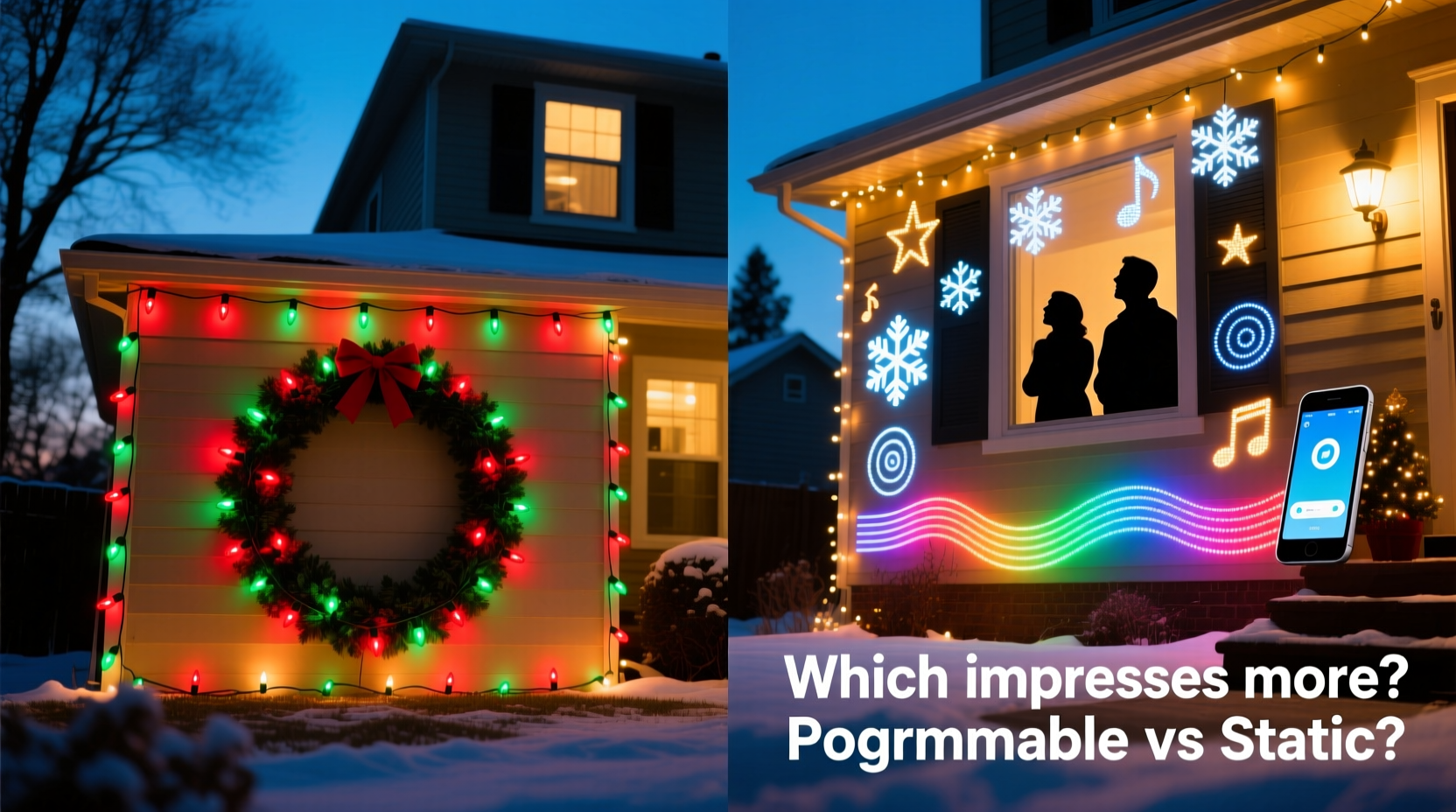
Static Christmas lights are the traditional backbone of holiday decor. These consist of strings of bulbs that remain constantly illuminated, often in warm white or multicolor patterns. They’re used to outline roofs, wrap trees, line walkways, and fill window frames with steady, inviting light.
What makes static displays enduring is their elegance and consistency. A home wrapped in warm white icicle lights exudes timeless charm. There’s no flickering, no sequencing—just a serene, uniform glow that evokes nostalgia and comfort. Many neighborhoods prize this classic aesthetic, especially in areas where understated tradition holds sway.
From a technical standpoint, static lights are simple. They require minimal setup: plug them in, secure them in place, and they stay on. Timers can automate operation, but there’s no need for software, controllers, or complex wiring. This makes static displays highly reliable and easy to maintain year after year.
The Rise of Programmable Light Displays
Programmable Christmas light displays represent the next evolution in holiday lighting. Using addressable LED strips (like WS2812B or “NeoPixels”) and microcontrollers such as ESP8266 or Raspberry Pi, these systems allow each bulb to be individually controlled. This means colors can shift, patterns can pulse, and entire sequences can sync to music—all orchestrated through software like xLights or Falcon Player.
The visual impact is dramatic. Imagine red and green waves rippling across your roofline, snowflake animations dancing down your eaves, or your entire house pulsing in rhythm with \"Jingle Bell Rock.\" Such displays don’t just catch the eye—they stop traffic. Homes with synchronized, music-driven light shows routinely attract dozens, even hundreds, of visitors during the season.
But beyond spectacle, programmable lights offer creative control. You can design themes—vintage Hollywood, winter wonderland, retro 80s—and switch between them with a click. Some users even create custom animations for birthdays or special events within the holiday period.
“Lighting has become experiential. People aren’t just decorating homes—they’re producing shows. And programmable LEDs are the canvas.” — Marcus Lin, Holiday Lighting Designer & Founder of LightShowEmporium.com
Comparing Impact: What Neighbors Actually Notice
To understand which display type impresses more, consider how people perceive and react to them.
- First impressions: Static displays convey effort and care. Neighbors might say, “They always do such a nice job with their lights.”
- Emotional response: Programmable displays generate excitement. Reactions include, “We drove 20 minutes just to see your house!” or “The kids wouldn’t stop clapping.”
- Social sharing: Programmable shows are far more likely to be filmed, posted on social media, and shared in community groups.
- Longevity of attention: A static display is admired once per visit. A programmable show holds attention for several minutes per cycle.
In suburban and family-oriented neighborhoods, the difference in perceived effort is significant. A high-quality programmable display signals dedication, technical skill, and generosity—offering a free public entertainment experience.
Real Example: The Johnson Residence, Portland, OR
The Johnsons began with a modest static display in 2018—roofline lights, a lit tree, and a reindeer figure. Their neighbors appreciated it, but it blended in with others on the block.
In 2020, they upgraded to a programmable system using 5,000 addressable LEDs, outdoor speakers, and a Wi-Fi-enabled controller. They designed a 5-minute musical sequence synced to classics like “Winter Wonderland” and “All I Want for Christmas Is You.”
The change was immediate. Within two weeks of turning it on, their street saw increased foot traffic. Local news featured them in a “Best Lights in the City” segment. By Christmas Eve, over 800 people had visited—some leaving cookies and thank-you notes. The Johnsons now update their show annually, treating it as a community gift.
Their experience reflects a broader trend: programmable displays don’t just impress—they create connection.
Practical Considerations: Cost, Setup, and Maintenance
While programmable lights offer greater impact, they come with trade-offs. A side-by-side comparison helps clarify the practical realities.
| Factor | Static Lights | Programmable Lights |
|---|---|---|
| Initial Cost | $100–$300 (basic kits) | $500–$2,000+ (LEDs, controllers, software, power supplies) |
| Setup Time | 2–6 hours | 20–50+ hours (wiring, mapping, programming) |
| Technical Skill | Low (plug-and-play) | Moderate to high (software, networking, troubleshooting) |
| Maintenance | Replace blown bulbs, check connections | Update software, recalibrate sequences, manage data cables |
| Lifespan | 3–7 years | 5–10 years (if protected from moisture) |
| Neighbor Appeal | Appreciated, familiar | Memorable, shareable |
For those short on time or uncomfortable with technology, static lights remain the smarter choice. But for enthusiasts who enjoy DIY projects and community engagement, programmable systems deliver unmatched returns in admiration and joy.
Step-by-Step: Building a Neighbor-Impressing Display
Whether you choose static or programmable, maximizing impact requires planning. Follow this timeline to ensure success by December 1st.
- Early October: Define Your Goal
Decide whether you want subtle charm or a full-scale show. Assess budget, time, and electrical capacity. - Mid-October: Design the Layout
Sketch your home’s exterior. Mark key features: rooflines, trees, porches. For programmable setups, plan pixel counts and zones. - Late October: Purchase Materials
Buy lights, extension cords, controllers (if needed), mounting clips, and surge protectors. Order early to avoid supply delays. - Early November: Install Infrastructure
Run conduit for data wires (for programmable), install power outlets if necessary, and secure mounting bases. - Mid-November: Hang Lights
Begin installation. Work top-down. Use consistent spacing. Label all strands and circuits. - Late November: Test & Program
For static: test all strings. For programmable: map pixels, upload test patterns, sync audio. - December 1: Launch Publicly
Turn on the display. Share viewing times on Nextdoor or Facebook. Consider adding a donation link for a local charity.
Checklist: Before You Flip the Switch
- ✅ All lights are securely fastened and weatherproofed
- ✅ Extension cords are rated for outdoor use and off the ground
- ✅ GFCI outlets are in use to prevent electrical hazards
- ✅ Timer or controller is programmed correctly
- ✅ Music volume is respectful (or offer silent mode via QR code)
- ✅ Emergency shut-off method is accessible
- ✅ Neighborhood association rules have been reviewed (if applicable)
Frequently Asked Questions
Do programmable lights use more electricity?
Surprisingly, no. Most programmable systems use LED pixels, which are highly energy-efficient. A full 5,000-pixel display typically consumes less than 300 watts—comparable to a few incandescent bulbs. In fact, because they’re often on for shorter durations (e.g., 30 minutes per hour), total usage can be lower than static displays left on all night.
Can I mix static and programmable lights?
Absolutely. Many top-rated displays combine both. Use static warm white lights for ambient glow on hedges and railings, and reserve programmable LEDs for dynamic zones like roof peaks or window outlines. This hybrid approach balances elegance with excitement while reducing complexity.
Are programmable displays worth the learning curve?
For hobbyists, yes. The initial investment in time pays off in long-term flexibility. Once set up, updating next year’s show takes a fraction of the original effort. Online communities like r/ChristmasLights on Reddit offer tutorials, templates, and troubleshooting support, making entry easier than ever.
Conclusion: Impress Not Just With Light, But With Heart
In the contest between programmable and static Christmas light displays, the winner depends on your goals. If you seek quiet admiration and effortless tradition, static lights will serve you well. But if you want to inspire awe, gather crowds, and become a seasonal landmark, programmable displays hold a clear edge in neighbor appeal.
Yet beyond brightness or motion, what truly impresses is intention. A display—whether simple or spectacular—that reflects thought, care, and generosity resonates most deeply. The twinkling of lights becomes secondary to the message they carry: warmth, welcome, and shared joy.




 浙公网安备
33010002000092号
浙公网安备
33010002000092号 浙B2-20120091-4
Comments
No comments yet. Why don't you start the discussion?