
As holiday seasons grow more tech-savvy, the way we decorate our homes has evolved dramatically. One of the most visible changes is in how we manage Christmas lights. Gone are the days when simply plugging in a strand and setting a basic timer was enough. Today’s market offers everything from simple mechanical timers to fully programmable, app-controlled smart light systems. But with higher functionality comes a higher price tag—so the real question becomes: do the smart features of programmable lights actually justify their cost compared to traditional timer-based options?
The answer isn’t always straightforward. It depends on your lifestyle, decorating ambitions, energy concerns, and long-term plans. Whether you're a minimalist who puts up one string of lights or a neighborhood sensation known for synchronized light shows, understanding the differences between these two systems can help you make a smarter investment.
Understanding the Basics: Timer vs Programmable Lights
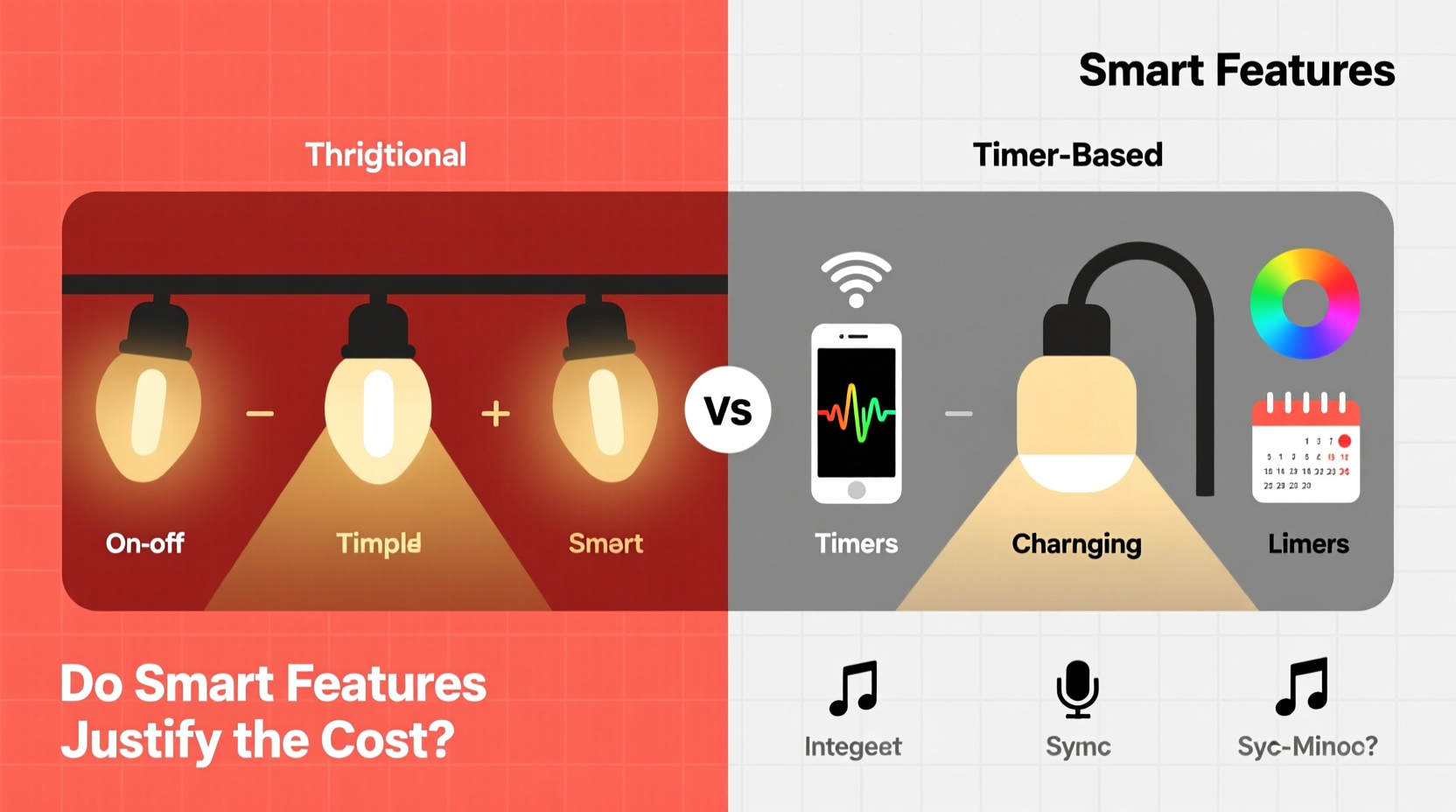
At first glance, both timer and programmable Christmas lights serve the same purpose: turning lights on and off automatically. However, their underlying mechanisms, capabilities, and user experience differ significantly.
Timer-based lights typically use a mechanical or digital timer connected either inline with the power source or built into an outlet. These devices operate on a fixed schedule—you set a start and end time, and every day the lights follow that pattern regardless of external conditions. Some advanced models include photocells that activate lights at dusk and deactivate at dawn, but they offer no further customization.
Programmable (smart) lights, on the other hand, connect to your home Wi-Fi or Bluetooth network and are controlled via smartphone apps or voice assistants like Alexa, Google Assistant, or Siri. These systems allow granular control over brightness, color, animation patterns, scheduling, and even music synchronization. Many support geofencing, so lights turn on as you approach home, or respond to weather alerts by adjusting display intensity.
Feature Comparison: What You Gain (and Lose)
To determine whether the upgrade is worth it, let’s break down the core differences between timer and programmable lights across key categories.
| Feature | Timer Lights | Programmable Smart Lights |
|---|---|---|
| Scheduling Flexibility | Limited to daily on/off; some adjust for daylight | Custom schedules by day, date, sunrise/sunset, or location |
| Remote Control | No | Yes, via app or voice command |
| Color & Animation Options | Fixed color; no animation unless pre-set in hardware | Millions of colors, dynamic effects (fade, chase, twinkle), custom sequences |
| Energy Efficiency | Moderate—lights run full cycle regardless of need | High—can dim, shorten duration, or turn off remotely |
| Installation Complexity | Simple plug-and-play | Requires app setup, network connection, possible firmware updates |
| Cost (Initial) | $10–$30 per timer/light set | $30–$100+ per set, plus potential hub costs |
| Lifespan & Durability | Long, minimal electronics exposed | Varies—depends on build quality and exposure to elements |
While programmable lights clearly outperform timer-based systems in terms of features, not all users need—or benefit from—such sophistication. For someone who wants lights on from 5 PM to 10 PM nightly, a $15 digital timer may be more than sufficient. But for those seeking creative expression, automation integration, or remote access, smart lights open doors that basic timers simply cannot.
Real-World Scenarios: Who Benefits Most?
Not every household will gain equal value from upgrading to programmable lights. Consider these realistic examples to see where each system shines.
Case Study: The Busy Family
The Martinez family lives in suburban Denver. Both parents work full-time, and their two kids have after-school activities. They love holiday decor but rarely have time to manually turn lights on and off. Last year, they used a basic timer, but often came home to find the porch dark because the timer wasn’t adjusted for changing sunset times.
This year, they invested in a smart lighting system. Using the app, they set lights to turn on 15 minutes after sunset and off at 10 PM. When they travel over the holidays, they can toggle the lights remotely to simulate presence. Voice commands let their kids say, “Alexa, turn on the Christmas lights,” adding fun without effort.
Verdict: The convenience and peace of mind justified the extra $40 spent on smart lights.
Case Study: The Minimalist Decorator
Sarah lives alone in a small apartment and hangs a single string of warm white LED lights around her window each December. She uses them from December 1st to January 1st and sets them on a simple mechanical timer. She doesn’t care about color changes or remote control—she just wants reliability.
For Sarah, spending $80 on a programmable strip with app control would be overkill. Her current setup costs less than $20, works flawlessly, and requires zero maintenance.
Verdict: Smart features add no meaningful benefit. A timer is optimal.
“Smart lighting isn’t just about aesthetics—it’s about integration. When your lights respond to your routine, environment, and preferences, they become part of a living home.” — Marcus Lin, Smart Home Systems Designer
Step-by-Step: Choosing the Right System for Your Needs
Deciding between timer and programmable lights doesn’t have to be overwhelming. Follow this practical decision-making process to identify the best fit.
- Assess your usage frequency and duration. Will you use lights only on weekends? All month? Only during specific events? Frequent, variable use favors programmability.
- Evaluate your technical comfort level. Are you comfortable downloading apps, connecting devices to Wi-Fi, and troubleshooting minor sync issues? If not, stick with simpler timers.
- Determine your aesthetic goals. Want multicolor displays, animated patterns, or synchronized music shows? You’ll need programmable LEDs. Prefer classic white or steady color? A timer suffices.
- Consider location and accessibility. If your lights are hard to reach (e.g., rooflines, tall trees), remote control becomes a major advantage. No ladder required.
- Calculate total cost of ownership. Include initial purchase, potential hub requirements, and expected lifespan. Smart lights may save energy over time, but upfront cost is higher.
- Think about future scalability. Do you plan to expand your display next year? Starting with a programmable ecosystem makes expansion easier and more cohesive.
Cost-Benefit Analysis: Is the Upgrade Worth It?
Let’s put numbers to the question. Suppose you’re comparing a $12 digital timer + $20 standard LED string versus a $70 smart LED string with built-in Wi-Fi control.
- Break-even point via energy savings: Smart lights often allow dimming and shorter runtime. If you reduce daily usage by 2 hours and dim to 70% brightness, you could save ~30% in energy. At $0.13/kWh, that’s about $1.50 saved per season. Not enough to offset cost—but convenience isn’t measured in watts.
- Value of convenience: Remote on/off, automatic adjustments, and voice control eliminate daily management. For time-poor households, this intangible benefit carries significant weight.
- Lifespan and reusability: High-quality smart lights often use better components and come with longer warranties. If they last 5+ seasons versus 3 for basic sets, the long-term value improves.
In short, programmable lights rarely pay for themselves purely through energy savings. Their justification lies in enhanced control, personalization, and integration into modern lifestyles.
Essential Checklist Before Buying
Whether you go smart or stick with a timer, use this checklist to avoid common pitfalls.
- ✅ Confirm outdoor rating (IP44 or higher for wet conditions)
- ✅ Check compatibility with existing smart home systems (Alexa, Google, Apple HomeKit)
- ✅ Verify app usability—read reviews for stability and interface clarity
- ✅ Ensure adequate range between router and light location (especially for Wi-Fi models)
- ✅ Review return policy—some retailers don’t accept used smart lighting returns
- ✅ Consider battery backup for timers during power fluctuations
- ✅ For programmable lights, check if a hub is required (adds cost and complexity)
Frequently Asked Questions
Can I use a smart plug with regular Christmas lights instead of buying programmable ones?
Yes—this is a cost-effective middle ground. Plug standard lights into a smart plug, then control power via app or schedule. You won’t get color or animation control, but you gain remote on/off, scheduling, and energy monitoring. Ideal for white or single-color sets.
Do programmable lights use more electricity?
Not inherently. In fact, many are more efficient due to LED quality and the ability to dim or shorten runtimes. However, complex animations or maximum brightness settings can increase consumption slightly. Overall, smart lights tend to use less energy when managed well.
Are timer lights becoming obsolete?
No. They remain popular for their simplicity, reliability, and low cost. Millions of users still prefer a “set it and forget it” approach. Timer lights are also less vulnerable to software bugs, connectivity issues, or platform discontinuation—common concerns with IoT devices.
Final Thoughts: Matching Technology to Lifestyle
The debate between programmable and timer Christmas lights ultimately comes down to alignment with your personal needs—not technological superiority. There’s undeniable magic in creating a custom light show synced to holiday music, viewable and adjustable from your phone while sipping cocoa indoors. But there’s also elegance in simplicity: a quiet porch illuminated each evening without fuss or fanfare.
Smart features don’t automatically mean better. They mean different. They offer flexibility, creativity, and integration—but only if you’re ready to use them. For casual decorators, a reliable timer remains the smartest financial and practical choice. For enthusiasts, tech adopters, or those seeking hands-free convenience, programmable lights deliver tangible benefits that easily justify their premium.
The best approach might even be hybrid: use smart lights for focal displays (front yard, tree, staircase) and timer-controlled strings for background areas (windows, railings). This balances cost and capability while maximizing visual impact.




 浙公网安备
33010002000092号
浙公网安备
33010002000092号 浙B2-20120091-4
Comments
No comments yet. Why don't you start the discussion?