
In recent years, the boundaries between physical space and digital experience have blurred. Nowhere is this more evident than in the world of lighting and environmental design. Once dominated by static fixtures and colored bulbs, decorative illumination has evolved into a dynamic dialogue between light, motion, and storytelling. At the heart of this transformation lies a growing debate: are traditional physical lights being replaced by digital alternatives like projection mapping? And if so, does this signal that digital decorating is not just trendy—but the future?
The answer isn't binary. Instead, it's layered—much like the visuals projected onto historic facades during festivals or the synchronized LED installations at luxury retail spaces. Both projection mapping and physical lighting systems offer unique strengths. But as technology advances and audiences demand more immersive, adaptable environments, the balance is shifting toward digital solutions that redefine what decoration can be.
The Evolution of Decorative Lighting
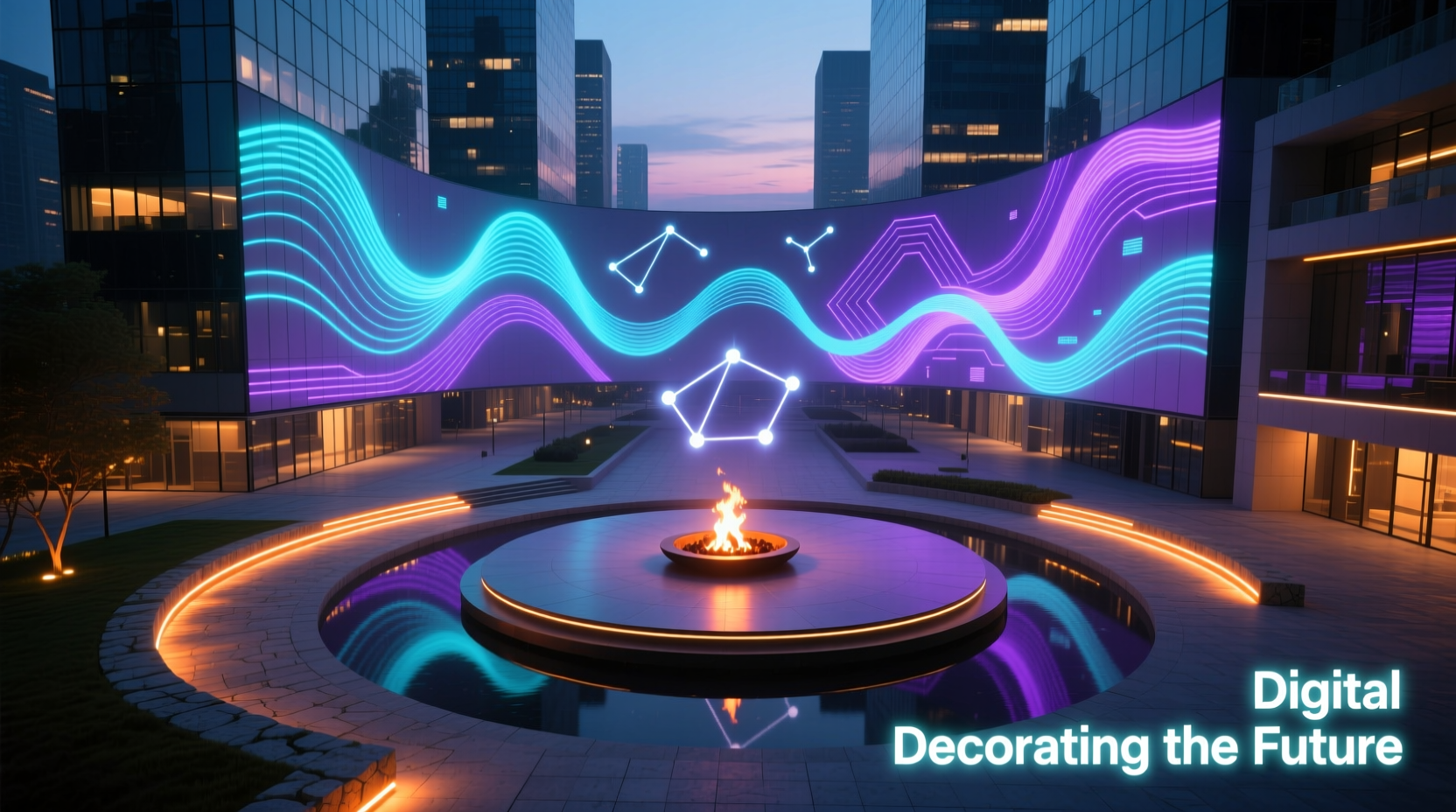
For decades, physical lighting—incandescent bulbs, neon tubes, LED strips, chandeliers—has defined ambiance. Whether illuminating a wedding venue with fairy lights or accenting a museum exhibit with track spots, these tools have been essential. Their reliability, color consistency, and tactile presence make them staples in interior design, architecture, and events.
But limitations exist. Physical lights are fixed. Changing their position requires rewiring or reinstallation. Altering color schemes often means replacing gels or purchasing new fixtures. Scaling up involves significant labor and cost. These constraints become apparent when designers aim for fluidity, interactivity, or large-scale visual narratives.
Enter projection mapping—a technique that uses calibrated projectors to cast dynamic images and animations precisely onto three-dimensional surfaces. Unlike flat video screens, projection mapping adapts to irregular shapes: buildings, sculptures, even moving objects. It turns inert structures into responsive canvases, capable of transforming from stone façade to cascading waterfall in seconds.
Projection Mapping vs. Physical Lights: A Comparative Breakdown
To understand where each excels, consider their core attributes across key performance categories.
| Feature | Projection Mapping | Physical Lights |
|---|---|---|
| Flexibility | High – Content can change instantly via software; no hardware changes needed | Low – Requires manual adjustments or fixture replacements |
| Installation Time | Moderate to high (requires calibration and alignment) | Low to moderate (plug-and-play for most setups) |
| Portability | Medium – Projectors and media servers are transportable but bulky | High – Many LED systems are modular and lightweight |
| Energy Efficiency | Lower – High-lumen projectors consume significant power | Higher – Modern LEDs use minimal energy per lumen |
| Visual Impact | Exceptional – Can create illusions, movement, narrative scenes | Limited – Static unless motorized or programmable |
| Lifespan & Maintenance | Shorter – Lamps degrade; optics require cleaning | Longer – LEDs last 50,000+ hours with little maintenance |
| Cost (Initial) | High – Professional-grade projectors and software are expensive | Variable – Ranges from affordable to premium based on system |
| Environmental Suitability | Poor in bright daylight; best in controlled/dark conditions | Effective indoors and outdoors, even in ambient light |
This comparison reveals a fundamental truth: projection mapping thrives in contexts demanding spectacle and transformation, while physical lights excel in functionality, longevity, and adaptability to real-world conditions.
Real-World Application: The Sydney Opera House Vivid Festival
Each year during Vivid Sydney, the iconic sails of the Opera House become a canvas for one of the world’s most celebrated projection mapping displays. Artists from around the globe submit animated works that transform the building into a living storybook—shifting from Aboriginal Dreamtime legends to futuristic cityscapes.
While thousands of physical lights illuminate the harbor, it’s the projection that captures global attention. What makes this possible? Precise 3D modeling of the structure, multi-channel projector arrays, and custom software that warps imagery to fit the complex curves of the roof.
Yet behind the spectacle, physical lights play a supporting role. Uplighting emphasizes architectural lines. Pathway LEDs guide crowds safely. Emergency lighting remains operational throughout. This synergy illustrates a critical point: digital decorating doesn’t eliminate physical lighting—it recontextualizes it.
As festival director Gill Minervini noted:
“Projection mapping allows us to tell stories that would be impossible with static lights. But without the foundation of well-designed ambient and safety lighting, the magic wouldn’t land.” — Gill Minervini, Vivid Sydney Festival Director
Why Digital Decorating Is Gaining Momentum
Digital decorating—defined as the use of dynamic, programmable, and often projection-based systems to alter environments—is gaining ground for several interconnected reasons.
- Democratization of Tools: Software like MadMapper, Resolume, and TouchDesigner has made projection mapping accessible beyond elite studios. Even small venues can now experiment with spatial visuals.
- Consumer Expectations: Audiences now expect immersive experiences. From Instagrammable art exhibits to branded pop-ups, visual novelty drives engagement and social sharing.
- Sustainability Through Reusability: A single projector can display infinite themes. Compare that to manufacturing dozens of themed light fixtures for seasonal decor—digital reduces material waste.
- Integration with Smart Systems: Projection content can sync with sound, motion sensors, or IoT devices, enabling responsive environments that react to human presence or data inputs.
- Architectural Preservation: Historic sites can be enhanced without permanent alterations. No drilling, no structural changes—just temporary visual overlays.
These advantages don’t mean physical lights are obsolete. Instead, they suggest a shift in hierarchy. Where once lighting was primarily functional, it’s now expected to be expressive. And expression favors flexibility—the domain of digital tools.
Step-by-Step Guide to Planning a Hybrid Lighting Installation
For designers considering a blend of projection and physical lighting, here’s a practical workflow:
- Define the Objective: Is the goal ambiance, storytelling, branding, or navigation? Clarity here determines the balance between digital and physical elements.
- Survey the Space: Measure dimensions, identify surface textures, assess ambient light levels, and locate power sources. Rough surfaces may diffuse projections; sunlight limits visibility.
- Create a 3D Model: Use photogrammetry or CAD software to map the environment. This is essential for accurate projection warping and blending.
- Select Equipment: Choose projectors based on lumens, throw ratio, and lens options. Pair with IP-rated LED fixtures for outdoor durability or color-tunable LEDs for mood control.
- Design Content: Develop animations or stills that complement—not compete with—existing architecture. Avoid overstimulation; negative space enhances impact.
- Integrate Control Systems: Use DMX or Art-Net to synchronize projectors with physical lights. Platforms like QLab or GrandMA allow unified timelines.
- Test and Calibrate: Conduct a site test at night. Adjust focus, brightness, and alignment. Ensure colors between projected and physical lights are harmonized.
- Document and Maintain: Save presets, label cables, and schedule lamp replacements or lens cleanings. Digital files should be backed up in multiple locations.
Checklist: Evaluating If Projection Mapping Is Right for Your Project
- ✅ Do you need frequent theme or content changes?
- ✅ Is the surface architecturally complex or historically protected?
- ✅ Will the installation occur in low-ambient-light conditions?
- ✅ Is storytelling or emotional impact a primary goal?
- ✅ Do you have access to skilled technicians for setup and calibration?
- ✅ Is budget flexible enough to accommodate higher initial costs?
- ✅ Can physical lighting alone achieve the desired effect?
If most answers are “yes,” projection mapping is likely a strong candidate. If not, a refined physical lighting design may be more efficient and sustainable.
Frequently Asked Questions
Can projection mapping work outdoors during the day?
Generally, no. Even ultra-high-lumen laser projectors struggle against direct sunlight. Some partial success occurs in shaded areas or with very dark surfaces, but nighttime remains ideal for maximum visual impact.
Are there health or safety concerns with prolonged exposure to projection mapping?
Unlike strobe-heavy LED shows, projection mapping typically poses minimal risk. However, rapid flashing sequences should comply with photosensitive epilepsy guidelines (avoid frequencies between 3–7 Hz). Also, ensure projector housings are secured to prevent falls.
How long does a typical projection mapping setup take?
A small indoor installation might take 1–2 days. Large-scale architectural projects often require 1–2 weeks, including modeling, content creation, rigging, and calibration. Re-runs of established shows can be deployed in under 48 hours.
The Future Is Not Either/Or—It’s Both/And
The question isn’t whether projection mapping will replace physical lights. It won’t—at least not entirely. Instead, the future of decorative lighting lies in intelligent integration. The most compelling environments merge the permanence and efficiency of physical LEDs with the narrative power of digital projection.
Imagine a hotel lobby where wall sconces provide warm, consistent illumination while a discreet projector casts seasonal motifs onto a textured feature wall—changing from cherry blossoms in spring to snowflakes in winter. Or a retail store using floor-projected AR-style trails to guide shoppers, while recessed LEDs highlight product displays.
This convergence reflects a broader trend: decoration is becoming experiential. It’s no longer about how something looks, but how it makes people feel—and how it responds to them. In this context, digital tools aren’t just convenient; they’re necessary for creating spaces that breathe, evolve, and engage.
“The future of environmental design isn’t about choosing between pixels and photons. It’s about orchestrating both to create moments that resonate.” — Dr. Lena Torres, Interactive Environments Researcher, MIT Media Lab




 浙公网安备
33010002000092号
浙公网安备
33010002000092号 浙B2-20120091-4
Comments
No comments yet. Why don't you start the discussion?