
For generations, couples have searched for ways to influence the sex of their future child. From folk remedies passed down through families to modern scientific theories, the desire to welcome either a boy or a girl has fueled countless strategies. While the biological determination of sex is ultimately governed by chromosomes, many people wonder: can timing, diet, or lifestyle actually tip the odds? This article separates fact from fiction, examining both scientifically supported approaches and persistent myths surrounding gender selection.
The Biological Basis of Baby Gender
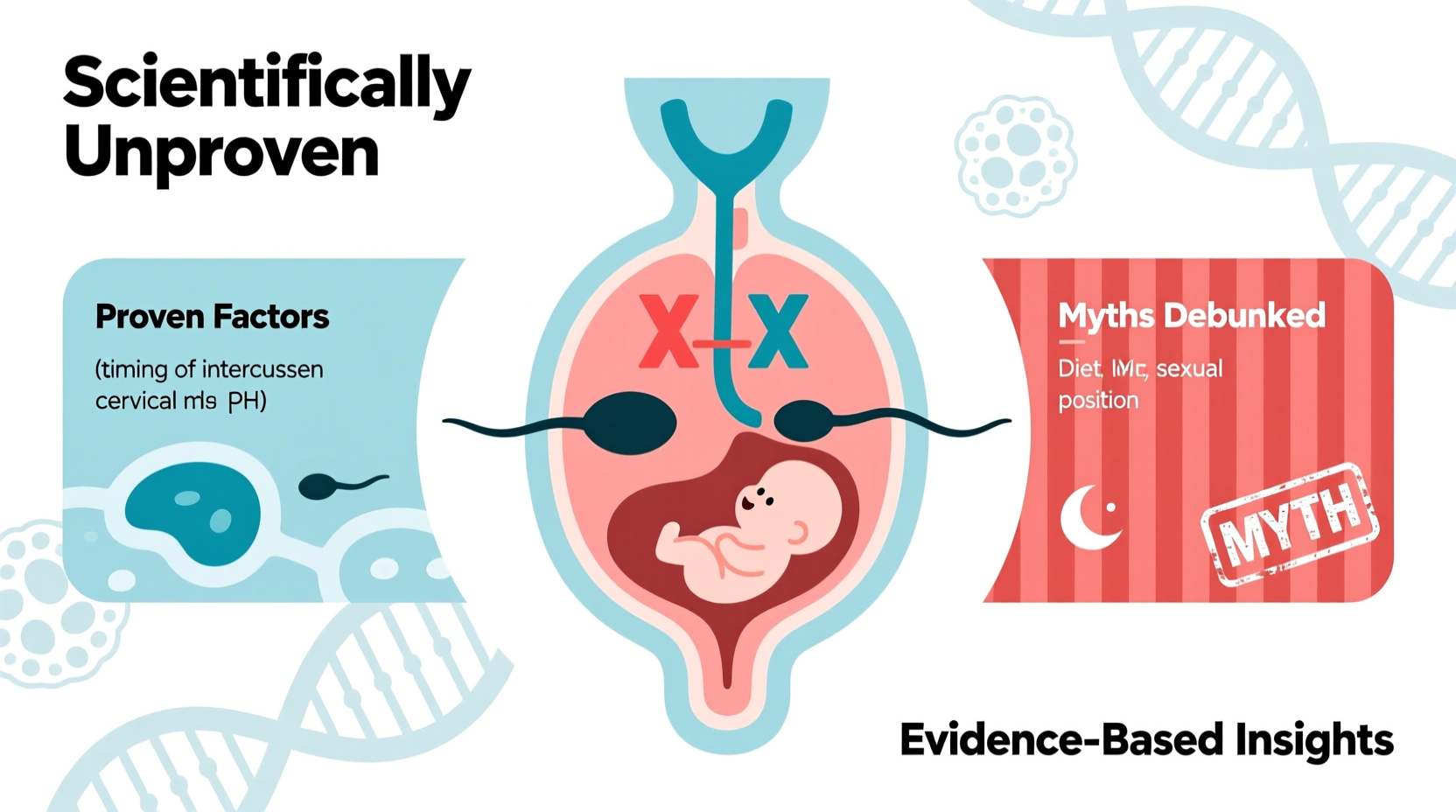
At conception, the sex of a baby is determined by the combination of chromosomes contributed by the parents. The mother always provides an X chromosome via her egg, while the father contributes either an X or a Y chromosome through his sperm. If the sperm carries an X chromosome, the resulting XX pairing produces a girl. If it carries a Y, the XY pairing results in a boy. Therefore, the father’s sperm determines the baby's sex.
Sperm carrying the Y chromosome (male) are generally faster but more fragile and shorter-lived than those carrying the X chromosome (female), which tend to be slower but more resilient. This biological difference forms the foundation for several timing-based methods aimed at increasing the likelihood of conceiving a boy or a girl.
“While parental genetics fix the fundamental mechanism of sex determination, subtle environmental factors within the reproductive tract may slightly influence which type of sperm reaches the egg first.” — Dr. Linda Chen, Reproductive Biologist
Proven Methods: What Science Suggests May Work
No natural method guarantees the birth of a boy or girl, but some approaches show modest statistical shifts based on peer-reviewed research. These are not foolproof but may offer slight advantages when consistently applied.
Shettles Method: Timing Intercourse Based on Sperm Traits
Developed by Dr. Landrum Shettles in the 1960s, this method leverages the differing characteristics of X and Y sperm. It suggests:
- To conceive a boy: Have intercourse as close to ovulation as possible. Faster Y sperm may reach the egg first.
- To conceive a girl: Have intercourse two to four days before ovulation. Hardier X sperm may survive longer and fertilize the egg after Y sperm die off.
A 2006 study published in *Human Reproduction* found that couples who followed timing guidelines consistent with the Shettles method saw a small but statistically significant shift toward the expected gender—about 56–58% success rate under ideal tracking conditions.
Dietary Influences: Minerals and pH Levels
Some studies suggest that maternal diet before conception may affect the likelihood of conceiving a boy or girl. A notable 2008 study from the University of Oxford observed that women who consumed higher-calorie diets, especially breakfast cereals, were slightly more likely to have boys.
Potassium and sodium intake have also been linked to male conceptions, while calcium and magnesium-rich diets were associated with female births. However, these correlations are weak and should not override nutritional balance.
| Goal | Dietary Focus | Supporting Evidence Level |
|---|---|---|
| Conceive a Boy | Higher calories, potassium (bananas, potatoes), sodium (sea salt) | Moderate observational data |
| Conceive a Girl | Lower sodium, higher calcium (dairy, leafy greens), moderate calories | Limited, inconsistent findings |
Common Myths That Lack Scientific Support
Despite widespread belief, many popular techniques have no credible backing. Relying on them may lead to disappointment or unnecessary stress.
- Sex position determines gender: No evidence supports claims that deep penetration favors boys or shallow favors girls.
- Changing vaginal pH with douches: Attempting to alter pH using baking soda or vinegar is not only ineffective but potentially harmful, disrupting natural flora and increasing infection risk.
- Lunar calendar or Chinese gender charts: These rely on superstition and show no predictive accuracy beyond chance (50%).
- Wearing loose clothing to “cool” testicles for a boy: While heat affects sperm count, there’s no proof it selectively impacts X vs. Y sperm ratios.
“The idea that simple lifestyle tweaks can control something as genetically fixed as sex is appealing—but most so-called methods are rooted in anecdote, not biology.” — Dr. Alan Ruiz, Fertility Specialist
Medical Options: When Precision Matters
For couples seeking certainty—often due to genetic disorders linked to one sex—medical interventions exist. These are highly effective but come with ethical, legal, and financial considerations.
Preimplantation Genetic Testing (PGT)
Used during in vitro fertilization (IVF), PGT allows embryos to be screened for chromosomal makeup before implantation. This method achieves over 99% accuracy in gender selection. However, it’s typically restricted to medical necessity in countries like Canada and the UK, while permitted for non-medical reasons in parts of the U.S. and Cyprus.
Sperm Sorting (MicroSort®)
This experimental technique separates X and Y sperm using fluorescent dye and flow cytometry. Though promising, it remains largely unavailable outside clinical trials and has variable success rates depending on the target gender (higher accuracy for girls).
Real-Life Example: The Johnson Family’s Approach
Sarah and Mark Johnson already had two boys and hoped for a daughter. After researching evidence-based methods, they adopted the Shettles approach: tracking ovulation meticulously and timing intercourse three days prior to predicted ovulation. They also adjusted Sarah’s diet to include more calcium-rich foods like yogurt and almonds while reducing salty snacks.
They conceived within three months—and ultrasound at 16 weeks confirmed they were expecting a girl. While they acknowledge it may have been coincidence, they felt empowered by taking proactive, informed steps grounded in biology rather than myth.
Action Plan: A Practical Checklist for Couples
If you're curious about influencing your baby’s sex, follow this science-informed checklist:
- Track ovulation using OPKs, basal body temperature, and cervical mucus observation.
- Decide your goal: early intercourse for a boy, earlier abstinence and timed intercourse before ovulation for a girl.
- Maintain a balanced diet with attention to mineral intake—emphasize potassium/sodium for boys, calcium/magnesium for girls.
- Avoid unproven practices like douching or extreme dietary changes.
- Reduce stress and maintain overall reproductive health—this improves fertility regardless of gender goals.
- Consult a fertility specialist if considering medical options like IVF with PGT.
Frequently Asked Questions
Can I really increase my chances of having a boy or girl naturally?
You may slightly improve odds—studies suggest up to 55–58% success with well-executed timing and dietary methods—but nothing guarantees results. Natural methods work within biological limits and should be viewed as supportive, not deterministic.
Does the father’s sperm decide the baby’s sex?
Yes. Since the mother contributes only an X chromosome, the presence of an X or Y chromosome from the father’s sperm determines whether the baby will be female (XX) or male (XY).
Are there risks to trying to influence baby gender?
Natural methods pose little risk if done sensibly. However, extreme diets, douching, or obsessive tracking can harm physical health or strain relationships. Always prioritize overall wellness over gender outcome.
Final Thoughts
The dream of choosing a baby’s gender is deeply human, tied to hopes, family balance, and cultural traditions. While nature ultimately decides, understanding the science behind conception empowers couples to make informed choices. Rather than chasing myths, focus on optimizing fertility, embracing accurate information, and preparing emotionally and physically for whatever life brings.




 浙公网安备
33010002000092号
浙公网安备
33010002000092号 浙B2-20120091-4
Comments
No comments yet. Why don't you start the discussion?