
Accidents happen—especially with pets. When your dog has an episode on the carpet, the urgency isn’t just about cleanliness; it’s about preventing permanent staining, lingering odors, and bacterial contamination. Dog diarrhea contains enzymes, bile, and organic matter that can bind deeply into carpet fibers if not treated promptly and correctly. The good news is that with the right approach, most stains can be fully removed without resorting to expensive professional cleaning.
This guide outlines scientifically backed, veterinarian-approved techniques for removing dog diarrhea stains from carpet—quickly, safely, and effectively. Whether you're dealing with a puppy’s first accident or managing a senior dog’s digestive issue, these steps will protect both your flooring and your household hygiene.
Why Immediate Action Matters
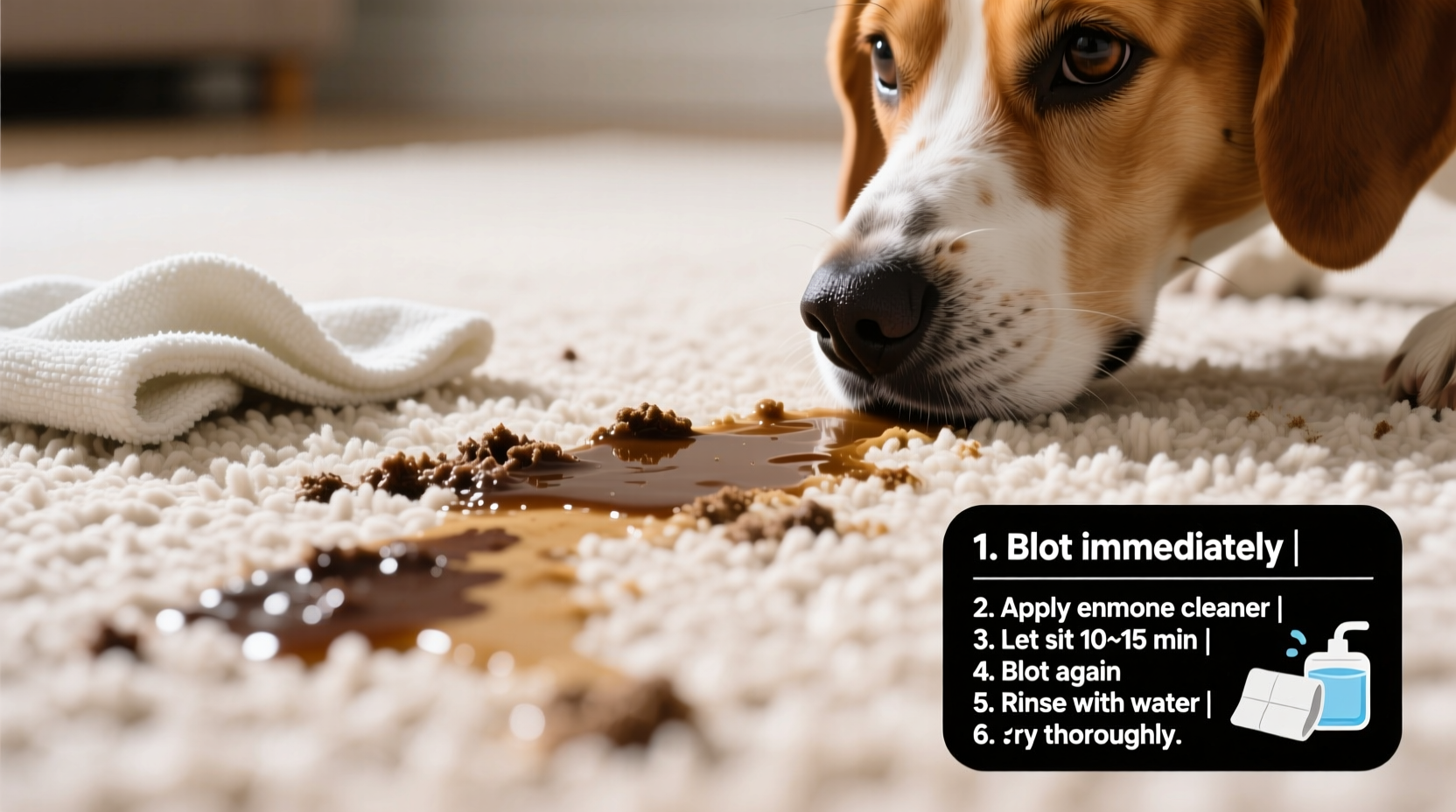
The longer diarrhea sits on carpet, the more time its components have to degrade fibers and embed odors. Proteins and pigments in fecal matter begin bonding with synthetic or natural carpet fibers within minutes. Additionally, moisture encourages mold growth and amplifies odor-causing bacteria like *E. coli* and *Salmonella*, which pose health risks, especially to children and immunocompromised individuals.
Acting fast not only improves stain removal success but also reduces the chance of re-soiling—where pets are drawn back to the same spot due to residual scent markers they can detect even when humans cannot.
Step-by-Step Guide to Remove Diarrhea Stains Safely
- Put on disposable gloves – Protect yourself from bacteria present in fecal matter.
- Blot excess material – Use paper towels or a clean cloth to gently lift as much of the mess as possible. Do not rub—this pushes the stain deeper.
- Scrape residue – For semi-solid remnants, use a spoon or dull knife to carefully lift without scratching the carpet.
- Rinse with cold water – Dampen a clean cloth and gently dab the area to dilute remaining contaminants. Avoid soaking, which can push waste into padding.
- Apply an enzyme-based cleaner – Spray generously over the affected zone and let sit for 5–10 minutes (follow product instructions).
- Blot thoroughly – Use dry cloths to absorb the solution and loosened debris.
- Allow full drying – Let the area air-dry completely. Do not walk on it until dry to prevent tracking.
Enzyme cleaners are essential because they break down the organic compounds in waste at a molecular level. Unlike traditional cleaners that mask odors, enzymatic formulas digest proteins, fats, and carbohydrates responsible for both stains and smells.
Do’s and Don’ts of Carpet Stain Removal
| Do’s | Don’ts |
|---|---|
| Use cold water initially (hot water sets protein stains) | Use hot water or steam too early |
| Blot, don’t scrub | Rub aggressively—it spreads the stain |
| Use enzyme-based cleaners designed for pet stains | Use ammonia or bleach—these react poorly with urine/diarrhea and create toxic fumes |
| Ventilate the room during cleanup | Seal the area tightly without airflow—traps moisture and odors |
| Test cleaners on a hidden area first | Assume all carpets react the same—wool, nylon, and olefin vary in sensitivity |
Real Example: Cleaning Up After a Puppy’s First Accident
Sarah noticed her 10-week-old Labrador had a diarrhea accident on the living room carpet after switching foods. She immediately put on gloves and used folded paper towels to absorb the bulk. Using a butter knife, she lifted clumps gently, then applied a vet-recommended enzymatic spray (containing protease and amylase enzymes). After letting it dwell for seven minutes, she blotted with a white microfiber towel until no transfer occurred. Within two hours, the carpet was dry. Three days later, the puppy did not revisit the spot—a strong sign the odor had been fully neutralized.
This case illustrates how prompt action and proper products prevent behavioral issues linked to incomplete cleaning. Puppies rely heavily on scent cues; eliminating all traces discourages repeat accidents.
Expert Insight on Pet Stain Management
“Many pet owners make the mistake of using household disinfectants that contain ammonia. This mimics the smell of urine to dogs and actually encourages them to mark again. Enzymatic cleaners are non-toxic and biologically decompose the source—this is the gold standard.” — Dr. Lena Patel, DVM, Small Animal Behavior Specialist
Tips for Preventing Future Incidents
- Monitor diet changes closely: Sudden switches in food are a leading cause of canine diarrhea. Transition over 7–10 days.
- Keep a log of accidents: Track frequency, consistency, and timing to identify medical patterns.
- Limit access to high-risk areas: Use baby gates or playpens during vulnerable times (e.g., post-meal, late evening).
- Train your dog to signal needs: Even adult dogs can learn bell systems or paw taps to indicate bathroom breaks.
- Have a cleanup protocol posted: Make sure family members or pet sitters know exactly what to do.
Frequently Asked Questions
Can I use vinegar and baking soda to clean dog diarrhea from carpet?
You can, but with caution. While vinegar is mildly antimicrobial and helps deodorize, it doesn’t break down complex organic molecules like enzymes do. Baking soda may lift some surface residue but can leave behind a powdery residue that attracts dirt. If used, apply vinegar after blotting, then rinse well before sprinkling baking soda. However, enzyme cleaners are far more effective and reliable for complete sanitation.
How long does it take for a cleaned carpet to dry completely?
Drying time depends on humidity, airflow, and carpet thickness. Typically, it takes 2–6 hours. Speed up drying by opening windows, using fans, or running a dehumidifier. Never cover the wet area with rugs or furniture until fully dry to avoid mildew.
Will the smell come back after cleaning?
If the odor returns, it likely means the cleaner didn’t penetrate deep enough or wasn’t enzymatic. Urine or feces can seep through carpet backing into padding and subfloor. In persistent cases, consider lifting the carpet edge to treat underneath or consult a professional who uses moisture meters and industrial-grade extraction tools.
Final Checklist: Emergency Cleanup Routine
- Wear gloves and eye protection if needed
- Remove solids with a paper towel or scraper
- Blot liquids—do not rub
- Rinse with cold water
- Apply enzyme cleaner liberally
- Wait 5–10 minutes for activation
- Blot until liquid is absorbed
- Allow full air drying
- Inspect after 24 hours; repeat if necessary
Conclusion: Act Fast, Clean Smart
Dealing with dog diarrhea on carpet doesn’t have to mean ruined flooring or recurring odors. By understanding the science behind organic stain removal and following a disciplined cleanup process, you preserve your home’s cleanliness and support your pet’s long-term behavior. The key lies in speed, the right products, and avoiding common misconceptions about household cleaners. With preparation and knowledge, every pet owner can handle accidents confidently and hygienically.




 浙公网安备
33010002000092号
浙公网安备
33010002000092号 浙B2-20120091-4
Comments
No comments yet. Why don't you start the discussion?