
Leather boots are an investment in both style and durability. However, even the best-fitting pair can feel uncomfortably tight when new. Breaking them in should not mean enduring pain or risking damage. The good news is that you don’t need professional help or expensive tools to stretch tight leather boots—many effective solutions exist right in your home. With patience and the right approach, you can achieve a custom fit without compromising the integrity of the leather.
The natural stiffness of new leather often causes discomfort, especially across the instep, toes, or heel. Over time, quality leather conforms to the foot, but accelerating this process safely is key. This guide outlines practical, tested techniques backed by footwear care experts and real users. Whether you’re dealing with ankle boots, work boots, or tall riding styles, these methods can provide relief while preserving the boot’s structure and appearance.
Why Leather Boots Feel Tight (And Why They Can Be Stretched)
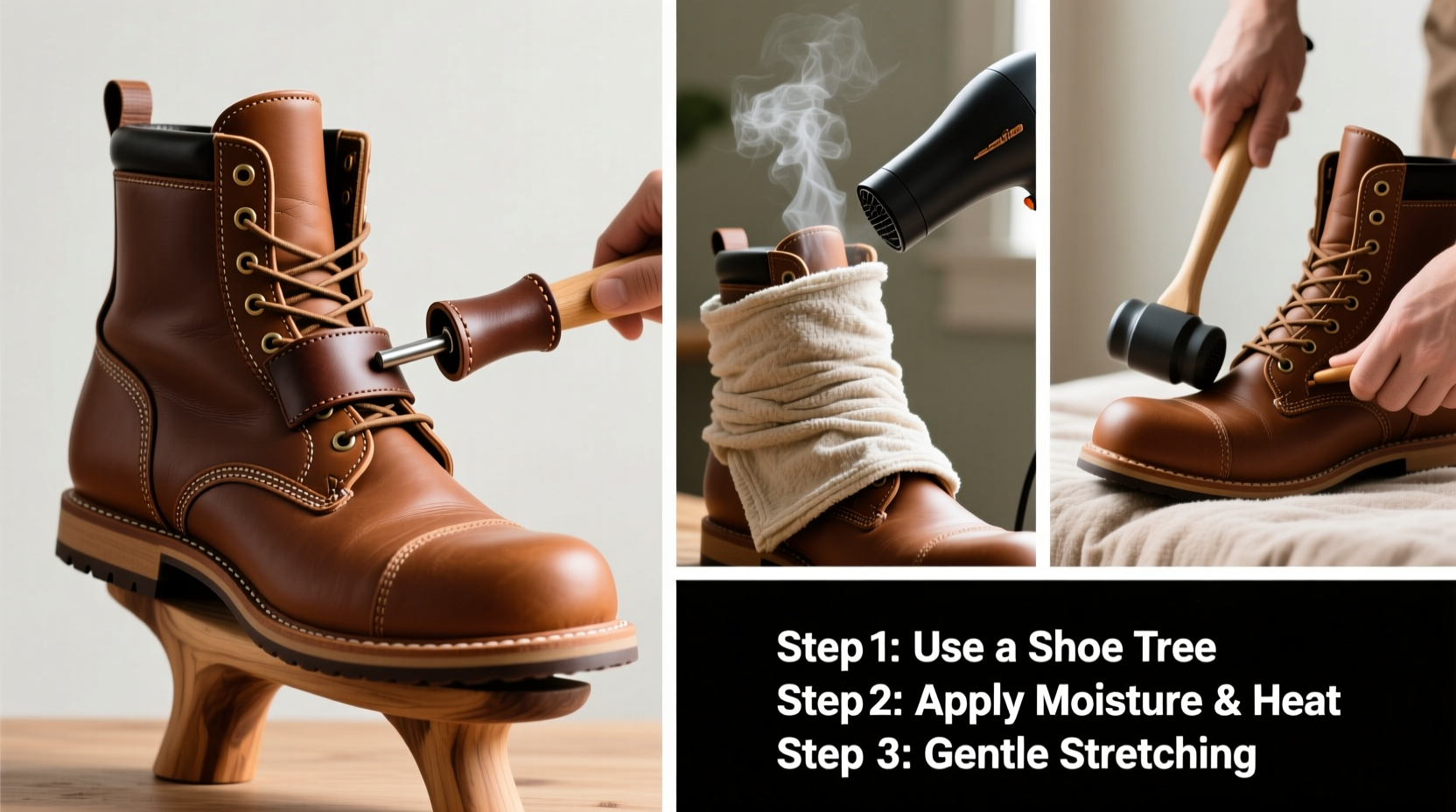
Leather is a natural material composed of interwoven fibers that respond to moisture, heat, and pressure. When boots are manufactured, the leather is shaped and dried into form, which locks in some rigidity. This initial stiffness is normal, particularly in full-grain or top-grain leathers known for their strength and longevity.
Unlike synthetic materials, genuine leather has the ability to expand slightly under controlled conditions. It does not “stretch” like fabric, but rather relaxes and molds as its fibers loosen. This means targeted stretching is possible, especially in areas under consistent pressure such as the instep or toe box. However, over-stretching or using aggressive methods can lead to permanent distortion, creasing, or weakening of seams.
“Leather has memory, but also flexibility. Gentle, repeated stress combined with moisture allows it to adapt without tearing.” — Marcus Langford, Shoemaking Instructor at the London Academy of Feet
Understanding this balance is essential. Effective stretching works with the material’s properties, not against them. Rushing the process with excessive heat or force may create slack in one area while damaging another. The goal is uniform expansion where needed, maintaining the boot’s support and aesthetic.
Safe & Effective Home Stretching Methods
You don’t need specialized equipment to begin stretching leather boots. Many household items can be used creatively and effectively. Below are five proven techniques, each suitable for different levels of tightness and boot construction.
1. The Frozen Water Bag Method
This technique uses water expansion to gently push out tight areas. As water freezes, it expands by approximately 9%, applying steady outward pressure inside the boot.
- Fill two sturdy plastic freezer bags with water (one for each boot).
- Insert a bag into the toe area of each boot, ensuring it fills the narrowest section.
- Seal the bags securely and place the boots upright in the freezer.
- Leave for 8–12 hours, or until the water is fully frozen.
- Remove boots, let ice melt slightly, then drain and dry thoroughly.
Repeat if necessary. This method is ideal for localized toe tightness and avoids direct heat exposure.
2. Heat + Wear Technique
Applying low heat softens leather fibers, making them more pliable. Combine this with body heat and movement for dynamic stretching.
- Put on thick socks or multiple layers of regular socks.
- Use a hairdryer on medium heat to warm the tight areas of the boot for 30–60 seconds.
- Immediately put the boots on and walk around for 20–30 minutes.
- Allow boots to cool while still on your feet to set the new shape.
This mimics the natural break-in process but accelerates it. Avoid high heat, which can dry out or crack leather.
3. Alcohol and Conditioner Rub
A mixture of rubbing alcohol and leather conditioner temporarily breaks down surface tension in leather, allowing it to stretch more easily under pressure.
| Mixture Ratio | Application Method | Expected Outcome |
|---|---|---|
| 1:1 rubbing alcohol to leather conditioner | Apply with soft cloth to interior pinch points | Softens leather; enhances flexibility during wear |
| Diluted isopropyl alcohol (70%) only | Spot test first; apply sparingly to exterior for slight expansion | Minor surface relaxation; not for frequent use |
After application, wear the boots with thick socks for at least 30 minutes. Follow up with a full conditioning treatment after 24 hours to restore moisture.
4. Use of a Shoe Stretch Spray
Commercial shoe stretch sprays contain solvents and moisturizers designed specifically for leather. While store-bought, they are simple to use at home and highly effective.
- Clean the boots’ surface with a damp cloth and let dry.
- Spray the interior focusing on tight zones (instep, sides, heel collar).
- Wear the boots with thick socks immediately for 30–60 minutes.
- Let boots air-dry naturally away from direct heat.
Most sprays require 1–3 applications for noticeable results. Choose alcohol-free formulas when possible to minimize drying.
5. The Potato Trick for Toe Box Expansion
An old cobbler’s secret, this method uses a raw potato to gradually stretch the toe area.
- Peel a large russet potato.
- Force it into the toe of the boot until snug.
- Leave for 24–48 hours.
As the potato dries, it absorbs moisture from the surrounding air—and very slightly from the leather—while maintaining outward pressure. It’s a slow, gentle way to open cramped toe boxes without cracking the upper.
What Not to Do: Common Mistakes That Damage Leather
While the desire for quick relief is understandable, certain practices can permanently ruin leather boots. Avoid these pitfalls:
| Don’t | Why It’s Harmful | Do Instead |
|---|---|---|
| Use boiling water | Causes leather to warp, shrink, or delaminate | Use lukewarm water in sealed bags |
| Leave boots in direct sunlight or near heaters | Dries out leather, leads to cracking | Use moderate hairdryer heat briefly |
| Overuse alcohol-based products | Strips natural oils, weakens fibers | Limited use followed by conditioning |
| Force stretch with oversized shoe trees | Distorts shape, bulges sidewalls | Use adjustable stretchers with gradual expansion |
Leather responds best to consistency, not intensity. Aggressive tactics may yield fast results but often shorten the lifespan of your boots significantly.
Step-by-Step Weekly Break-In Plan
For best results, combine multiple methods over time. Here’s a realistic 14-day plan to stretch tight leather boots safely:
- Day 1: Clean boots with a leather wipe. Apply conditioner and let absorb overnight.
- Day 2: Perform the frozen water bag method. Leave in freezer overnight.
- Day 3: Dry boots completely. Wear with thick socks for 1 hour.
- Day 4: Use shoe stretch spray on interior pressure points. Walk in boots 30 minutes.
- Day 5: Insert raw potatoes into toe boxes. Leave 48 hours.
- Day 7: Remove potatoes. Condition leather again.
- Day 8: Repeat heat + wear method: warm tight spots, wear 45 minutes.
- Day 10: Try the alcohol-conditioner rub on stubborn areas. Wear with socks.
- Day 12: Assess fit. If still tight, repeat frozen bag or spray treatment.
- Day 14: Final conditioning. Wear normally with regular socks.
This gradual approach prevents shock to the leather and aligns with its natural adaptation cycle. Most users report significant improvement within two weeks.
Real Example: Breaking In Work Boots
James, a landscape technician from Oregon, purchased a new pair of full-grain leather work boots for winter use. Within two days, he developed blisters along the ankle collar and felt compression across his forefoot. Rather than returning them, he decided to try home stretching methods.
He started with the frozen water bag technique, targeting the toe box. After two cycles, he noticed slight improvement but still had heel slippage and tightness on the top of his foot. He then applied a 1:1 mix of rubbing alcohol and mink oil to the instep, wore the boots with wool socks while using a hairdryer intermittently, and walked for 20 minutes daily.
By day ten, the boots flexed naturally with his stride. After two weeks, he was able to wear them all day without discomfort. “I saved $180 and kept a durable pair I really liked,” James said. “Taking it slow made all the difference.”
Checklist: How to Safely Stretch Leather Boots at Home
- ✅ Clean boots before starting any stretching method
- ✅ Identify exact pressure points (toe, instep, heel, etc.)
- ✅ Use moisture-based methods like frozen water bags or potatoes
- ✅ Apply heat gently and briefly with a hairdryer
- ✅ Condition leather every 2–3 days during the process
- ✅ Avoid boiling water, radiators, and excessive alcohol
- ✅ Test chemical solutions on a small hidden area first
- ✅ Wear thick socks during stretching sessions
- ✅ Allow boots to rest and dry naturally between treatments
- ✅ Stop if you notice cracking, warping, or seam separation
Frequently Asked Questions
Can I stretch leather boots more than one size?
Generally, leather boots can be stretched about half a size comfortably. Attempting to go a full size larger risks distorting the sole, breaking glue bonds, or creating loose, unstable areas. If you're more than half a size too small, consider exchanging them.
How long does it take to stretch leather boots?
With consistent effort, most people see noticeable improvement within 7–14 days. Full adaptation may take up to three weeks, depending on leather thickness and method used. Patience yields better results than rushing.
Should I use a shoe stretcher instead of DIY methods?
Shoe stretchers are effective, especially adjustable ones with targeted toe or side knobs. They’re a worthwhile investment for frequent boot wearers. However, DIY methods work well for occasional use and are far more affordable.
Final Thoughts: Comfort Meets Longevity
Stretching tight leather boots doesn’t have to mean sacrificing quality for comfort. By using smart, incremental techniques, you preserve the material’s strength while shaping it to your foot. The key is consistency, moisture control, and avoiding extreme temperatures.
Every pair of leather boots tells a story—one that begins with a little friction but evolves into a perfect fit. With the methods outlined here, you’re not just relieving discomfort; you’re extending the life of a valuable piece of footwear. Whether you choose the simplicity of a potato or the precision of a stretch spray, what matters most is treating the leather with respect.




 浙公网安备
33010002000092号
浙公网安备
33010002000092号 浙B2-20120091-4
Comments
No comments yet. Why don't you start the discussion?