
In the persistent world of Aeternum, survival isn’t just about combat prowess or gear progression—true power lies in economic influence. Whether you're a fresh settler or a seasoned veteran, mastering the in-game economy is essential for acquiring top-tier gear, housing, and long-term dominance. Unlike traditional MMOs where gold sinks dominate, New World rewards active participation in trade, crafting, and resource control. The players who thrive are not always those with the best reflexes, but those who understand how to generate consistent, scalable income.
This guide breaks down actionable, battle-tested methods to boost your gold per hour, reduce waste, and position yourself advantageously in regional markets. These strategies apply regardless of your playstyle—whether you prefer solo grinding, group PvE, or territorial warfare.
1. Master Gathering & Resource Flipping
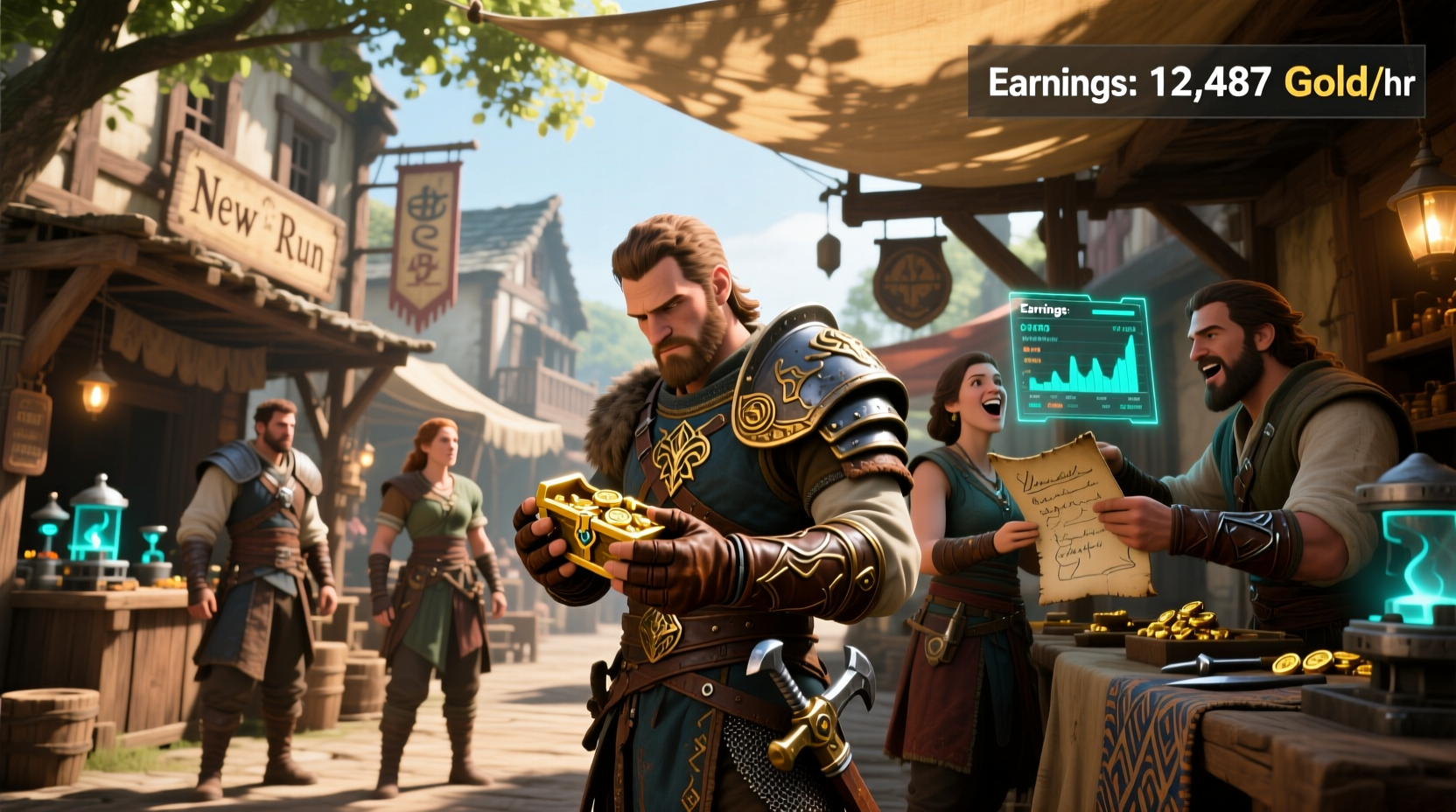
The foundation of wealth in New World begins with gathering. Ore, wood, fiber, hide, and stone are in constant demand for crafting armor, weapons, tools, and consumables. However, simply gathering and selling raw materials at vendor price won’t yield substantial returns. The key is strategic harvesting and market arbitrage.
Each region specializes in certain high-tier resources. For example, Windsward excels in Frostwood and Iron, while Reekwater produces abundant Silversap and Flint. Identify which rare nodes spawn frequently in low-population zones, farm them during off-peak hours, and sell in high-demand hubs like Restless Shores or Monarch’s Bluffs.
Use the in-game marketplace to compare buyout prices across settlements. A stack of 200 Iron Ore might sell for 1,200 coins in one town but fetch 2,100 in another due to local crafting surges. This price gap is where profit lives.
Optimal Gathering Rotation Example
- Start in Windsward (Iron/Frostwood) — 45 minutes
- Ferry to Monarch’s Bluffs — 10 minutes
- Sell high-value goods, check market trends — 10 minutes
- Travel to Reekwater (Silversap/Flint) — 30 minutes
- Repeat cycle or switch based on real-time pricing
2. Dominate Crafting for Maximum ROI
Crafting isn’t just a side activity—it’s a primary engine of wealth. High-level gear crafted with optimized refinement paths can return 3x–5x the investment when sold on the market. Focus on high-turnover items: weapons, armor, and consumables like potions and repair hammers.
Begin by leveling up two complementary tradeskills. Armorsmith + Miner provides full control over heavy armor production. Weaponsmith + Logger enables efficient weapon crafting. Alchemist + Botanist dominates potion sales, especially during faction wars when healing and buff potions spike in demand.
| Crafting Path | Starter Investment (Coins) | Avg. Sell Price (Coins) | Profit Margin |
|---|---|---|---|
| Level 50 Iron Sword (Refined Steel) | 8,500 | 14,200 | +67% |
| Greater Healing Potion x20 | 6,300 | 11,800 | +87% |
| Reinforced Chain Legs (Steel) | 9,100 | 15,500 | +70% |
Always craft using refined materials when possible. Refined Steel sells for more than raw iron ore *and* yields better gear. The refining step adds value at every stage.
“Players who treat crafting as an investment, not a chore, consistently out-earn dungeon farmers.” — Kaelen Moss, New World Economy Analyst
3. Leverage Company Ownership & Territory Control
Joining or founding a company unlocks access to territory management, which is central to passive income. Controlling a settlement grants daily tax revenue from market transactions, extracted directly from all sales within that zone.
If your company holds a major trade hub like Everfall or Bridgewatch, even a modest 2% tax can generate thousands of gold daily. More importantly, it allows you to influence regional pricing and prioritize your own listings.
Mini Case Study: The Rise of House Valenar
In early 2023, a mid-sized company, House Valenar, secured control of Windsward. Rather than focusing solely on PvP defense, they invested in placing 12 market boards and maximizing their tax rate. They also launched an internal “crafting guild” incentivized with shared profits. Within six weeks, individual members averaged 50k+ gold per week from tax dividends and coordinated sales, far surpassing solo earners in the same tier.
4. Optimize Market Timing & Flipping Strategy
Timing is everything. Prices fluctuate based on server events, reset cycles, and player behavior. Use these patterns to your advantage:
- Weekend spikes: PvP activity increases Friday evening through Sunday. Demand for repair kits, food, and potions rises 40–60%.
- Tuesday resets: Daily quests and expeditions refresh. Raw material prices dip early week as gatherers flood the market, then climb by Thursday.
- War Declarations: Monitor the campaign map. When war is declared on a territory, stockpile siege weapons and healing potions—they often sell for 3x normal price during assaults.
Do’s and Don’ts of Market Flipping
| Do | Don't |
|---|---|
| Buy low on Tuesday, sell high on Friday | Leave items listed indefinitely without adjusting price |
| Track 3–5 core commodities consistently | Try to flip every rare item—focus on volume and turnover |
| Use multiple characters on same account to move goods | Ignore listing fees—factor them into profit calculations |
5. Build a Sustainable Income Checklist
Wealth in New World isn’t built overnight. It requires routine, discipline, and adaptability. Follow this checklist weekly to stay ahead:
- ✅ Gather at least 3,000 units of primary resource (ore, wood, etc.)
- ✅ Craft and list 3–5 batches of high-demand gear or consumables
- ✅ Check market prices in 2–3 major hubs daily
- ✅ Refine excess raw materials into higher-tier components
- ✅ Participate in at least one faction mission or expedition for bonus loot
- ✅ Deposit profits into secure storage or invest in housing/blueprints
Consistency compounds. A player earning 15k gold daily may seem modest, but that’s over 450k monthly—enough to buy legendary gear, upgrade homes, and fund company operations.
FAQ
Can I make good money without joining a company?
Yes, but with limitations. Solo players can earn well through crafting and flipping, but miss out on tax revenue and coordinated market control. For maximum scalability, align with a stable company eventually.
What’s the fastest way to reach 100k gold?
The quickest path combines weekend PvP looting, crafting Greater Fortitude potions (high demand), and selling rare drops on the market. Focus on high-margin, fast-turnover items rather than slow farming.
Are there risks in investing heavily in the market?
Absolutely. Overstocking on niche items can lead to stagnant inventory. Always diversify and avoid putting more than 30% of your capital into a single product. Market crashes do happen after major patches or balance changes.
Conclusion
Maximizing earnings in New World isn’t about luck—it’s about strategy, timing, and execution. From precise gathering routes to smart crafting investments and territorial influence, every decision shapes your financial trajectory. The most successful players aren’t just strong in combat; they’re shrewd operators who treat Aeternum like a living economy.




 浙公网安备
33010002000092号
浙公网安备
33010002000092号 浙B2-20120091-4
Comments
No comments yet. Why don't you start the discussion?