
Ceramic vases are more than decorative objects—they often carry emotional value, historical significance, or artistic merit. Whether inherited, collected, or gifted, these delicate pieces demand thoughtful care to withstand the test of time. Despite their sturdy appearance, ceramics are vulnerable to thermal shock, physical impact, moisture, and environmental wear. With the right preventive strategies, however, you can preserve their beauty and structural integrity for decades.
1. Handle with Intention: Safe Practices for Daily Use
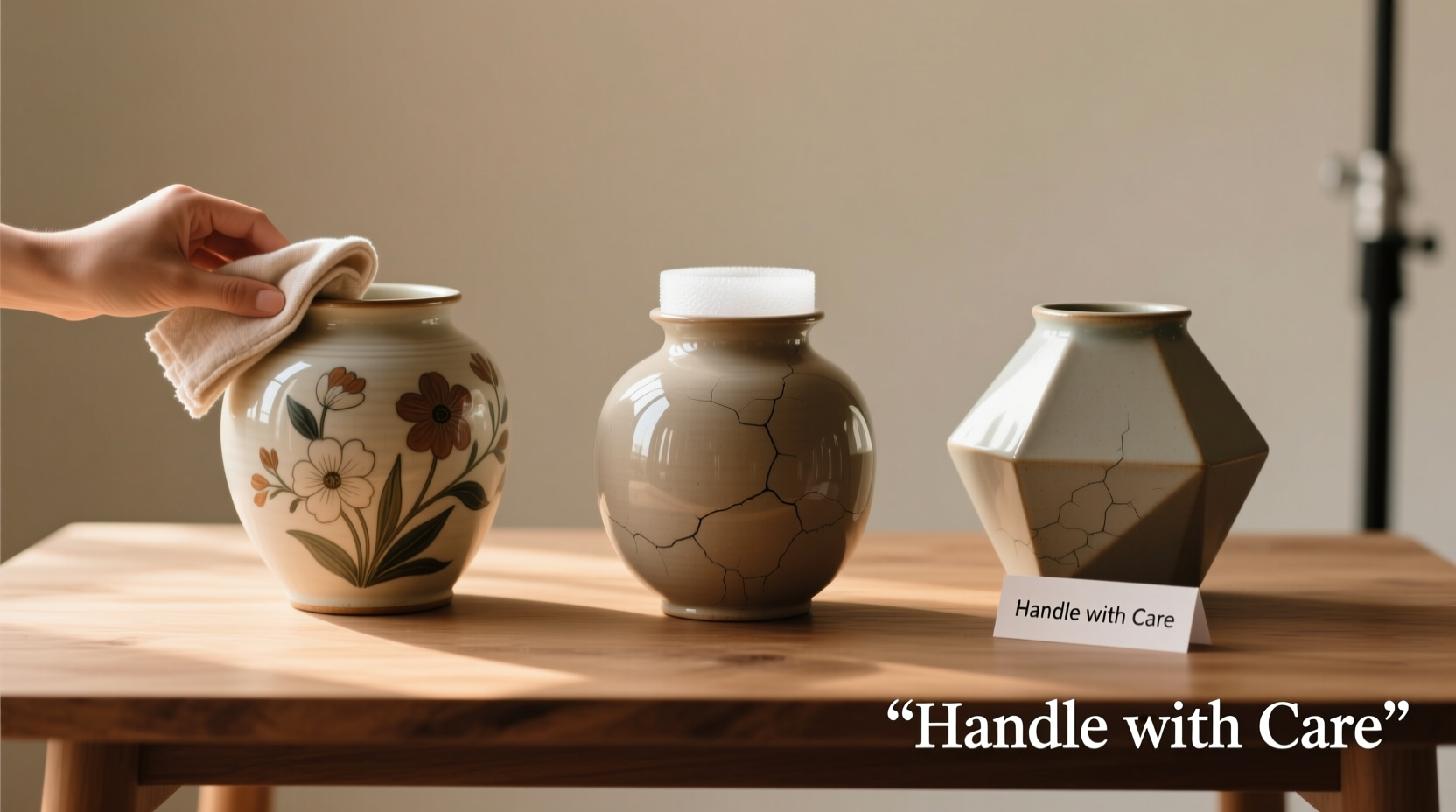
The most common cause of ceramic vase damage is mishandling. Even minor drops or abrupt movements can result in chips, cracks, or complete breakage. Always lift a vase with two hands—one supporting the base, the other cradling the body—never by the neck or rim. Avoid wearing loose jewelry or using slippery gloves that could catch or reduce grip.
When moving a vase from one room to another, clear your path first and walk slowly. If transporting over long distances, wrap it properly (see storage section) and use a secure container. Never stack vases directly on top of each other, even briefly.
2. Clean Gently: Effective Methods Without Risk
Regular dusting prevents grime buildup but requires care. Use a soft microfiber cloth or a natural-bristle brush to remove surface particles. For deeper cleaning, avoid soaking unless absolutely necessary. Most ceramic glazes resist water, but porous unglazed areas—especially at the base—can absorb moisture, leading to staining or weakening over time.
If washing is required, use lukewarm water and a few drops of mild dish soap. Never use abrasive sponges, steel wool, or harsh chemicals like bleach or ammonia. Rinse thoroughly and dry immediately with a lint-free towel. Let the vase air-dry completely before storing or displaying.
For antique or hand-painted vases, consult a conservator before any cleaning. Some finishes degrade with even minimal exposure to soap or moisture.
“Improper cleaning accounts for nearly 30% of preventable ceramic damage in home collections.” — Dr. Lena Reyes, Museum Conservator at the National Decorative Arts Institute
3. Optimize Display Conditions: Environmental Protection
Where you place a ceramic vase matters as much as how you handle it. Direct sunlight accelerates fading of pigments and can create uneven temperature zones that stress the material. UV rays also degrade organic components in some glazes or underglaze decorations.
Avoid placing vases near radiators, fireplaces, air conditioning vents, or drafty windows. Rapid temperature changes cause expansion and contraction, which over time leads to hairline cracks—a phenomenon known as “crazing.” Humidity levels above 65% encourage mold growth on unglazed surfaces and can corrode metal mounts or gilding.
| Factor | Ideal Condition | Risks of Poor Control |
|---|---|---|
| Temperature | 65–72°F (18–22°C) | Cracking from thermal shock |
| Humidity | 45–55% | Mold, staining, glaze deterioration |
| Light Exposure | Low to moderate, UV-filtered | Fading, pigment breakdown |
| Air Quality | Low dust, no pollutants | Surface erosion, soiling |
Consider rotating displayed vases every few months to limit prolonged exposure. Use display cabinets with glass doors for added protection against dust and accidental bumps.
4. Store Smart: Long-Term Preservation Techniques
When not on display, proper storage is critical. Wrap each vase individually in acid-free tissue paper, then place it in a rigid box lined with foam or bubble wrap. Avoid using newspaper—it contains ink that can transfer, and its acidity may affect surfaces over time.
Store boxes upright on stable shelves, away from foot traffic. Never place heavy items on top. Basements and attics are poor choices due to fluctuating temperatures and humidity. Instead, opt for interior closets or climate-controlled storage rooms.
For vases with removable parts (like lids), store them separately but labeled together to avoid pressure points. Use silica gel packets inside storage containers to regulate moisture—but never let them touch the ceramic surface directly.
Step-by-Step: Preparing a Vase for Storage
- Clean and fully dry the vase.
- Wrap in acid-free tissue, focusing on protruding details.
- Place in a custom-fit box with cushioned base and sides.
- Add a desiccant packet (not touching the vase).
- Label the box clearly: “Fragile – Ceramic – This Side Up”.
- Store in a cool, dark, low-humidity area off the floor.
5. Address Common Threats: Real-Life Scenarios and Solutions
Damage often occurs during routine activities. Consider this real example: A homeowner placed a large ceramic vase on a narrow console table near a frequently used doorway. One evening, while walking past with a laundry basket, her elbow grazed the vase. It fell and shattered against the hardwood floor.
The issue wasn’t clumsiness—it was placement. High-traffic areas increase collision risk. The solution? Relocate the vase to a wall shelf out of reach, or install a small barrier like a plant stand or bench to create buffer space.
Another common scenario involves seasonal decoration. Some people fill ceramic vases with fresh flowers weekly. While beautiful, this introduces moisture, sap, and stem residue that seep into pores or stain interiors. To enjoy both flowers and preservation, insert a glass or plastic liner inside the vase instead of arranging stems directly in the ceramic.
Ceramic Vase Care Checklist
- ✔ Dust regularly with a soft cloth
- ✔ Use two hands when lifting or moving
- ✔ Keep away from direct sunlight and heat sources
- ✔ Maintain stable humidity and temperature
- ✔ Store wrapped in acid-free materials, upright
- ✔ Avoid stacking or overcrowding shelves
- ✔ Use liners when displaying fresh flowers
- ✔ Inspect periodically for cracks or stains
- ✔ Photograph valuable pieces for records
- ✔ Consult a conservator before deep cleaning antiques
Frequently Asked Questions
Can I put water in my ceramic vase permanently?
No. Even glazed ceramics can develop micro-leaks over time, especially if unglazed at the base. Standing water promotes mold, weakens structural integrity, and may stain porous clay. Empty and dry the vase within 24 hours of use.
What should I do if my vase gets a small chip?
Stop using it immediately to prevent further cracking. For minor damage, clean the area gently and consider professional restoration. DIY repair kits exist, but improper adhesives can yellow or weaken the piece. Always photograph the damage before attempting fixes.
Are all ceramic vases dishwasher-safe?
No. Most decorative and handmade ceramic vases are not designed for dishwashers. The high heat, strong detergents, and mechanical agitation can erode glazes and loosen bonds. Only machine-wash if explicitly labeled as safe—and even then, use a gentle cycle with cold water.
Conclusion: Preserve Beauty Through Mindful Care
Ceramic vases endure for generations when treated with respect and consistency. Their longevity isn’t determined by luck but by deliberate choices in handling, environment, and maintenance. By integrating these proven strategies—gentle cleaning, smart placement, careful storage, and proactive monitoring—you protect not just an object, but a legacy.
Start today: inspect your displayed vases, adjust risky placements, and update your cleaning tools. Small actions compound into lasting preservation. Every vase has a story; make sure yours continues to tell it for years to come.




 浙公网安备
33010002000092号
浙公网安备
33010002000092号 浙B2-20120091-4
Comments
No comments yet. Why don't you start the discussion?