
The mid-2010s marked a pivotal moment in gaming history. As the dust settled on the PS3 and Xbox 360 era, Sony and Microsoft entered a new battleground: the eighth generation of consoles. The PlayStation 4 and Xbox One weren’t just machines for playing games—they represented divergent philosophies about entertainment, community, and the future of interactive media. Now, nearly a decade later, it’s time to look back. Did consumers make the right choice? Was the market’s overwhelming preference for the PS4 justified? Or did the Xbox One offer a more forward-thinking vision that was simply ahead of its time?
Performance and Hardware Design
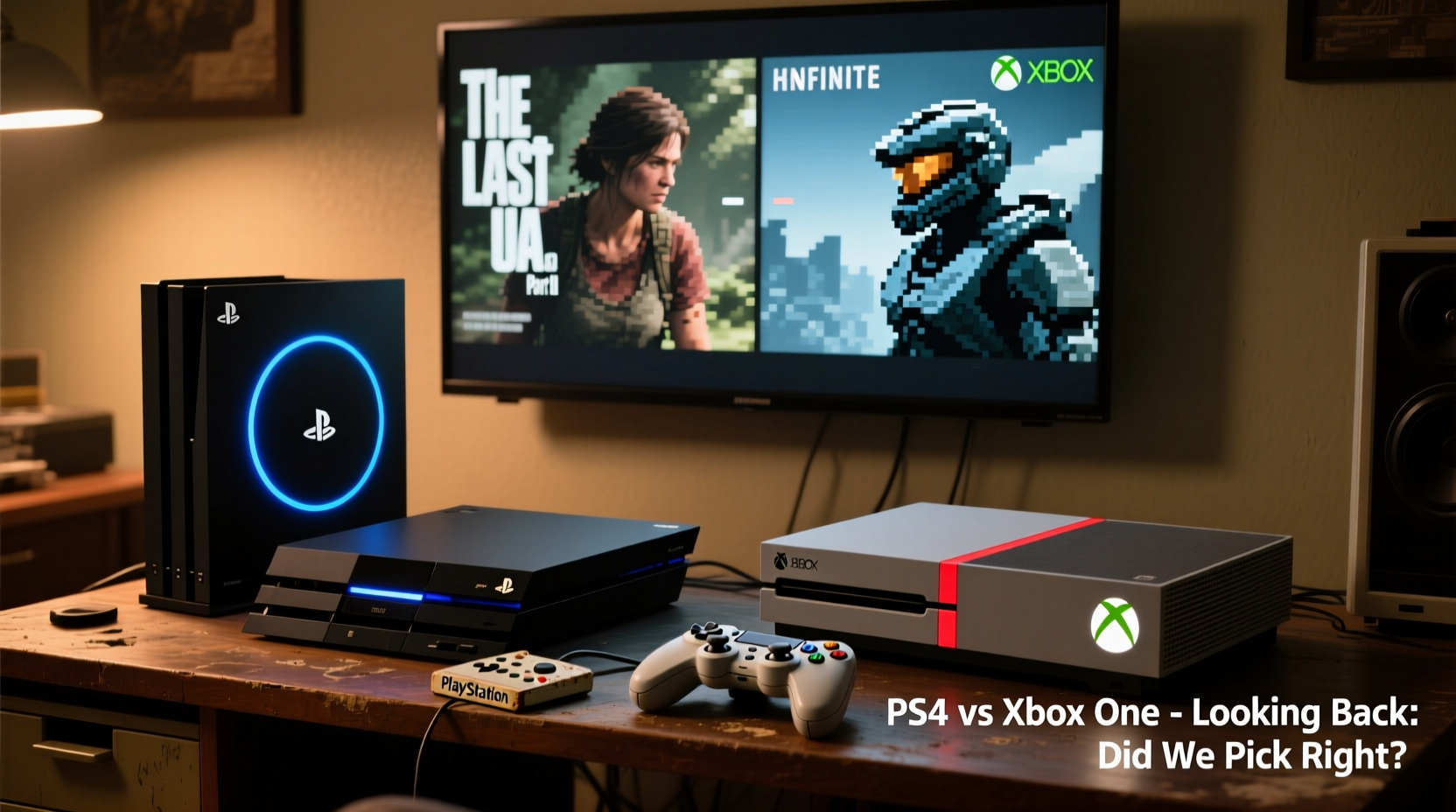
From day one, the PS4 had a clear edge in raw power. With an 8-core AMD Jaguar CPU and a stronger GPU than the Xbox One, it consistently delivered higher frame rates and better resolutions in multi-platform titles. Games like Infamous Second Son, Shadow of Mordor, and Dragon Age: Inquisition ran smoother and looked sharper on the PS4, often by a noticeable margin.
The Xbox One, meanwhile, launched with a focus on integration. It included an HDMI input for cable boxes, voice commands via Kinect, and deeper media functionality. While technically sound, its weaker GPU and slower memory bandwidth put it at a disadvantage in game performance—a fact developers quickly exploited by optimizing first for PS4.
Exclusive Titles and Franchise Momentum
If performance was the PS4’s early advantage, exclusives were its knockout punch. Sony leaned heavily into its first-party studios, delivering a relentless stream of critically acclaimed titles: The Last of Us Remastered, Uncharted 4, God of War (2018), Spider-Man, Horizon Zero Dawn, and Ghost of Tsushima. These weren’t just hits—they became cultural touchstones.
Microsoft, in contrast, struggled to maintain momentum. While franchises like Halo and Gears of War remained strong, they lacked the frequency and freshness of Sony’s output. The acquisition of studios like Mojang (Minecraft) helped, but it wasn’t until late in the generation that Microsoft began rebuilding its exclusive pipeline with titles like Sunset Overdrive and ReCore.
“We doubled down on narrative-driven, character-focused experiences because we believed players wanted more than spectacle—they wanted meaning.” — Shawn Layden, Former Chairman of SIE Worldwide Studios
Market Reception and Sales Reality
Sales don’t lie. By the end of the generation, the PS4 had sold over 117 million units, compared to the Xbox One’s estimated 58 million. That gap reflects more than marketing—it reflects consumer satisfaction, developer support, and ecosystem strength.
Several factors contributed to this disparity:
- Pricing: The PS4 launched at $399, while the Xbox One debuted at $499 with mandatory Kinect inclusion.
- Digital Rights Management (DRM): Microsoft’s initial policy requiring daily online checks and restrictions on used games sparked immediate backlash. Though reversed, the damage was done.
- Perception: The PS4 was seen as a gamer-first machine; the Xbox One, initially, as an all-in-one entertainment hub.
Console Comparison Table: PS4 vs Xbox One (Launch Specs & Key Features)
| Feature | PlayStation 4 | Xbox One |
|---|---|---|
| Launch Price | $399 | $499 |
| GPU (TFLOPS) | 1.84 | 1.31 |
| RAM | 8GB GDDR5 | 8GB DDR3 + 32MB ESRAM |
| Kinect/Peripherals | Optional camera | Mandatory at launch |
| Used Game Support | Unrestricted | Initially restricted |
| Final Sales (Approx.) | 117 million | 58 million |
Ecosystem and Long-Term Vision
Where the PS4 excelled in exclusives and performance, the Xbox One quietly laid groundwork for the future. Its emphasis on cloud integration, backward compatibility, and digital ecosystems foreshadowed Microsoft’s eventual shift toward Game Pass and platform-agnostic play.
Xbox Game Pass, launched in 2017, revolutionized how people access games. For a flat monthly fee, users could play hundreds of titles—including day-one first-party releases. This model, unthinkable in the PS4’s peak years, has since influenced the entire industry.
Sony, by comparison, doubled down on premium single-player experiences and monetization through DLC and microtransactions. While profitable, this approach left some players feeling priced out as game costs rose beyond $60.
Mini Case Study: Alex’s Console Dilemma (2013–2020)
Alex, a college student in 2013, had $400 to spend on a new console. He loved Call of Duty and Battlefield, but also valued story-driven games like The Last of Us. After researching both systems, he chose the PS4 due to its lower price and stronger indie and third-party support. Over the next seven years, he accumulated 45 games, most bought at launch. By 2020, he felt his library was rich but expensive. When the Xbox Series X launched with Game Pass, he purchased one too—finally gaining access to titles he’d missed, like Hi-Fi Rush and Forza Horizon 5, for a fraction of the cost. “I picked the right console for 2013,” he said, “but Xbox built the future I actually wanted.”
What We Got Right—and What We Missed
In hindsight, the PS4 was the safer, more satisfying choice for most gamers in 2013. It delivered polished hardware, a robust game library, and a clear identity. But the Xbox One’s early missteps obscured a longer-term strategy that would eventually redefine value in gaming.
Microsoft learned from its mistakes. They dropped Kinect, embraced used games, improved online services, and invested heavily in cloud gaming and subscription models. Sony, while dominant, has been slower to adapt—only launching its own Game Pass rival, PlayStation Plus Premium, years later, with mixed reception.
Checklist: How to Evaluate a Console Generation in Retrospect
- Compare launch pricing and value proposition
- Analyze exclusive title quality and release cadence
- Assess third-party developer support and optimization
- Evaluate online services (matchmaking, parties, store)
- Consider backward compatibility and legacy support
- Review long-term ecosystem growth (subscriptions, cloud, cross-play)
- Measure user satisfaction through reviews and community sentiment
Frequently Asked Questions
Was the Xbox One really less powerful than the PS4?
Yes. Despite similar architectures, the PS4’s superior GPU and unified GDDR5 memory allowed for better texture streaming, higher resolutions, and more stable frame rates in multi-platform games. The difference was especially visible in titles like Destiny and Watch Dogs.
Did Xbox One’s DRM policies really kill its launch?
Effectively, yes. The requirement for daily online checks and restrictions on used games triggered massive backlash. Even after Microsoft reversed the policy, the perception of Xbox as “anti-consumer” lingered, giving PS4 a critical head start in trust and goodwill.
Can you still enjoy either console today?
Absolutely. Both systems are fully supported with online multiplayer, though Sony has begun phasing out older servers. The PS4 remains a capable machine for accessing the vast PSN library, while the Xbox One benefits from backward compatibility with select Xbox 360 and original Xbox titles—plus full integration with Game Pass.
Conclusion: Picking the Right Console Wasn’t Just About Specs
The PS4 vs Xbox One debate isn’t just about teraflops or sales numbers. It’s about what gamers valued at a turning point in the industry. The PS4 won the generation by listening to core gamers—delivering power, exclusives, and freedom. The Xbox One lost the battle but may yet win the war, having pioneered a sustainable, accessible model for game ownership in the streaming age.
So, did we pick the right console? For most, yes—the PS4 was the better choice in 2013. But the real lesson is this: loyalty should be earned, not assumed. As the industry shifts toward services and subscriptions, the definition of “value” is changing. The next generation isn’t about who has the best hardware—it’s about who gives players the most freedom.




 浙公网安备
33010002000092号
浙公网安备
33010002000092号 浙B2-20120091-4
Comments
No comments yet. Why don't you start the discussion?