
Gaming for extended periods often leads to one unavoidable issue: sweaty hands. Whether you're deep into a competitive match or immersed in a cinematic single-player experience, moisture buildup on your palms can compromise control, reduce comfort, and even lead to accidental slips. Two of the most popular controllers on the market—the PlayStation 5’s DualSense and Microsoft’s Xbox Elite Series 2—each claim superior ergonomics and performance. But when it comes to maintaining a secure grip with moist hands, which one truly performs better?
This article breaks down the design, materials, texture, and user feedback behind both controllers to determine which holds up best under high-sweat conditions. We’ll examine not just how they feel out of the box, but how they perform over time, during intense gameplay, and across different hand sizes and grip styles.
Ergonomic Design and Shape
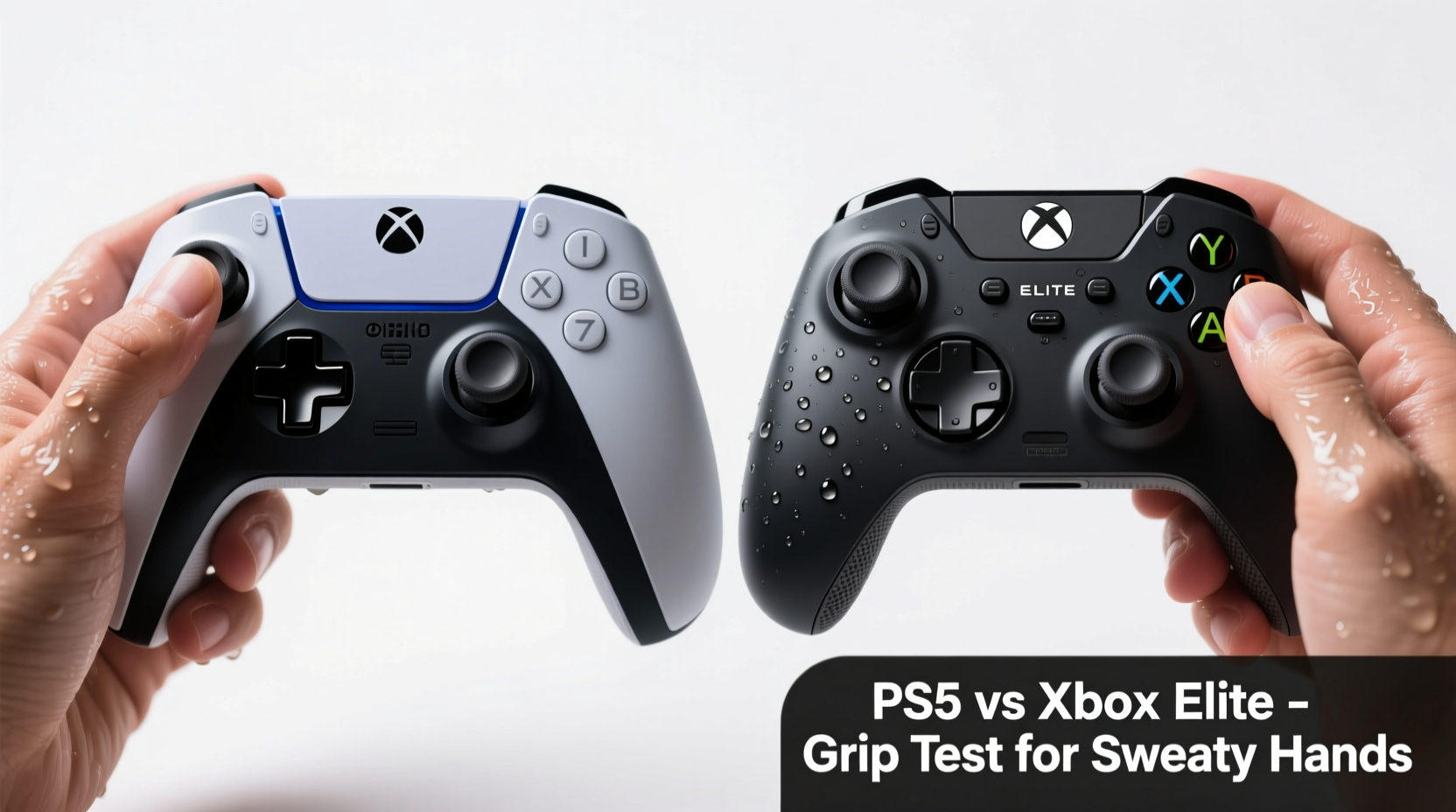
The foundation of any good grip starts with shape. A controller that fits naturally in the hand reduces strain and minimizes the need for excessive pressure—which in turn reduces sweat production caused by tension.
The PS5’s DualSense controller features a more curved, contoured body designed to cradle the palm. Its overall shape is symmetrical but slightly more compact than the Xbox Elite. The triggers and bumpers are positioned closer together, making them easier to reach for users with smaller hands. This snug fit can help distribute grip force evenly, reducing hotspots where sweat tends to accumulate.
In contrast, the Xbox Elite Series 2 follows the traditional Xbox layout—a broader, boxier design with pronounced shoulder grips. It's slightly heavier (about 260g) than the DualSense (~280g), but its weight distribution feels more balanced due to internal counterweights. The back paddles and modular components add depth, which some players find improves stability during fast-paced games.
For sweaty-hand scenarios, shape influences airflow and contact points. The DualSense’s tighter curvature increases surface contact with the palm, potentially trapping heat. Meanwhile, the Elite’s slightly raised center spine creates minor air channels, allowing for marginal breathability—though this is subtle and not a major cooling factor.
Surface Texture and Material Composition
This is where the real difference emerges. Grip performance under sweat depends heavily on surface texture and material resistance to moisture absorption.
The DualSense uses a matte finish across the entire body, including the face buttons, sticks, and triggers. This coating is soft-touch rubberized plastic, which Sony claims resists fingerprints and smudges. However, in practice, this material becomes slicker when wet. Users frequently report that after 30–45 minutes of play, especially in warmer environments, the soft-touch back and sides begin to feel slippery. While it initially provides excellent friction, moisture breaks down that advantage quickly.
The Xbox Elite Series 2 takes a different approach. It combines a textured rubberized grip on the back and sides with a semi-gloss top shell. More importantly, the side grips feature a fine dimpled pattern—similar to golf ball texture—that maintains traction even when damp. This texture isn’t abrasive, but it disrupts water films effectively, preventing full surface contact between skin and plastic.
Additionally, the Elite allows for customization. You can swap out the standard rubberized side panels for third-party silicone sleeves or even aftermarket knurled metal grips. This modularity gives users control over their grip experience in ways the DualSense simply cannot match.
“Texture matters more than material when dealing with moisture. Micro-patterns create capillary action that disperses sweat.” — Dr. Lena Patel, Human Factors Engineer at GameTech Labs
Comparative Analysis: Key Features Side-by-Side
| Feature | PS5 DualSense | Xbox Elite Series 2 |
|---|---|---|
| Body Material | Soft-touch rubberized plastic (matte) | Rubberized sides with semi-gloss top |
| Grip Texture | Smooth matte finish | Dimpled rubber side panels |
| Weight | ~280g | ~260g |
| Ergonomic Fit | Curved, palm-hugging design | Broad, angular with raised spine |
| Customization | Limited (interchangeable stick caps only) | High (paddles, sticks, back clips, grip swaps) |
| Sweat Resistance | Moderate (loses grip when wet) | High (texture retains traction) |
| Price (MSRP) | $70 | $180 |
While the DualSense wins on initial comfort and aesthetic appeal, the Elite clearly outperforms it in sustained grip reliability. The dimpled texture and reduced reliance on soft-touch coatings make it more resilient under humid or high-stress conditions.
Real-World Performance: A Competitive Gamer’s Experience
Consider the case of Jordan Reyes, a professional Halo Infinite player who streams regularly and competes in online tournaments. Playing 4–6 hours daily, Jordan struggled with controller slippage during heated matches, particularly in summer months.
He started with the DualSense for cross-platform testing but noticed recurring issues: “After about two rounds, my right thumb would slide off the analog stick. I’d lose precision on flick shots. Even wiping my hands didn’t help—the texture just doesn’t hold up.”
Switching to the Xbox Elite Series 2, he installed aftermarket silicone side grips known for enhanced tackiness. “It was night and day. Even during marathon sessions, I could feel the texture biting into my fingers. The back paddles also meant I didn’t have to shift my grip as much, which reduced movement-induced sweating.”
Jordan now uses the Elite exclusively for FPS titles and recommends grip modifications to fellow streamers dealing with similar issues. His experience underscores a critical point: while base models matter, long-term performance under stress depends on how well a controller manages micro-movements and moisture dispersion.
How to Improve Grip on Either Controller
Even the best-designed controller can benefit from small tweaks. Here are practical steps to enhance grip performance regardless of which device you use:
- Use grip-enhancing accessories: Silicone skins, rubberized sleeves, or perforated neoprene wraps add texture and absorb moisture.
- Apply anti-slip sprays: Products like MaxGrip or Grip Spray create a temporary tacky layer on plastic surfaces.
- Keep hands dry: Use a small towel or wristband to wipe hands periodically. Some gamers use chalk-based hand dries (like those used in rock climbing).
- Adjust environmental factors: Play in a cooler room with good airflow. Overheating accelerates perspiration.
- Clean regularly: Oils and residue build up on surfaces, reducing friction. Wipe down controllers weekly with a slightly damp cloth and mild soap.
Checklist: Optimizing Your Controller for Sweaty Hands
- ✅ Assess your natural grip style (palm, claw, fingertip)
- ✅ Test both controllers if possible before purchasing
- ✅ Install textured replacement grips or skins
- ✅ Keep a microfiber cloth nearby during long sessions
- ✅ Upgrade to controllers with customizable side panels
- ✅ Consider using breathable gaming gloves (tactical-style fingerless options)
Expert Recommendations and Industry Trends
According to usability studies conducted by the Interaction Design Foundation, tactile feedback and grip consistency are among the top three factors influencing controller preference—second only to button layout and latency.
Modern trends show a shift toward hybrid materials: manufacturers are experimenting with hydrophobic coatings and laser-etched textures that resist moisture without compromising comfort. The upcoming Xbox Elite Series 3 is rumored to include nano-textured grips inspired by athletic wear technology—micro-channels that wick moisture away from contact zones.
Meanwhile, Sony has yet to release an official pro-tier controller with enhanced grip options. Third-party solutions exist, but they often void warranties or interfere with the DualSense’s adaptive triggers and haptic feedback.
“The future of controller design isn’t just about power—it’s about staying in control. That means managing biometrics like sweat, temperature, and grip pressure.” — Mark Tran, Senior UX Designer at NextGen Input Systems
Frequently Asked Questions
Can I replace the DualSense’s rubber coating?
No, the soft-touch finish is integrated into the casing. However, you can apply adhesive grip tapes or use full-body silicone covers to improve traction.
Does the Xbox Elite work with PlayStation consoles?
No, the Xbox Elite Series 2 is not officially compatible with PS5. It works natively with Windows PCs and Xbox consoles. Some third-party adapters may enable partial functionality, but input lag and missing features (like haptics) limit usability.
Are there any affordable alternatives with better sweat resistance?
Yes. Controllers like the Razer Wolverine V2 or Scuf Instinct Pro offer textured grips, paddle customization, and durable finishes at lower price points than the Elite. Some even come with removable side panels made from non-slip thermoplastic.
Conclusion: Which Controller Wins for Sweaty Hands?
When comparing the PS5 DualSense and Xbox Elite Series 2 for grip performance under sweaty conditions, the evidence strongly favors the Xbox Elite. Its dimpled rubber side panels, modular design, and superior texture retention give it a clear edge in maintaining control during prolonged or intense gameplay.
The DualSense excels in innovation and comfort for casual to moderate use, but its soft-touch surface degrades rapidly when exposed to moisture. For players prone to sweaty hands—especially in genres requiring precision like first-person shooters or fighting games—the Elite’s resilience makes it the smarter investment.
That said, no controller is perfect out of the box. With the right modifications, environment adjustments, and maintenance habits, both devices can be optimized. But if grip security is your top priority, the Xbox Elite Series 2 stands alone as the current benchmark for performance under pressure.




 浙公网安备
33010002000092号
浙公网安备
33010002000092号 浙B2-20120091-4
Comments
No comments yet. Why don't you start the discussion?