
The choice between the PS5 Digital Edition and the standard PS5 with a disc drive isn’t just about upfront cost—it’s a decision that shapes how you buy, play, and manage your gaming library for years. While the Digital Edition saves $100 at purchase, the standard model offers flexibility with physical media. But does the ability to resell or trade in used games offset that initial price gap? For many gamers, the answer depends on habits, budget, and long-term strategy.
Gaming has evolved into a hybrid economy where digital convenience meets tangible ownership. Yet, physical games still hold a unique financial edge: they retain value after use. This article examines whether that edge is substantial enough to justify paying more for a disc drive—especially when digital sales are frequent, storage is expanding, and cloud libraries promise permanence.
Upfront Cost vs. Long-Term Savings
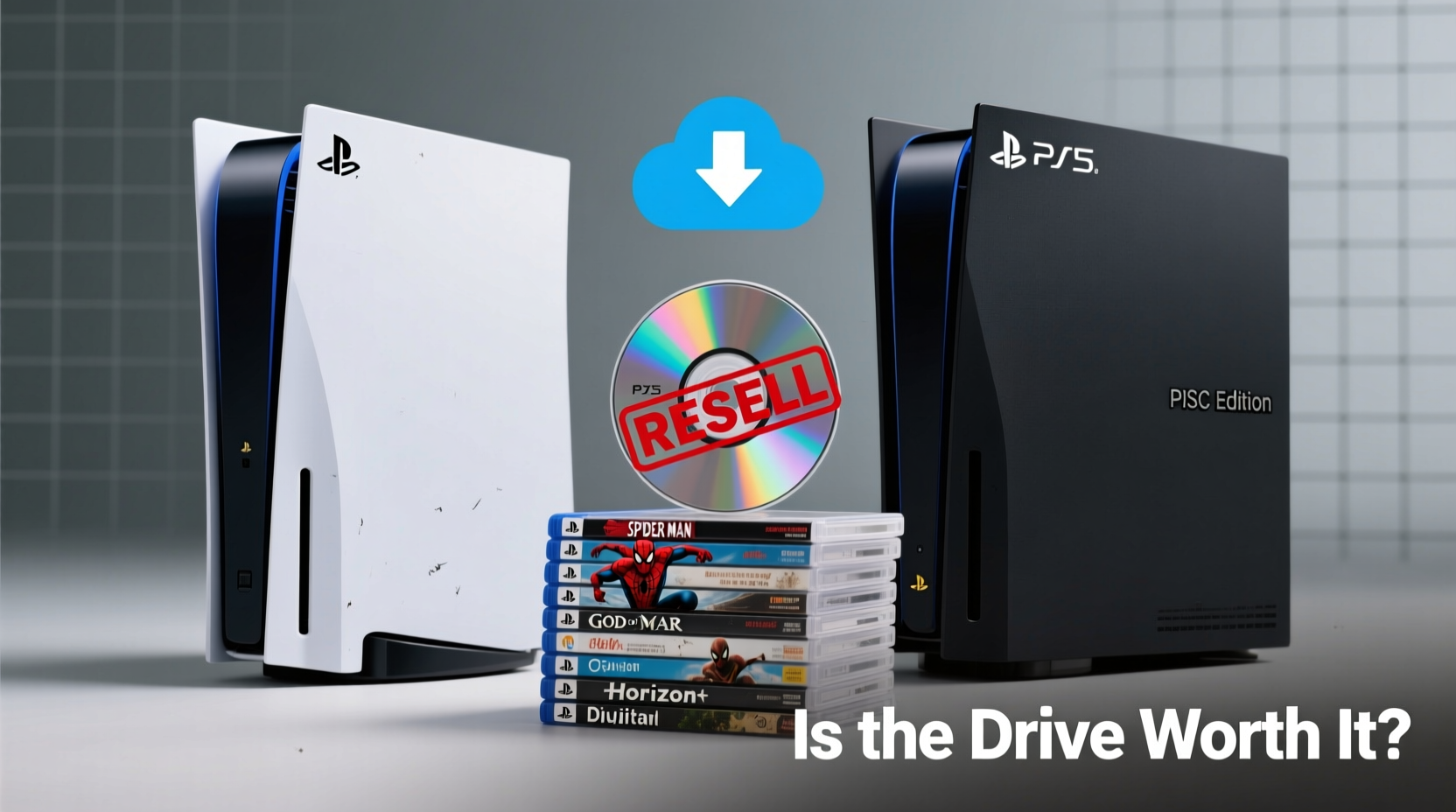
The most immediate difference between the two PS5 models is the $100 price gap. At launch, the PS5 Standard Edition retails for $499.99, while the Digital Edition comes in at $399.99. That savings may seem appealing, but it's only the beginning of the financial equation.
With the Digital Edition, every game must be purchased online. There’s no option to buy discounted pre-owned titles, borrow from friends, or take advantage of retail clearance bins. Meanwhile, the disc version allows access to all these avenues—and the potential to recoup part of your spending through resale.
For example, selling five physical games per year at an average return of $30 each generates $150 in recovered funds—more than covering the initial price difference. Over three years, consistent resale could yield $450 in trade-in credit or cash, effectively making the console \"free\" in recovered value if managed strategically.
Resale Value Trends: What Data Shows
GameStop, Best Buy, and independent resellers provide insight into how well physical games hold value. On average, new PS5 games trade in for 30% to 50% of their original retail price within six months of release. After one year, that drops to 20–30%, depending on demand.
Popular franchises like God of War, Spider-Man, and Horizon tend to maintain higher resale values due to strong secondary market demand. Niche or poorly reviewed titles may drop to under $10 even when new.
| Game Title | New Price (MSRP) | Trade-In Value (6 months) | % Recovery |
|---|---|---|---|
| God of War: Ragnarök | $69.99 | $35.00 | 50% |
| Marvel’s Spider-Man 2 | $69.99 | $30.00 | 43% |
| Final Fantasy XVI | $69.99 | $25.00 | 36% |
| Star Wars Jedi: Survivor | $69.99 | $18.00 | 26% |
This data suggests that selective purchasing and timely resale can significantly reduce net game costs. However, this strategy requires discipline: holding onto games too long diminishes returns, and poor-condition discs lose value quickly.
“Physical games aren’t just media—they’re assets. Smart collectors treat them like short-term investments, flipping them shortly after playthroughs.” — Marcus Tran, Retail Gaming Analyst at GameEconomy Insights
Convenience vs. Control: The Ownership Trade-Off
Digital games offer unmatched convenience. No swapping discs, instant downloads during commutes, and seamless integration with PS Plus cloud saves. But they come with limitations: no lending, no resale, and dependence on Sony’s storefront policies.
In contrast, physical ownership grants control. You can sell, gift, or loan your copy without platform restrictions. You're not subject to delisting risks—if Sony removes a game from the PlayStation Store, digital owners keep access, but new buyers can't purchase it. Physical copies remain playable regardless of server status.
There’s also the psychological factor. Many gamers report feeling more committed to finishing a game they’ve physically owned, reducing “shelf waste” common in digital libraries. The act of buying, playing, and selling creates a cycle of intentional consumption.
When the Digital Edition Makes Sense
- You primarily play early-access or indie titles available only digitally.
- You have reliable internet and sufficient SSD space.
- You rarely replay or collect games.
- You rely heavily on PS Plus subscriptions for instant access.
- You live in an area with limited access to game retailers.
When the Disc Model Wins
- You enjoy collecting or displaying games.
- You frequently buy pre-owned or discounted physical copies.
- You want to share games with family or friends locally.
- You play in areas with spotty internet or data caps.
- You plan to resell or trade in games regularly.
Real-World Example: Two Gamers, Two Paths
Alex bought the PS5 Digital Edition in 2023. He spends about $300 annually on digital games, mostly through seasonal sales. He owns 18 titles but has finished only seven. His total investment: $1,200 over four years. All games remain in his library, but he acknowledges many will never be replayed.
Jamie opted for the Standard Edition. She buys about 10 games per year, half new and half pre-owned. After finishing each, she trades it in within two months. Her average net cost per game is $40, reduced to $22 after trade-in. Over the same period, she spent $1,600 gross on games but recovered $780—netting $820. She also saved $200 by buying used.
Jamie’s effective game cost: $51 per year. Alex’s: $300. Even accounting for the $100 higher console price, Jamie came out ahead in value retention and spending efficiency.
Step-by-Step: Maximizing Resale Value from Physical Games
- Buy Strategically: Focus on major franchises with proven resale demand. Avoid overspending on limited editions unless collecting is your goal.
- Keep It Clean: Use microfiber cloths to wipe discs. Store cases upright in a cool, dry place away from sunlight.
- Play Promptly: Finish games within 2–3 months of release to maximize trade-in value before depreciation hits.
- Monitor Trade Programs: Compare GameStop, Best Buy, and local shops. Some offer bonus credit during promotional periods.
- Bundle for Better Deals: Trading in multiple games at once often unlocks tiered bonuses (e.g., $5 extra for five+ titles).
- Reinvest Wisely: Use store credit to buy pre-owned games or accessories instead of full-price new releases.
This approach turns gaming from a pure expense into a partially self-sustaining hobby. Over time, disciplined traders can maintain a fresh library at a fraction of retail cost.
Expert Insight: The Future of Physical Media
Despite the rise of digital distribution, industry experts believe physical games will persist—at least for the next decade.
“Collectibility, ownership rights, and market liquidity keep physical media relevant. As long as there’s a secondary market, consoles with disc drives will have a strategic advantage.” — Dr. Lena Patel, Media Economies Researcher at NYU Interactive Institute
She notes that regions with unreliable broadband infrastructure—such as rural areas or developing markets—still depend on physical distribution. Additionally, collectors and preservationists argue that discs are more durable than digital licenses, which can vanish due to corporate decisions or account issues.
Frequently Asked Questions
Can I add an external disc drive to the PS5 Digital Edition?
No. Sony does not support external optical drives for game playback. The PS5 Digital Edition lacks the internal hardware to read discs, and no third-party solution bypasses this limitation for retail games.
Do digital games ever go on deeper sale than physical ones?
Yes. Digital versions often see steeper discounts during PlayStation Store sales, especially for older titles. However, physical prices also drop at retailers, and buying used can beat even the lowest digital sale price.
Is the disc drive likely to be phased out soon?
Not imminently. While Sony has hinted at a future without discs, the current PS5 generation still supports them fully. Backward compatibility with PS4 discs adds value, and removing the drive entirely would alienate a significant portion of the user base.
Checklist: Choosing the Right PS5 for You
- ☐ I understand the $100 price difference between models.
- ☐ I know how often I resell or trade in games.
- ☐ I’ve considered my internet reliability and data limits.
- ☐ I’ve compared typical resale values for games I play.
- ☐ I’m comfortable with digital-only limitations (no sharing, no resale).
- ☐ I’ve evaluated my interest in collecting or preserving games.
- ☐ I’ve checked local trade-in policies and rates.
Conclusion: Value Beyond the Price Tag
The PS5 Digital vs. Disc debate isn’t just about hardware—it’s about philosophy. Do you prioritize seamless access and minimal clutter? The Digital Edition fits that lifestyle. But if you value ownership, flexibility, and long-term savings, the disc model offers tangible benefits that compound over time.
The resale value of physical games isn’t a myth. For active traders, it can erase the console’s price premium and then some. When combined with pre-owned deals, game sharing, and offline access, the disc drive becomes less of a relic and more of a financial tool.
Ultimately, the “worth it” question depends on behavior. If you treat games as disposable entertainment, digital suffices. But if you engage with gaming as a curated, ongoing hobby, the ability to buy, sell, and share physical copies delivers real economic and emotional returns.




 浙公网安备
33010002000092号
浙公网安备
33010002000092号 浙B2-20120091-4
Comments
No comments yet. Why don't you start the discussion?