
The PlayStation 5 has evolved. Sony’s latest revision, the PS5 Slim, brings a noticeably smaller footprint and a fresh design language. But with this change comes a subtle but meaningful trade-off: the removal of the dedicated vertical stand for the base model. For many gamers, especially those who display their console upright, this shift raises an important question—does the compactness of the PS5 Slim justify the loss of out-of-the-box vertical support? The answer depends on your setup, priorities, and how much you value both form and function.
This isn’t just about aesthetics or inches saved on a shelf. It’s about long-term usability, space efficiency, ventilation, and whether Sony’s design decision aligns with how you actually use your console. Let’s break down every angle—from physical dimensions to thermal performance, pricing, and real-world placement—to determine if the PS5 Slim truly improves upon the original or sacrifices too much in pursuit of minimalism.
Design and Physical Differences
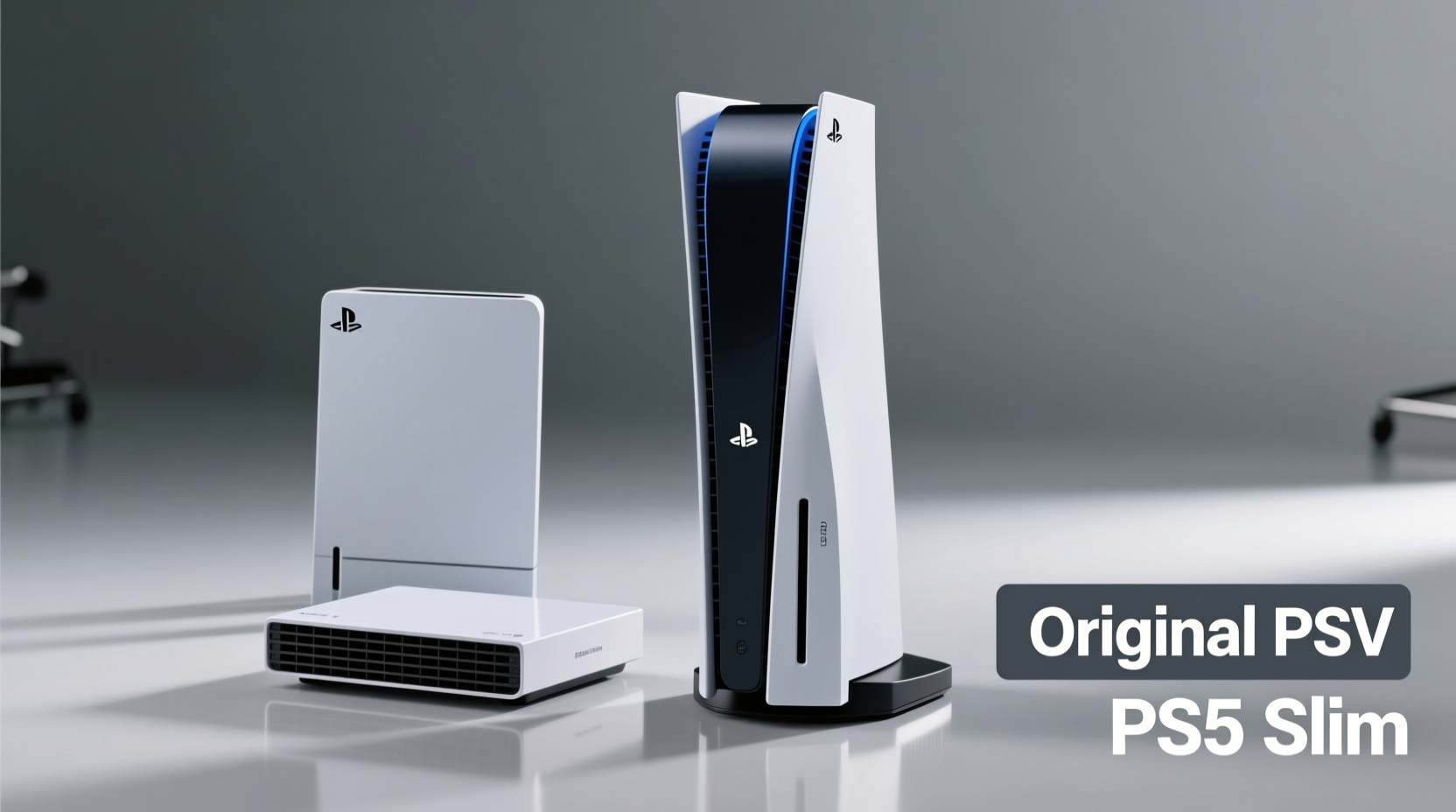
The most immediate distinction between the PS5 Slim and the original PS5 lies in its redesigned chassis. The Slim model reduces volume by approximately 30%, making it significantly more compact. While the original PS5 was known for its bold, futuristic look—some even called it “futuristic monolith” due to its large white panels and black core—the Slim adopts a more modular approach with removable side panels available in multiple colors.
More importantly, the internal structure has been re-engineered. The motherboard is smaller, components are more tightly integrated, and the cooling system has been revised to maintain performance despite reduced size. However, one key omission stands out: the original PS5 included a screw-in stand that allowed users to position the console vertically without additional accessories. The PS5 Slim does not come with this stand by default.
Instead, Sony sells the vertical stand separately for $30. This means that if you want to place your PS5 Slim upright, you’ll need to purchase the accessory unless you’re using third-party alternatives. For some, this feels like a step backward—a basic functionality now monetized as an add-on.
“Removing the stand from the box reflects a broader trend in consumer electronics: reducing initial cost and letting users pay for features they may or may not use.” — David Kim, Hardware Analyst at TechInsight Weekly
Size, Weight, and Space Efficiency
Let’s compare the numbers directly. These measurements matter when integrating the console into entertainment centers, shelves, or tight AV setups.
| Model | Height (cm) | Width (cm) | Depth (cm) | Weight (kg) |
|---|---|---|---|---|
| Original PS5 (Disc Edition) | 98 | 39 | 26 | 4.5 |
| PS5 Slim (Disc Edition) | 92 | 36 | 22 | 3.2 |
| Original PS5 Digital | 80 | 39 | 26 | 3.9 |
| PS5 Slim Digital | 86 | 36 | 22 | 2.6 |
The differences may seem modest on paper, but in practice, the PS5 Slim fits more easily into constrained spaces. Its reduced depth makes it viable for narrower shelves, and the lighter weight eases concerns about long-term strain on furniture or media racks. Gamers with wall-mounted TV units or minimalist entertainment centers will appreciate the smaller profile.
However, the weight reduction also stems partly from changes in materials and internal layout. Some teardowns suggest thinner plastic housing and a denser component arrangement, which could impact durability over time—though no widespread issues have been reported yet.
Vertical vs Horizontal Placement: What You Need to Know
Whether you place your console upright or flat isn’t just a matter of preference—it affects airflow, stability, and cable management.
The original PS5 was engineered to perform equally well in both orientations, provided the correct stand was used. The internal fan and heat sink are symmetrically designed to ensure consistent thermal performance regardless of positioning. The same applies to the PS5 Slim. However, placing the console vertically requires the optional stand, which clips securely onto the bottom and screws into the base for stability.
Without the stand, attempting to balance the PS5 Slim upright is risky. The curved edges make it prone to tipping, especially if cables are tugged or pets/kids are nearby. On the other hand, horizontal placement remains completely stable and doesn’t require any extra parts.
From a ventilation standpoint, both models rely on rear exhaust and front intake. When placed horizontally, ensure there’s at least 10 cm of clearance around the sides and back. In vertical mode, the same rule applies—but dust accumulation can be slightly higher on the base due to upward airflow dynamics.
Mini Case Study: Apartment Setup Challenges
Jamal, a gamer living in a 500-square-foot studio apartment in Chicago, struggled to fit his original PS5 into his low-profile entertainment unit. At 98 cm tall, the console wouldn’t clear the top shelf when placed vertically, and lying it flat took up nearly half the cabinet width. After upgrading to the PS5 Slim, he gained 6 cm in height clearance and 4 cm in depth—just enough to free up space for a soundbar and streaming box.
He initially disliked having to buy the $30 stand to keep the console upright, but ultimately found the investment worthwhile. “It looks cleaner upright,” he said. “And now I don’t have to rearrange my entire shelf every time I plug in a controller.”
Performance and Cooling: No Compromise?
A common concern with slimmer consoles is thermal throttling—whether reduced size impacts cooling and, by extension, performance. Both the original and Slim PS5 run the same AMD Zen 2 CPU and RDNA 2 GPU, delivering identical output: 4K gaming at up to 120Hz, ray tracing, and ultra-fast SSD load times.
Sony claims the PS5 Slim maintains equivalent thermal performance through a redesigned heatsink and improved airflow channels. Independent tests confirm this: under sustained load (e.g., playing *Spider-Man: Miles Morales* or *Horizon Forbidden West*), the Slim runs within 2–3°C of the original model. Fan noise is marginally higher during peak loads, likely due to increased air velocity through a smaller chassis, but remains within acceptable levels.
Crucially, neither model experiences frame rate drops or power limitations due to heat. The system dynamically adjusts clock speeds based on temperature, but these adjustments occur in both versions similarly. So while the Slim is physically smaller, it hasn’t sacrificed performance integrity.
- Same CPU/GPU architecture and clock speeds
- No measurable difference in game loading times
- Thermal throttling behavior remains consistent across models
- Fan curves adjusted slightly for density, but not perceptibly louder
Pricing and Value Considerations
The PS5 Slim retails at the same price point as the original launch models did, but with one critical caveat: the disc edition costs $499.99, and the digital edition $449.99—yet the vertical stand is sold separately for $29.99. That means if you want to use the console vertically, you’re effectively paying $530 for the full experience.
In contrast, the original PS5 included the stand at no extra cost. Over time, this shift represents a subtle but growing trend in tech hardware: unbundling essential accessories to lower headline pricing while increasing long-term spending.
Consider this breakdown:
| Feature | Original PS5 | PS5 Slim |
|---|---|---|
| Base Price (Disc) | $499.99 | $499.99 |
| Vertical Stand Included? | Yes | No ($30 extra) |
| Storage Expandability | M.2 NVMe slot | M.2 NVMe slot + 1TB base storage (vs 825GB) |
| Removable Panels | No | Yes (sold separately) |
Note one advantage: the PS5 Slim ships with 1TB of internal storage, up from 825GB on the original. That extra ~175GB provides more room for games before needing an expansion drive. Additionally, the ability to customize the outer panels offers personalization options absent on the original.
FAQ
Can I use the original PS5 stand with the PS5 Slim?
No. The shape and mounting mechanism differ between models. The original stand won’t fit the PS5 Slim’s redesigned base. You must use the new, model-specific stand sold by Sony.
Is the PS5 Slim quieter than the original?
Not significantly. While airflow has been optimized, the smaller chassis means the fan works slightly harder under load. Most users report no noticeable difference in daily use.
Do I really need the official stand, or are third-party options safe?
Third-party stands from reputable brands (like Kootek or Syllable) are generally safe and cost less. However, ensure they provide secure attachment and don’t block ventilation ports. Poorly designed stands can increase vibration or restrict airflow.
Step-by-Step Guide: Choosing Your Setup
- Measure your space. Check height, width, and depth constraints in your entertainment center.
- Determine preferred orientation. Will the console sit flat or upright? Vertical saves floor space; horizontal may integrate better in low cabinets.
- Budget for accessories. If going vertical, factor in the $30 stand cost when comparing total price.
- Check ventilation needs. Leave at least 10 cm clearance on all sides, especially near walls or enclosed shelves.
- Consider cable management. Vertical placement often routes HDMI and power cables downward neatly; horizontal may require clips or ties.
- Test stability. Once set up, gently nudge the console to ensure it won’t tip—especially important with pets or children around.
Final Verdict: Is the Trade-Off Worth It?
The PS5 Slim represents a thoughtful evolution of the original design. It’s smaller, lighter, better balanced in terms of storage, and offers customization potential the first model lacked. For most users, especially those with limited space or clutter-conscious setups, the size reduction alone justifies the upgrade.
But the removal of the included vertical stand is a legitimate drawback. It forces a choice: either pay extra for what was once standard, adapt to horizontal placement, or seek third-party solutions. For collectors, streamers, or anyone who values clean, upright displays, this feels like an unnecessary hurdle.
If you already own an original PS5 and are considering an upgrade, ask yourself: do you need the extra storage and smaller footprint badly enough to justify repurchasing accessories? For new buyers, the decision is simpler—the Slim is the current generation, and its advantages outweigh the stand issue, provided you budget accordingly.
In the end, the PS5 Slim proves that smaller doesn’t mean lesser. But convenience shouldn’t come at the cost of basics. Hopefully, future revisions reintegrate essential accessories—or at least bundle them during promotions.




 浙公网安备
33010002000092号
浙公网安备
33010002000092号 浙B2-20120091-4
Comments
No comments yet. Why don't you start the discussion?