
When winter storms roll in with cold winds and steady rain, staying dry is just as important as staying warm. Two popular outerwear choices—puffer jackets and wool coats—are often praised for their insulation, but how do they perform when wet weather hits? While both have loyal followings, the answer to which keeps you drier isn’t always straightforward. It depends on fabric treatments, construction, layering strategy, and exposure level. Understanding the strengths and limitations of each can help you make a smarter choice for rainy winter conditions.
How Water Resistance Works in Outerwear
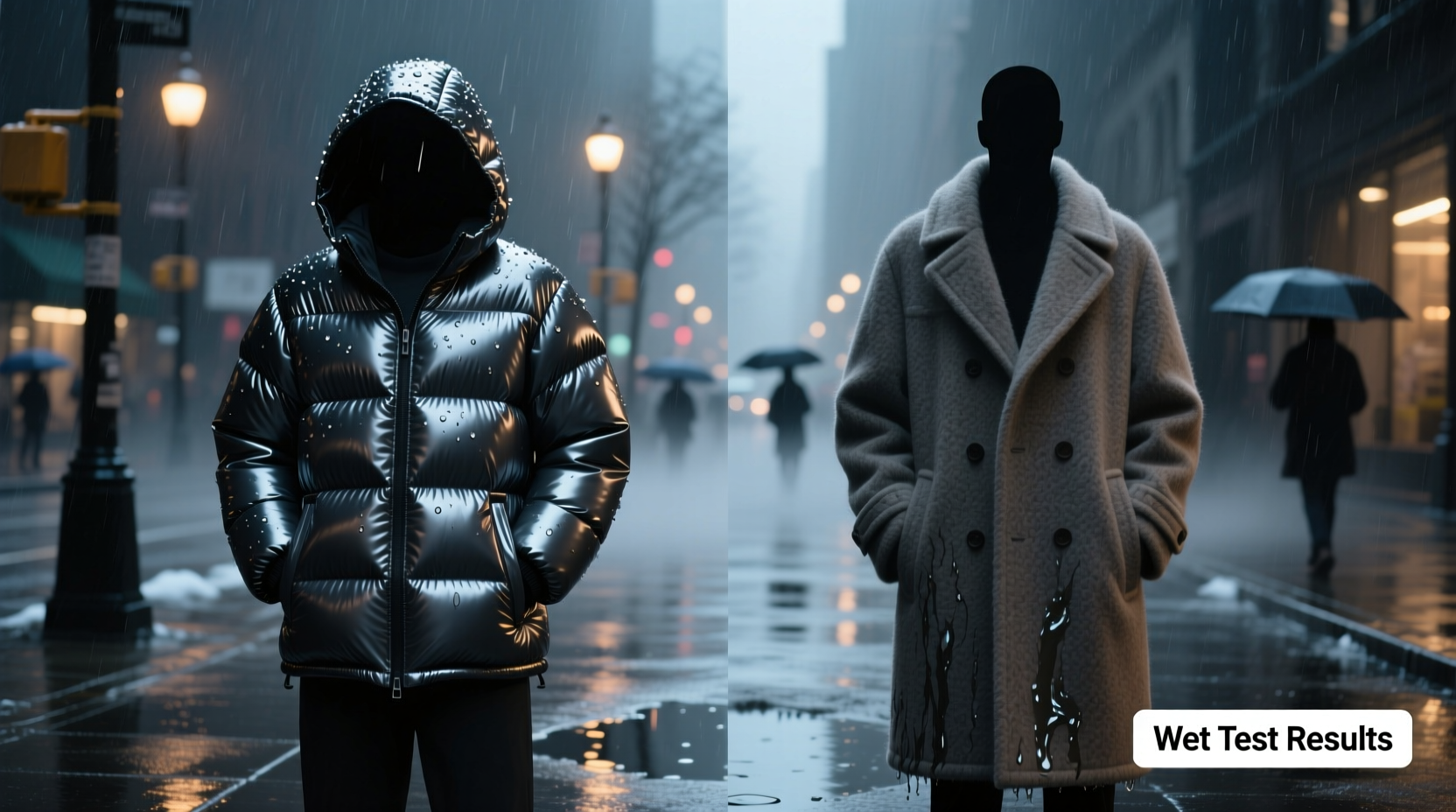
Dryness in wet weather depends on more than just thickness or warmth. The key factors are water resistance, moisture-wicking ability, breathability, and whether the garment has a protective shell. Water resistance refers to a fabric’s ability to repel liquid water without absorbing it. This is typically achieved through coatings, laminates, or tightly woven fibers. Breathability, on the other hand, allows moisture vapor (like sweat) to escape, preventing internal dampness from condensation.
Puffer jackets are usually constructed with synthetic shells made from nylon or polyester, materials that naturally resist water better than untreated wool. These shells are often treated with durable water-repellent (DWR) finishes that cause water to bead up and roll off. Many high-end puffers also include waterproof membranes like Gore-Tex, making them highly effective in sustained rain.
Wool coats, traditionally made from natural sheep’s wool, rely on lanolin—a waxy substance found in raw wool—for mild water resistance. However, most commercial wool garments are processed to remove lanolin, reducing their inherent ability to shed water. While wool can absorb up to 30% of its weight in moisture without feeling wet, this absorption compromises insulation and leads to prolonged drying times.
Material Behavior in Rain: Puffer Jackets
Puffer jackets derive their warmth from synthetic down or real down insulation enclosed between two layers of tightly woven fabric. The outer shell is typically engineered for performance in adverse conditions. Most modern puffers use ripstop nylon or high-denier polyester, both known for durability and low water absorption.
The real advantage of puffer jackets in rain lies in their layered construction. A quality puffer will feature:
- A DWR-treated outer shell
- Taped seams to prevent water ingress at stitch points
- Water-resistant zippers or storm flaps
- Optional waterproof membranes for extreme conditions
In light to moderate rain, a standard puffer jacket performs well, keeping the wearer dry for extended periods. However, under heavy or prolonged rainfall, the DWR coating may eventually break down, allowing water to soak into the shell. Once the outer layer saturates, it loses breathability and begins transferring moisture inward. If the insulation is non-waterproof (as most down fill is), wetness compromises thermal efficiency.
Synthetic-filled puffers handle moisture better than down-filled ones. Unlike down, synthetic insulation retains warmth even when wet and dries faster. For rainy climates, choosing a puffer with synthetic insulation and a fully waterproof membrane significantly improves performance.
“Modern technical puffers with eVent or Gore-Tex shells outperform traditional wool in sustained wet conditions—hands down.” — Dr. Lena Torres, Textile Engineer at Alpine Gear Labs
Material Behavior in Rain: Wool Coats
Wool coats, especially those made from melton or boiled wool, offer a classic aesthetic and excellent warmth in dry cold. Their dense weave provides some wind resistance, and untreated wool fibers have natural hydrophobic properties due to residual lanolin. However, once cleaned and finished for consumer wear, much of this protection is lost.
While wool absorbs moisture slowly and continues to insulate even when damp, it is not inherently waterproof. In steady rain, wool fibers gradually take on water, leading to increased weight and reduced loft. A soaked wool coat can become heavy, cold, and difficult to dry. Unlike synthetic fabrics, wool does not evaporate moisture quickly, especially in humid winter air.
Some manufacturers now treat wool with fluorocarbon-based DWR finishes to improve water shedding. These enhanced versions perform better in drizzle but still fall short in heavy rain compared to technical outerwear. Additionally, wool lacks taped seams and sealed zippers—features common in performance puffers—which means water can seep through stitching lines during downpours.
Another consideration is maintenance. Wet wool must be dried flat and reshaped carefully to avoid shrinkage or felting. Frequent exposure to moisture increases wear and reduces the lifespan of the garment.
Direct Comparison: Performance in Real Conditions
To evaluate which garment keeps you drier, consider three scenarios: light drizzle, moderate rain, and prolonged exposure.
| Condition | Puffer Jacket (Standard) | Wool Coat (Untreated) |
|---|---|---|
| Light Drizzle (15–30 mins) | Performs excellently; water beads off surface | Holds up initially; slight darkening but remains dry inside |
| Moderate Rain (1 hour) | Stays dry with minor saturation at shoulders; breathability decreases | Fibers absorb moisture; outer feels damp, inner may feel clammy |
| Heavy Rain (2+ hours) | Outer saturates; down fill risks clumping if no membrane; synthetic fill safer | Becomes waterlogged; heavy, cold, and slow to dry |
| Drying Time (indoor, room temp) | 4–6 hours (shell); 12+ hours (if insulated layer wet) | 24–48 hours depending on thickness |
This comparison shows that while both garments offer temporary protection, puffer jackets—especially those designed for outdoor use—maintain dryness longer and recover faster. Wool’s strength lies in comfort and style during dry or mildly damp conditions, not in active rain defense.
Optimizing Dryness: Layering and Accessories
No single coat guarantees complete dryness in all conditions. Smart layering enhances performance regardless of your outerwear choice.
For puffer jackets, wearing a moisture-wicking base layer (such as merino wool or polyester) pulls sweat away from the skin, reducing internal dampness. Adding a lightweight softshell or hardshell over the puffer in heavy rain creates an extra barrier against saturation.
With wool coats, pairing them with a waterproof overshell—like a packable raincoat—preserves the coat’s appearance while adding real protection. This hybrid approach combines style with function, ideal for urban commuters who face unpredictable weather.
“I wear my wool coat daily in the city, but I always carry a foldable rain shell. It’s the best of both worlds.” — Marcus Reed, Urban Commuter, Toronto
Step-by-Step Guide: Staying Dry in Rainy Winters
- Assess your environment: Determine average rainfall intensity and duration in your area.
- Choose the right outer layer: Opt for a waterproof puffer if rain is frequent; choose treated wool only for occasional light showers.
- Add a base layer: Use synthetic or merino fabrics that manage moisture effectively.
- Consider a mid-layer: Fleece or lightweight synthetic insulation adds warmth without trapping sweat.
- Top with a shell if needed: Wear a breathable rain jacket over your coat during downpours.
- Protect extremities: Waterproof gloves, boots, and a hood reduce overall exposure.
- Maintain your gear: Reapply DWR treatments every few months and clean according to manufacturer instructions.
Common Misconceptions About Wool and Water
Many believe wool is naturally waterproof due to its origin. While raw fleece repels water thanks to lanolin, processed wool used in coats has minimal inherent water resistance. The myth persists because wool feels warm even when damp—but warmth does not equal dryness.
Another misconception is that thick coats automatically keep you dry. Thickness affects insulation, not moisture management. A bulky wool coat may feel substantial, but if it soaks up rain, it becomes a liability.
Finally, some assume all “water-resistant” labels mean full protection. In reality, water-resistant means limited defense against light moisture—not sustained rain. True waterproof garments meet specific standards (e.g., 10,000mm+ hydrostatic head rating).
Checklist: Choosing the Right Winter Coat for Rainy Climates
- ✅ Look for sealed seams and waterproof zippers
- ✅ Choose synthetic insulation over down if rain is common
- ✅ Check for DWR finish on the outer fabric
- ✅ Prefer garments with hoods or compatibility with hats/scarves
- ✅ Consider layering flexibility—can you add a shell?
- ❌ Avoid untreated wool for daily use in rainy regions
- ❌ Don’t rely solely on fashion appeal without functional testing
FAQ
Can I make my wool coat more water-resistant?
Yes. You can apply a wool-safe DWR spray designed for natural fibers. Products like Nikwax Fabric & Leather Proof or Grangers Performance Repel can enhance water shedding. However, this won’t make the coat fully waterproof—just more resistant to light moisture.
Are down-filled puffer jackets ruined by rain?
Not immediately, but wet down loses its loft and insulating power. Once saturated, down takes a long time to dry and may develop mold if stored damp. For rainy areas, opt for hydrophobic down (treated to resist moisture) or switch to synthetic insulation.
Which is better for city commuting in rainy winters?
A high-quality puffer jacket with a waterproof shell and synthetic fill is generally superior for urban environments with frequent rain. It’s lighter, easier to maintain, and offers consistent protection. Wool coats work best as fashion pieces paired with a separate rain shell.
Conclusion
When it comes to staying dry in rainy winters, puffer jackets outperform wool coats in nearly every practical category. Their engineered shells, sealed construction, and compatibility with waterproof technologies give them a decisive edge in wet conditions. Wool coats, while stylish and warm in dry cold, absorb moisture over time and lack the technical features needed for reliable rain protection.
That said, personal needs vary. If you value aesthetics and only face occasional showers, a treated wool coat with a backup rain shell may suffice. But for consistent exposure to rain—whether walking to work, waiting for transit, or navigating stormy days—a well-constructed puffer jacket is the smarter, drier choice.




 浙公网安备
33010002000092号
浙公网安备
33010002000092号 浙B2-20120091-4
Comments
No comments yet. Why don't you start the discussion?