
Puppies explore the world with their mouths. It's natural for them to nibble, chew, and occasionally bite during play or when teething. While a puppy nipping at your hand might seem harmless—or even cute—this behavior can quickly become problematic as they grow stronger and their teeth sharpen. Left unaddressed, hand biting can lead to painful injuries and difficulty managing your dog in social settings. Understanding why puppies bite and learning how to redirect this instinct is essential for raising a well-mannered adult dog.
Why Puppies Bite Hands: The Root Causes
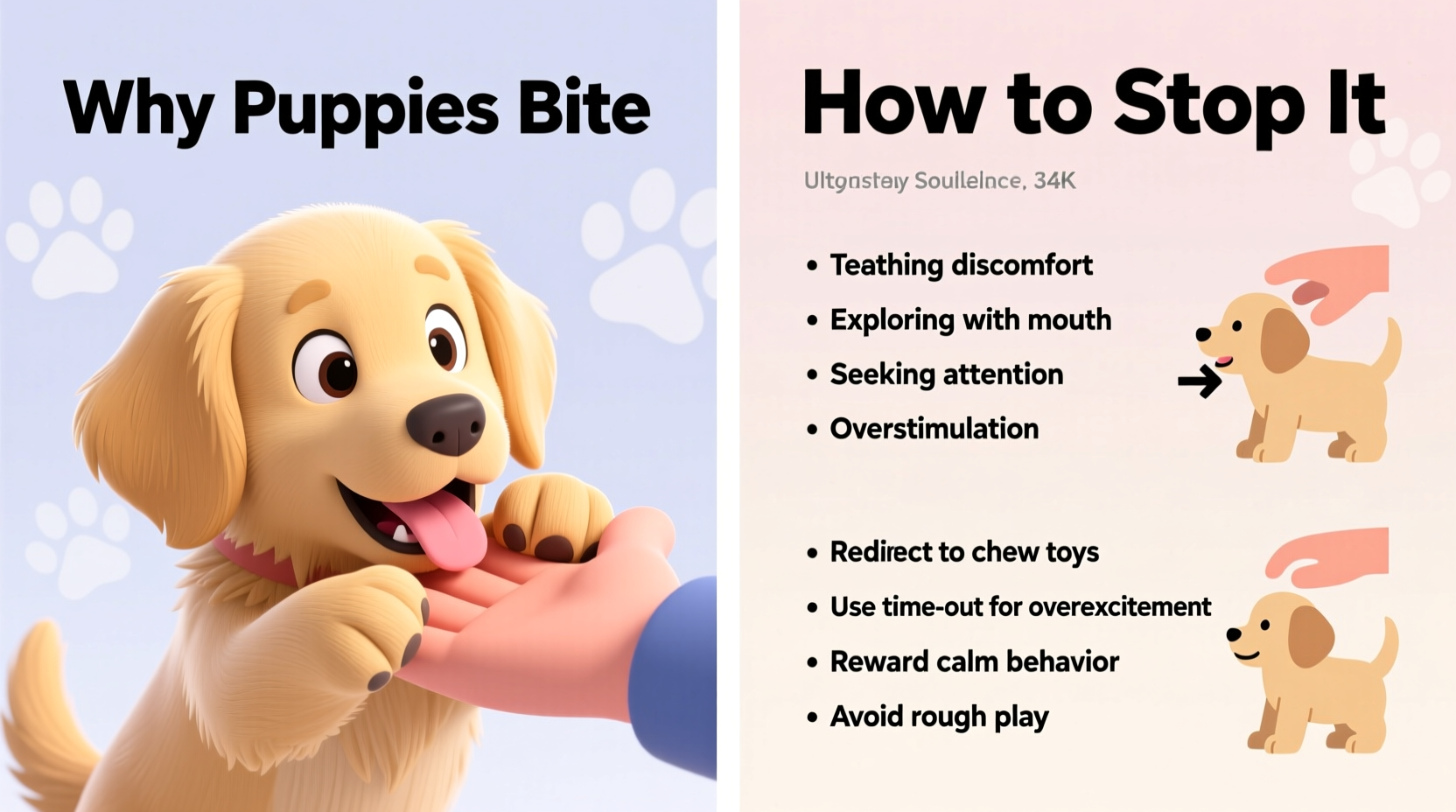
Puppy biting isn’t aggression—it’s communication, exploration, and often a cry for attention. Several key factors drive this behavior:
- Teething discomfort: Between 3 and 6 months of age, puppies lose their baby teeth and grow adult ones. Chewing soothes sore gums, and hands are often the most accessible object.
- Exploration: Puppies use their mouths like humans use their hands—to feel textures, test objects, and understand boundaries.
- Play behavior: In litter play, puppies bite each other during wrestling and chasing. When playing with humans, they don’t always know that skin is more sensitive than fur.
- Overstimulation: Excitement from games, visitors, or new environments can trigger mouthing as a release.
- Attention-seeking: If a puppy learns that biting gets a reaction—even if it’s a scolding—they may repeat the behavior to engage you.
“Puppies aren’t born knowing human rules. Mouthing is normal, but we must teach them what’s acceptable.” — Dr. Karen Becker, Veterinary Behaviorist
How to Stop Puppy Hand Biting: A Step-by-Step Guide
Stopping hand biting requires patience, timing, and consistency. Follow this proven method to reshape your puppy’s behavior:
- Recognize early signs: Watch for stiffening, intense staring, or playful lunges—these precede bites.
- React immediately: When teeth touch skin, let out a high-pitched “ouch!” to mimic a hurt littermate. This often startles the puppy into stopping.
- Withdraw attention: Stand up, turn away, or leave the room for 20–30 seconds. No eye contact, no talking. This teaches biting ends fun.
- Offer an alternative: After the pause, present a chew toy. Reward engagement with praise or a treat.
- Repeat consistently: Every family member must respond the same way. Inconsistency confuses puppies.
This technique mimics how dogs naturally correct each other during play. Over time, your puppy learns that gentle interaction leads to continued attention, while biting brings an abrupt end to fun.
Effective Training Tools and Alternatives
Redirecting biting means giving your puppy better outlets for their chewing instincts. The right tools make a significant difference:
| Tool | Purpose | Recommended Use |
|---|---|---|
| Rope toys | Satisfy tug-of-war urges | Use during structured play sessions |
| Chew bones (rubber or nylon) | Relieve teething pain | Freeze for extra gum relief |
| Interactive puzzle toys | Engage mind and mouth | Fill with kibble or peanut butter |
| Fetch toys (balls, frisbees) | Channel energy away from biting | Outdoor play only, under supervision |
Avoid using your hands as toys during play. Even if you're encouraging grabbing a glove or sock, it blurs the line between acceptable and unacceptable biting.
Common Mistakes That Reinforce Biting
Well-meaning owners often unknowingly encourage biting. Avoid these pitfalls:
- Waving fingers near the puppy’s face: Invites snapping, even if playful.
- Letting biting continue until it hurts: Sends mixed signals—gentle bites are okay, hard ones aren’t.
- Using physical corrections: Yelling, tapping, or holding the mouth shut can damage trust and increase anxiety.
- Inconsistent responses: One person ignores biting, another yells—confusion delays learning.
- Over-handling during excitement: Petting or playing when the puppy is already overstimulated fuels more biting.
“Training is not about dominance. It’s about clear communication. Puppies thrive on predictable feedback.” — Ian Dunbar, DVM, Dog Training Pioneer
Real-Life Example: Turning Around a Persistent Biter
Meet Max, a 14-week-old Labrador Retriever adopted by a young couple. Max loved his owners but would latch onto sleeves, ankles, and hands during play. Despite saying “no,” the couple found themselves constantly swatting him away. After consulting a trainer, they implemented the “ouch-and-withdraw” method consistently. They also introduced frozen Kongs and rope toys during peak biting times—early evening and after walks.
Within two weeks, Max began pausing after mouthing, looking up as if asking, “Was that too much?” By week four, he’d grab his toy instead of a hand when excited. The key? Everyone in the home followed the same rules. No exceptions. Max is now a well-behaved 8-month-old who greets guests with a toy in his mouth, not teeth on skin.
Checklist: How to Prevent and Stop Hand Biting
Action Plan for Stopping Puppy Hand Biting:
- ✅ Use a high-pitched “ouch” when teeth touch skin
- ✅ Immediately stop interaction for 20–30 seconds
- ✅ Offer a chew toy as a replacement
- ✅ Practice short, frequent training sessions daily
- ✅ Provide appropriate chew items at all times
- ✅ Avoid rough play involving hands
- ✅ Enroll in a positive-reinforcement puppy class
- ✅ Supervise interactions with children and guests
Frequently Asked Questions
Is puppy biting a sign of aggression?
No. Most puppy biting is exploratory or play-related. True aggression is rare and includes stiff body posture, growling without provocation, and avoiding retreat. If you’re concerned, consult a veterinary behaviorist.
What if my puppy only bites certain people?
This often reflects differences in movement or energy. Children, for example, move quickly and squeal—triggering prey drive. Teach everyone in the household to stay calm and use consistent responses.
When will my puppy stop biting?
Most puppies significantly reduce biting by 6–7 months as teething ends and training takes hold. However, occasional nips may occur during excitement until maturity at around 18–24 months. Consistent training ensures it doesn’t become a habit.
Conclusion: Building a Bite-Inhibited Companion
Hand biting is a phase, not a life sentence. With understanding, consistency, and the right tools, you can guide your puppy toward gentle, respectful interactions. Remember, every correction is an opportunity to teach—not punish. Your puppy isn’t trying to dominate you; they’re trying to figure out how to be part of your world.
Start today. Respond calmly, redirect firmly, and reward good choices. In a few months, you’ll have a dog who greets you with a wagging tail and a toy, not sharp teeth. That transformation begins with the next bite—and how you choose to respond.




 浙公网安备
33010002000092号
浙公网安备
33010002000092号 浙B2-20120091-4
Comments
No comments yet. Why don't you start the discussion?