
In the quiet corners of everyday life, small choices speak volumes. Where you clip your keys might seem trivial—attached to a designer purse or dangling from a worn backpack—but these tiny details can reflect identity, priorities, and even unspoken social codes. The debate between using a purse keychain versus a backpack charm isn’t just about function; it’s layered with symbolism, practicality, and subtle judgment. So, does anyone actually care? The answer is more nuanced than a simple yes or no.
The Functional Divide: Purpose Over Aesthetics
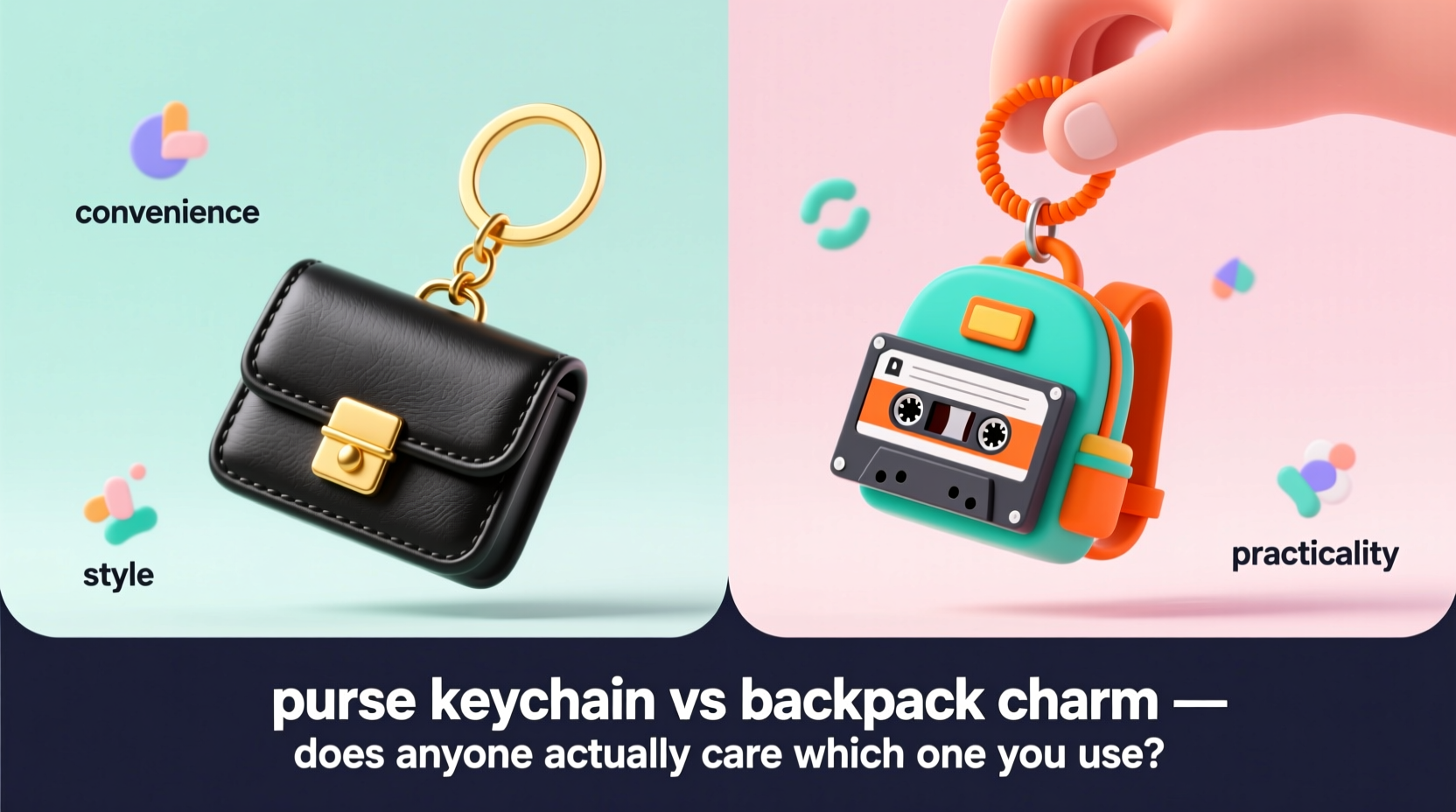
At their core, both items serve as accessories that enhance utility or style. A purse keychain is typically designed to keep keys organized and easily accessible within a handbag. Often made with fine metals, leather accents, or branded embellishments, they lean toward elegance and intentionality. In contrast, a backpack charm is usually decorative—a whimsical enamel pin, a plush figurine, or a beaded tassel clipped onto zippers for flair rather than function.
Yet this distinction blurs in practice. Many people repurpose backpack charms as key finders inside large bags. Others attach functional keychains to backpacks simply because they prefer not to carry a purse. The line between form and function has become increasingly porous, especially among younger demographics who prioritize personal expression over traditional categorization.
Social Perception and Subtle Judgments
While most people won’t confront you over your choice of accessory, perceptions do exist—often operating below conscious awareness. Carrying a luxury purse with a matching designer keychain may signal professionalism or affluence, particularly in corporate environments. On the other hand, adorning a backpack with quirky charms might suggest creativity, youthfulness, or an anti-establishment mindset.
These associations aren't universal, but they influence how others interpret your persona. A 2023 consumer behavior study by the Urban Lifestyle Institute found that 42% of respondents made assumptions about someone’s personality based on visible bag accessories—ranging from \"organized\" to \"playful\" to \"careless,\" depending on context.
“Accessories are micro-signals. They don’t define a person, but they contribute to first impressions faster than words.” — Dr. Lena Torres, Sociologist & Author of *Material Identity*
Comparing Purse Keychains and Backpack Charms
| Feature | Purse Keychain | Backpack Charm |
|---|---|---|
| Primary Purpose | Organization, quick access to keys | Decoration, self-expression |
| Common Materials | Leather, metal, enamel, branded hardware | Fabric, plastic, resin, beads |
| Typical User Profile | Professionals, fashion-conscious individuals | Students, creatives, Gen Z consumers |
| Durability | Moderate to high (designed for daily use) | Variable (some fragile, others rugged) |
| Social Connotation | Elegance, sophistication, order | Casualness, individuality, rebellion |
Real-World Example: Two Commuters, One Train
Consider two women boarding the same morning train. Sarah, mid-30s, wears a tailored coat and carries a structured tote. Her keys hang from a minimalist gold-plated keychain engraved with her initials—easily spotted when she reaches into her bag at security. Across the aisle, Maya, early 20s, hoists a canvas backpack covered in embroidered patches and a rotating charm: today, it’s a tiny avocado with googly eyes.
No one comments aloud. But later, a colleague mentions to Sarah how “put together” she always looks. Meanwhile, Maya’s supervisor gently suggests toning down her “accessories” before a client meeting. Neither criticism nor praise is overtly about the keychain or charm—but both stem from the same unconscious bias shaped by cultural norms.
This scenario illustrates that while few will directly confront you over your accessory choice, workplace culture, age demographics, and regional expectations still play a role in how these small decisions are interpreted.
When It Actually Matters: Context Is Everything
The truth is, people only tend to notice when the accessory clashes with the environment. Wearing a glittery unicorn charm on a briefcase during a boardroom presentation may raise eyebrows—not because it’s inherently wrong, but because it disrupts expected visual cues. Conversely, a sleek leather key fob on a gym backpack might look out of place among athletic peers.
That said, societal tolerance for personalization is growing. Brands like Herschel, Ban.do, and even Louis Vuitton now offer hybrid products—functional key organizers styled like playful charms—blurring the categories entirely.
Step-by-Step Guide: Choosing the Right Accessory for Your Lifestyle
- Assess your daily routine: Do you move through professional spaces, school campuses, or creative studios?
- Evaluate bag type: Is your primary carrier a purse, backpack, crossbody, or tote?
- Determine priority: Are you seeking organization, visibility, or self-expression?
- Check durability needs: Will it withstand weather, frequent handling, or tight zipper pulls?
- Select accordingly: Choose a purse keychain if function dominates. Pick a backpack charm when style leads.
- Stay flexible: Rotate accessories based on occasion—there’s no rule saying you can’t switch.
Expert Insight: Functionality Meets Identity
“The modern accessory isn’t just about holding keys—it’s about claiming space. Whether it’s a $200 logo keychain or a handmade clay charm, people use them to say, ‘This is me.’ And yes, others notice—even if they don’t admit it.” — Jamal Reed, Product Designer at ToteWell Studio
FAQ
Does using a backpack charm make me look unprofessional?
Not inherently. In creative industries or casual workplaces, backpack charms are widely accepted. However, in conservative fields like law or finance, minimalism tends to be safer. Consider removing or swapping out flashy charms for low-profile clips in formal settings.
Can I use a purse keychain on a backpack?
Absolutely. There’s no functional or legal restriction. Many people do exactly this to keep keys secure and easy to find. If it works for your lifestyle, go for it—labels like “purse” or “backpack” are marketing terms, not rules.
Are expensive keychains worth it?
Only if they meet your needs. High-end keychains often use superior materials and craftsmanship, offering better longevity and aesthetic appeal. But a $15 silicone charm with a loud bell might serve you better if your main goal is finding keys fast.
Final Thoughts: Does Anyone Care?
Yes—and no. Most people won’t stop you on the street to critique your keychain choice. But subconscious judgments happen all the time, influenced by culture, context, and conditioning. What matters most is alignment: does your accessory support your lifestyle, values, and comfort?
If you love your sparkly dinosaur charm, wear it proudly—even on your leather satchel. If you want a silent, streamlined key holder, choose simplicity without guilt. The world is shifting toward individuality, and rigid categories are fading. Today’s fashion misstep could be tomorrow’s trend.




 浙公网安备
33010002000092号
浙公网安备
33010002000092号 浙B2-20120091-4
Comments
No comments yet. Why don't you start the discussion?