
Staying dry in heavy rain isn’t just about having a coat—it’s about having the right one. Two of the most common materials used in rainwear are PVC (polyvinyl chloride) and polyester. While both offer protection from moisture, their performance differs significantly when it comes to keeping you dry over extended periods. Understanding how each material handles water, breathability, and environmental conditions can help you make a smarter choice for long-term comfort and functionality.
How Waterproofing Works: The Science Behind Dryness
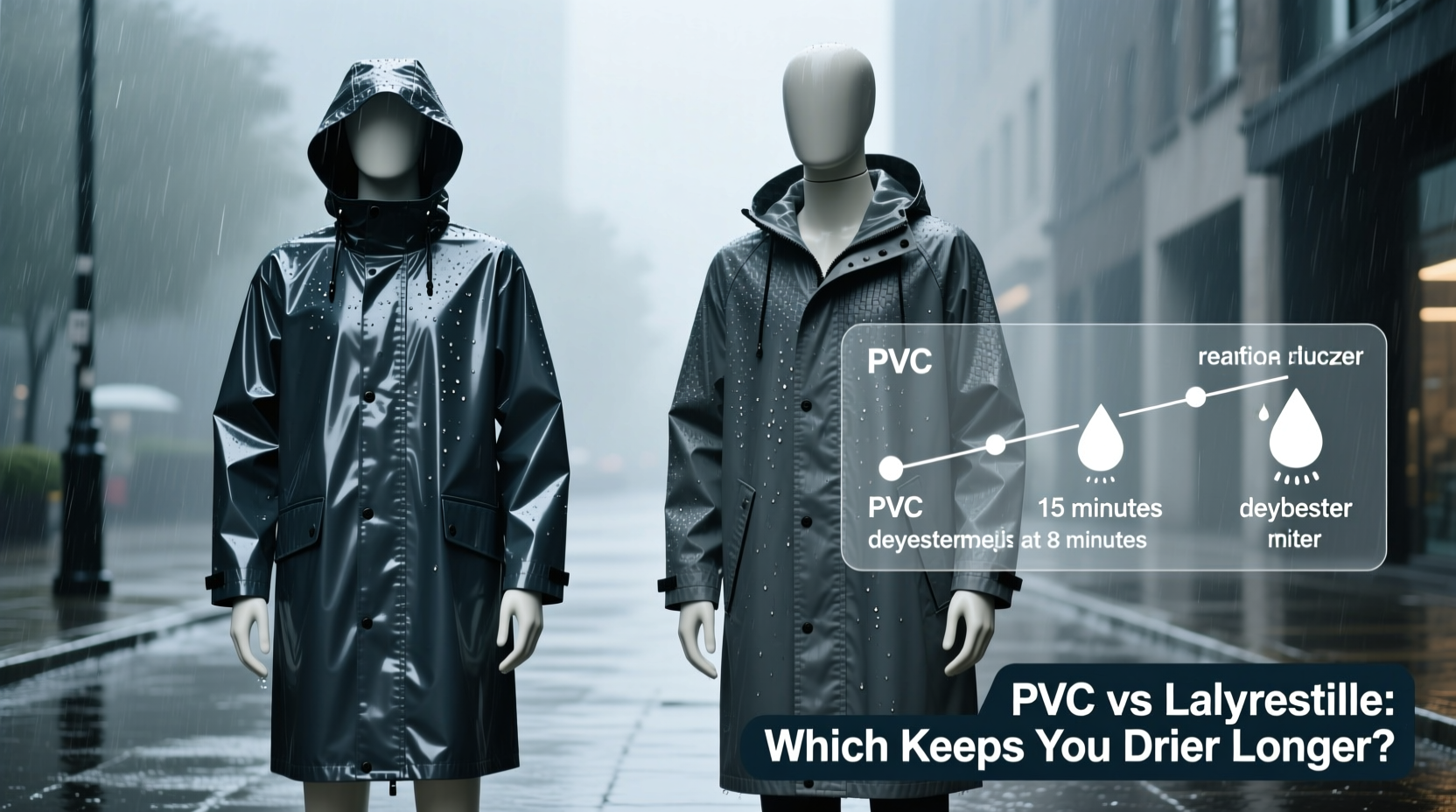
Waterproofing isn't just about repelling water on the surface; it's also about preventing internal dampness caused by sweat and condensation. True dryness means staying dry from both external rain and internal humidity.
PVC is inherently waterproof. It forms a continuous plastic barrier that doesn’t allow water molecules to pass through. This makes it exceptionally effective in torrential downpours or prolonged exposure—ideal for outdoor workers, fishermen, or festival-goers enduring days of rain.
Polyester, on the other hand, is not naturally waterproof. Most polyester raincoats rely on a coating—often polyurethane (PU) or a laminate like Gore-Tex—to become water-resistant. These coatings vary in quality. Entry-level polyester jackets may resist light rain but begin leaking under pressure or after repeated use. High-end versions with advanced membranes perform much better, offering excellent water resistance while improving breathability.
“PVC offers near-total waterproof assurance, but at the cost of breathability. Polyester systems can balance protection and comfort—if engineered well.” — Dr. Lena Torres, Textile Engineer at Outdoor Gear Labs
Durability and Long-Term Performance
Dryness over time depends not only on initial waterproofing but also on how well the material holds up after wear, washing, and exposure to UV light.
PVC is highly durable against abrasion and punctures. It resists tearing and maintains its waterproof integrity even after years of use. However, it becomes brittle in extreme cold and may crack if folded repeatedly. Prolonged sun exposure degrades PVC over time, leading to yellowing and reduced flexibility.
Polyester excels in longevity under varied conditions. It resists UV degradation better than PVC and remains flexible in colder temperatures. However, the waterproof coating on polyester can degrade with frequent washing or friction (like backpack straps rubbing). Once the coating wears off, the fabric begins absorbing water.
Comparative Analysis: PVC vs Polyester
| Feature | PVC Raincoat | Polyester Raincoat |
|---|---|---|
| Waterproof Level | Excellent – fully waterproof without coatings | Good to Excellent – depends on coating/laminate quality |
| Breathability | Poor – traps sweat and heat | Fair to Good – especially with breathable membranes |
| Durability | High – resistant to tears and abrasion | Moderate to High – coating may degrade over time |
| Weight & Flexibility | Heavy, stiff – less comfortable for movement | Lightweight, flexible – better for active use |
| Cold Weather Performance | Poor – becomes brittle below freezing | Good – remains flexible in low temps |
| Eco-Impact | Low – non-biodegradable, hard to recycle | Moderate – some recycled options available |
| Best For | Workwear, boating, stationary use | Hiking, commuting, urban wear |
Real-World Scenario: A Hiker’s Weekend Test
Consider Mark, an avid hiker who tested both types during a two-day trek in the Pacific Northwest. Day one brought steady drizzle. His lightweight polyester rain jacket kept him dry and allowed sweat to escape during uphill climbs. He stayed relatively comfortable despite high exertion.
On day two, heavy rain persisted for eight hours. The polyester jacket began showing signs of wetting out—the outer fabric absorbed moisture, reducing breathability. Condensation built up inside, making his base layer damp from sweat.
The next weekend, Mark tried a PVC raincoat. Though heavier and noisier, it completely blocked the rain. However, after 90 minutes of walking, he felt soaked—not from outside rain, but from trapped perspiration. By mid-hike, his shirt clung to his back despite no external leakage.
The takeaway: PVC kept him drier from the outside longer, but polyester offered better overall comfort during movement. For pure dryness *from rain*, PVC won. For balanced performance, polyester was more practical.
Which Keeps You Drier Longer? The Verdict
If “drier” means protected from external moisture over many hours of relentless rain, **PVC wins**. Its impermeable nature ensures zero water penetration as long as seams are sealed and zippers are covered. Fishermen, construction workers, or event staff standing in rain for hours benefit most from this unyielding barrier.
However, if “drier” includes staying comfortable and avoiding sweat buildup, **polyester often performs better in real-life conditions**. High-quality polyester raincoats with breathable membranes manage moisture transfer far more effectively. They allow vapor to escape while blocking liquid water, reducing clamminess during physical activity.
In short:
- PVC = Maximum external dryness, minimal comfort
- Polyester = Balanced protection, better long-term wearability
When PVC Is the Right Choice
- You're exposed to heavy rain for extended periods without movement
- You need industrial-grade durability
- You prioritize cost-effectiveness over comfort
When Polyester Is Better
- You’re walking, cycling, or hiking in the rain
- You want a packable, lightweight option
- You value breathability and modern design
Actionable Checklist: Choosing Your Raincoat
- Evaluate your activity: Will you be moving vigorously or standing still?
- Check the waterproof rating: Look for hydrostatic head ratings above 5,000mm for polyester coats.
- Inspect seam sealing: Fully taped seams prevent leaks regardless of material.
- Test breathability: If possible, wear it indoors while exercising lightly to gauge sweat buildup.
- Assess weight and packability: Lightweight polyester folds small; PVC usually doesn’t.
- Review care instructions: PVC can be wiped clean; polyester often requires gentle washing.
- Consider sustainability: Recycled polyester is eco-friendlier than PVC.
FAQ
Can polyester be as waterproof as PVC?
Not inherently, but with advanced laminates (e.g., Gore-Tex, eVent), polyester can match PVC’s water resistance while adding breathability. However, these premium fabrics come at a higher price.
Do PVC raincoats need maintenance?
Yes. Wipe them down with a damp cloth after use and avoid folding sharply. Store flat or rolled to prevent cracking. Avoid prolonged sun exposure to reduce degradation.
Why does my polyester raincoat feel wet inside even when it’s not leaking?
This is due to condensation from trapped body moisture. When breathability is low or exertion is high, sweat vapor can’t escape and turns into liquid inside the jacket. Ensure your coat has pit zips or mesh lining to improve airflow.
Final Recommendation
For sheer ability to keep rain *out*, PVC is unmatched. It will keep you externally drier longer than any standard polyester coat. But true dryness involves more than just rain protection—it includes managing internal moisture. For most people engaging in daily activities or outdoor recreation, a high-quality polyester raincoat provides a superior balance of dryness, comfort, and versatility.
If your priority is enduring storms without movement, choose PVC. If you move, sweat, or hike, invest in a well-constructed polyester jacket with a breathable membrane. The best protection isn’t just about blocking water—it’s about managing it in all forms.




 浙公网安备
33010002000092号
浙公网安备
33010002000092号 浙B2-20120091-4
Comments
No comments yet. Why don't you start the discussion?