
When choosing a pen, most people focus on comfort, ink color, or brand reputation. But one often-overlooked factor—drying time—can dramatically affect your writing experience. Whether you're signing documents, journaling, or taking fast-paced notes, the difference between quick-dry and regular ink can mean the distinction between smudge-free clarity and a messy hand. So, does drying time really matter? The answer isn't just yes—it depends on how and why you write.
The Science Behind Ink Drying Time
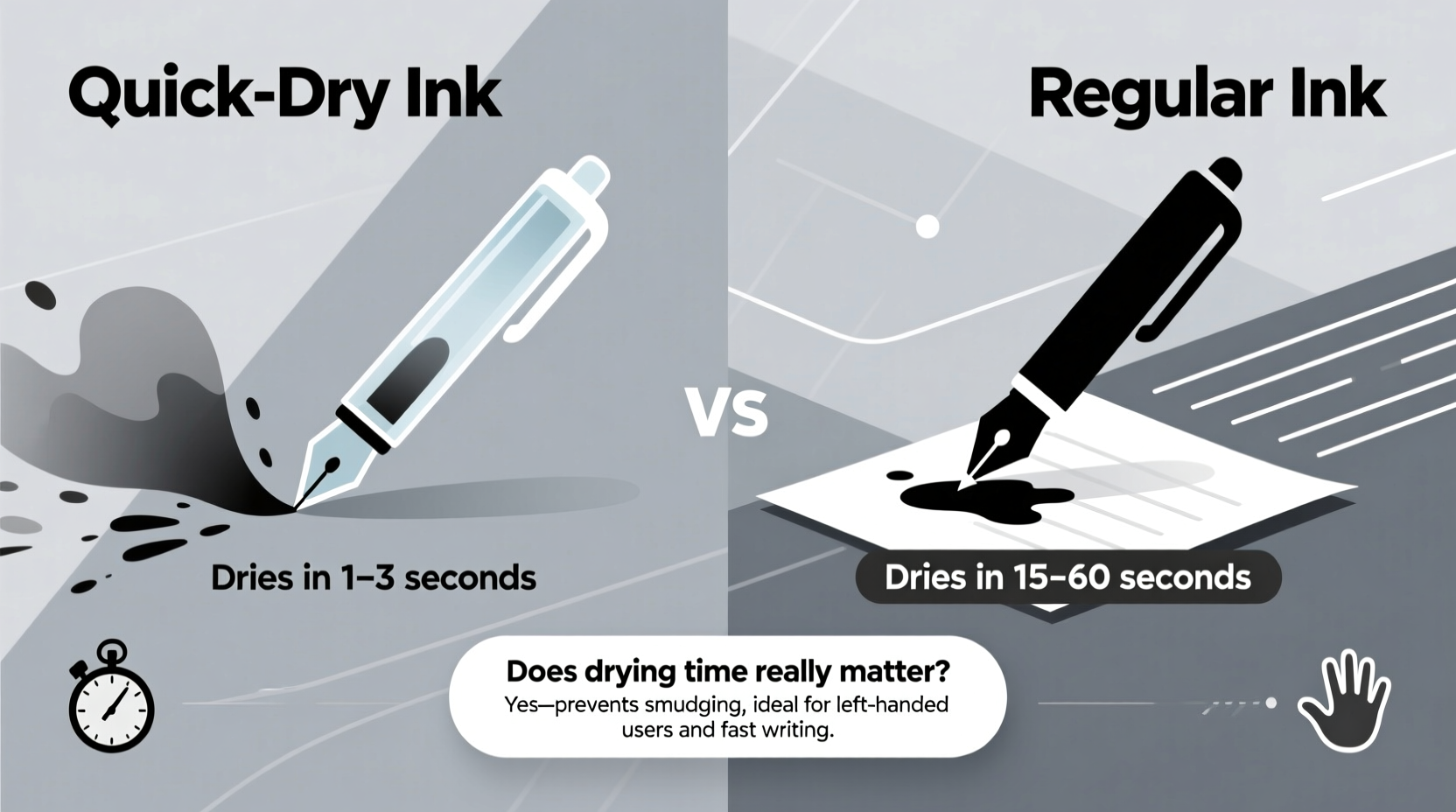
Ink drying is not just about evaporation; it’s a chemical process influenced by ink composition, paper type, and environmental conditions. Ballpoint, rollerball, and gel pens each use different formulations, which directly impact how quickly the ink sets on paper.
Quick-dry inks are typically alcohol-based or formulated with fast-evaporating solvents that allow the ink to set almost instantly upon contact with paper. This minimizes smearing when your hand passes over freshly written text. Regular inks, especially those in gel or water-based rollerball pens, rely more on absorption into the paper fibers and slower solvent release, leading to longer drying times—sometimes up to 10 seconds or more.
Paper quality also plays a role. Porous papers like standard copy paper absorb ink faster, reducing visible wetness but potentially increasing bleed-through. Smoother, coated papers may delay drying, increasing the risk of smudging even with quick-dry formulas.
“Drying time isn’t just a minor detail—it’s a critical performance metric, especially for left-handed writers or anyone who writes quickly.” — Dr. Lena Patel, Materials Scientist at PenForm Labs
Quick-Dry vs Regular Ink: A Practical Comparison
| Feature | Quick-Dry Ink Pens | Regular Ink Pens |
|---|---|---|
| Drying Speed | 1–3 seconds | 5–15+ seconds |
| Smudge Resistance | High | Low to moderate |
| Ink Flow | Smoother but sometimes thinner | Richer, bolder lines |
| Suitable For | Left-handed users, fast note-takers, signing documents | Journaling, calligraphy, expressive writing |
| Paper Compatibility | Works well on most surfaces, including glossy | Best on absorbent paper |
| Likelihood of Bleed-Through | Lower | Higher, especially on thin paper |
| Common Examples | Pilot G-2 07 (Quick Dry), Uni-ball Jetstream | Pilot Precise V5, Pentel EnerGel |
When Drying Time Actually Matters
In certain situations, fast-drying ink isn’t just convenient—it’s essential.
- Signing legal documents: A smudged signature can invalidate a form or appear unprofessional. Quick-dry ink ensures legibility and permanence immediately after signing.
- Left-handed writing: Left-handed individuals often drag their hands across fresh ink. Without fast-drying ink, this results in constant smearing and frustration.
- Fast-paced environments: Students, journalists, or professionals taking rapid notes benefit from being able to flip pages or continue writing without waiting.
- Using digital notebooks: Devices like reMarkable or Moleskine Smart Writing Systems require clean, smear-free strokes for accurate scanning.
A Real-World Example: The Student’s Dilemma
Consider Maria, a university student majoring in law. During her first semester, she used a popular gel pen known for its smooth flow and vibrant ink. However, she consistently struggled with smudged notes—her palm would drag through wet ink during long lectures, making her notes nearly illegible by the end of class.
After switching to a quick-dry rollerball like the Uni-ball Jetstream, her note-taking transformed. She could write continuously, flip pages, and rest her hand without ruining her work. The change wasn’t in her handwriting or attention—it was purely in the pen’s performance. Her grades didn’t improve overnight, but her ability to review clean, readable notes gave her a tangible academic edge.
This case illustrates that drying time isn’t just about aesthetics. It affects functionality, efficiency, and even confidence in everyday tasks.
Choosing the Right Pen: A Step-by-Step Guide
Selecting between quick-dry and regular ink shouldn’t be arbitrary. Follow this sequence to make an informed decision:
- Assess your writing habits: Are you fast-paced or deliberate? Do you write for long periods?
- Determine your dominant hand: Left-handed writers should prioritize smudge resistance.
- Identify primary use cases: Note-taking, signing, sketching, or journaling?
- Test on your preferred paper: Try a sample pen on the notebook or forms you use daily.
- Evaluate trade-offs: Will you sacrifice ink richness for speed? Is longevity more important than immediate dry time?
- Check refill availability: Some quick-dry pens use proprietary refills that may be harder to source.
Expert Tips for Maximizing Performance
No pen is perfect out of the box. How you use and store it affects performance.
- Avoid extreme temperatures: Heat can thin ink and increase drying time; cold can slow flow and cause skipping.
- Clean the nib occasionally: Dust and dried ink buildup can interfere with consistent delivery.
- Cap securely: Uncapped quick-dry pens may dry out faster due to volatile solvents.
- Rotate your pens: Using multiple pens prevents overuse and extends the life of each.
Frequently Asked Questions
Can I convert a regular ink pen into a quick-dry one?
No. Ink formulation is sealed within the refill. You cannot alter drying time without replacing the entire ink cartridge or refill with a quick-dry version designed for that pen model.
Do quick-dry pens last as long as regular ones?
In terms of ink volume, yes—many have comparable reservoir sizes. However, because quick-dry inks often use thinner formulations, some users report slightly lower page yield. Always check manufacturer specifications for estimated writing length.
Are there downsides to quick-dry ink?
Some users find that quick-dry inks feel less luxurious—less “buttery” or bold—than premium gel inks. Additionally, very fast-drying inks may skip on certain coated papers or dry out faster if left uncapped.
Making the Right Choice for Your Needs
The choice between quick-dry and regular ink ultimately comes down to context. If reliability, speed, and cleanliness are priorities—especially in professional or academic settings—quick-dry pens offer a measurable advantage. Their ability to deliver sharp, smudge-free writing under pressure makes them indispensable tools.
On the other hand, if you value expressive writing, deep color saturation, or enjoy the tactile pleasure of a slow, deliberate script, regular ink pens still hold strong appeal. They’re ideal for journaling, creative projects, or any situation where appearance trumps urgency.
The key is intentionality. Understand your needs, test options, and don’t assume that a smoother or bolder ink is inherently better. Sometimes, the best pen isn’t the one that feels the nicest in your hand—but the one that works best with your lifestyle.
“People overlook drying time until they ruin a page. Then they never forget it.” — James Holloway, Stationery Reviewer at WriteGear Weekly
Final Thoughts: Small Detail, Big Impact
Drying time might seem like a minor technicality, but its effects ripple through every note, signature, and idea you put on paper. In a world where efficiency and presentation matter, a few seconds of drying can save minutes of frustration. Whether you're a student, professional, artist, or occasional writer, taking drying time seriously can elevate your everyday writing experience.




 浙公网安备
33010002000092号
浙公网安备
33010002000092号 浙B2-20120091-4
Comments
No comments yet. Why don't you start the discussion?