
Squeaky floorboards are more than just a minor household nuisance—they can disrupt sleep, ruin conversations, and make your home feel less polished. Whether it’s a single board near the kitchen or an entire hallway chorus of creaks, the noise often signals underlying movement between wood components. The good news? Most squeaks can be silenced with simple tools and techniques you likely already have at home. Understanding what causes the noise—and how to stop it—can save you time, money, and frustration.
Floor squeaks typically occur when wooden subfloors separate slightly from joists, or when individual boards rub against each other due to seasonal expansion and contraction. While some may assume this is a sign of serious structural damage, in most cases, it’s merely friction from loose connections. Addressing these issues promptly not only restores peace but also helps maintain the integrity of your flooring over time.
Why Floorboards Squeak: The Science Behind the Sound
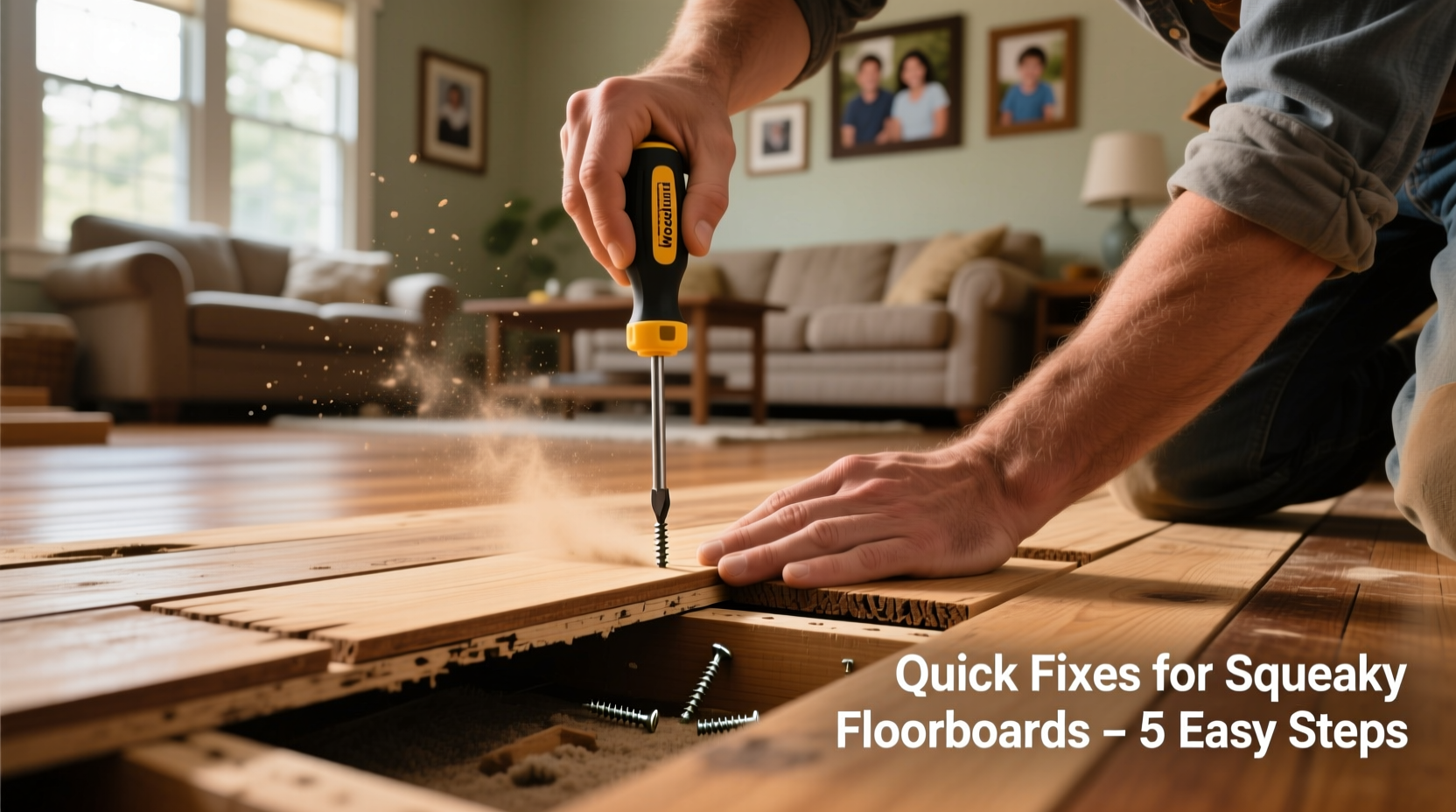
The root cause of squeaky floors lies in motion. When foot traffic applies pressure, floorboards shift slightly. If there's even a small gap between the subfloor and the supporting joists—or between adjacent boards—this movement creates friction, resulting in that familiar high-pitched groan.
Several factors contribute to this shifting:
- Wood shrinkage: Seasonal changes in humidity cause wood to expand and contract, leading to gaps.
- Loose fasteners: Nails or screws can loosen over time, especially if they missed the joist during installation.
- Weak subfloor adhesion: Insufficient glue or improper nailing patterns reduce stability.
- Structural settling: Homes naturally settle over years, which can misalign framing elements.
It’s important to distinguish between surface-level squeaks and deeper structural concerns. A localized squeak under normal walking conditions is usually harmless. However, widespread flexing, sagging, or persistent noise after repairs may warrant professional inspection.
“Most squeaks aren’t dangerous, but ignoring them long-term can lead to accelerated wear and cosmetic damage.” — Daniel Reeves, Residential Carpenter & Flooring Specialist
Step-by-Step Guide: How to Locate and Fix Squeaky Spots
Before applying any fix, you need to pinpoint exactly where the squeak occurs. This process requires patience and precision.
- Walk the area slowly: Have someone walk across the suspected zone while you listen closely. Mark each squeaky spot with masking tape or chalk.
- Test multiple angles: Apply weight from different directions—heel, toe, side—to see if the sound changes. This helps determine whether the issue is vertical (up-and-down movement) or lateral (side-to-side).
- Check access from below (if possible): Basements or crawl spaces allow direct observation of joists and subfloor joints. Look for visible gaps or nails backing out.
- Confirm joist alignment: Use a stud finder or tap method to locate joists beneath the flooring. Knowing their position ensures accurate repair targeting.
Fix #1: Reinforce from Below (Basement/Crawl Space Access)
If you have access beneath the floor, this is often the most effective approach. The goal is to eliminate movement between the subfloor and joists.
- Position a temporary support post or clamp to gently lift the subfloor and close any gap.
- Cut a wooden block (about 6–8 inches long) to fit snugly between the joist and subfloor.
- Secure the block with two construction screws driven at opposing angles (toe-screwing).
- Remove the temporary support—pressure should now be transferred through the new brace.
This method provides lasting rigidity and prevents future shifting.
Fix #2: Drive Screws Through the Floor (No Access Needed)
When basement access isn't available, driving screws through the finished floor into the joists works well—especially with carpet or engineered wood.
- Locate the joist directly under the squeaky board using a stud finder.
- Select trim-head screws slightly longer than the combined thickness of the finish floor and subfloor (typically 2.5” to 3”).
- Drive the screw at a slight angle into the joist until the head is just below the surface.
- For hardwood floors, use a plug cutter to cover the hole with a matching wood dowel.
Alternative Quick Fixes Without Tools
Not everyone has time or tools for major interventions. Fortunately, several low-effort methods can reduce or eliminate squeaks temporarily—or even permanently in mild cases.
Use Powdered Lubricants
Pouring lubricant between floorboard seams reduces friction without damaging finishes.
- Talcum powder: Safe for all surfaces; apply via crevice tool attachment on a vacuum.
- Graphite powder: Ideal for tight joints; doesn’t clump like oils.
- Bar soap shavings: Press fine shavings into gaps—acts as a dry lubricant.
Work the powder into the seam by walking back and forth. Repeat every few months if needed.
Insert Foam or Felt Shims
For gaps between boards (common in older homes), compressible shims can stabilize movement.
- Cut thin strips of closed-cell foam or felt.
- Tap them into visible cracks using a putty knife.
- Trim flush with a utility knife.
This technique silences lateral rubbing and improves comfort underfoot.
Do’s and Don’ts When Repairing Squeaky Floors
| Do | Don’t |
|---|---|
| Use construction adhesive when reattaching subfloors | Over-tighten screws, which can crack flooring |
| Mark joist locations before drilling | Use standard nails instead of screws—they loosen again |
| Work in sections to avoid missing spots | Apply oil-based lubricants on finished floors (they stain) |
| Wear eye protection when drilling overhead | Ignore squeaks in high-moisture areas like bathrooms |
| Test repaired areas thoroughly after completion | Assume all squeaks have the same cause |
Mini Case Study: Solving a Hallway Full of Squeaks
In a 1920s bungalow in Portland, Oregon, the second-floor hallway developed a symphony of squeaks that disturbed the family nightly. The homeowner, Maria, first tried talcum powder between the oak planks—but results lasted only a week. She then rented a stud finder and mapped joist positions from above.
Using 2.5-inch trim-head screws, she secured five key points where boards met joists. One particularly noisy junction required a support block installed from the attic below. After three hours of work over a weekend, the hallway was silent. Six months later, no recurrence has been reported.
Her success came from combining diagnostics with targeted fastening—not treating every squeak the same way.
Expert-Approved Checklist for Permanent Results
- Walk through the area to identify all squeaky zones
- Mark each location with tape or pencil
- Determine access: from above, below, or both?
- Locate joists using a stud finder or tapping method
- Gather materials: screws, drill, lubricant, shims, safety gear
- Choose appropriate fix based on access and flooring type
- Reinforce connections with screws or blocking
- Apply dry lubricant to remaining joints if needed
- Test all repaired areas with full weight
- Inspect again after one week for recurrence
Frequently Asked Questions
Can I fix squeaky floors without damaging the finish?
Yes. Using trim-head screws minimizes visibility, and filling holes with color-matched wood plugs or wax sticks makes repairs nearly invisible. For carpeted floors, simply tuck the screw heads beneath the padding.
Will humidity changes make the squeaks come back?
Possibly. Wood naturally expands and contracts with moisture levels. While proper fastening reduces movement, seasonal shifts may reintroduce minor noise. Maintaining indoor humidity between 35% and 55% helps minimize this effect.
Is it worth hiring a professional for one squeaky board?
Generally, no. Isolated squeaks are ideal DIY projects. However, if you notice widespread flexing, water damage, or signs of structural compromise, consult a licensed contractor. Professionals bring specialized tools like subfloor jacks and structural adhesives for complex jobs.
Final Thoughts: Silence Starts with Smart Action
A quiet floor is more than a comfort—it reflects care and attention to your home’s condition. Squeaky boards don’t have to be permanent fixtures. With basic tools, a little know-how, and systematic troubleshooting, most issues can be resolved in a single afternoon.
The key is acting early. Delaying repairs allows continued wear, potentially turning a simple fix into a costly renovation. Whether you choose lubrication, screw reinforcement, or bracing from below, each step brings you closer to peaceful living.




 浙公网安备
33010002000092号
浙公网安备
33010002000092号 浙B2-20120091-4
Comments
No comments yet. Why don't you start the discussion?