
Dining chairs are workhorses in any home. They endure daily use, shifting weight, and occasional bumps. Over time, even the sturdiest chair can develop a wobble—not because it’s beyond repair, but because joints loosen, legs settle unevenly, or floor surfaces expose instability. The good news? You don’t need a toolbox, replacement screws, or a trip to the hardware store to stabilize a shaky chair. With clever techniques and everyday household items, you can fix a wobbly dining chair quickly, quietly, and completely without tools or extra hardware.
These methods are ideal for renters, temporary fixes before guests arrive, or when you simply want to avoid drilling or disassembling furniture. More importantly, they’re accessible. Whether you're in a kitchen with only dish towels and rubber bands or a dining room with napkin rings and coasters, there's a solution that works—right now.
Why Chairs Wobble—and When Tools Aren’t Necessary
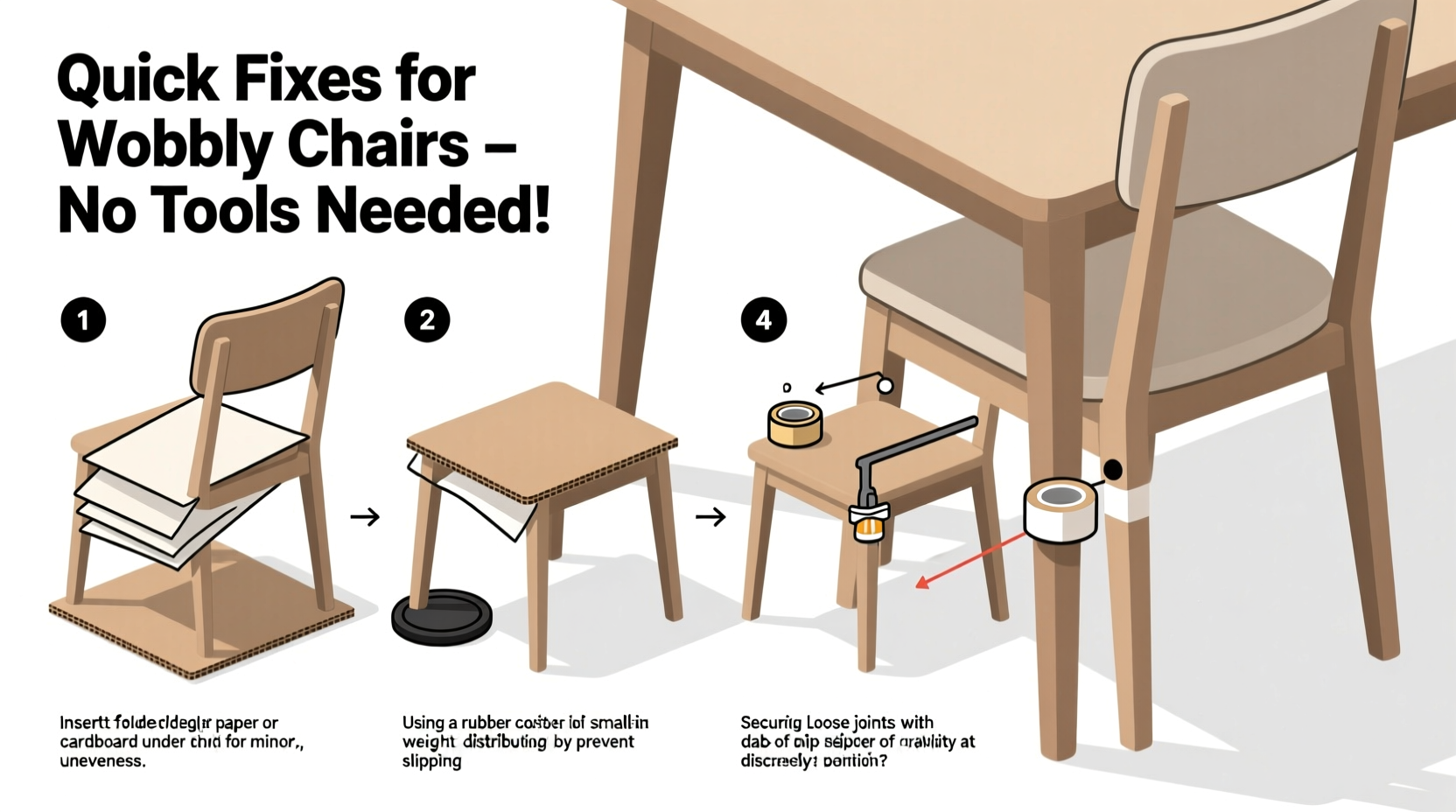
A wobbly chair usually stems from one of three issues: uneven leg contact with the floor, loosened joints due to wood expansion or glue failure, or minor structural shifts from repeated use. While traditional repairs involve tightening bolts, regluing joints, or adding corner braces, these require tools and downtime. But many wobbles are small enough that structural reinforcement isn’t the priority—stability is.
In fact, most everyday wobbles occur not from broken parts, but from imbalance. One leg may be slightly shorter due to wear, carpet compression, or an uneven floor. In such cases, the fix isn't mechanical—it's corrective. Leveling the contact points restores balance, eliminating the wobble without altering the chair itself.
“Many people assume a wobble means damage, but often it’s just a matter of load distribution. A quarter-inch difference in leg height can create a noticeable rock.” — Lena Pruitt, Furniture Restoration Specialist
Understanding this principle opens the door to non-invasive fixes. Instead of repairing the chair, you adapt it to its environment—using what you already have.
Everyday Household Fixes (No Tools Required)
The key to tool-free chair stabilization lies in improvisation. Common household objects can act as shims, dampeners, or stabilizers. These aren’t long-term replacements for proper maintenance, but they’re reliable, immediate, and surprisingly durable.
1. Folded Paper or Cardboard Shims
If one leg is shorter than the others, place folded paper or thin cardboard under the base of the short leg. Start with a single sheet, test the chair, and add layers gradually until the wobble stops. Dollar bills, receipt paper, or cut-up cereal boxes work well.
2. Rubber Bands for Joint Tightening
Loose leg-to-seat joints often cause side-to-side wobble. Stretch wide rubber bands around the joint where the leg meets the seat frame. The tension pulls the pieces closer together, reducing play. Use multiple bands in parallel for more pressure.
This method works best on chairs with exposed square or rectangular frames. It won’t fix severe looseness, but it can eliminate small movements that contribute to instability.
3. Coasters or Felt Pads as Levelers
Hardwood or tile floors amplify wobbles caused by tiny leg discrepancies. Place a felt coaster or adhesive-backed felt pad (often used under furniture legs) beneath the shortest leg. If you don’t have felt pads, a folded fabric napkin or tea towel can serve temporarily.
For chairs with all four legs touching but still rocking, try placing a soft coaster under two diagonal legs. This creates a “four-point leveling” effect, distributing weight more evenly across micro-uneven surfaces.
4. Tension from Tablecloth or Rug Grip
If your dining table sits on a rug, the chair legs may sink at different rates into the padding. Place a non-slip rug pad or shelf liner (the rubbery kind used in cabinets) under the chair legs. Even a section cut from a silicone oven mitt provides grip and cushioning.
Alternatively, tuck the edge of a tablecloth tightly under the chair legs. The tension resists lateral movement and can reduce perceived wobble during use.
5. Wedging with Cork or Eraser Pieces
For chairs with visible gaps in joints—especially where a dowel or tenon has slipped—insert a small wedge of soft material. A piece of wine cork, pencil eraser, or even a folded Post-it note can fill the gap and stiffen the connection.
Press the material gently into the crack using your thumb. Don’t force it—over-wedging can split wood. The goal is snugness, not pressure.
Step-by-Step: Stabilize a Wobbly Chair in 5 Minutes
Follow this sequence to diagnose and fix most common wobbles without leaving the dining area.
- Identify the direction of wobble: Sit in the chair (or press down firmly) and rock it forward/backward, then side-to-side. Note which motion causes instability.
- Lift each leg slightly: Slide a piece of paper under each leg. If it slides easily under one leg but not others, that leg is too short or not touching the floor.
- Add a shim: Fold a piece of paper or cardboard and place it under the short leg. Test again. Repeat layering until the chair sits flat.
- Check for joint looseness: Grasp each leg and wiggle it horizontally. If there’s play, wrap a thick rubber band around the joint near the seat.
- Test stability: Sit in the chair and shift your weight. If the wobble persists, re-evaluate whether the floor is uneven. Try rotating the chair 90 degrees—if the wobble changes, the issue is the floor, not the chair.
Do’s and Don’ts of Tool-Free Chair Repair
| Do | Don’t |
|---|---|
| Use layered shims for fine adjustments | Stack thick, slippery materials like plastic cards |
| Wrap rubber bands around both sides of a joint | Stretch rubber bands so tightly they deform the wood |
| Place non-slip materials under all four legs on smooth floors | Use tape that leaves residue on finished wood |
| Rotate the chair to test if the floor is the issue | Assume the chair is broken just because it wobbles |
| Reassess after 24 hours; some fixes settle | Ignore persistent creaking—it may signal deeper joint fatigue |
Real-Life Example: Dinner Party Rescue
Sarah was hosting a dinner party when she noticed one of her vintage dining chairs rocked noticeably on her hardwood floor. She didn’t own tools, and removing the chair wasn’t an option—guests were arriving in 20 minutes.
She tested each leg and found one back leg didn’t touch the floor. Using a folded sticky note, she created a thin shim and taped it lightly to the bottom of the short leg with masking tape. Then, noticing slight side-to-side play in the front joints, she wrapped two wide rubber bands around each front leg where it met the seat.
The chair stabilized immediately. Throughout the evening, no guest noticed anything unusual. Two days later, Sarah replaced the temporary fix with felt pads—but the quick solution held strong through the entire event.
Expert Tips for Long-Term Stability Without Hardware
While temporary fixes are valuable, a few habits can prevent wobbles from developing in the first place.
- Rotate chairs regularly: Uneven wear occurs when the same chairs occupy the same spots. Rotating them every few months distributes stress.
- Keep humidity stable: Wood expands and contracts with moisture changes. In dry climates, use a humidifier to prevent joint shrinkage.
- Clean under legs periodically: Dust and grit buildup can tilt a chair subtly. Wipe the bottom of legs and floor contact points monthly.
- Use furniture coasters: Small, round felt discs under each leg reduce friction and help maintain even contact on hard floors.
“Prevention is quieter than repair. A chair that never wobbles saves more than effort—it preserves craftsmanship.” — Mateo Delgado, Sustainable Furniture Designer
When to Accept Limits—and Plan for Real Repair
Tool-free fixes excel at managing minor instability, but they aren’t substitutes for structural integrity. If a chair leg is cracked, a joint is visibly separated, or the seat sags under weight, temporary methods won’t suffice. Similarly, if the wobble returns daily despite consistent shimming, the chair likely needs glue, clamps, or professional attention.
That said, even in those cases, quick fixes buy time. You can stabilize the chair for another week or month while sourcing help or planning a proper repair. This is especially useful in rental units where landlord approval is needed for modifications.
FAQ
Can I use tape to fix a loose joint?
Not effectively. Tape lacks tensile strength to hold shifting wood. However, it can secure shims or rubber bands in place. For joints, rely on tension-based solutions like rubber bands or wedges.
Will a folded dollar bill really work as a shim?
Yes. U.S. currency is approximately 0.0043 inches thick. Ten folded bills equal less than 1/16 inch—precise enough to correct minor leg discrepancies. Plus, it’s clean, uniform, and readily available.
How long do these fixes last?
Temporary fixes typically last from a few days to several weeks, depending on usage. A shim under a rarely moved chair may stay effective for months. High-traffic chairs may need adjustment weekly. Reassess after heavy cleaning or chair movement.
Checklist: Quick Stabilization Routine
Keep this checklist handy for instant response to wobbly chairs:
- ✅ Identify wobble direction (front-back or side-to-side)
- ✅ Check floor contact with paper test
- ✅ Apply folded paper or cardboard shim if needed
- ✅ Wrap rubber bands around loose joints
- ✅ Add non-slip material under legs (felt, rubber, cloth)
- ✅ Test with full body weight
- ✅ Recheck after 24 hours
Conclusion
A wobbly dining chair doesn’t have to disrupt your day or wait for a hardware run. With observation and resourcefulness, you can restore stability using only everyday household items. These fixes respect the integrity of the furniture, avoid permanent alterations, and deliver immediate results.
Next time a chair rocks under your weight, pause—don’t push it aside. Diagnose, improvise, and stabilize. The simplest solutions are often the most elegant. And who knows? That rubber band and sticky note fix might just carry you through a holiday dinner, a family gathering, or a quiet breakfast in peace.




 浙公网安备
33010002000092号
浙公网安备
33010002000092号 浙B2-20120091-4
Comments
No comments yet. Why don't you start the discussion?