
When it comes to choosing between a quilted chain bag and a leather backpack, the decision often feels like a tug-of-war between fashion and function. One embodies elegance and evening-ready sophistication; the other promises utility and all-day comfort. But beyond aesthetics, which truly wins in practicality? The answer depends on your lifestyle, daily needs, and how you define “practical.” For some, practical means carrying everything from laptops to water bottles without discomfort. For others, it’s about making a polished impression with minimal effort. This article breaks down both options across key factors—durability, storage, comfort, versatility, and maintenance—to help you decide which bag aligns best with your real-world demands.
Durability: How Long Will Each Bag Last?
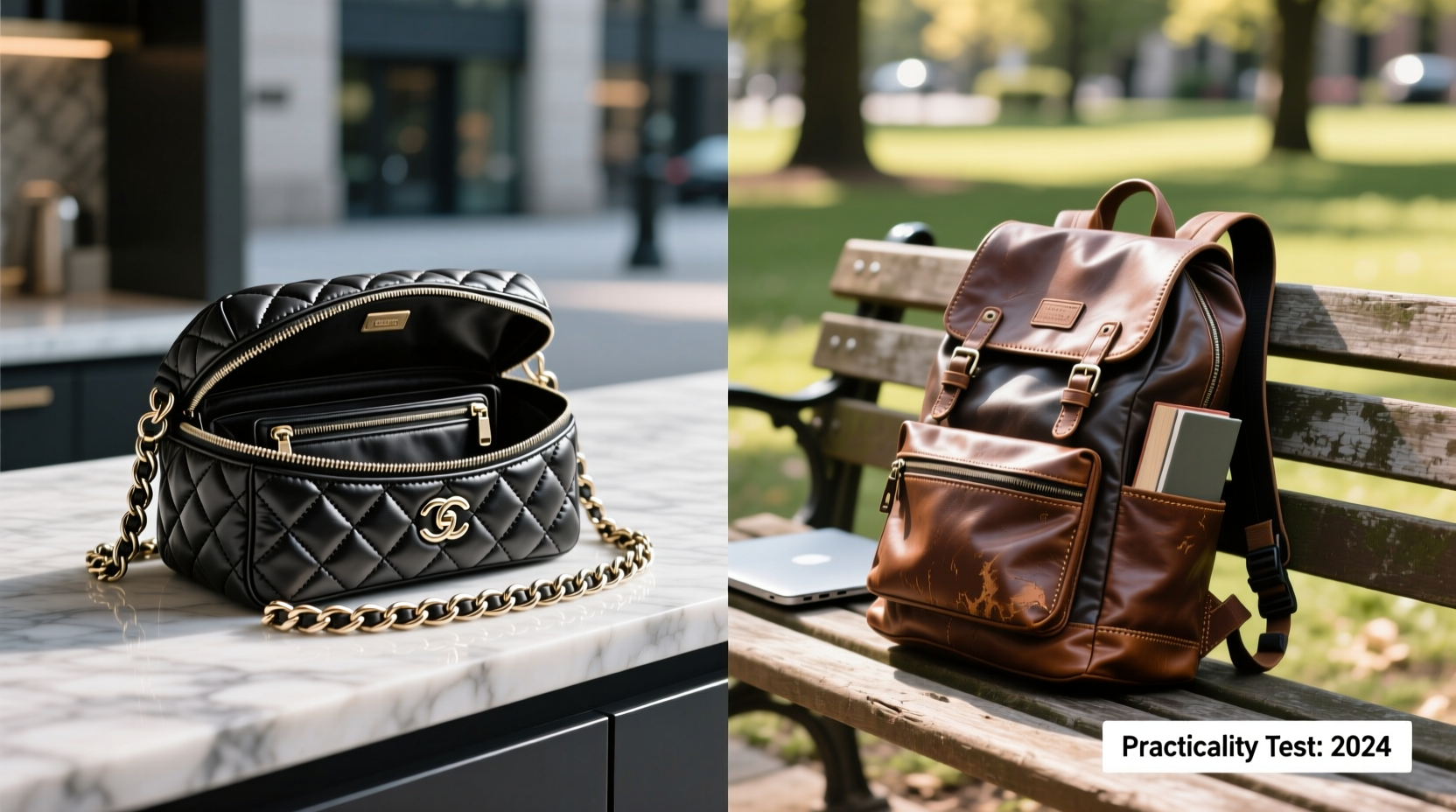
Durability isn’t just about material strength—it’s also about structural integrity, resistance to wear, and long-term resilience under regular use.
Leather backpacks, especially those made from full-grain or top-grain leather, are built to last. High-quality leather develops a patina over time, becoming more characterful rather than less functional. Stitches are typically reinforced, zippers are robust, and the overall construction supports heavy loads. With proper care, a good leather backpack can remain in rotation for a decade or more.
Quilted chain bags, while visually striking, face durability challenges. The delicate quilting—often stitched in diamond patterns—is prone to fraying if snagged. The metal chains, though stylish, can break under strain or develop weak links over time. Additionally, many quilted bags use synthetic or coated fabrics that degrade faster than natural leather when exposed to moisture or sunlight.
“Luxury doesn’t have to mean fragile, but with quilted designs, there’s often a trade-off between visual appeal and structural endurance.” — Marcus Lin, Product Designer at Urban Carry Co.
Storage Capacity and Organization
If you need to carry multiple items—a tablet, wallet, keys, cosmetics, phone charger, notebook—the difference in functionality becomes stark.
A typical **leather backpack** features multiple compartments: padded laptop sleeves, front zip pockets, internal organizers, and even hidden anti-theft sections. Most offer 15–20 liters of capacity, enough for a full day’s essentials, including gym clothes or work documents. Their design encourages efficient packing and easy access.
In contrast, the average **quilted chain bag** holds little more than a phone, lipstick, cardholder, and perhaps small keys. While some larger crossbody versions exist, they rarely include structured dividers or protective padding. Retrieving items often means digging through a single open cavity, increasing the risk of losing small objects or damaging contents.
| Feature | Leather Backpack | Quilted Chain Bag |
|---|---|---|
| Average Capacity | 15–22 L | 1–3 L |
| Compartments | 4–7 (including padded) | 0–2 (usually unstructured) |
| Laptop Friendly | Yes (up to 15\") | No |
| Weight Distribution | Balanced across shoulders/back | Uneven, shoulder or hand strain |
Comfort and Ergonomics
No bag is practical if wearing it causes discomfort. Here, the backpack format has a clear advantage.
Leather backpacks distribute weight evenly across both shoulders and the upper back, reducing strain during extended wear. Padded straps and contoured back panels enhance comfort, especially when loaded. Even heavier loads feel manageable thanks to biomechanical support.
Quilted chain bags, however, place all weight on one shoulder or arm. The rigid chains dig into skin, and the lack of padding makes them uncomfortable after 20–30 minutes of continuous wear. Carrying one on a crowded commute or while walking long distances quickly becomes a burden.
This doesn’t mean chain bags are unusable—they shine in low-movement scenarios: dinner dates, gallery openings, or short outings where appearance outweighs utility. But for anyone logging thousands of steps a day, the ergonomic cost is high.
Mini Case Study: Commuter vs. Social Butterfly
Sophia, a graphic designer in Chicago, used to carry a quilted chain bag to client meetings. She loved the look but found herself constantly adjusting the strap and arriving with shoulder pain. After switching to a slim leather backpack, she noticed immediate improvements: no more soreness, better organization, and the ability to carry her tablet and sketchbook without hassle. Her clients still complimented her style—now paired with confidence from not fumbling for items mid-meeting.
Meanwhile, Lena, a PR consultant in LA, uses her quilted bag almost exclusively for evening events. She values its instant glamour and ease of grabbing before heading out. For weekday errands, she switches to a tote. Her strategy? Match the bag to the moment—not force one solution for all situations.
Maintenance and Care Requirements
Practicality includes how much effort a bag demands to stay presentable.
Leather backpacks require periodic conditioning (every 3–6 months) to prevent drying and cracking. They should be wiped down after exposure to rain and stored away from direct heat. However, minor scuffs can often be buffed out, and quality leather ages gracefully.
Quilted chain bags demand more delicate handling. The fabric may stain easily, and cleaning often requires professional services to avoid damaging the stitching or coating. Chains tarnish over time, especially with sweat exposure, and may need polishing. If the quilted lining sags or loses shape, restoration is difficult and costly.
- Leather: Wipe with damp cloth, condition twice a year, store in breathable bag
- Quilted Fabric: Spot clean only, avoid moisture, store upright to maintain structure
- Chains: Wipe after use, polish monthly if worn frequently
Versatility Across Settings
How seamlessly a bag transitions between environments defines its real-world usefulness.
The leather backpack excels here. It fits naturally in offices, campuses, travel hubs, and casual weekend outings. In professional settings, minimalist leather backpacks are increasingly accepted—even preferred—for their blend of form and function. Add a blazer, and the look remains cohesive.
The quilted chain bag, while iconic, is context-sensitive. It elevates an evening ensemble but looks out of place in rugged or active environments. You wouldn’t bring it hiking, to the gym, or on a rainy city walk. Its strength lies in social precision: when you want to signal style-first intent.
Checklist: Choosing the Right Bag for Your Lifestyle
- Do you carry more than five daily essentials? → Lean toward backpack.
- Are you on your feet for hours? → Backpack offers better comfort.
- Is your schedule packed with formal or social events? → Quilted bag adds flair.
- Do you value low-maintenance accessories? → Leather wins for resilience.
- Is budget a concern? → A well-made backpack often costs less than luxury quilted bags.
- Do you want one bag for most situations? → Versatile leather backpack is likely the answer.
Frequently Asked Questions
Can a quilted chain bag be practical for everyday use?
Only if your daily load is extremely light—phone, cards, lip balm—and you’re not walking far. For most people, the lack of space and poor ergonomics make it impractical as a primary bag.
Are leather backpacks too bulky for women or petite frames?
Not necessarily. Many brands now design slim-profile leather backpacks with adjustable straps and curved shapes that suit smaller builds. Look for models under 16 inches in height and with lightweight construction.
Isn’t a quilted bag more stylish than a backpack?
Subjectively, yes—it carries strong fashion symbolism, often associated with haute couture. But modern leather backpacks come in sleek, minimalist designs that exude quiet sophistication. Style isn’t exclusive to one silhouette.
Final Verdict: Which Is Actually More Practical?
The leather backpack is objectively more practical for daily, multifunctional use. It offers superior durability, greater storage, better comfort, easier maintenance, and broader versatility. It adapts to life’s unpredictability—rainy commutes, sudden errands, transit delays—without compromising performance.
The quilted chain bag, while less functional, serves a different purpose: it’s a statement piece. It belongs in wardrobes not as a workhorse, but as a highlight—like a pair of designer heels versus running sneakers. Both have value, but only one handles the grind of everyday reality.
Ultimately, practicality isn’t about rejecting style. It’s about alignment: choosing what supports your actual routine, not just an idealized version of it. If your days involve movement, multitasking, and carrying more than just a phone, the leather backpack earns its place. Save the quilted bag for moments when looking impeccable matters more than hauling cargo.




 浙公网安备
33010002000092号
浙公网安备
33010002000092号 浙B2-20120091-4
Comments
No comments yet. Why don't you start the discussion?