
The QWERTY keyboard layout is so deeply embedded in modern life that most people use it daily without ever questioning its origins. Found on computers, smartphones, and even digital kiosks, QWERTY dominates global typing culture. Yet few know the true story behind its creation. Contrary to popular belief, it wasn’t designed for speed or efficiency. Instead, its layout emerged from mechanical limitations, market competition, and a stroke of strategic engineering.
Understanding why QWERTY exists as it does reveals not just a tale of 19th-century innovation but also how early design decisions can persist for over a century—shaping how humans interact with machines.
The Typewriter’s Mechanical Challenge
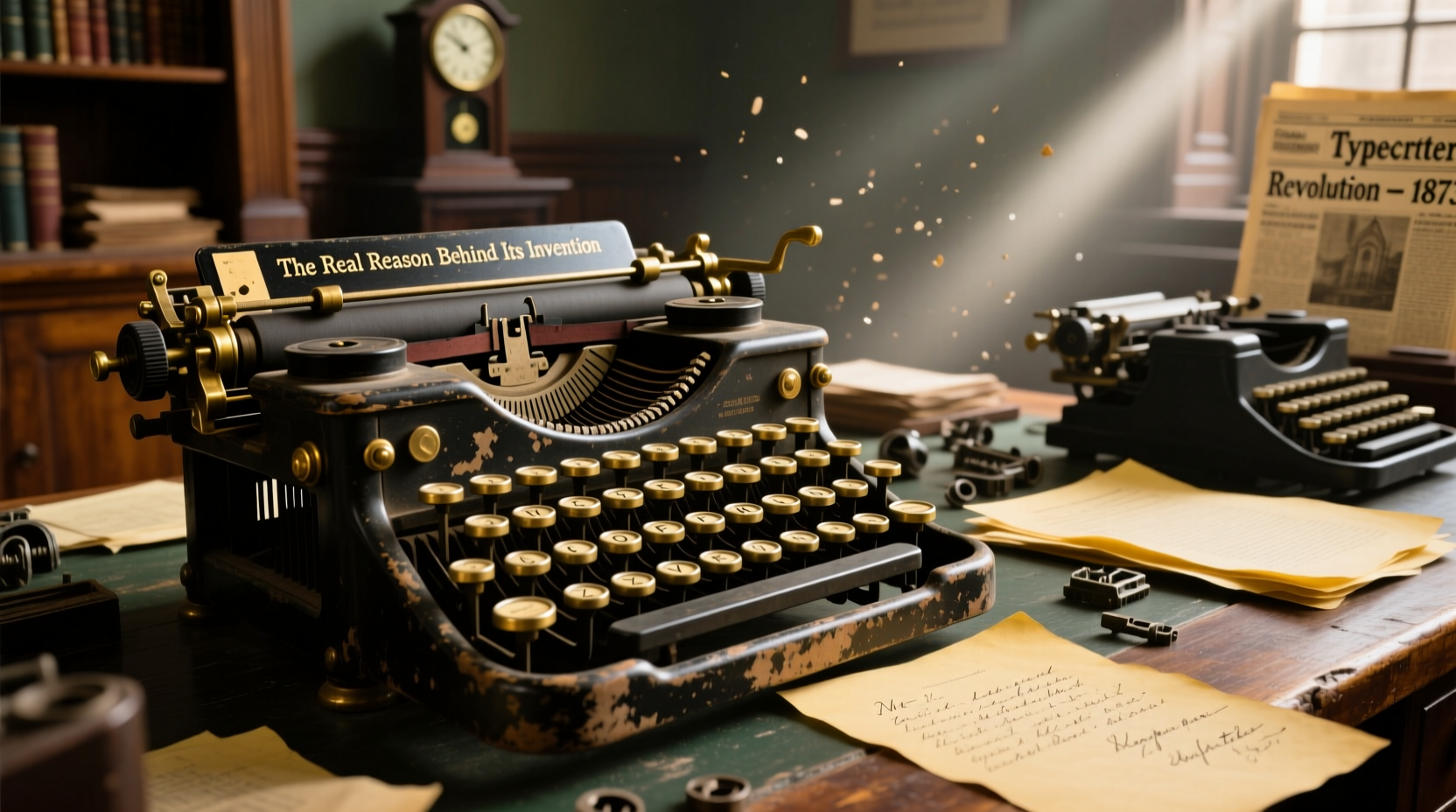
In the 1860s, Christopher Latham Sholes, a Milwaukee-based inventor, began developing a machine to transcribe letters mechanically. His goal was simple: allow users to produce clean, legible documents faster than handwriting. However, early prototypes faced a critical flaw. The typewriter’s typebars—metal arms with raised characters—would frequently jam when adjacent keys were pressed in quick succession.
For example, pressing “A” and “S” rapidly caused their respective bars to collide before returning to rest. This mechanical interference slowed down typing and frustrated users. To address this, Sholes realized he needed to reduce key clashes—not by making the machine faster, but by slowing the typist down.
He rearranged the keyboard so that commonly used letter pairs were placed farther apart. This reduced the likelihood of jamming by spacing out frequent combinations like “TH,” “HE,” and “IN.” The result was a deliberately inefficient layout designed to work *with* the machine’s limitations, not against them.
The Evolution of the QWERTY Layout
Sholes’ first keyboard layouts looked nothing like today’s QWERTY. Early versions arranged letters alphabetically. By 1873, after extensive experimentation and collaboration with fellow inventors Carlos Glidden and Samuel Soule, Sholes finalized a configuration that minimized jams while still being usable.
This version was licensed to E. Remington and Sons, a firearms and sewing machine manufacturer looking to diversify. Remington refined the design, added features like shift keys for capitalization, and launched the Remington No. 2 in 1878—the first typewriter with the now-familiar QWERTY arrangement.
The timing was crucial. As businesses adopted typewriters for correspondence, secretarial schools began teaching QWERTY as standard. Once institutionalized, switching costs became too high—even when better alternatives emerged.
Key Milestones in QWERTY’s Rise
- 1868: Sholes patents the first typewriter with a piano-like keyboard.
- 1873: Final QWERTY layout developed and sold to Remington.
- 1878: Remington No. 2 released, popularizing QWERTY commercially.
- 1888: Frank McGurrin, a court stenographer, wins a typing contest using touch-typing on a QWERTY machine, cementing its dominance.
- 20th Century: QWERTY becomes standard across electric typewriters and later computer keyboards.
Debunking the Myth: Was QWERTY Designed to Slow Typists?
A persistent myth claims that QWERTY was intentionally created to slow typists down. While partially rooted in truth, this oversimplifies the reality. Engineers didn’t aim to limit human performance—they aimed to accommodate mechanical constraints.
As historian Richard Hunter explains:
“The QWERTY layout was less about suppressing speed and more about preventing catastrophic failure in a delicate mechanical system. It was a solution to an engineering problem, not a psychological one.” — Richard Hunter, Historian of Computing Technology
Later studies have shown that while QWERTY isn’t optimal for speed, it isn’t as inefficient as once believed. Alternative layouts like Dvorak Simplified Keyboard claim up to 20% faster typing, but real-world tests show mixed results. Familiarity, muscle memory, and training often outweigh marginal ergonomic gains.
Alternatives to QWERTY and Why They Failed
In the 1930s, Dr. August Dvorak sought to create a scientifically optimized layout. He grouped vowels and common consonants together on the home row to minimize finger movement. The Dvorak layout promised faster typing, reduced fatigue, and fewer errors.
Despite these advantages, Dvorak never displaced QWERTY. The reasons were largely economic and social:
- Millions had already learned QWERTY.
- Typewriter manufacturers had no incentive to retool production lines.
- Businesses resisted retraining staff.
- No major institution adopted Dvorak as standard.
This phenomenon is known as path dependence—a situation where historical choices lock in future outcomes, even if better options exist.
| Layout | Year Introduced | Designed For | Adoption Rate |
|---|---|---|---|
| QWERTY | 1873 | Mechanical reliability | ~95% globally |
| Dvorak | 1936 | Ergonomic efficiency | <1% |
| Workman | 2010 | Modern typing patterns | Niche use |
| Colemak | 2006 | Balanced learning curve | ~2% among enthusiasts |
Real-World Example: The Persistence of Legacy Design
In 2015, a tech startup attempted to launch a smartphone with a Dvorak-based virtual keyboard. Market research showed slight improvements in typing speed and comfort. However, user feedback was overwhelmingly negative. New users struggled due to lack of muscle memory, and existing Dvorak typists remained a tiny minority.
Within six months, the company reverted to QWERTY. Their product manager noted: “No matter how efficient your design, you can’t ignore the weight of collective habit. People don’t want to relearn something they’ve used since childhood.”
This case illustrates how entrenched systems resist change—even when logic suggests improvement.
Why QWERTY Still Matters Today
Even in the age of touchscreens and voice input, QWERTY endures. Virtual keyboards on smartphones replicate its layout almost exactly. Emoji placement, autocomplete, and swipe typing are layered on top of the same foundational structure invented 150 years ago.
The persistence of QWERTY highlights a broader principle in technology: usability often trumps optimization. A design doesn’t need to be perfect to dominate—it needs to be familiar, accessible, and supported by infrastructure.
Moreover, attempts to replace QWERTY face a catch-22: widespread adoption requires ease of learning, yet ease of learning depends on prior exposure. Without mass education initiatives or disruptive technological shifts, alternatives remain niche.
Checklist: Evaluating Keyboard Layout Options
- ✅ Assess your typing goals (speed, comfort, injury prevention)
- ✅ Research layouts: QWERTY, Dvorak, Colemak, Workman
- ✅ Test each layout using free online typing tutors
- ✅ Consider device compatibility (mobile, desktop, tablet)
- ✅ Allocate at least 2–4 weeks for relearning
- ✅ Use layout-switching software (e.g., Windows Keyboard Settings, Karabiner for Mac)
- ✅ Track progress with typing speed and accuracy metrics
Frequently Asked Questions
Did the QWERTY layout actually succeed in preventing jams?
Yes. By separating high-frequency letter pairs, QWERTY significantly reduced typebar collisions in early typewriters. This allowed for smoother operation and made the machines more reliable for business use.
Is QWERTY the worst possible keyboard layout?
No. While not optimal, studies show QWERTY performs reasonably well compared to random layouts. Its main drawback isn’t inefficiency—it’s the opportunity cost of not adopting better designs earlier.
Can I switch to Dvorak or Colemak today?
Absolutely. Modern operating systems support multiple keyboard layouts. You can switch instantly in settings. However, expect a productivity dip during the transition period, which may last several weeks.
Conclusion: The Legacy of a Mechanical Fix
The QWERTY keyboard was born not from a vision of human efficiency, but from the clunky reality of metal levers and springs. Its design solved a specific problem in a specific era—one that has long since vanished. Yet here we are, in the digital age, still tapping out messages on a layout engineered to slow us down.
This isn’t a failure of innovation. It’s a testament to how deeply habits shape technology. Sometimes, the best solution isn’t the most elegant—it’s the one that sticks.




 浙公网安备
33010002000092号
浙公网安备
33010002000092号 浙B2-20120091-4
Comments
No comments yet. Why don't you start the discussion?