
Let’s be honest—most standard tissue boxes are an eyesore. Their bright colors, bold branding, and utilitarian design clash with even the most casually styled living room or bedroom. That’s where decorative tissue box covers come in. Among the most popular materials are rattan and wicker, both celebrated for their natural warmth and timeless appeal. But when it comes to concealing those unsightly tissue boxes, is one truly better than the other? The answer isn’t as straightforward as you might think, because \"rattan\" and \"wicker\" aren’t opposing materials—they’re related but distinct in ways that affect performance, aesthetics, and functionality.
Understanding the Difference: Rattan vs Wicker
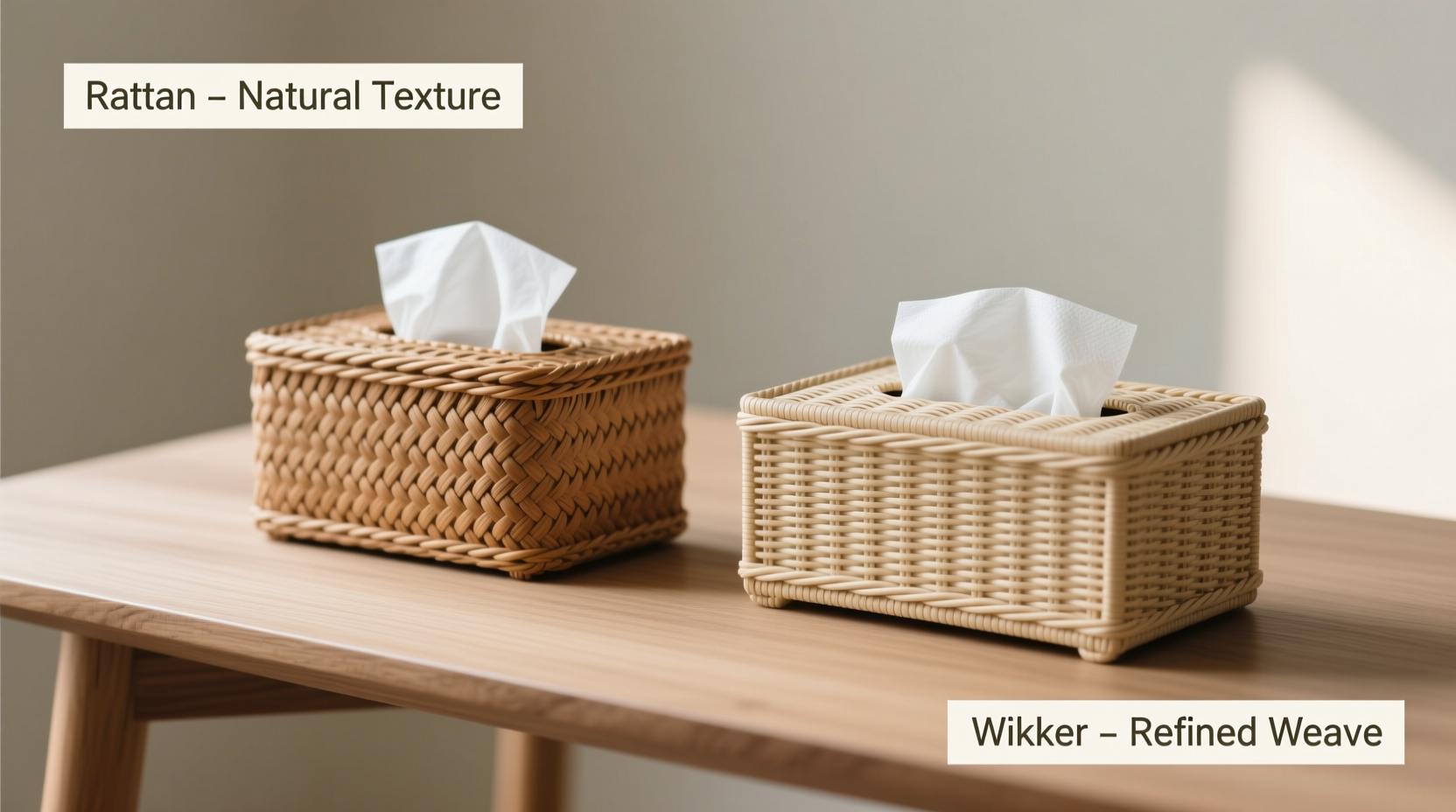
The confusion starts here. Many people use “rattan” and “wicker” interchangeably, but they refer to different things. Rattan is a material—a solid, flexible palm stem harvested from tropical forests, primarily in Southeast Asia. It's strong, lightweight, and naturally suited for furniture and home accessories. Wicker, on the other hand, is a weaving technique. It describes how materials like rattan, bamboo, willow, or synthetic fibers are woven together to create patterns and textures.
In short: rattan is what something is made of; wicker is how it’s made. Most so-called “rattan tissue box covers” are actually rattan woven using the wicker method. True wicker tissue boxes might use other materials like reed or paper fiber, but rattan remains the premium choice due to its durability and refined appearance.
“People often say 'rattan' when they mean 'woven natural fiber.' The real distinction lies in the quality of the weave and the integrity of the base material.” — Lena Tran, Interior Stylist & Sustainable Home Goods Consultant
Design and Aesthetic Impact: Which Hides the Box Better?
The primary goal of a tissue box cover is concealment without sacrificing accessibility. Both rattan and wicker covers excel at masking the visual clutter of a branded tissue box, but subtle differences affect how seamlessly they blend into a space.
Rattan covers, especially those with tight, uniform weaves, offer a smooth, almost polished finish. Their natural golden-brown hue adds organic elegance and pairs well with boho, coastal, or minimalist interiors. Because rattan is a denser material, gaps between weaves are typically smaller, making it harder to see the tissues inside—ideal if you want complete visual coverage.
Wicker covers, particularly those made from lighter or thinner fibers, may have looser weaves. While this gives them a more rustic, handmade charm, it can sometimes allow glimpses of the tissue roll beneath, especially if the tissues are brightly colored. However, some wicker designs incorporate solid side panels or double-layered construction to offset this.
Comparison Table: Rattan vs Wicker Tissue Box Covers
| Feature | Rattan Cover | Wicker Cover |
|---|---|---|
| Material Type | Natural vine (solid core) | Weaving method (can use rattan, reed, or synthetic) |
| Durability | High – resistant to warping and cracking | Moderate – depends on base material |
| Concealment | Excellent – tight weave hides tissues completely | Good to Fair – varies by weave density |
| Style Flexibility | Bright, clean, modern-natural | Rustic, vintage, artisanal |
| Maintenance | Easy – dust with dry cloth | More delicate – avoid moisture |
| Price Range | Moderate to high | Budget to moderate |
Real-World Example: A Living Room Makeover
Sarah, a freelance designer in Portland, wanted to refresh her small apartment living room without spending much. Her coffee table held a rainbow-packaged tissue box that clashed with her neutral linen sofa and beige rug. She tried a fabric sleeve first, but it wrinkled and slipped off. Then she bought a loosely woven wicker cover from a discount store. While charming, the wide gaps revealed the pink tissues inside, defeating the purpose.
She later upgraded to a finely woven rattan cover with solid side panels. Instantly, the tissue box disappeared into the aesthetic. “It looks like a little basket I’ve had for years,” she said. “No one even realizes it’s hiding a tissue box.” This case illustrates a key point: not all natural fiber covers are equal. The quality of the material and weave matters more than the label.
Step-by-Step Guide to Choosing the Right Cover
Selecting the best cover isn’t just about material—it’s about matching function to your space. Follow these steps to make a confident decision:
- Assess your current tissue box. Note its size, color, and packaging. Is it oversized? Glossy? Brightly printed? These factors influence how much coverage you need.
- Evaluate your room’s decor. Do you lean toward sleek minimalism or cozy cottagecore? Rattan suits modern spaces; looser wicker fits rustic ones.
- Check the weave tightness. Run your fingers over sample photos or in-store pieces. Tight, consistent patterns hide contents better.
- Look at access points. Top-loading covers are common, but some have front pull-slots. Ensure the slot is sized to dispense tissues smoothly without tearing.
- Consider maintenance. Dust accumulates in crevices. Rattan is easier to wipe clean; delicate wicker may require gentle brushing.
- Test durability. Press lightly on the sides. Does it feel sturdy? Flimsy wicker bends easily and won’t last.
Tips for Maximizing Concealment and Longevity
- Use plain white or neutrally colored tissues to reduce visibility through semi-transparent weaves.
- Avoid placing the box in direct sunlight, which can fade rattan and weaken natural fibers over time.
- Rotate the cover quarterly to prevent uneven discoloration from ambient light exposure.
- Never use water or cleaning sprays directly on the surface—damp cloths can cause warping.
Frequently Asked Questions
Can I use a rattan cover with any tissue box size?
Most rattan covers are designed for standard rectangular tissue boxes (approx. 5” x 9” x 5”). Oversized or travel-sized boxes may not fit properly. Always check interior dimensions before purchasing.
Are wicker covers eco-friendly?
It depends on the material. Natural wicker made from sustainably harvested rattan or bamboo is biodegradable and renewable. However, some mass-produced wicker items use synthetic resins or non-recyclable fibers. Look for product descriptions specifying natural, chemical-free materials.
Do rattan tissue box covers require assembly?
No, most are pre-assembled and ready to use. Some flat-pack designs may require simple snap-together assembly, but tools are rarely needed.
Final Verdict: Which One Wins?
When it comes to effectively hiding an ugly tissue box, **rattan generally outperforms generic wicker**—but only when it’s well-made. Its dense structure, finer weave options, and smoother finish provide superior concealment and longevity. That said, a high-quality wicker cover crafted from premium rattan fibers can offer nearly identical benefits.
The takeaway? Don’t focus solely on the label. Instead, prioritize craftsmanship. Look for tight weaves, reinforced corners, and solid side panels regardless of whether the product is marketed as “rattan” or “wicker.” Your goal is seamless integration into your space—not just a quick cover-up.




 浙公网安备
33010002000092号
浙公网安备
33010002000092号 浙B2-20120091-4
Comments
No comments yet. Why don't you start the discussion?