
When designing or selecting a flowy dress, the fabric’s drape is one of the most critical factors in achieving elegance and movement. Two commonly used materials—rayon and polyester—often compete for top spot in casual, semi-formal, and even formal wear. While both can create flowing silhouettes, they behave very differently when it comes to how they fall, move, and feel on the body. Understanding their structural and textural differences helps determine which fabric delivers superior drape for soft, graceful gowns and everyday bohemian styles.
Drape refers to how a fabric hangs and flows around the body. A well-draping fabric moves fluidly with the wearer, creating soft folds and natural contours. For flowy dresses—such as maxi styles, bias cuts, or tiered designs—the right drape enhances comfort, silhouette, and visual appeal. Choosing between rayon and polyester isn't just about cost or care; it's about how the garment performs in motion and how it feels during wear.
Fabric Fundamentals: What Are Rayon and Polyester?
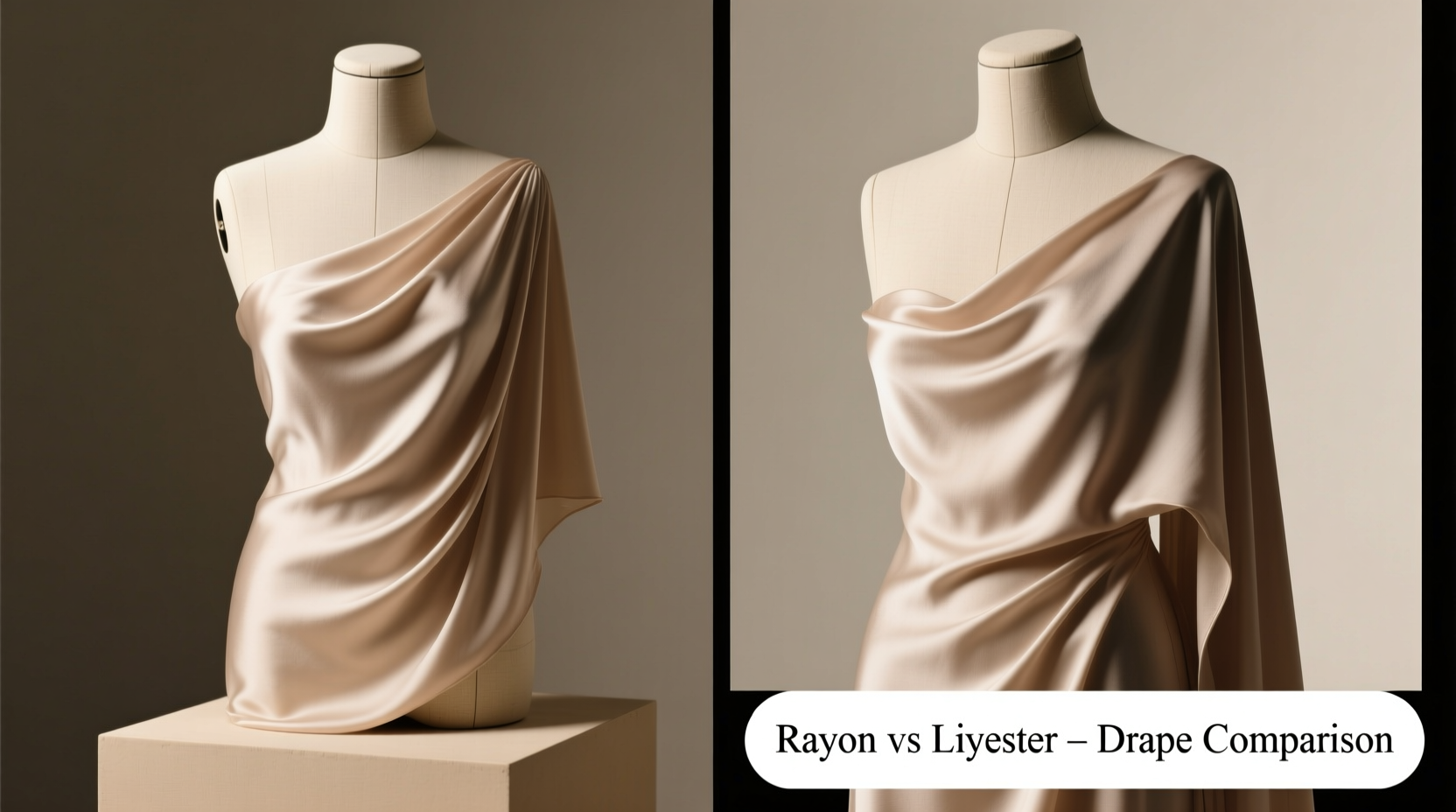
To understand drape performance, it’s essential to examine the origins and composition of each fabric.
Rayon is a semi-synthetic fiber made from regenerated cellulose, typically derived from wood pulp. It is engineered to mimic the luxurious qualities of silk, linen, and cotton while offering greater affordability. Because it originates from plant material, rayon has a natural affinity for moisture and breathability. There are several types—viscose rayon (most common), modal, and lyocell (e.g., TENCEL™)—each varying slightly in strength and texture.
Polyester, by contrast, is a fully synthetic fiber made from petroleum-based polymers. It is extruded into long filaments that are strong, resilient, and highly resistant to wrinkles and shrinking. Unlike rayon, polyester does not absorb moisture well, making it less breathable but more durable under stress and repeated washing.
Their differing origins directly impact how they behave in garments. Rayon tends to be softer, lighter, and more pliable, while polyester holds its shape rigidly and resists deformation. These characteristics form the foundation of their drape capabilities.
Drape Performance: How Each Fabric Flows
Drape quality depends on several physical attributes: weight, stiffness, flexibility, surface friction, and fiber structure. Let’s break down how rayon and polyester perform across these dimensions.
Rayon: The Natural Draper
Rayon excels in drape due to its low stiffness and high flexibility. The fibers are soft and fine, allowing the fabric to bend and fold easily into smooth, cascading curves. When cut on the bias or used in lightweight weaves like chiffon or georgette, rayon creates a liquid-like effect that moves gracefully with the body.
Its moisture absorption also contributes to a softer hand feel, enhancing the perception of fluidity. Rayon fabrics tend to cling gently rather than stand away from the body, giving them a flattering, figure-skimming quality ideal for evening gowns, wrap dresses, and flutter sleeves.
Polyester: Structured Flow with Limitations
Polyester can drape well, especially in microfiber or knitted forms, but it generally lacks the organic softness of rayon. Its high tensile strength means it resists bending, often resulting in stiffer folds and sharper angles. While modern finishing techniques can improve drape (e.g., brushed polyester or sheer voile), the fabric still tends to “hold” its shape rather than conform naturally.
In heavier weights, polyester may appear boxy or stiff, disrupting the desired flowy aesthetic. However, in ultra-lightweight variants—such as polyester chiffon or tricot—it can mimic the movement of silk or rayon, particularly in pleated or ruffled designs where structure is beneficial.
“Rayon remains unmatched in natural drape for flowy silhouettes. Even high-end fashion houses use it as a go-to for bias-cut gowns because of its ability to follow the body’s curves without resistance.” — Lena Moreau, Textile Designer & Fashion Consultant
Comparative Analysis: Rayon vs Polyester for Flowy Dresses
The following table compares key attributes relevant to drape and overall wearability in flowy dress applications.
| Attribute | Rayon | Polyester |
|---|---|---|
| Drape Quality | Excellent – soft, fluid, natural fall | Good to fair – stiffer, less conforming |
| Weight (Typical) | Light to medium | Light to heavy |
| Flexibility | High – bends easily | Moderate – resists folding |
| Moisture Absorption | High – breathable, comfortable in heat | Low – traps heat, less breathable |
| Wrinkle Resistance | Poor – creases easily | Excellent – holds shape well |
| Care Requirements | Delicate – often hand wash or dry clean | Durable – machine washable, quick-drying |
| Cost | Moderate to high | Low to moderate |
| Sustainability | Biodegradable base, but processing can be polluting | Non-biodegradable, derived from fossil fuels |
This comparison reveals a trade-off: rayon offers superior drape and comfort but demands careful maintenance. Polyester provides durability and ease of care at the expense of natural movement and breathability.
Real-World Application: A Stylist’s Experience
Consider the case of Maya Tran, a boutique stylist in Austin, Texas, who specializes in sustainable occasion wear. She was commissioned to design a summer wedding guest dress collection emphasizing comfort, elegance, and accessible pricing.
Her initial prototypes used 100% polyester chiffon for its affordability and wrinkle resistance. While the garments held their shape well during shipping and storage, clients reported the dresses felt “stiff” and didn’t move fluidly during dancing or walking. The skirts stood out rather than flowing, and the bodices lacked soft contouring.
Maya switched to a 100% viscose rayon crepe for the next batch. The difference was immediate. The new dresses draped softly over the hips, moved with the breeze, and created flattering S-curves along the body. Customers praised the “silky” feel and natural elegance. However, she noted increased care instructions were necessary—dry cleaning recommended, no wringing, lay flat to dry.
For her third run, she experimented with a 70% rayon / 30% polyester blend. This balanced improved drape with better wrinkle recovery and reduced shrinkage. The blend offered the closest approximation to pure rayon drape while improving durability and reducing maintenance burden.
Her takeaway: “If drape is your priority, rayon wins. But if you need something travel-friendly or low-maintenance, a smart blend can bridge the gap.”
How to Choose Based on Your Needs
Selecting between rayon and polyester isn’t just about aesthetics—it’s about aligning fabric properties with lifestyle, climate, and care preferences. Here’s a step-by-step guide to help you decide.
- Define the Dress Purpose: Is it for a beach wedding, daily wear, or a cocktail event? Flowy dresses meant for movement and elegance benefit most from rayon.
- Evaluate Climate: In hot, humid environments, rayon’s breathability keeps you cooler. Polyester may feel sticky or clammy.
- Assess Care Commitment: If you prefer machine washing and minimal ironing, polyester is more practical. Rayon requires gentle handling.
- Check the Weave and Weight: Lightweight rayon challis drapes better than heavy polyester twill. Always inspect fabric samples before purchasing.
- Test Drape in Person: Hold the fabric and let it fall from your hand. Does it cascade smoothly (rayon) or hold a sharp fold (polyester)?
Maximizing Drape: Design and Construction Tips
Even the best fabric won’t drape well if cut incorrectly. Garment construction plays a crucial role in enhancing natural flow.
- Bias Cutting: Cutting fabric diagonally (at a 45-degree angle to the grain) maximizes stretch and drape. Rayon responds exceptionally well to bias cuts, creating figure-hugging yet flowing silhouettes.
- Minimal Seaming: Fewer seams allow uninterrupted flow. Use French seams or serging to maintain clean lines without bulk.
- Layering with Sheer Fabrics: Pairing rayon underlays with sheer polyester overlays can combine drape with structure—ideal for tiered or ruffled designs.
- Avoid Excessive Lining: Heavy linings restrict movement. If lining is needed, use Bemberg cupro or lightweight silk instead of polyester satin.
Designers aiming for ethereal movement often combine rayon’s drape with strategic gathering or shirring to add volume without stiffness. This technique works beautifully in midi and maxi dresses where soft waves are desired.
Frequently Asked Questions
Can polyester be made to drape like rayon?
Yes, to an extent. Microfiber polyester and finely woven chiffons can mimic soft drape, especially when blended with spandex or treated with softening finishes. However, it still lacks the natural suppleness and breathability of rayon. High-twist yarns and specialized weaves help, but the result is often more structured than fluid.
Is rayon suitable for all body types in flowy dresses?
Relying on drape alone, rayon is flattering for most body types because it follows natural curves without clinging tightly. For those seeking more shaping, consider a rayon blend with a small percentage of elastane. Avoid overly loose cuts in very lightweight rayon if you prefer defined waistlines, as it may billow unpredictably.
Does rayon shrink more than polyester?
Yes. Rayon is prone to shrinking, especially when exposed to water or heat. Most rayon garments recommend dry cleaning or cold hand washing. Polyester is dimensionally stable and resists shrinking, making it more reliable for frequent washing.
Final Checklist Before You Buy
Use this checklist to ensure you’re selecting the best fabric for a flowy dress:
- ☐ Prioritize rayon for superior drape and natural movement
- ☐ Consider blends (e.g., 70% rayon / 30% polyester) for balance of drape and durability
- ☐ Avoid 100% polyester for elegant, flowing styles unless it’s a sheer or microfiber variant
- ☐ Check the garment care label—rayon often requires special handling
- ☐ Feel the fabric: soft, cool, and slightly porous suggests rayon; slick, waxy, or static-prone indicates polyester
- ☐ Look at the cut—bias cuts enhance drape, especially in rayon
Conclusion: Embrace Elegance Through Informed Choice
When it comes to flowy dresses, drape is everything. Between rayon and polyester, rayon stands out as the superior choice for achieving soft, fluid, and naturally elegant movement. Its organic structure, breathability, and ability to conform to the body make it the preferred fabric for designers and wearers alike who value grace and comfort.
Polyester has its place—particularly in travel-friendly wardrobes or structured flowy pieces—but it cannot replicate the effortless fall of high-quality rayon. By understanding the strengths and limitations of each fabric, you can make choices that align with both aesthetic goals and practical needs.




 浙公网安备
33010002000092号
浙公网安备
33010002000092号 浙B2-20120091-4
Comments
No comments yet. Why don't you start the discussion?