
The crisp, earthy aroma of a pine forest after rain—few scents evoke such immediate calm and clarity. For centuries, humans have sought to capture that feeling, whether through walks in the woods or bottles on a shelf. Today, with the rise of aromatherapy and home wellness, synthetic pine-scented diffusers are marketed as instant gateways to nature’s serenity. But how do they truly compare to standing beneath an actual pine tree? More importantly, which one more effectively tricks your brain into believing you’re immersed in nature?
The answer lies not just in chemistry, but in neuroscience, psychology, and sensory integration. While both real trees and artificial diffusers engage the olfactory system, their impact on cognition, emotion, and physiological response can differ significantly.
The Science of Scent and Memory
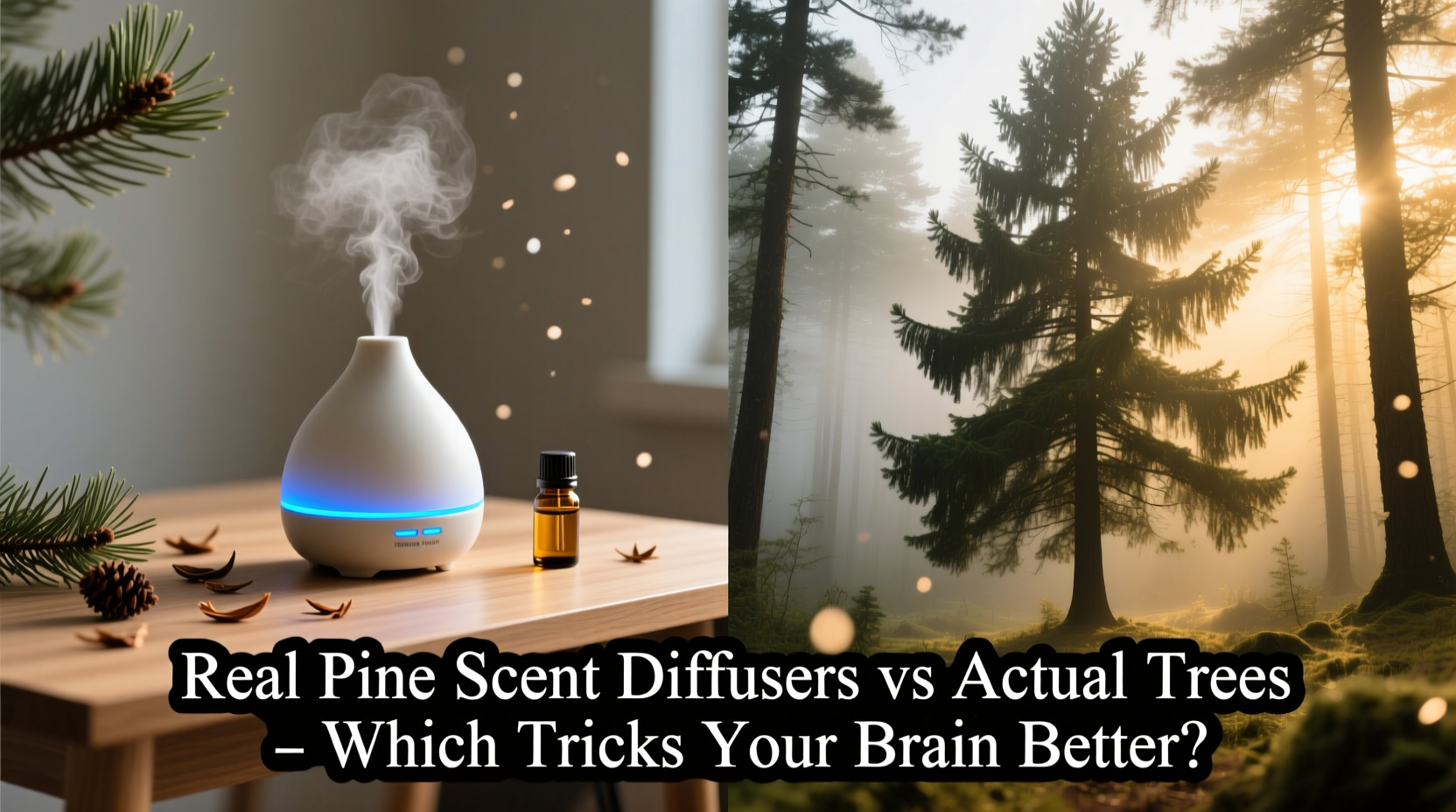
The human sense of smell is uniquely wired to memory and emotion. Unlike sight or sound, olfactory signals bypass the thalamus and travel directly to the limbic system—the brain’s emotional control center. This includes the amygdala (fear and emotion) and the hippocampus (memory formation). As a result, smells can trigger vivid recollections and strong feelings almost instantly.
Pine scent, specifically, is often associated with winter holidays, mountain hikes, or childhood camping trips. These associations aren’t random; they’re formed through repeated exposure during emotionally charged experiences. When you inhale the scent of pine, your brain doesn’t just register a fragrance—it activates neural networks tied to those memories.
“Smell is the only sense that has a direct line to the emotional brain. A single whiff can transport someone decades backward in time.” — Dr. Rachel Herz, Cognitive Neuroscientist and Author of *The Scent of Desire*
But here’s the catch: the authenticity of the scent matters. Real pine emits a complex blend of volatile organic compounds (VOCs), including pinene, limonene, and myrcene. These compounds vary by species, season, temperature, and humidity. In contrast, most commercial diffusers use a simplified, standardized formulation designed to mimic the “idea” of pine—not its full biological complexity.
Sensory Fidelity: Real Trees Offer Full Immersion
Standing beneath a live pine tree engages far more than your nose. You hear needles rustling in the wind, feel cool air on your skin, see dappled sunlight filtering through branches, and may even taste the crispness in the air. This multisensory input creates a phenomenon known as sensory coherence—when all senses align to confirm a single environmental narrative.
Your brain interprets this coherence as “real,” triggering deeper relaxation responses. Studies show that spending time in forests—known as “forest bathing” or *shinrin-yoku* in Japan—lowers cortisol levels, reduces blood pressure, and improves mood. These benefits aren’t solely due to scent; they result from the entire sensory package.
In contrast, a diffuser delivers only one element: odor. Even high-quality essential oils lack the subtle variability of natural emissions. Moreover, many diffusers use carrier oils or alcohol bases that alter dispersion patterns, potentially introducing unnatural undertones your brain subconsciously flags as “off.”
Chemical Composition: Nature vs Lab
Let’s break down what you’re actually smelling in each scenario.
| Component | Real Pine Tree Emissions | Typical Pine-Scented Diffuser |
|---|---|---|
| Alpha-Pinene | Naturally abundant; varies with tree health and environment | Often present, but in fixed concentration |
| Beta-Pinene / Limonene | Present in fluctuating ratios depending on weather | May be reduced or absent for cost reasons |
| Terpene Complexity | Dozens of compounds interacting dynamically | Limited to 3–5 key synthetics |
| Background VOCs | Soil microbes, decaying needles, ambient humidity effects | Absent or artificially simulated |
| Release Pattern | Intermittent, influenced by wind, sun, and temperature | Constant, unless device has timer |
This table reveals a critical limitation: artificial diffusers offer consistency at the expense of authenticity. The brain detects these discrepancies, even unconsciously. Over time, repeated exposure to artificial pine may fail to elicit the same emotional resonance as the real thing—especially if prior memories were formed in natural settings.
Mini Case Study: Office Workers and Cognitive Performance
In a 2022 pilot study conducted at a tech startup in Colorado, researchers tested the cognitive effects of pine exposure on remote workers. Two groups worked identical tasks in identical office environments. Group A used premium pine essential oil diffusers for two hours daily. Group B took 20-minute walks in a nearby ponderosa pine forest during lunch breaks.
After four weeks, both groups reported improved focus and reduced stress. However, Group B showed significantly greater reductions in self-reported anxiety (37% vs. 18%) and scored higher on creative problem-solving tasks. EEG readings also indicated deeper alpha-wave activity—a marker of relaxed alertness—only in the forest group.
Interestingly, when asked to describe the scent experience, Group A frequently used words like “clean” or “sharp.” Group B used descriptors like “alive,” “resinous,” and “changing.” This suggests that dynamic, variable scent profiles—like those from real trees—are more cognitively engaging.
When Artificial Scents Work Best
Despite their limitations, pine-scented diffusers have clear advantages in specific contexts:
- Accessibility: Not everyone lives near coniferous forests.
- Consistency: Useful for creating predictable environments (e.g., spas, meditation rooms).
- Therapeutic Support: Can complement treatments for seasonal affective disorder (SAD) when paired with light therapy.
- Behavioral Cues: Repeated use can condition the brain to associate the scent with relaxation, even if initially artificial.
In fact, research from the University of Vienna found that after six weeks of consistent evening diffusion, participants began reporting relaxation responses comparable to early forest therapy sessions—though still without the full physiological depth.
Step-by-Step Guide: Maximizing the Brain-Boosting Power of Pine
Whether you’re using a diffuser or visiting real trees, follow this timeline to optimize your brain’s response:
- Week 1–2: Establish Exposure
Create a routine. Use a diffuser at the same time daily (e.g., morning or pre-sleep), or schedule weekly forest visits. - Week 3–4: Add Sensory Layers
Pair scent with sound (nature recordings), touch (wool blanket, wooden surface), or visual cues (green lighting, forest imagery). - Week 5–6: Introduce Variability
If using diffusers, rotate between different pine-based essential oils (e.g., spruce, fir, cypress) to simulate natural diversity. - Week 7+: Deepen Association
Reflect mindfully during exposure. Journal about memories or emotions the scent evokes to strengthen neural pathways.
This approach leverages neuroplasticity—the brain’s ability to rewire itself based on repeated stimuli. Over time, even artificial scents can gain emotional weight through deliberate conditioning.
Checklist: Choosing the Right Pine Experience for Your Needs
- ✅ I want quick stress relief at home → High-quality diffuser + mindfulness practice
- ✅ I seek long-term mental resilience → Monthly forest immersion + journaling
- ✅ I have mobility or geographic constraints → Rotating essential oils + nature audio
- ✅ I’m using scent for focus or sleep → Diffuser with timer, placed strategically
- ✅ I want maximum brain engagement → Real trees, especially in changing weather
FAQ
Can pine diffusers replicate the health benefits of forest bathing?
Partially. While diffusers may reduce stress and improve mood, they don’t replicate the full physiological benefits—such as lowered heart rate or enhanced immune function—linked to actual forest exposure. Those require multisensory input and phytoncide inhalation (natural antimicrobial compounds released by trees).
Are some pine diffusers more effective than others?
Yes. Diffusers using 100% pure conifer essential oils (e.g., Siberian fir, black spruce) are closer to natural scent profiles than those with synthetic fragrance oils. Look for GC/MS test results from reputable brands to verify purity.
How often should I expose myself to pine scent for lasting effects?
For noticeable impact, aim for at least 20 minutes of focused exposure 3–5 times per week. Consistency over 4–6 weeks builds stronger neural associations, whether from real trees or diffusers.
Conclusion: The Brain Knows the Difference—But Can Be Trained
Ultimately, real pine trees win in raw neurological impact. Their dynamic scent profiles, combined with multisensory richness, provide an unmatched signal of safety, calm, and connection to nature. Your brain evolved to respond to these cues—and nothing artificial can fully replicate them.
Yet modern life doesn’t always allow for daily forest retreats. This is where well-chosen pine diffusers shine—not as replacements, but as strategic tools. When used intentionally, they can condition the brain to access similar states of peace, particularly when layered with other sensory cues and mindful practice.
The key isn’t deception, but association. The brain doesn’t need perfection to relax—it needs reliability. Whether under towering pines or beside a quiet diffuser, what matters most is showing up consistently, breathing deeply, and allowing the mind to believe—in stages—that it’s exactly where it needs to be.




 浙公网安备
33010002000092号
浙公网安备
33010002000092号 浙B2-20120091-4
Comments
No comments yet. Why don't you start the discussion?