
Choosing the right notebook isn’t just about aesthetics or brand reputation—it’s about how it feels under your pen. The tactile experience of writing can influence focus, creativity, and even the joy you derive from journaling, sketching, or taking notes. Two eco-conscious materials have gained popularity in recent years: recycled paper and bamboo-based paper. While both are marketed as sustainable alternatives to traditional wood pulp paper, they differ significantly in texture, durability, and writing performance. This article compares recycled paper notebooks and bamboo notebooks side by side, focusing on how each feels during actual use—so you can decide which one suits your handwriting style and daily routine.
The Texture Factor: How Each Paper Feels to the Touch
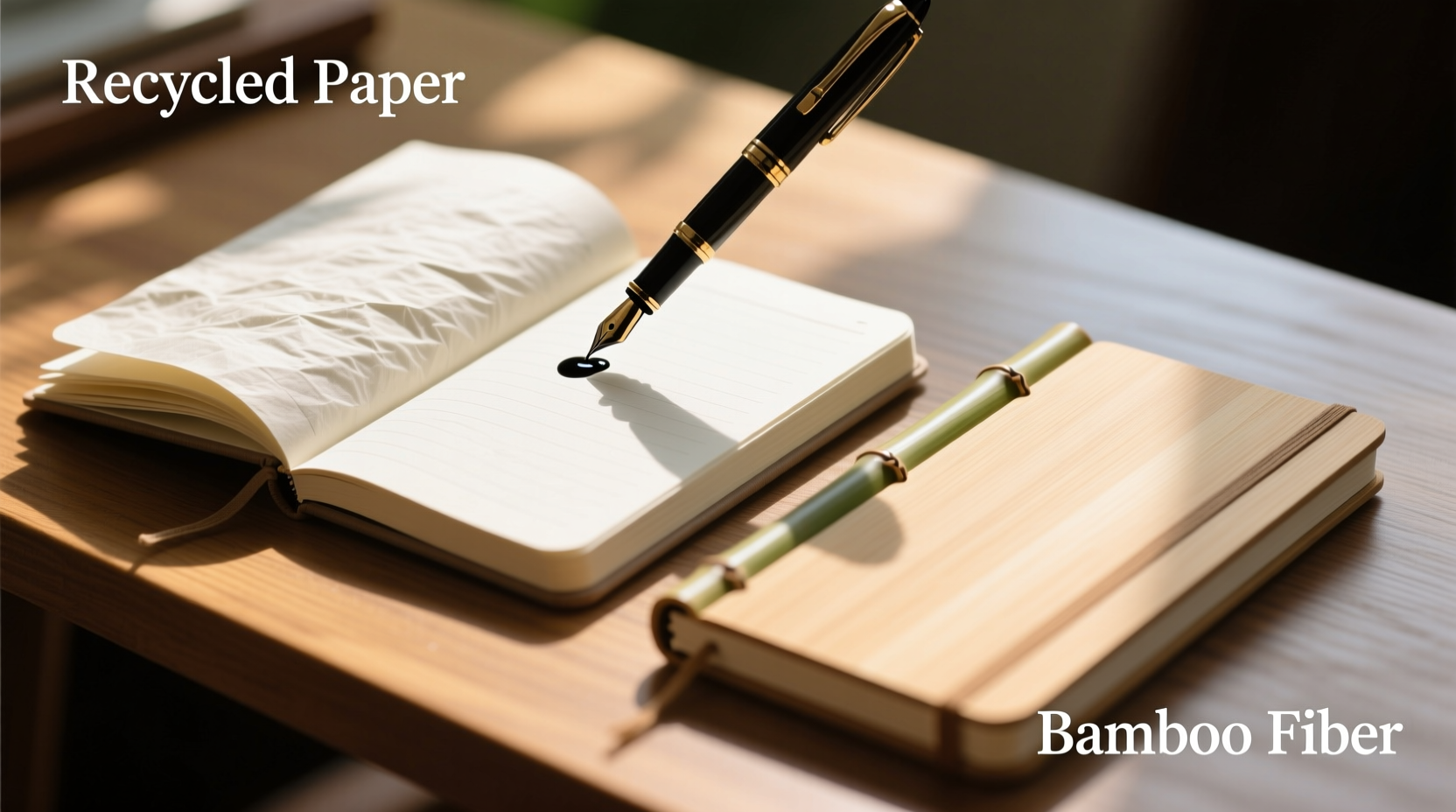
The first thing you notice when opening a new notebook is the surface of the page. Is it smooth or rough? Does it feel absorbent or slick? These sensory details shape your writing experience before you even put pen to paper.
Recycled paper often has a slightly uneven texture due to its mixed fiber composition. During recycling, paper fibers shorten with each processing cycle, resulting in a less uniform sheet. Many recycled papers retain small specks or flecks from original inks or additives, contributing to a rustic, organic feel. Some users describe this as “earthy” or “authentic,” while others find it distractingly coarse, especially when using fine-tipped pens.
In contrast, bamboo paper typically offers a smoother, denser surface. Bamboo fibers are naturally long and strong, producing a tighter weave that resists pilling and fraying. High-quality bamboo paper feels crisp and clean—closer to premium wood pulp than to standard recycled stock. It doesn’t have the visual imperfections common in lower-grade recycled sheets, making it ideal for those who prefer a sleek, minimalist writing surface.
Ink Performance: Absorption, Bleed-Through, and Feathering
How paper interacts with ink is critical for anyone using fountain pens, gel inks, or even ballpoints. Three key factors determine ink performance: absorption rate, feathering (ink spreading into fibers), and bleed-through (ink seeping to the other side).
- Recycled paper tends to be more porous. Because the fibers are shorter and less refined, ink spreads faster across the surface, increasing the risk of feathering. Lower GSM (grams per square meter) recycled pages may also allow ink to bleed through, especially with wet-writing tools like fountain pens. However, higher-quality recycled notebooks now use coatings or increased paper weight (e.g., 90–100 gsm) to mitigate these issues.
- Bamboo paper, thanks to its natural fiber strength and density, generally performs better with wet inks. It absorbs ink more evenly, reducing feathering and minimizing bleed-through—even at lower weights (70–80 gsm). Writers report sharper lines and crisper letterforms on bamboo pages, particularly when using liquid ink or brush pens.
“Bamboo fiber creates a naturally resilient sheet that holds up well against moisture without requiring synthetic coatings.” — Dr. Lena Torres, Materials Scientist, Sustainable Paper Research Group
Sustainability Comparison: Beyond the Surface
Both materials are promoted as environmentally responsible choices, but their ecological footprints vary in important ways.
| Factor | Recycled Paper | Bamboo Paper |
|---|---|---|
| Raw Material Source | Post-consumer waste (office paper, newspapers) | Fast-growing bamboo grass (harvested in 3–5 years) |
| Water Usage | Moderate (de-inking process requires water) | High (chemical pulping unless processed mechanically) |
| Energy Consumption | Lower than virgin pulp, but varies by facility | Higher if chemical pulping is used |
| Deforestation Impact | Reduces demand for virgin wood pulp | Low; bamboo regenerates quickly without replanting |
| Biodegradability | Excellent (especially uncoated versions) | Good, though some binders may slow decomposition |
While recycled paper reduces landfill waste and conserves trees, its quality depends heavily on sourcing and processing methods. Poorly processed recycled paper may contain chlorine residues or synthetic brighteners. On the other hand, bamboo grows rapidly and sequesters carbon efficiently, but large-scale production sometimes involves clear-cutting native forests to make way for monoculture plantations—a practice that undermines its green credentials.
Real-World Writing Experience: A Mini Case Study
Sophie Kim, a freelance illustrator and bullet journal enthusiast, tested both types of notebooks over a six-week period. She used a Lamy Safari fountain pen with Pelikan 4001 ink, a Pilot G-2 rollerball, and a Tombow brush pen for sketches.
Her observations:
- With the recycled paper notebook (80 gsm, dot grid), she noticed visible feathering with the fountain pen, especially on diagonal strokes. The brush pen bled through on heavy applications, requiring her to place a blotter sheet underneath. However, she appreciated the subtle texture for pencil sketching and found it added character to her layouts.
- The bamboo notebook (75 gsm, blank pages) surprised her with its performance. Despite being slightly lighter in weight, it resisted bleed-through almost completely. Ink dried quickly, and line precision was noticeably sharper. She described the writing sensation as “smooth but not slippery”—ideal for rapid note-taking and detailed illustrations.
After the trial, Sophie switched to bamboo for her daily journal but kept the recycled paper notebook for brainstorming sessions where she preferred a looser, more expressive format.
Durability and Long-Term Use
A notebook must withstand daily handling—being tossed in a bag, flipped open repeatedly, or exposed to humidity. Durability isn’t just about longevity; it affects how confident you feel marking up the pages.
Recycled paper, while sturdy in high-GSM forms, can degrade faster over time. Repeated erasing may cause surface pilling, and frequent folding or creasing leads to cracking along edges. Some users report yellowing after several months, even when stored away from sunlight—likely due to residual lignin or oxidative breakdown of mixed fibers.
Bamboo paper excels in tear resistance and resilience. Its natural silica content strengthens the fibers, making pages harder to rip or dent. Notebooks made with bamboo pulp maintain their integrity longer, even under heavy use. Archival tests suggest properly processed bamboo paper retains legibility and structure for decades, comparable to acid-free wood pulp.
However, durability also depends on binding and cover quality. A poorly stitched recycled paper notebook will fail regardless of page strength. Always check construction: look for Smyth-sewn bindings, reinforced covers, and lay-flat designs.
Step-by-Step Guide: Choosing the Right Eco-Friendly Notebook for You
Follow this practical sequence to select the best option based on your needs:
- Assess Your Writing Tools: List what pens you use most (fountain, gel, pencil, etc.). If you rely on wet inks, prioritize smoothness and bleed resistance—favoring bamboo.
- Determine Your Purpose: Are you journaling, sketching, or taking technical notes? Creative work may benefit from textured recycled paper; structured planning favors bamboo’s precision.
- Check Paper Weight: Look for at least 80 gsm in recycled paper and 70+ gsm in bamboo. Higher weights reduce show-through.
- Research the Brand’s Practices: Not all “eco” labels are equal. Seek transparency: Does the company disclose sourcing? Do they avoid chlorine bleaching or harmful dyes?
- Test Before Committing: Order samples or single notebooks to evaluate feel and performance firsthand. Pay attention to how the pen glides and whether the page texture distracts you.
- Evaluate Binding and Design: Ensure the notebook lies flat when open and has enough pages for your usage cycle. Replaceable inserts add sustainability.
FAQ: Common Questions About Recycled vs Bamboo Notebooks
Is bamboo paper really more sustainable than recycled paper?
It depends. Bamboo grows fast and doesn’t require replanting, but if harvested unsustainably or processed with harsh chemicals, its benefits diminish. Recycled paper reduces waste but requires energy and water for de-inking. Both are better than virgin wood pulp, but the most sustainable choice supports ethical production and minimal processing.
Can I recycle a bamboo notebook after use?
Yes, if it’s uncoated and free of plastic elements. However, many bamboo notebooks combine materials (e.g., synthetic covers or adhesive bindings), so separate components where possible. Check local recycling guidelines.
Do recycled paper notebooks always feel rough?
No. Advances in refining technology have produced smoother recycled papers. Look for terms like “high-finish,” “premium recycled,” or “processed chlorine-free” (PCF) to identify higher-quality options with improved texture.
Final Verdict: Which Feels Better to Write On?
When it comes to pure writing comfort, **bamboo notebooks generally feel better** for most users. Their smooth, resilient surface provides consistent ink flow, minimal friction, and excellent control—especially with finer tips or wet inks. They offer a modern, clean experience akin to premium paper without relying on old-growth forests.
That said, **recycled paper has its own appeal**. For writers and artists who value authenticity and tactility, the slight grain and organic imperfections can enhance mindfulness and creative freedom. When sourced responsibly and manufactured well, high-end recycled paper rivals conventional stock in usability.
The choice ultimately hinges on personal preference and intended use. If you prioritize precision, durability, and a seamless writing glide, bamboo is likely your best bet. If you embrace imperfection and want to minimize post-consumer waste, a well-made recycled paper notebook delivers both ethics and functionality.
“The ideal notebook disappears into the act of writing. Whether it’s bamboo or recycled, the best paper lets your thoughts flow—not fight the surface.” — Marcus Reed, Journaling Coach & Author of *Ink & Insight*
Take Action: Find Your Perfect Match
Don’t settle for compromise between sustainability and performance. Test both types with your favorite pen. Keep a log of how each feels after a week of regular use. Share your findings online to help others navigate the growing world of eco-friendly stationery. The future of writing isn’t just green—it’s thoughtful, intentional, and deeply personal.




 浙公网安备
33010002000092号
浙公网安备
33010002000092号 浙B2-20120091-4
Comments
No comments yet. Why don't you start the discussion?