
When choosing a winter jacket for damp, rainy, or snowy environments, the decision often comes down to two popular options: recycled polyester jackets and traditional down puffer jackets. Both have strong advocates, but their performance diverges significantly in wet conditions. Understanding how each material behaves when exposed to moisture—along with factors like warmth retention, environmental impact, and durability—is essential for making an informed choice. For anyone living in or traveling to regions with frequent rain, sleet, or high humidity, this distinction isn’t just about comfort—it can affect safety and long-term value.
How Moisture Affects Insulation Performance
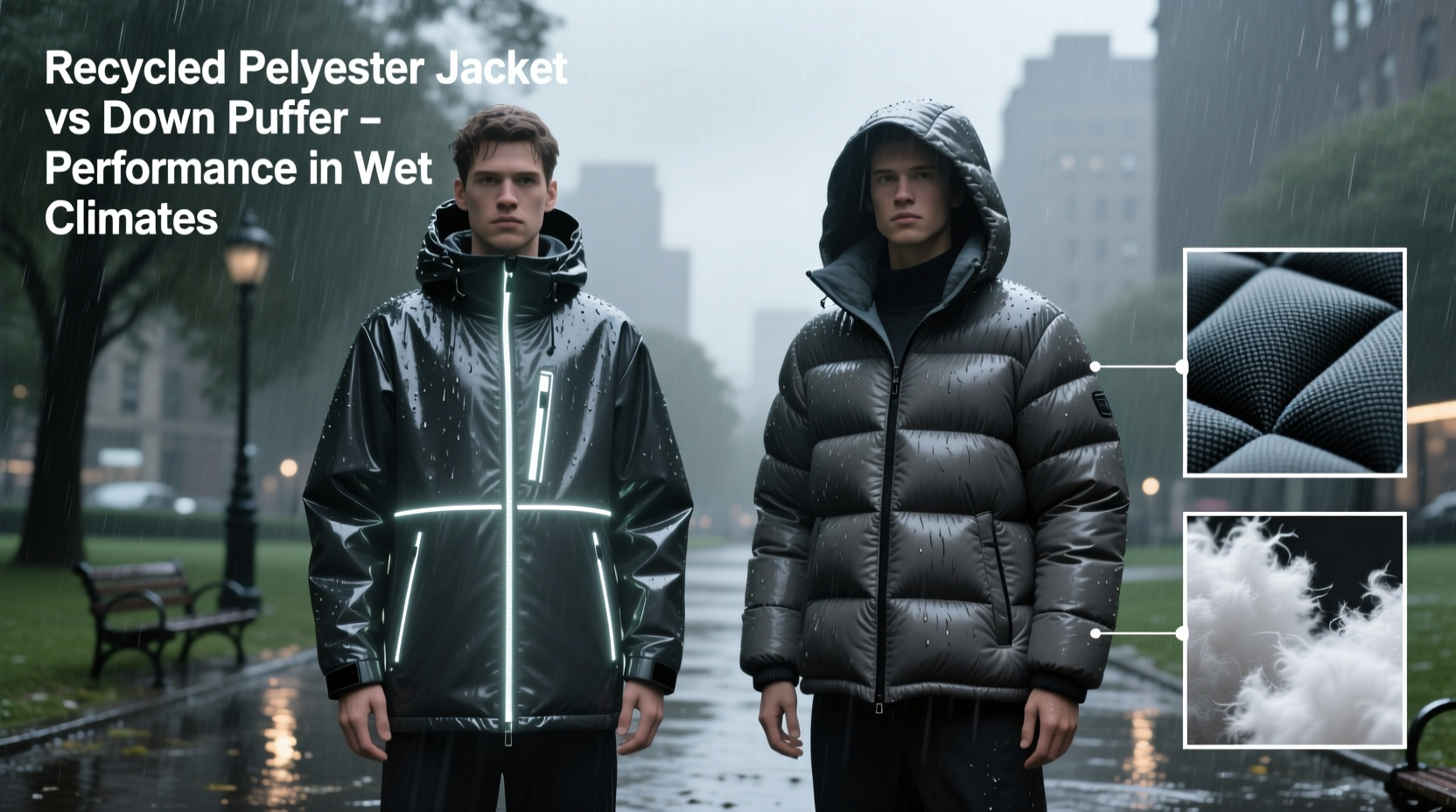
The core difference between recycled polyester and down insulation lies in their response to water. Down, derived from the soft underplumage of ducks and geese, is renowned for its exceptional warmth-to-weight ratio. However, its Achilles’ heel is moisture. When down gets wet, the clusters collapse, losing their loft—the key to trapping body heat. Once compressed, wet down provides minimal insulation and takes a long time to dry, even under ideal conditions.
In contrast, recycled polyester insulation, typically made from post-consumer plastic bottles, is inherently hydrophobic. It doesn’t absorb water and maintains its structure and insulating properties even when damp. This makes it far more reliable in consistently wet environments where precipitation is frequent and drying opportunities are limited.
“Wet down loses up to 90% of its thermal efficiency. Synthetic insulation like recycled polyester retains over 70% of its warmth when wet.” — Dr. Lena Torres, Textile Scientist at Alpine Performance Labs
This fundamental divergence in moisture management shapes the entire performance profile of each jacket type in rainy or humid climates.
Warmth and Thermal Efficiency in Real Conditions
While down excels in dry cold—such as in continental winters or high-altitude alpine zones—its performance plummets in maritime or coastal climates. Consider a hiker trekking through the Pacific Northwest, where drizzle is common and temperatures hover near freezing. A down puffer may feel warm initially, but after hours of light rain, the jacket’s insulation collapses, leaving the wearer chilled and at risk of hypothermia if not changed promptly.
Recycled polyester jackets, on the other hand, are engineered to perform in these exact conditions. Modern synthetics like PrimaLoft® Eco or Thermore® Ecodown mimic the loft and softness of down while resisting clumping and maintaining consistent thermal output. These materials are often treated with water-repellent finishes that further enhance their ability to shed moisture before it penetrates the inner layers.
Moreover, many recycled polyester jackets integrate breathable outer shells that allow sweat vapor to escape, reducing internal condensation—a common issue in humid environments. This combination of moisture resistance and breathability gives them a distinct edge in active use scenarios like hiking, commuting, or urban exploration in rainy cities.
Environmental Impact and Sustainability
For eco-conscious consumers, the sustainability angle adds another layer to the comparison. Recycled polyester is made by melting down existing plastic—primarily PET bottles—and re-spinning it into new fibers. This process reduces landfill waste, lowers energy consumption by up to 50% compared to virgin polyester, and cuts CO₂ emissions significantly.
However, recycled polyester is not without drawbacks. It still sheds microplastics during washing, contributing to ocean pollution. To mitigate this, users should wash synthetic garments in microfiber-catching bags and use liquid detergent to reduce fiber abrasion.
Down, while natural and biodegradable, raises ethical and environmental concerns. Conventional down sourcing has been linked to live-plucking and force-feeding practices, though certified ethical standards like the Responsible Down Standard (RDS) now offer traceable, humane alternatives. Still, down production relies on the poultry industry, which carries its own carbon footprint and resource demands.
| Factor | Recycled Polyester Jacket | Down Puffer Jacket |
|---|---|---|
| Insulation when wet | Maintains 70–80% warmth | Loses 80–90% warmth |
| Drying time | 2–6 hours (fast) | 12–48 hours (slow) |
| Sustainability | Reduces plastic waste; recyclable | Natural material; RDS-certified options available |
| Microplastic shedding | Yes (manageable with care) | No |
| Packability | Good, but less compressible than down | Excellent—highly compressible |
| Lifespan | 5–10 years with proper care | 8–15 years if kept dry |
Real-World Use Case: Commuting in Seattle
Sarah, a software engineer in Seattle, commutes year-round by bike and foot. Her city averages over 150 rainy days annually, with high humidity and temperatures rarely dropping below freezing. She initially purchased a premium 700-fill-power down puffer for winter wear, drawn by its lightweight warmth and sleek design. Within weeks, she noticed the shoulders darkening from constant light rain. After a month of daily use, the jacket felt flat and cold, especially during her 30-minute evening commute.
She switched to a recycled polyester insulated jacket with a wind-resistant shell and taped seams. Despite similar external temperatures, she reported staying warmer and drier. The jacket dried overnight on a rack, retained its shape, and didn’t require special storage. Over two winters, it showed no signs of insulation breakdown. “I used to think down was superior,” she said. “But in our climate, it just doesn’t hold up. The synthetic one works harder every day.”
This scenario illustrates a broader truth: performance depends on context. In consistently wet environments, reliability trumps peak dry-weather efficiency.
Care and Maintenance in Wet Climates
Proper maintenance extends the life and performance of any jacket, but it’s especially critical in damp conditions. Here’s how to care for each type:
Caring for Recycled Polyester Jackets
- Wash only when necessary using a technical detergent.
- Avoid fabric softeners, which can degrade DWR treatments.
- Tumble dry on low with clean tennis balls to restore loft.
- Reapply DWR spray every 3–6 months if water stops beading.
Caring for Down Puffers
- Use a down-specific cleaner to preserve natural oils.
- Ensure complete drying—use a dryer with wool dryer balls for several cycles if needed.
- Never store down when damp; always air thoroughly first.
- Rotate usage during wet seasons to prevent long-term moisture buildup.
Step-by-Step Guide: Choosing the Right Jacket for Your Climate
- Assess your local weather patterns: Count the average number of rainy days per winter. If above 60, prioritize moisture resistance.
- Evaluate your activity level: High-exertion activities (hiking, biking) generate sweat—choose breathable, quick-drying insulation.
- Check the shell fabric: Look for tightly woven, DWR-treated exteriors with sealed seams for both types.
- Inspect the insulation: For synthetics, look for brands like PrimaLoft® or Climashield®. For down, ensure RDS certification and minimum 600 fill power.
- Test real-world performance: Read user reviews focused on wet-weather use, not just lab specs.
- Consider backup layers: In mixed climates, pair a lighter synthetic mid-layer with a waterproof shell for maximum adaptability.
Frequently Asked Questions
Can I wear a down jacket in the rain?
You can, but only if it has a high-quality, fully waterproof outer shell and you’re not exposed for long periods. Even then, prolonged dampness will compromise insulation. For regular rain, a synthetic or hybrid jacket is safer.
Are recycled polyester jackets as warm as down?
Not quite by weight, but modern versions come close. A 60g/m² recycled polyester insulation performs similarly to a 550-fill down in dry conditions—and significantly better when wet. For most urban and moderate outdoor use, the warmth difference is negligible.
Do recycled polyester jackets pill or wear out faster?
Early versions did, but today’s high-density knits and bonded weaves are highly durable. With proper care, they last 5–10 years. Some brands even offer lifetime repairs or recycling programs.
Final Recommendation: Prioritize Function Over Fashion
In wet climates, function must outweigh aesthetics or tradition. While down puffers remain iconic for their sleek silhouette and unmatched compressibility, they are fundamentally ill-suited to environments where moisture is constant. Recycled polyester jackets offer superior resilience, consistent thermal performance, and growing sustainability credentials—all without sacrificing modern design.
Outdoor gear manufacturers are increasingly favoring hybrid models: jackets with recycled polyester insulation in moisture-prone areas (hood, shoulders, sleeves) and down in the core, protected by advanced membranes. These represent a smart compromise, but for pure reliability in rain, snow, or fog, all-synthetic designs lead the field.
“The best jacket isn’t the warmest one on paper—it’s the one that keeps you safe and comfortable in your actual environment.” — Mark Tran, Outdoor Gear Editor, *Climate Ready Magazine*
Action Plan: Make the Right Choice This Season
- Inventory your current outerwear: Identify which pieces fail in wet conditions.
- Research brands with strong wet-climate reputations: Consider Patagonia (Nano Puff), Arc'teryx (Gamma series), Fjällräven (Lime Lite Hood), or Uniqlo (Ultra Light Down Hybrid).
- Invest in a waterproof shell if keeping down: Pair it with a synthetic mid-layer for versatility.
- Dispose of old synthetics responsibly: Many brands accept worn-out polyester garments for recycling.
- Track performance: Note how your new jacket handles real-world rain, sweat, and temperature shifts.




 浙公网安备
33010002000092号
浙公网安备
33010002000092号 浙B2-20120091-4
Comments
No comments yet. Why don't you start the discussion?