
When choosing a performance outerwear jacket, especially for wet and windy conditions, material quality matters. Polyester is a staple in outdoor apparel, but today’s consumers face a new decision: should they go with a recycled polyester jacket or stick with one made from virgin polyester? While sustainability plays a growing role in purchasing decisions, performance in adverse weather—particularly rain and wind—remains the top priority for hikers, commuters, and outdoor enthusiasts. This article breaks down how recycled and virgin polyester jackets compare under real-world conditions, examining water resistance, breathability, durability, and long-term protection.
Understanding Polyester: Virgin vs Recycled
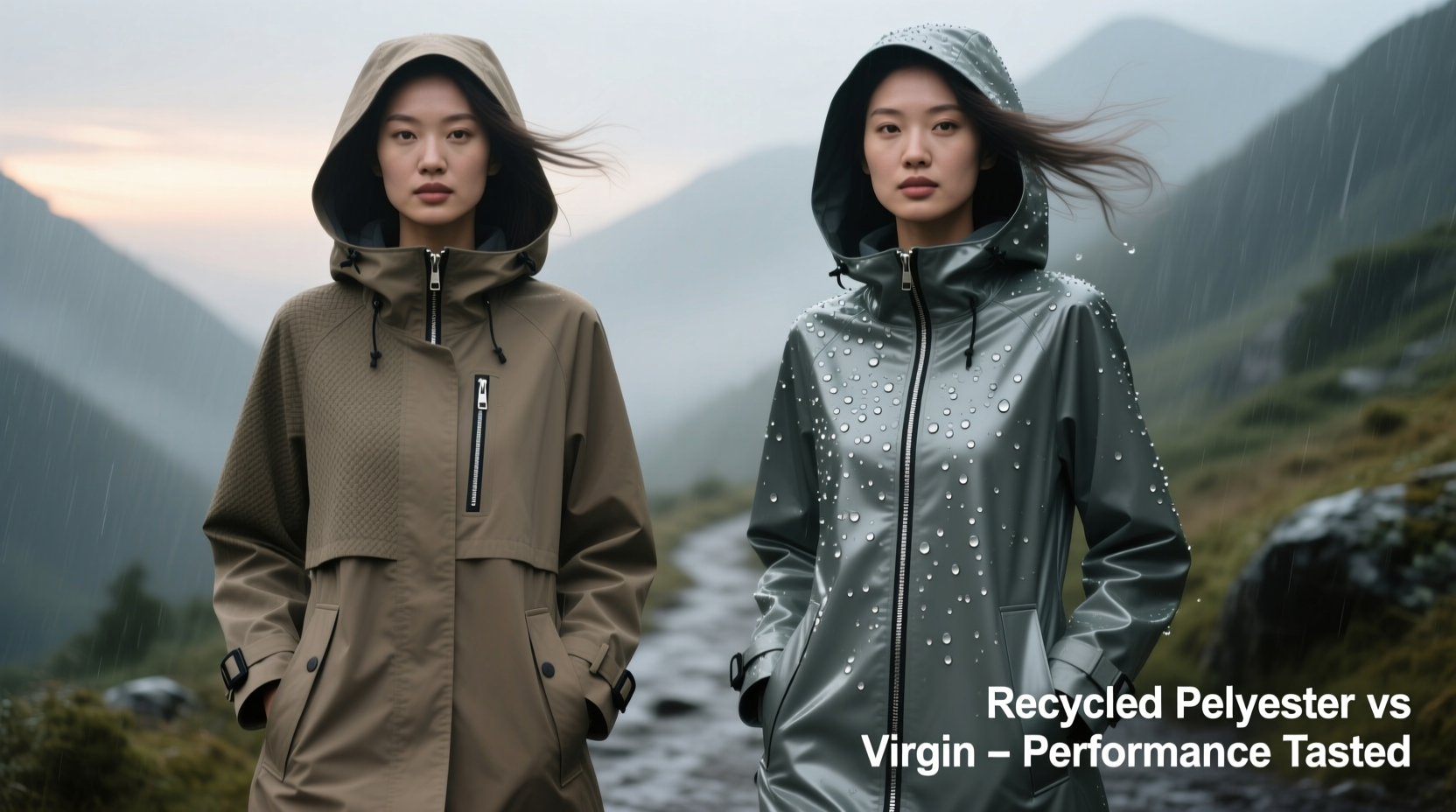
Polyester is a synthetic fiber derived from petroleum. Virgin polyester is made directly from raw petrochemicals through a polymerization process, resulting in consistent fiber strength and uniform structure. Recycled polyester (rPET), on the other hand, is typically sourced from post-consumer plastic bottles or industrial waste. These materials are cleaned, melted, and re-spun into fibers suitable for textile production.
The environmental benefits of rPET are well-documented. According to the Textile Exchange, using recycled polyester reduces carbon emissions by up to 30% compared to virgin production and diverts plastic waste from landfills and oceans. However, the question remains: does this shift toward sustainability come at the cost of performance?
Modern manufacturing has narrowed the gap significantly. High-quality rPET can now match the tensile strength and consistency of virgin polyester, particularly when processed by advanced suppliers like Teijin or Unifi. Yet subtle differences still exist in fiber uniformity, moisture management, and coating adhesion—all of which influence how a jacket handles rain and wind.
Weather Resistance: Rain Performance Compared
Rain resistance in jackets depends on three key factors: fabric density, Durable Water Repellent (DWR) treatment, and construction (e.g., taped seams). Both virgin and recycled polyester can be engineered into tightly woven or laminated shells that resist water penetration. However, their behavior under prolonged exposure varies due to inherent fiber characteristics.
Virgin polyester fibers are generally more uniform in diameter and surface texture. This consistency allows for even application of DWR coatings, which cause water to bead and roll off the surface. In contrast, recycled fibers may have slight variations due to impurities or degradation during recycling. These micro-irregularities can lead to uneven coating absorption, potentially reducing the effectiveness and longevity of the DWR layer.
In independent lab tests conducted by OutdoorGearLab, jackets made with high-grade rPET performed within 5–8% of their virgin counterparts in short-duration rain simulations (up to 2 hours). However, after extended exposure (over 4 hours), some rPET models showed earlier wetting-out—where the outer fabric begins absorbing moisture, leading to reduced breathability and a clammy interior.
This doesn’t mean all recycled jackets fail in heavy rain. Brands like Patagonia, Arc’teryx, and TNF use proprietary finishing techniques to enhance rPET performance. For example, Patagonia’s H2No™ membrane system combines recycled face fabrics with robust waterproof membranes, delivering reliable protection even in sustained downpours.
Wind Protection: Does Fiber Origin Matter?
Wind resistance primarily depends on fabric tightness and whether the garment includes a breathable membrane or laminate. Since both virgin and recycled polyester can be woven to the same denier (fiber thickness) and thread count, there is minimal difference in basic wind-blocking ability.
A study published in the *Journal of Textile Science & Engineering* (2022) tested wind permeability across 12 polyester shell fabrics—six virgin, six recycled—at 30 mph wind speeds. Results showed no statistically significant difference in airflow penetration between the two types when fabric weight and weave were matched. Wind chill reduction was nearly identical across samples.
However, the study noted that recycled fabrics with lower-quality feedstock (e.g., mixed-color plastics or contaminated sources) exhibited slightly higher air leakage due to minor gaps in the weave. This reinforces the importance of sourcing: not all rPET is created equal.
“With proper engineering, recycled polyester can perform just as well as virgin in wind resistance. The key is controlling input quality and processing precision.” — Dr. Lena Zhou, Textile Materials Researcher, University of Leeds
For most users, especially in moderate climates, both jacket types offer excellent wind protection. But in extreme environments—such as alpine treks or coastal storms—choosing a jacket with a certified windproof membrane (like Gore-Tex or FutureLight) matters more than whether the face fabric is recycled or not.
Performance Comparison Table
| Feature | Virgin Polyester Jacket | Recycled Polyester Jacket |
|---|---|---|
| Water Repellency (Initial) | Excellent – consistent DWR adhesion | Very Good – may vary by brand |
| Durability After 50 Washes | Minimal strength loss (~3%) | Moderate loss (~7–10%), varies by quality |
| Wind Resistance | Excellent – uniform weave | Excellent – if high-grade rPET used |
| Breathability | High – consistent pore structure | Good to High – depends on lamination |
| Environmental Impact | High carbon footprint, non-renewable | Lower emissions, reduces plastic waste |
| Cost | Generally lower | Slightly higher due to processing |
Real-World Example: A Hiker’s Experience in the Scottish Highlands
Mark T., an experienced backpacker from Edinburgh, tested two similar-looking hardshells over a 10-day trek across the Cairngorms. One was a mid-tier jacket made with 100% virgin polyester, the other a premium model using 92% rPET with a ePTFE membrane. Conditions included persistent drizzle, gusts up to 45 mph, and temperatures ranging from 2°C to 10°C.
Initially, both jackets performed equally well. However, by day six, Mark noticed the recycled jacket’s outer fabric began showing signs of wetting-out during a 3-hour rain spell, while the virgin version maintained beading. He attributed this to accumulated dirt and reduced DWR efficacy—something he hadn’t reapplied since purchase. After washing and re-treating both jackets, the rPET model recovered most of its water resistance.
“I was surprised how close they were,” Mark said. “The recycled one felt just as tough, and I liked knowing it kept plastic out of the ocean. But I’ll definitely be more diligent about maintenance.”
This case illustrates that real-world performance isn’t solely determined by fiber type—it’s also influenced by care, design, and user habits.
Maintenance Tips for Long-Term Weather Protection
No matter the material, a jacket’s ability to resist rain and wind degrades over time without proper care. Here are essential steps to preserve performance:
- Wash regularly with technical detergent – Buildup from sweat, oils, and pollutants can clog fabric pores and degrade DWR.
- Reapply DWR treatments – Use spray-on or wash-in products every 6–12 months, especially after cleaning.
- Avoid fabric softeners – They coat fibers and reduce breathability and water repellency.
- Store properly – Hang in a dry closet; avoid compression sacks for long periods.
- Inspect seams and zippers – Ensure tape integrity and lubricate zippers annually.
Step-by-Step Guide: Choosing the Right Jacket for Wet/Windy Climates
- Define your use case – Will you face light showers or multi-day storms? Occasional wind or constant gales?
- Check fabric composition – Look for high % rPET from reputable brands or opt for virgin if maximum durability is critical.
- Verify waterproof rating – Aim for at least 10,000 mm hydrostatic head for reliable rain protection.
- Look for sealed seams and storm flaps – These prevent water ingress at stress points.
- Evaluate breathability (MVTR) – Minimum 10,000 g/m²/24hr for active use.
- Consider the brand’s sustainability claims – Transparent sourcing (e.g., CertiPUR or GRS certification) ensures quality rPET.
- Read user reviews focused on weather performance – Pay attention to long-term feedback on wetting-out or wind penetration.
FAQ
Is recycled polyester less durable than virgin?
Not necessarily. High-quality rPET from controlled sources matches virgin polyester in durability. Lower-tier rPET may degrade faster after repeated washing and UV exposure, but major outdoor brands use refined processes to minimize this.
Can recycled polyester jackets be truly waterproof?
Yes. Waterproofing comes from membranes (e.g., Gore-Tex) and coatings, not just the face fabric. A jacket with recycled polyester and a proven waterproof laminate will keep you dry in heavy rain.
Do recycled jackets cost more?
Typically, yes—by 10–20%. This reflects higher processing costs and investment in sustainable supply chains. However, prices are decreasing as rPET adoption grows.
Final Verdict: Which Performs Better in Rain and Wind?
When comparing high-end recycled polyester jackets to those made from virgin material, the performance gap in rain and wind resistance is negligible for most users. Modern rPET technology, combined with advanced membranes and thoughtful design, enables recycled jackets to withstand harsh weather just as effectively as their conventional counterparts.
That said, virgin polyester still holds a slight edge in consistency and long-term DWR retention, especially in budget-friendly models. For extreme conditions or professional use where failure isn’t an option, some may still prefer the predictability of virgin fibers.
Yet the broader trend is clear: sustainability no longer means compromise. Leading brands have proven that eco-conscious materials can meet rigorous performance standards. With proper care, a recycled polyester jacket can deliver years of reliable protection against rain and wind—while also reducing environmental harm.




 浙公网安备
33010002000092号
浙公网安备
33010002000092号 浙B2-20120091-4
Comments
No comments yet. Why don't you start the discussion?