
The title Red Dead Redemption stands out not just for its poetic rhythm but for the layered meaning embedded within each word. At first glance, it may sound like a dramatic Western moniker, but the phrase carries profound thematic weight that reflects the game’s core narrative, moral ambiguity, and emotional journey. Understanding why Rockstar Games chose this name reveals much about the soul of one of the most acclaimed video games of all time.
The story of John Marston—and later Arthur Morgan in the sequel—isn’t just about gunslingers and frontier justice; it's a meditation on guilt, consequence, and the possibility of atonement. The title encapsulates these themes in three simple words: “Red,” “Dead,” and “Redemption.” Each term contributes to a larger philosophical and emotional framework that defines the experience.
The Meaning Behind “Red”
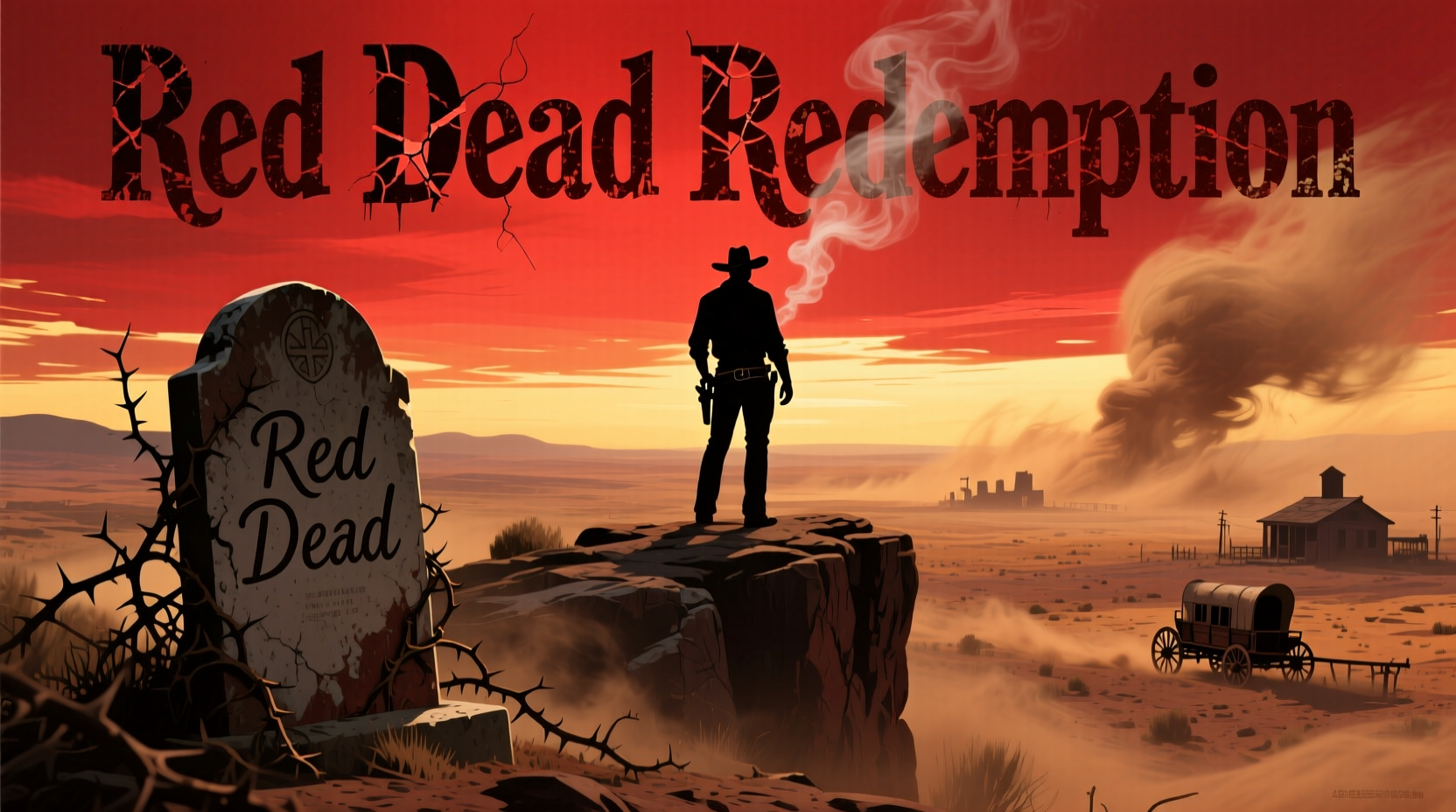
“Red” evokes multiple interpretations, all deeply tied to the game’s setting and tone. Most immediately, it suggests blood—the ever-present specter of violence in the American West. Guns, betrayal, revenge, and war are central motifs, and blood stains nearly every character’s hands by the end of their journey.
But “red” also symbolizes urgency, danger, and passion. It reflects the dying embers of a wild, untamed era being extinguished by industrialization and modern law. The red sunsets over New Austin, the crimson stains on desert sands, and even the flushed faces of men facing their final moments—all reinforce the idea of a world soaked in moral and physical conflict.
In literary terms, “red” often signifies sin or transgression. John Marston is a man haunted by his past as an outlaw. His violent history weighs on him, and the color metaphorically marks him as someone who has lived in moral crimson. This aligns with biblical imagery where “scarlet sins” can be washed white through repentance—a theme directly echoed in the concept of redemption.
What “Dead” Signifies in the Title
“Dead” is the most literal yet haunting component of the title. Death permeates every corner of the Red Dead universe. Characters die violently, civilizations fade, and ideals collapse. But “dead” isn’t only about physical mortality—it speaks to the death of a way of life.
The late 1800s and early 1900s marked the end of the Wild West. Railroads, telegraphs, and federal law enforcement were replacing rugged individualism and frontier justice. In Red Dead Redemption, characters like Dutch van der Linde rage against this change, refusing to accept that their world is already dead. John Marston, caught between two eras, embodies this transition—he is both a product of the old world and a reluctant participant in the new.
There’s also a personal dimension to “dead.” For John, much of what he once valued—loyalty, brotherhood, freedom—is gone. His former gang is fractured, his family is endangered, and his sense of self is fractured by regret. In many ways, he is emotionally and spiritually dead before his journey begins. The title acknowledges this inner void.
The Heart of the Title: “Redemption”
If “red” and “dead” represent the burden of the past, “redemption” offers a glimmer of hope. It’s the central promise of the narrative: Can a man defined by violence earn forgiveness? Can he reclaim his humanity?
Redemption in the Christian tradition means salvation from sin through repentance and sacrifice. John Marston’s arc follows this pattern closely. He is coerced by government agents into hunting down his former gang members, but his motivation evolves. What starts as survival becomes a quest to protect his family and prove he’s more than his past.
His final stand on the ranch, defending his home like a last sacrament, cements his redemption. He dies not as an outlaw, but as a father and protector. In that moment, he achieves what the title promises: a chance to die with dignity after a life stained by blood.
“Redemption isn’t about erasing the past. It’s about making your final act mean something.” — Dan Houser, Writer and Vice President of Rockstar Games
Religious and Literary Influences
The title draws heavily from religious and Western literary traditions. The phrase echoes biblical passages such as Isaiah 1:18: “Though your sins be as scarlet, they shall be as white as snow.” This metaphor of cleansing through suffering is central to John’s journey.
Likewise, classic Western films like Shane and The Searchers explore similar themes—men trying to escape violent histories while being pulled back into chaos. Red Dead Redemption fits squarely within this canon, using its title to signal its place in a long tradition of morally complex Western storytelling.
The word “redemption” also implies a transaction—something must be paid to earn forgiveness. For John, that price is his life. For Arthur Morgan in Red Dead Redemption 2, it’s enduring pain, illness, and betrayal to do right by those he loves. The title, therefore, sets up an expectation: this will not be a story of triumph, but of sacrifice.
A Closer Look: Comparing the Titles
| Title | Key Themes | Protagonist’s Journey |
|---|---|---|
| Red Dead Redemption (2010) | Atonement, family, government coercion | John seeks to redeem himself to protect his wife and son |
| Red Dead Redemption 2 (2018) | Brotherhood, decline, inevitability | Arthur confronts his past and chooses morality over loyalty |
| Literally \"Dead\"? | Yes – both protagonists die | Death as the ultimate act of redemption |
Mini Case Study: Arthur Morgan’s Final Ride
In Red Dead Redemption 2, Arthur Morgan is diagnosed with tuberculosis—a symbolic representation of a dying man in a dying world. As his health declines, so does the Van der Linde gang. Yet, in his final days, Arthur shifts from blind loyalty to moral clarity.
He helps Charles Smith escape to a better life, protects innocent people, and even forgives Dutch, his ideological father. When he dies on a hillside watching the sunrise, it’s not in battle, but in peace—having chosen goodness despite knowing he won’t live to enjoy its rewards.
This moment crystallizes the title’s meaning. He was “red” with sin, “dead” in body and spirit, yet found “redemption” through conscious choice. The title isn’t just a name—it’s a prophecy fulfilled.
Why Not Just “Redemption”?
One might ask: why not call it simply Redemption? The addition of “Red Dead” transforms the phrase from generic to iconic. It grounds the spiritual concept in visceral reality. This isn’t abstract salvation—it’s earned in blood and dust.
“Red Dead” acts as a compound adjective modifying “Redemption.” It specifies the kind of redemption on offer: hard-won, tragic, and stained by violence. It’s not the clean redemption of fairy tales, but the messy, painful kind reserved for flawed men in brutal times.
Frequently Asked Questions
Does “Red Dead” refer to Native American genocide?
While not the primary meaning, the phrase can evoke the bloody displacement of Indigenous peoples during westward expansion. The game touches on this through characters like Rains Fall and the destruction of tribal lands, adding another layer of historical “redness” and death.
Is there a religious message in the title?
Yes, though not overtly. The structure mirrors Christian narratives of sin, suffering, and salvation. However, the game avoids preaching, instead presenting redemption as a personal, human struggle rather than a divine guarantee.
Why is the sequel also called “Red Dead Redemption”?
Red Dead Redemption 2 reframes the original title as a broader theme. It shows that redemption isn’t guaranteed, linear, or easily achieved. Both games explore different paths toward moral reckoning, proving the title applies to a cycle, not just one man’s story.
Conclusion: A Title That Earns Its Weight
“Red Dead Redemption” is more than a catchy name—it’s a narrative compass. Every element of the game, from its visuals to its writing, points back to the tension between a violent past and the fragile hope of forgiveness. The title prepares players for a story steeped in tragedy, beauty, and moral complexity.
It challenges the myth of the noble cowboy, replacing it with something more honest: a man trying, failing, and ultimately striving to be better. In doing so, it elevates the Western genre and cements its place in cultural history.




 浙公网安备
33010002000092号
浙公网安备
33010002000092号 浙B2-20120091-4
Comments
No comments yet. Why don't you start the discussion?