
Many people who once loved creating art find themselves stepping away—sometimes for months, sometimes for years. Life gets busy, self-doubt creeps in, or the pressure to produce something “good” becomes overwhelming. But creativity isn’t a switch you lose; it’s a muscle that weakens with disuse. The good news? It can be reawakened. Whether you’re returning after burnout, fear, or simply time away, regaining your creative flow is not only possible—it can be deeply rewarding.
The journey back to making art begins not with perfection, but with permission: permission to create badly, to experiment, to feel awkward. This article offers grounded, actionable strategies to help you rebuild confidence, reconnect with joy, and establish a sustainable creative rhythm.
Why Creative Flow Fades—and Why It Can Return
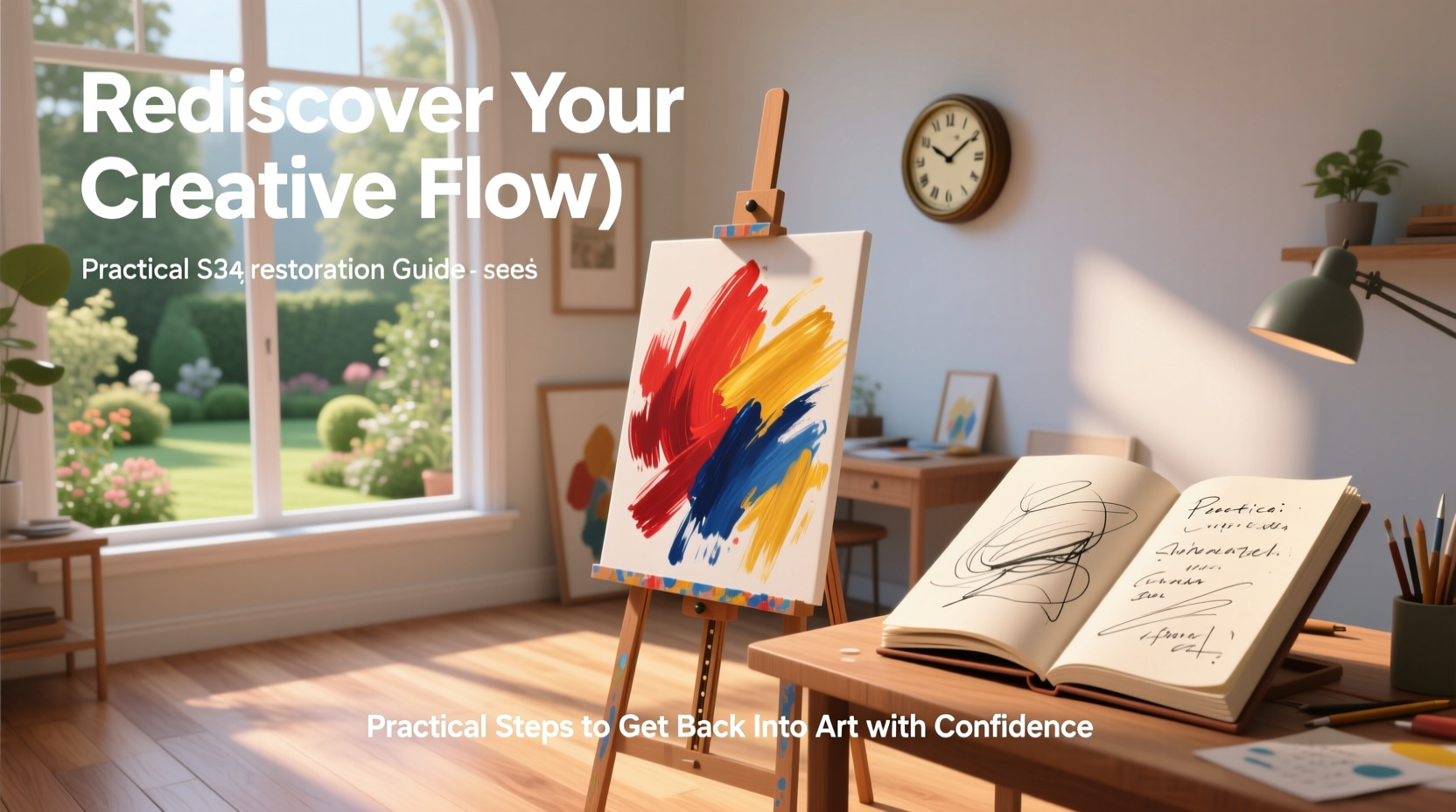
Creative stagnation rarely stems from a lack of talent. More often, it’s rooted in emotional barriers: fear of judgment, comparison to others, or internalized beliefs like “I’m not a real artist.” External factors—work stress, parenting responsibilities, financial strain—also pull focus away from creative pursuits.
Neuroscience supports the idea that creativity is not fixed. Brain plasticity allows us to strengthen neural pathways associated with imagination and expression through repeated engagement. In other words, the more you create, the easier it becomes to access that state of flow—the immersive, focused experience where time seems to disappear.
“Art is not about getting it right. It’s about showing up, being honest, and allowing yourself to explore.” — Lisa Congdon, illustrator and author
Step-by-Step Guide to Rebuilding Your Practice
Returning to art doesn’t require grand gestures or hours of free time. Start small, with consistency over intensity. Follow this six-week timeline to gently reintroduce creativity into your life:
- Week 1: Reconnect with curiosity – Spend 10 minutes a day doodling, journaling, or flipping through art books. No goals, just observation.
- Week 2: Gather simple materials – Assemble a basic toolkit: a sketchbook, pencils, markers, or watercolors. Keep it visible and accessible.
- Week 3: Commit to micro-sessions – Create for 15 minutes, three times a week. Set a timer. Focus on process, not product.
- Week 4: Try a constraint-based prompt – Limit your palette to two colors or draw only with your non-dominant hand. Constraints reduce decision fatigue.
- Week 5: Share with one person – Show a piece to a trusted friend or post anonymously online. Notice how feedback (or lack of criticism) shifts your mindset.
- Week 6: Reflect and adjust – Review what felt joyful or difficult. Adjust your schedule or medium based on what resonates.
Overcoming Common Barriers
Returning artists face predictable hurdles. Recognizing them is the first step to moving past them.
| Barrier | Practical Response |
|---|---|
| Fear of failure | Create “ugly pages” in your sketchbook—dedicated space for messy, unfiltered work. |
| Perfectionism | Set a timer and finish a piece before it ends, even if incomplete. |
| Lack of time | Schedule creativity like a meeting—even 10 minutes counts. |
| Comparison to others | Unfollow social media accounts that trigger self-doubt. Curate your inspiration. |
| Feeling “out of practice” | Reframe skill loss as an opportunity to rediscover your voice without old habits. |
A Real Example: How Maria Restarted After Ten Years
Maria, a former graphic designer, stopped painting when she had her first child. For a decade, her creative energy went entirely into caregiving and freelance work. She felt guilty wanting time for herself, and when she did pick up a brush, frustration followed—her hands didn’t obey like they used to.
She began by setting aside 12 minutes every Sunday morning while her daughter watched cartoons. No expectations. She painted abstract shapes with gouache, focusing only on color mixing. Over time, those sessions grew longer. She joined a local drop-in art group where no one asked about her background. Six months in, she completed a small series inspired by motherhood—not polished, but emotionally honest. Her confidence returned not through mastery, but through regular, judgment-free practice.
Essential Habits for Sustainable Creativity
To maintain momentum, build routines that support long-term engagement. These aren’t rigid rules, but flexible structures designed to protect your creative space.
- Anchor creativity to an existing habit – Pair drawing with your morning coffee or listening to music while sketching.
- Create a dedicated zone – Even a single shelf with supplies lowers the barrier to starting.
- Track progress visually – Mark an “X” on a calendar for each day you create. Chain the X’s to build motivation.
- Rotate mediums monthly – Switching between collage, ink, or clay keeps things fresh and reduces burnout.
- Keep a “joy list” – Note what activities or subjects spark excitement. Return to them often.
Checklist: Your First Month Back
Use this checklist to stay on track during your initial return to art:
- ☐ Choose one simple medium to start with
- ☐ Designate a workspace (even if it’s a tray)
- ☐ Schedule three 15-minute creative sessions per week
- ☐ Complete five “no rules” warm-up exercises
- ☐ Write down one thing you enjoyed in each session
- ☐ Avoid sharing work publicly until you feel stable
- ☐ Reflect weekly: What felt easy? What felt hard?
Frequently Asked Questions
What if I don’t know what to create?
Start with prompts: draw what you ate for breakfast, paint a memory from childhood, or interpret a song lyric. The goal isn’t originality—it’s motion. Action precedes inspiration.
Is it normal to feel worse after starting?
Yes. Discomfort often arises when confronting old expectations or comparing current skills to past ones. Acknowledge the feeling, then refocus on the act of creating rather than the outcome. This usually passes within a few weeks.
How do I know if I’m making progress?
Progress isn’t always visible in the artwork. If you’re showing up more consistently, feeling less resistance, or finding moments of enjoyment—that’s growth. Track emotional milestones as much as technical ones.
Conclusion: Begin Where You Are
You don’t need to reclaim your past creativity—you need to build a new relationship with it. One that’s kinder, more intentional, and rooted in presence rather than performance. Confidence doesn’t come from producing masterpieces; it grows from the quiet courage of showing up, again and again, even when doubt whispers otherwise.
Your creative voice hasn’t vanished. It’s waiting for you to listen. Pick up the pen, open the sketchbook, mix the paint. Not tomorrow. Today. Make something—anything—that reminds you: you are still an artist.




 浙公网安备
33010002000092号
浙公网安备
33010002000092号 浙B2-20120091-4
Comments
No comments yet. Why don't you start the discussion?