
When choosing between two mid-range smartphones from reputable brands—Xiaomi’s Redmi Note 8 and Samsung’s Galaxy A50—it’s not just about specs on paper. Real-world usage determines whether one truly outperforms the other in everyday tasks like browsing, photography, multitasking, and long-term reliability. For users considering an upgrade or switching brands, understanding how these devices behave outside benchmark tests is crucial.
The Redmi Note 8 launched with aggressive pricing and strong hardware for its class, while the Galaxy A50 offered Samsung’s polish, software support, and premium design at a slightly higher cost. But does that extra investment translate into meaningful improvements? Let’s break down their performance across key areas based on actual user experiences, durability over time, and practical functionality.
Design and Build Quality: First Impressions Matter
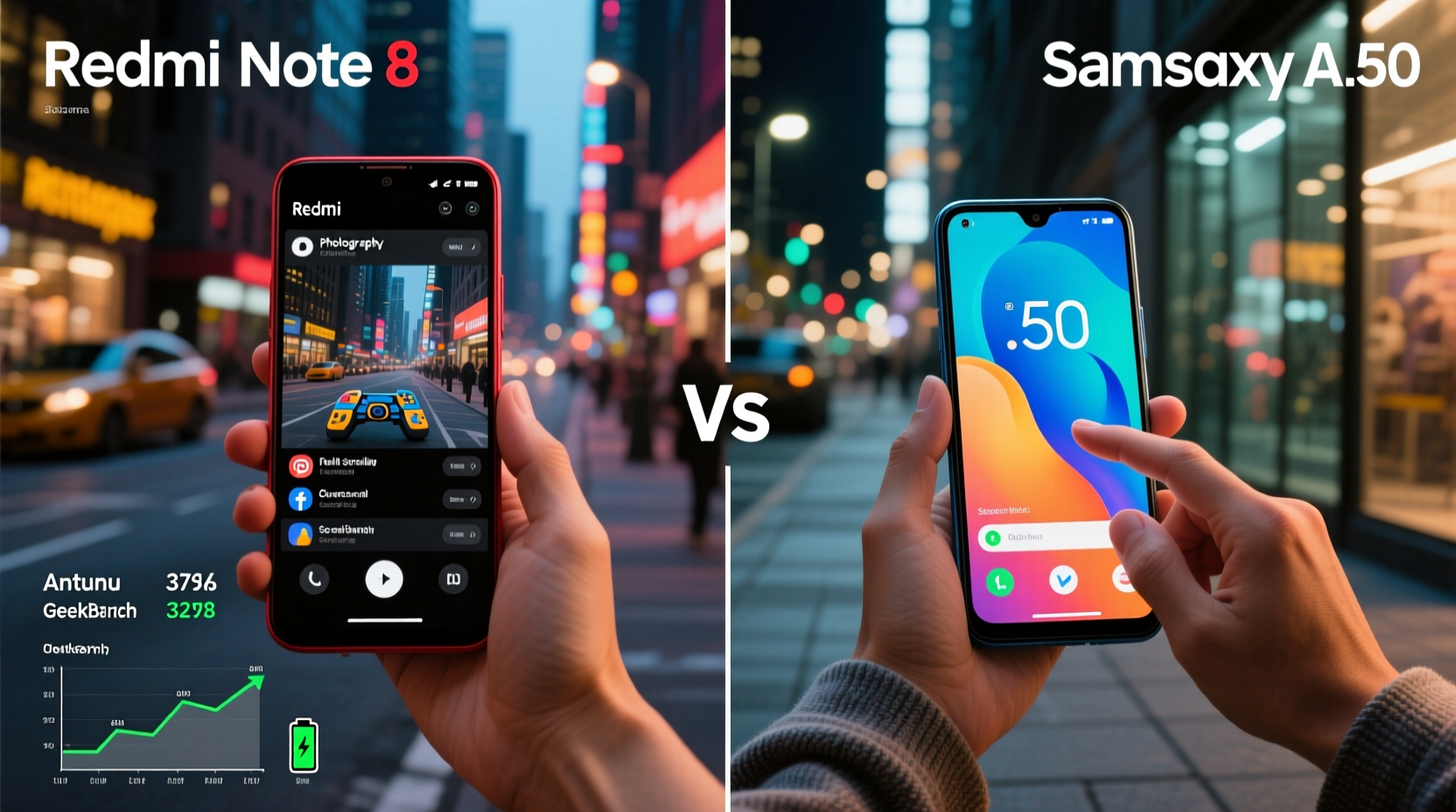
The Galaxy A50 stands out immediately with its glass-like front and back paired with a plastic frame, giving it a more premium feel than the Redmi Note 8’s matte plastic body. Its slim profile (7.7mm) and symmetrical AMOLED display with a small teardrop notch make it visually appealing. In contrast, the Redmi Note 8 uses a larger waterdrop notch and thicker bezels, resulting in a less refined look despite being comfortable to hold.
Samsung also opted for an in-display fingerprint scanner, which was relatively new for this price segment at launch. While convenient, early firmware versions made it inconsistent. The Redmi Note 8 relies on a side-mounted capacitive sensor—faster and more reliable in daily use.
Display Performance: Clarity and Comfort
The Galaxy A50 features a 6.4-inch Super AMOLED display with Full HD+ resolution, delivering deeper blacks, vibrant colors, and excellent viewing angles. It supports Always-On Display and adaptive brightness, enhancing usability outdoors. The Redmi Note 8, meanwhile, has a 6.3-inch IPS LCD panel with HD+ resolution—perfectly adequate but noticeably dimmer and less dynamic in direct sunlight.
For media consumption, especially streaming videos or reading in low light, the A50’s screen provides a superior experience. However, some users report eye strain due to PWM flickering at lower brightness levels—a known issue with certain AMOLED panels. The IPS display on the Redmi Note 8 doesn’t suffer from this, making it potentially easier on the eyes during prolonged use.
“AMOLED screens offer richer visuals, but not all users benefit equally—those sensitive to screen flicker might prefer stable LCDs.” — Dr. Lena Park, Digital Eye Health Researcher
Performance and Software Experience
Under the hood, both phones use different chipsets targeting similar performance tiers. The Redmi Note 8 runs on Qualcomm’s Snapdragon 665, built on a 11nm process with decent efficiency and mid-tier gaming capability. The Galaxy A50 uses Samsung’s Exynos 9610, an octa-core processor with Mali-G72 MP3 graphics. On paper, they’re comparable, but real-world behavior diverges.
In day-to-day tasks like app switching, web browsing, and social media scrolling, both devices perform smoothly. However, after six months of regular use, many A50 owners report increased lag and slower app launches, particularly as One UI updates added background processes. The Redmi Note 8, running near-stock MIUI, tends to remain snappier over time, though occasional bloatware can be annoying.
Battery life favors the Redmi Note 8 thanks to its larger 4,000mAh cell and efficient SoC. With moderate use, it easily lasts 1.5 days. The A50’s 4,000mAh battery is matched in capacity but drains faster due to the brighter AMOLED screen and heavier software layer. Fast charging is nearly identical—both support 15W—but only the A50 includes USB Power Delivery.
Real-World Example: Commuter’s Perspective
Jessica, a teacher in Bangalore, upgraded from a Redmi 6A to the Galaxy A50 for its modern design and brand trust. Initially impressed by the screen and camera, she grew frustrated within four months. “It started freezing when I opened WhatsApp and Gmail together. By evening, the battery would drop to 20%, even though I wasn’t doing much.” She eventually switched back to a Redmi device, citing reliability and longer battery life as deciding factors.
Camera Comparison: Photos That Reflect Reality
Both phones feature quad-camera setups, but implementation differs significantly. The Redmi Note 8 includes a 48MP main sensor (Samsung GM1), an 8MP ultrawide, a 2MP macro, and a 2MP depth sensor. The Galaxy A50 packs a 25MP main shooter (Samsung GD1), an 8MP ultrawide, a 5MP depth sensor, and no dedicated macro lens.
In daylight, the A50 produces well-saturated, detailed images with natural skin tones. Its AI scene optimizer works subtly, avoiding oversaturation. Low-light performance is where it stumbles—images become noisy, and detail drops sharply without Night mode enabled. The Redmi Note 8 delivers punchier colors and better dynamic range in HDR scenes. Its Night mode improves dark shots considerably, though processing takes longer.
Videos are capped at 1080p@30fps on both devices. Stabilization is basic; neither handles motion well without external help. Selfies go to the A50—the 32MP front camera captures crisp, flattering portraits with accurate color reproduction.
| Feature | Redmi Note 8 | Samsung A50 |
|---|---|---|
| Main Camera | 48MP (f/1.8) | 25MP (f/1.7) |
| Ultrawide | 8MP (f/2.2) | 8MP (f/2.2) |
| Front Camera | 13MP (f/2.0) | 32MP (f/2.0) |
| Video Recording | 1080p @ 30fps | 1080p @ 30fps |
| Night Mode | Yes | Yes |
| Dedicated Macro Lens | Yes | No |
Longevity and After-Sales Support
This is where the decision becomes nuanced. Samsung offers up to two major Android OS upgrades and three years of security patches. At launch, the A50 ran Android 9 Pie with One UI and later received updates to Android 11. This extended support means better app compatibility and security over time.
Xiaomi promised one major update for the Redmi Note 8 (upgrading from Android 9 to 10). While community developers continue to provide custom ROMs, official support ended sooner. Users relying on stock firmware may face limitations with newer apps in the future.
Repair costs also differ. Samsung service centers are widespread globally, and spare parts—even third-party—are standardized. Xiaomi’s footprint is growing, but component availability varies regionally. Replacing the A50’s curved glass back is pricier than fixing the simpler Redmi chassis.
Frequently Asked Questions
Is the Samsung A50 waterproof?
No, neither the Galaxy A50 nor the Redmi Note 8 has any official IP rating for water or dust resistance. Both should be kept away from moisture.
Which phone has better speakers?
The Redmi Note 8 has a single bottom-firing speaker with slightly louder output and clearer mids. The A50’s speaker is quieter and tends to get muffled when held horizontally.
Can either phone run PUBG Mobile smoothly?
Yes, both handle PUBG Mobile at medium settings with minimal frame drops. The Snapdragon 665 in the Redmi Note 8 manages thermal throttling slightly better during extended gameplay sessions.
Final Verdict: Is the Upgrade Worth It?
If you're upgrading from an older budget phone, both the Redmi Note 8 and Galaxy A50 represent significant leaps in performance, display quality, and camera capabilities. However, whether the jump from the Redmi Note 8 to the Samsung A50 is \"worth it\" depends on what you value most.
The A50 excels in screen quality, front camera performance, and long-term software support. Its sleek design appeals to users who want a premium aesthetic. But these benefits come at the cost of slightly weaker real-world battery life, inconsistent fingerprint recognition, and a tendency to slow down over time.
The Redmi Note 8 counters with superior build ergonomics, faster unlock response, longer-lasting battery efficiency, and more balanced camera versatility—including a dedicated macro lens often missing in rivals. It lacks the visual flair of the A50 but wins in functional consistency.
For most users seeking dependable daily performance without paying extra for marginal gains, the Redmi Note 8 remains a smarter choice. The Samsung A50 justifies its higher price only if you deeply value AMOLED visuals, selfie quality, and guaranteed future updates.




 浙公网安备
33010002000092号
浙公网安备
33010002000092号 浙B2-20120091-4
Comments
No comments yet. Why don't you start the discussion?