
Perfume is more than a luxury—it's an extension of identity. Whether it’s a signature scent for daily wear or a bold statement for special occasions, how you store and use your fragrance matters. In recent years, refillable perfume atomizers have surged in popularity, championed by travelers, minimalists, and eco-conscious consumers. But as convenient as they may seem, do they truly offer cost savings? And more importantly, do they preserve the integrity of your favorite scents?
The debate between using full-size perfume bottles versus transferring fragrances into portable atomizers isn't just about convenience—it touches on economics, chemistry, and long-term enjoyment. This article examines both sides with real-world data, expert insights, and practical advice to help you decide whether switching to refillables is smart—or if you're sacrificing quality for portability.
Understanding the Basics: What Are Refillable Atomizers?
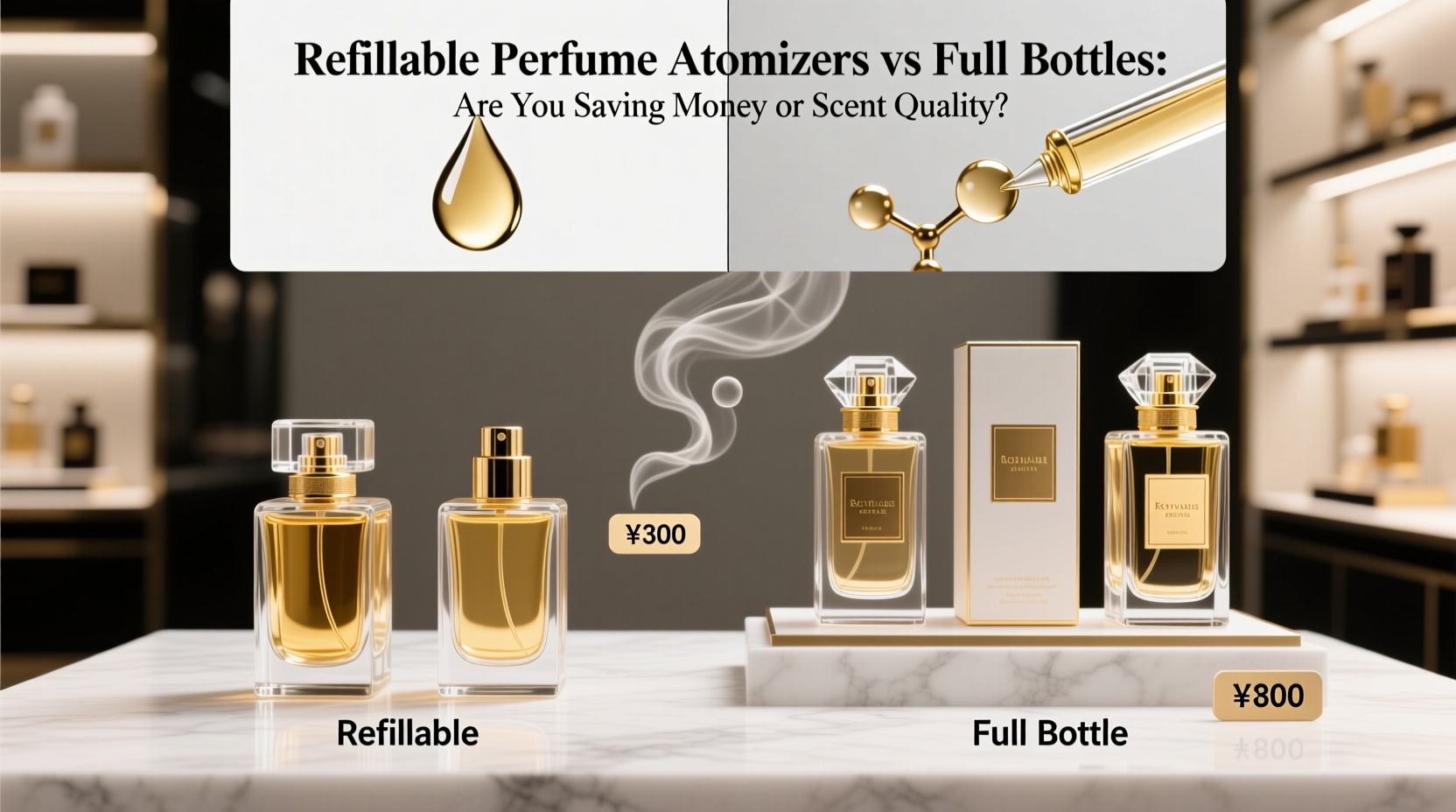
A refillable perfume atomizer is a small, reusable spray container designed to hold a portion of your full-sized fragrance. Typically ranging from 5ml to 15ml in capacity, these devices allow users to carry their preferred scent without lugging around bulky bottles. Most are made from aluminum, stainless steel, or durable plastic, often featuring leak-proof mechanisms and sleek designs suitable for purses, pockets, or travel kits.
Refillable atomizers work by drawing liquid from a source bottle through a tube or nozzle, then sealing tightly to prevent evaporation and contamination. They’re commonly used by people who:
- Travel frequently and want TSA-compliant options
- Want to sample multiple scents without buying full bottles
- Seek sustainable alternatives to single-use packaging
- Prioritize discretion and portability
While the appeal is clear, the trade-offs begin at the molecular level—where light, air, and material interactions can subtly alter a fragrance over time.
Cost Comparison: Are You Actually Saving Money?
At first glance, refillable atomizers appear economical. After all, why buy multiple travel-sized perfumes when you can decant your own? However, true cost analysis must account for initial investment, longevity, and indirect expenses like potential waste due to spoilage.
Let’s compare two scenarios based on a typical niche fragrance retailing for $120 per 100ml:
| Option | Initial Cost | Ongoing Costs | Lifespan | Total 2-Year Estimate |
|---|---|---|---|---|
| Full Bottle Only (100ml) | $120 | None | 3–5 years (stored properly) | $120 |
| Refillable Atomizer + Full Bottle | $120 (perfume) + $35 (atomizer) | Replacement seals, cleaning supplies (~$10/year) | Atomizer lasts ~2 years with care | $175 |
| Multiple Travel Sprays (pre-filled) | $45 each × 3 = $135 | Replace every 6–8 months | Short-term use only | $270+ |
As shown, relying solely on a full bottle is the most cost-effective option over time. Using a refillable atomizer adds value primarily in flexibility—not direct financial savings. The upfront cost of a high-quality atomizer ($25–$50) combined with maintenance means you’ll spend more unless you’re avoiding expensive travel-sized purchases.
However, there’s a hidden economic benefit: reduced impulse buys. When you can sample favorites via decanting, you're less likely to purchase new scents unnecessarily. Over a year, this behavioral shift can offset the atomizer’s cost.
Scent Quality: Does Decanting Degrade Fragrance?
Fragrance composition is delicate. Perfumes contain top, middle, and base notes that evaporate at different rates. Exposure to environmental factors—especially light, heat, oxygen, and certain materials—can accelerate degradation.
When you transfer perfume into a refillable atomizer, several risks emerge:
- Oxidation: Repeated exposure to air during refills introduces oxygen, which breaks down volatile compounds. Citrus and green notes are especially vulnerable.
- Photodegradation: Clear or translucent atomizers expose perfume to UV light, altering chemical bonds. Vanillin (common in gourmand scents) can darken or lose sweetness.
- Material Interaction: Low-grade plastics or rubber gaskets may leach chemicals or absorb oils, distorting aroma profiles.
“Once a fragrance leaves its original packaging, it begins a slow decline. The original bottle is engineered for stability—dark glass, tight seals, minimal headspace.” — Dr. Lena Moreau, Cosmetic Chemist & Fragrance Stability Researcher
Full bottles, particularly those in amber or cobalt glass, are designed to minimize these risks. They limit light penetration, reduce air exchange, and maintain consistent internal pressure. In contrast, even premium atomizers rarely match this level of protection.
A 2022 study published in the *Journal of Sensory Chemistry* found that after six weeks of daily use, decanted fragrances showed measurable shifts in olfactory perception. Test subjects reported diminished sillage (projection) and altered dry-down phases in 68% of samples stored in non-original containers.
Real Example: A Weekender’s Experiment
Mark, a frequent business traveler, switched from carrying his 100ml bottle of Terre d’Hermès to a 10ml stainless steel atomizer. He refilled monthly and kept the device in his jacket pocket. After three months, he noticed the once-crisp grapefruit opening had mellowed into a flat, almost metallic tone. The vetiver base remained but lacked depth.
He conducted a side-by-side test: spraying both the original bottle and the atomizer version on identical blotter strips. Colleagues confirmed the difference—one described the atomized sample as “like a photocopy of the real thing.” Mark concluded that while convenient, the atomizer compromised the experience he valued most: authenticity.
Best Practices for Using Refillable Atomizers Without Sacrificing Quality
If you choose to use refillable atomizers, you don’t have to accept diminished performance. With careful handling, you can preserve scent integrity and extend usability.
Step-by-Step Guide to Safe Decanting
- Choose the right atomizer: Opt for models made from medical-grade stainless steel or opaque aluminum with silicone-free seals.
- Clean before first use: Rinse with isopropyl alcohol, then let dry completely to eliminate residues.
- Fill in a cool, dark space: Avoid direct sunlight and high humidity to minimize immediate oxidation.
- Minimize air exposure: Fill the atomizer to near capacity and avoid leaving half-empty for extended periods.
- Store properly: Keep in a padded pouch inside a drawer or luggage compartment away from heat sources.
- Rotate regularly: Use one scent at a time and return to the original bottle for replenishment every 4–6 weeks.
- Retire old units: Replace O-rings annually and discard atomizers showing discoloration or residue buildup.
Checklist: Maximizing Scent Longevity in Atomizers
- ✅ Use only opaque or UV-protected containers
- ✅ Limit refills to no more than twice per month per unit
- ✅ Avoid storing in cars, gym bags, or near windows
- ✅ Never mix fragrances in the same atomizer
- ✅ Clean immediately after finishing a scent
- ✅ Carry only what you’ll use within 4–6 weeks
When Full Bottles Make More Sense
There are clear situations where sticking with the original bottle is not just preferable—but essential.
- For collector-grade or limited-edition scents: These are investments. Preserving their original condition maintains both olfactory fidelity and resale value.
- In humid or hot climates: High temperatures accelerate evaporation and breakdown. A full bottle with minimal headspace outperforms smaller containers.
- For complex, layered fragrances: Scents with intricate pyramids (e.g., Amouage Interlude Man, Le Labo Santal 33) rely on precise note evolution, easily disrupted by poor storage.
- If you wear perfume daily: Frequent access to a large reservoir reduces the need for constant transfers, minimizing risk.
Moreover, many high-end brands now offer official travel sets with magnetic docks and rechargeable sprayers (e.g., Diptyque, Byredo). These systems maintain quality through controlled engineering and sealed cartridges—bridging the gap between convenience and preservation.
FAQ: Common Questions About Atomizers and Full Bottles
Can I refill my atomizer with any type of perfume?
Most perfumes can be transferred, but caution is needed with oil-based, all-natural, or sediment-heavy fragrances. Thick formulas may clog fine mist nozzles. Always check compatibility and consider using dedicated atomizers for heavier extrait de parfum concentrations.
How long does decanted perfume last in an atomizer?
Under optimal conditions—cool, dark storage, minimal air exposure—a decanted fragrance can remain stable for 4 to 8 weeks. Beyond that, expect gradual fading of top notes and possible alteration of the overall profile.
Do refillable atomizers damage the original bottle’s pump?
Repeated pumping during decanting can wear out the spray mechanism faster, especially with alcohol-based fragrances that dry internal seals. To minimize wear, consider using a glass dropper or transfer pipette instead of spraying directly into the atomizer.
Conclusion: Balancing Practicality and Perfume Integrity
Refillable perfume atomizers aren’t inherently wasteful or damaging—but they come with compromises. While they enhance mobility and support sustainable habits by reducing single-use packaging, they don’t always deliver cost savings or scent fidelity. The decision ultimately hinges on your lifestyle, priorities, and relationship with fragrance.
If you travel lightly and rotate scents seasonally, a well-maintained atomizer offers unmatched convenience. But if you cherish the full sensory journey of your favorite perfume—the bright opening, the heart’s bloom, the lingering base—then treating the original bottle as sacred remains the wisest choice.
You don’t have to pick one over the other. Many discerning users keep a full bottle at home for optimal preservation and use a high-quality atomizer for short-term needs. This hybrid approach balances economy, ecology, and olfactory excellence.




 浙公网安备
33010002000092号
浙公网安备
33010002000092号 浙B2-20120091-4
Comments
No comments yet. Why don't you start the discussion?