
A well-crafted cucumber and onion salad is more than just a side dish—it’s a celebration of texture, contrast, and balance. When dressed in a cool, tangy sour cream dressing, the crisp freshness of cucumbers and the sharp bite of raw onions transform into a harmonious accompaniment that elevates grilled meats, sandwiches, or even a simple weeknight meal. This version delivers brightness without bitterness, creaminess without heaviness, and flavor that lingers long after the last bite. Whether served at a backyard barbecue, alongside roasted chicken, or as part of a deli-style spread, this salad bridges cultures, cuisines, and seasons with ease.
The appeal lies not only in its simplicity but in its versatility. Unlike mayonnaise-based salads that can turn soggy or overpowering, the sour cream dressing here enhances rather than masks the vegetables. It offers a subtle richness while allowing the natural hydration and crunch of cucumbers to shine. With proper technique, excess moisture is managed, flavor is layered thoughtfully, and results are consistently excellent—even when made hours ahead.
Definition & Overview
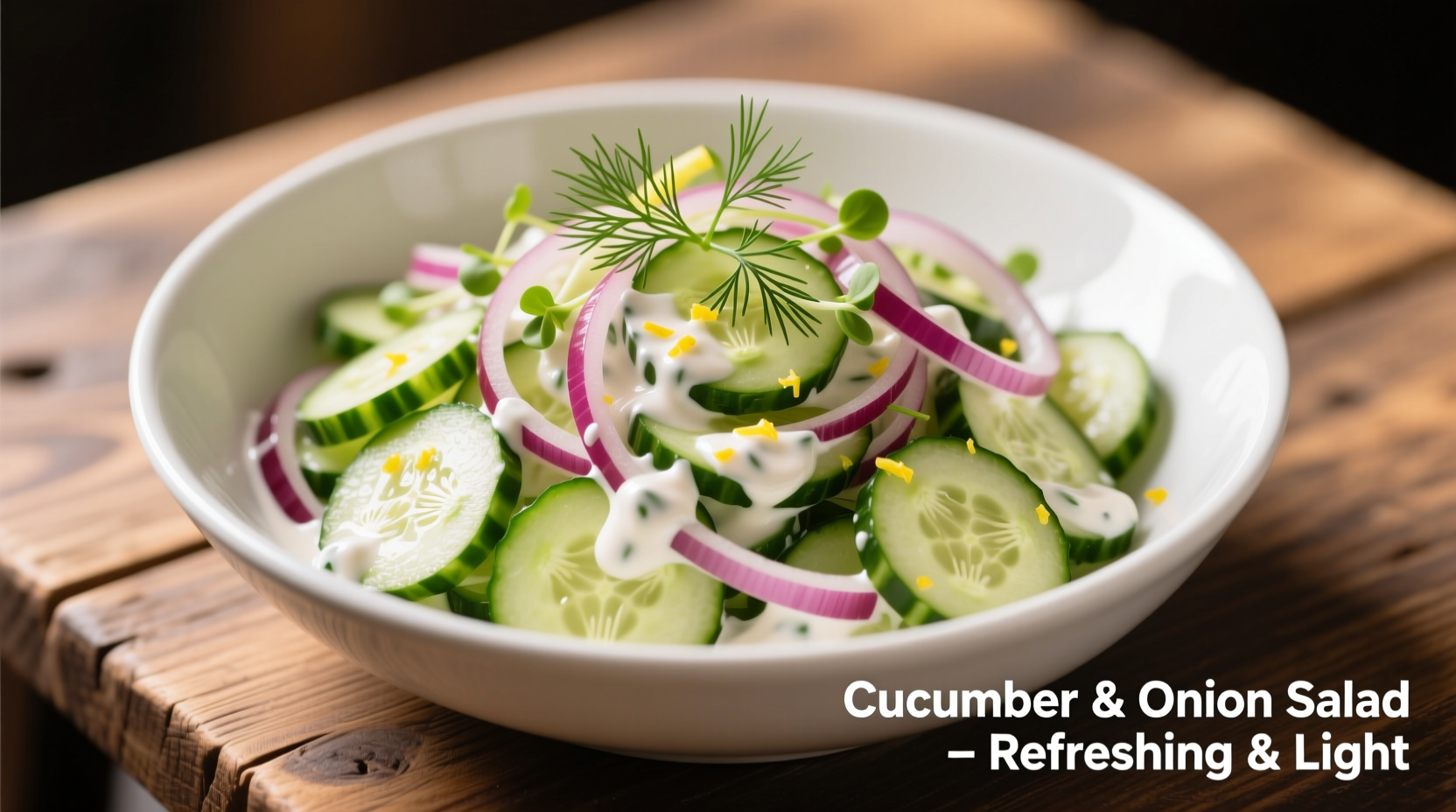
Refreshing Cucumber and Onion Salad with Sour Cream Dressing is a chilled vegetable preparation featuring thinly sliced cucumbers and red onions bound together by a creamy, acidic dressing made primarily from sour cream. It belongs to the broader category of cold salads commonly found across Eastern European, Scandinavian, and American home cooking traditions. While variations exist—from dill-heavy versions in Poland to vinegar-forward renditions in Southern U.S. kitchens—this particular style emphasizes balance: a touch of sweetness, a hint of acidity, and a lush mouthfeel from dairy.
Cucumbers contribute high water content and a clean, slightly sweet vegetal note. Red onions provide pungency and color contrast. The sour cream base introduces lactic tang and body, often enhanced with lemon juice or vinegar, fresh herbs (especially dill), salt, pepper, and sometimes a whisper of sugar to round out sharp edges. Unlike pickled cucumber dishes such as tzatziki or sauerkraut-style relishes, this salad relies on raw ingredients and immediate consumption, preserving maximum crispness and vibrancy.
This dish functions both as a palate cleanser and a textural counterpoint. Its cool temperature and high hydration make it ideal for warm weather dining, particularly when paired with rich or smoky foods like grilled sausages, burgers, kebabs, or fried fish. Because it requires no cooking, it's accessible to cooks of all skill levels and fits seamlessly into meal prep routines.
Key Characteristics
| Attribute | Description |
|---|---|
| Flavor Profile | Bright, tangy, mildly sweet, with herbal notes; balanced between fresh vegetal taste and creamy richness. |
| Aroma | Freshly cut cucumber, sharp onion, and faintly fermented dairy; enhanced by dill or other herbs if used. |
| Texture | Crisp, juicy cucumbers; firm yet yielding onion slices; smooth, velvety dressing coating evenly. |
| Color | Pale green from cucumbers, deep magenta from red onions, off-white from dressing; visually appealing contrast. |
| Heat Level | None inherently, though raw onion adds mild pungency; adjustable based on soaking or quantity. |
| Culinary Function | Side dish, condiment, sandwich filler, or palate refresher; complements grilled, roasted, or fried proteins. |
| Shelf Life | Best consumed within 24 hours; retains quality up to 48 hours refrigerated, though texture softens over time. |
Practical Usage: How to Make and Use the Salad
To prepare an exceptional cucumber and onion salad with sour cream dressing, follow these steps carefully. Success hinges on ingredient selection, moisture control, seasoning balance, and timing.
- Select the right cucumbers: English (hothouse) cucumbers are preferred due to their thin skin, minimal seeds, and lower water content. If using standard slicing cucumbers, peel them partially in stripes, halve lengthwise, and scoop out the seedy core before slicing.
- Slice uniformly: Use a mandoline or sharp knife to cut cucumbers into rounds about 1/8 inch thick. Consistent thickness ensures even texture and dressing absorption.
- Prep the onions: Slice red onions thinly—again, a mandoline helps achieve paper-thin slices. To reduce harshness, soak them in ice water for 10–15 minutes, then drain and pat dry. This step mellows the bite without sacrificing flavor or color.
- Salt and drain cucumbers: Place sliced cucumbers in a colander, sprinkle with kosher salt (about ½ tsp per medium cucumber), toss gently, and let sit for 20–30 minutes. This draws out excess moisture, preventing a watery salad. Rinse lightly under cold water to remove excess salt and squeeze gently in a clean towel to remove remaining liquid.
- Prepare the dressing: In a mixing bowl, combine ¾ cup full-fat sour cream, 1 tbsp lemon juice or white wine vinegar, 1 tsp Dijon mustard (optional, for emulsification), 1 tbsp chopped fresh dill, ¼ tsp black pepper, and a pinch of sugar. Whisk until smooth. Taste and adjust acid or sweetness as needed.
- Combine and chill: Fold cucumbers and drained onions into the dressing. Refrigerate for at least 30 minutes before serving to allow flavors to meld. Stir once before serving.
Pro Tip: For restaurant-quality presentation, chill the serving bowl beforehand. Garnish with extra dill sprigs or a dusting of paprika for visual appeal. Serve in small mason jars for picnic-friendly portions.
In home kitchens, this salad pairs exceptionally well with grilled salmon, pulled pork sandwiches, or as part of a brunch spread alongside bagels and lox. Some chefs use it as a topping for baked potatoes, replacing traditional chives and sour cream with the entire salad for layered flavor. Others incorporate it into open-faced sandwiches or serve it alongside falafel or schnitzel for added freshness.
The dressing ratio should maintain a 3:1 vegetable-to-dressing volume ratio. Too much dressing overwhelms; too little leaves the salad dry. Start with less—you can always add more—but err on the side of restraint.
Variants & Types
While the classic version uses sour cream, several regional and dietary adaptations offer distinct profiles:
- Yogurt-Based Version: Substitute Greek yogurt for sour cream. Results in a lighter, more tart profile with higher protein and probiotic content. Ideal for health-conscious preparations.
- Dairy-Free Alternative: Use unsweetened coconut yogurt or cashew cream blended with apple cider vinegar and nutritional yeast. Mimics tang and richness without animal products.
- Herbed Variations: Replace dill with chopped mint (common in Middle Eastern versions), parsley, chives, or tarragon for different aromatic dimensions.
- Garlic-Infused: Add ½ clove of minced garlic or ¼ tsp garlic powder for depth. Use sparingly to avoid dominating delicate flavors.
- Sweet-and-Sour Style: Increase sugar slightly (up to 1 tsp) and use apple cider vinegar instead of lemon juice. Popular in German-influenced recipes like “Gurkensalat.”
- Add-Ins: Incorporate diced bell peppers, radishes, celery, or hard-boiled eggs for increased complexity and heartiness.
| Variant Type | Base Ingredient | Best Used For |
|---|---|---|
| Classic Sour Cream | Full-fat sour cream | Grilled meats, holiday meals, traditional pairings |
| Yogurt-Herb | Greek yogurt + dill/mint | Light lunches, Mediterranean platters, summer picnics |
| Dairy-Free | Coconut or cashew cream | Vegan diets, allergy-sensitive settings |
| Sweet Vinegar | Vinegar-sugar brine with minimal dairy | German, Polish, or Ashkenazi Jewish cuisine |
Comparison with Similar Ingredients
This salad is often confused with related dishes that share ingredients but differ significantly in method and purpose.
| Salad Type | Main Base | Texture | Use Case |
|---|---|---|---|
| Cucumber & Onion Salad (Sour Cream) | Raw cucumbers + onions + creamy dressing | Crisp, moist, creamy | Fresh side dish, served same day |
| Tzatziki | Grated cucumber + yogurt + garlic + dill | Thick, strained, cool | Meze platter, gyro topping, dip |
| Pickled Red Onions | Onions preserved in vinegar brine | Soft, tangy, translucent | Condiment, taco garnish, burger topping |
| Creamy Coleslaw | Shredded cabbage + mayo/sour cream | Crisp-tender, dense | BBQ sides, sandwich layer |
The key distinction lies in composition and function. Tzatziki uses grated, seeded, and squeezed cucumber mixed into seasoned yogurt, intended as a sauce. Pickled onions undergo preservation and lose their raw edge. Coleslaw features cabbage as the dominant vegetable and typically includes carrots and sweeter dressings. Our salad maintains equal prominence between cucumber and onion, with a focus on freshness and immediate consumption.
Practical Tips & FAQs
How do I prevent the salad from becoming watery?
Salt the cucumbers before mixing. This draws out excess moisture through osmosis. After salting, rinse and pat dry thoroughly. Skipping this step risks dilution of the dressing and a limp final product.
Can I make it ahead of time?
Yes, but with caveats. Assemble the salad up to 24 hours in advance and store covered in the refrigerator. Stir before serving. Texture will soften slightly after 12 hours due to continued release of cucumber juice, so optimal freshness occurs within 6–8 hours of preparation.
What type of sour cream should I use?
Full-fat sour cream (18–20% fat) provides the best mouthfeel and stability. Low-fat versions may separate or lack richness. Avoid whipped sour cream, which contains air and stabilizers unsuitable for dressings.
Are there non-dairy substitutes that work well?
Yes. High-quality plain coconut yogurt or cashew-based sour creams perform admirably. Look for brands with neutral flavor and thick consistency. Add a splash of vinegar to enhance tang.
How spicy are the onions?
Raw red onions have moderate pungency. Soaking in ice water reduces sharpness significantly. For sensitive palates, use sweet onions like Vidalia or Walla Walla, though they offer less color contrast.
Can I add cheese?
While uncommon, crumbled feta or queso fresco can be folded in for a Mediterranean twist. Add just before serving to maintain texture.
Is this salad healthy?
It is low in calories and carbohydrates, high in water content, and contributes hydration and micronutrients (like vitamin K and potassium). Using full-fat dairy increases saturated fat content, but moderate portions fit within balanced diets. Opt for Greek yogurt to boost protein and reduce fat.
Storage Checklist:
- Store in an airtight container in the coldest part of the fridge (not the door).
- Consume within 48 hours for best quality.
- Do not freeze—texture degrades severely upon thawing.
- If separation occurs, stir gently to recombine.
\"The secret to great cucumber salad isn’t just the dressing—it’s respect for the vegetable. Cucumbers are 95% water. Your job is to manage that water, not fight it.\" — Chef Elena Marquez, Culinary Instructor, Institute of Regional Foods
Summary & Key Takeaways
A truly refreshing cucumber and onion salad with sour cream dressing balances crisp texture, bright flavor, and creamy richness. By selecting the right cucumbers, properly preparing onions, and crafting a balanced dressing, home cooks can produce a dish that rivals professional kitchens. The salting and draining step is non-negotiable for optimal texture, and herb choice allows for personalization without compromising integrity.
This salad shines brightest when treated as a dynamic component of a larger meal—not merely an afterthought. Its cooling properties contrast beautifully with grilled, smoked, or spicy foods. Variants accommodate dietary needs, from vegan alternatives to yogurt-based twists, ensuring broad accessibility.
Mastering this recipe offers more than a single dish—it builds foundational skills in moisture management, acid balance, and cold preparation techniques applicable to countless other salads and condiments.
Ready to elevate your next meal? Try this salad with grilled lamb chops and roasted new potatoes. Prepare it the night before, let flavors deepen overnight, and garnish with micro-dill just before serving. Share your creation online with #CrispCreamySalad—we’d love to see your take.




 浙公网安备
33010002000092号
浙公网安备
33010002000092号 浙B2-20120091-4
Comments
No comments yet. Why don't you start the discussion?