
A salad built from cucumbers, red onions, and tomatoes is more than just a side dish—it’s a celebration of freshness, texture, and balance. Found across Mediterranean, Middle Eastern, and Balkan cuisines, this combination appears in forms like Greek horiatiki, Turkish çoban salatası, and Lebanese fattoush (in its simpler iterations). Its enduring popularity lies not only in its ease of preparation but in its ability to deliver bright, clean flavors that cut through rich meals or stand confidently on their own. For home cooks seeking a reliable, nutritious, and visually appealing dish, mastering this trio is essential. The interplay of juicy tomatoes, crisp cucumbers, and sharp red onions creates a foundation that can be subtly elevated with herbs, dressings, and technique.
Definition & Overview
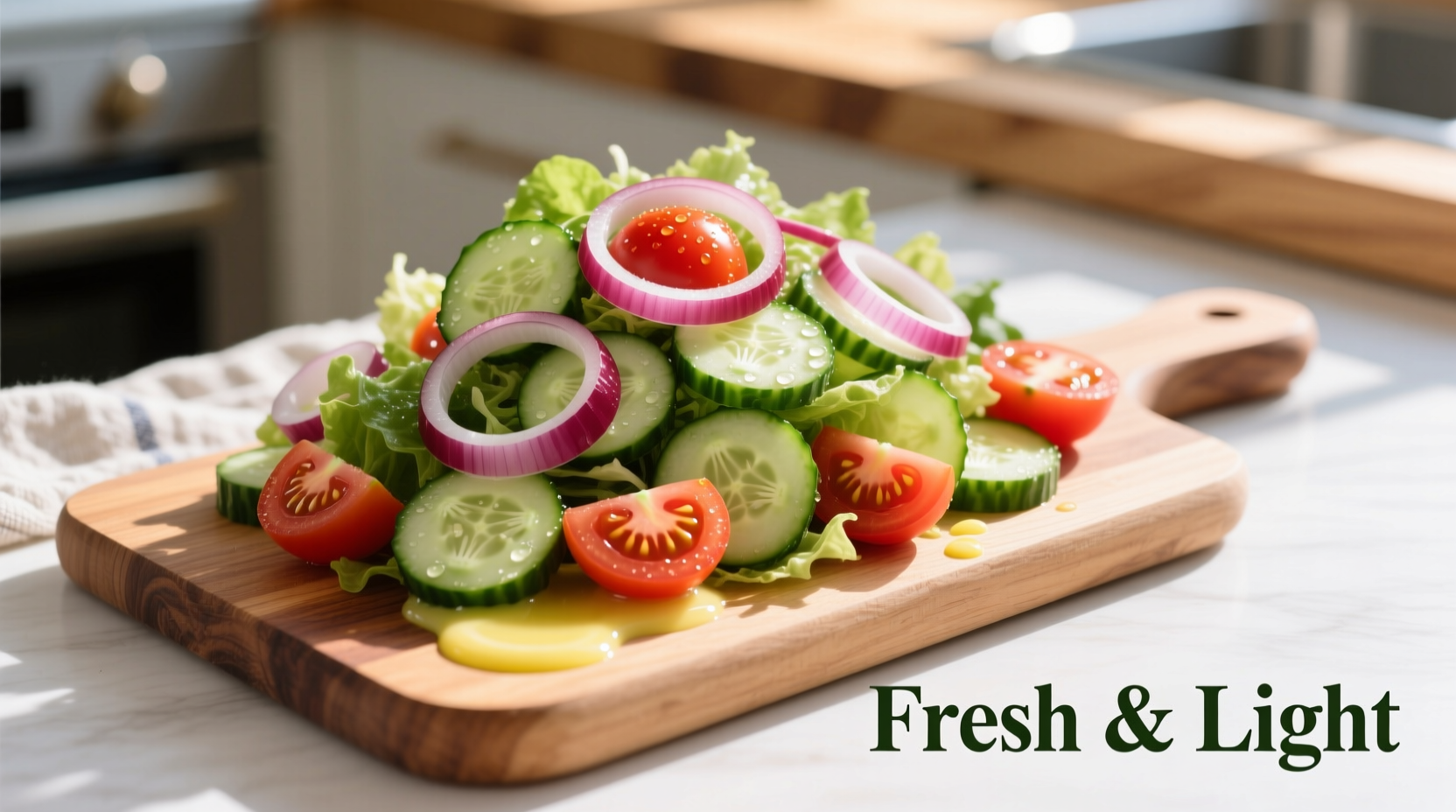
This salad is a raw vegetable composition centered on three core ingredients: ripe tomatoes, crisp cucumbers, and thinly sliced red onions. It belongs to the broader category of chopped salads or fresh garden salads, distinguished by minimal cooking (typically none) and an emphasis on seasonal produce. While variations exist globally, the base remains consistent—vegetables are chopped into bite-sized pieces, lightly dressed, and served cold or at room temperature.
The flavor profile is bright and layered: sweet-acidic from tomatoes, cool and watery from cucumbers, and pungent with a slight sweetness from red onions. When balanced correctly, the result is neither soggy nor overpowering, but crisp, hydrating, and refreshingly savory. Unlike composed salads such as Niçoise or Cobb, this version is rustic and communal—meant to be tossed and shared.
Culinarily, it functions as a palate cleanser, a cooling accompaniment to grilled meats, or a light lunch when paired with bread or feta cheese. Nutritionally, it delivers hydration, vitamin C, antioxidants like lycopene, and dietary fiber. Because it relies so heavily on ingredient quality, its success hinges less on technique and more on selection and timing.
Key Characteristics
| Characteristic | Description |
|---|---|
| Flavor Profile | Bright, slightly sweet, tangy, with a clean finish. Tomatoes contribute acidity and umami; cucumbers add neutrality and moisture; red onions bring sharpness and subtle heat. |
| Aroma | Fresh, green, slightly earthy when ripe. Enhanced by herbs like parsley or mint if added. |
| Texture | Crisp, juicy, and crunchy. Properly prepped vegetables retain firmness without being tough. |
| Color | Vibrant mix of deep red (tomatoes), emerald green (cucumbers), and magenta (red onions). Visually appealing and indicative of phytonutrient diversity. |
| Heat Level | None inherently, though raw red onions may cause mild pungency. This diminishes with soaking or dressing. |
| Culinary Function | Accompaniment, palate refresher, base for protein additions, standalone light meal. |
| Shelf Life | Best consumed within 4–6 hours of assembly. Can last up to 24 hours refrigerated, though texture degrades due to moisture release. |
Practical Usage: How to Make It Perfectly
The simplicity of this salad belies the precision required for excellence. A poorly made version can be watery, overly sharp, or bland. A well-executed one sings with clarity and balance. Follow these steps for consistent results:
- Select peak-season produce: Use vine-ripened tomatoes in summer—avoid refrigeration, which dulls flavor and alters texture. English or Persian cucumbers are ideal for their thin skin and low seed count. If using larger slicing cucumbers, peel partially and scoop out seeds if watery.
- Uniform chopping: Cut all vegetables into similar sizes—approximately ½-inch cubes. This ensures even distribution of flavor and texture in each bite.
- Prep onions properly: Slice red onions thinly. To reduce sharpness, soak slices in ice water for 10–15 minutes, then drain and pat dry. This removes sulfur compounds responsible for bite without sacrificing crunch.
- Season in stages: Lightly salt tomatoes immediately after cutting to draw out excess moisture. Let them sit in a colander for 5–10 minutes, then gently press to remove liquid. This prevents dilution of the dressing later.
- Dress just before serving: Combine extra virgin olive oil, red wine vinegar (or lemon juice), salt, and freshly ground black pepper in a 3:1 oil-to-acid ratio. Toss gently to coat. Overdressing leads to sogginess.
- Add herbs at the end: Fresh parsley, dill, or mint should be torn and folded in last to preserve aroma and color.
Pro Tip: For restaurant-quality presentation, chill the serving bowl beforehand. Assemble the salad directly in the chilled dish and garnish with a drizzle of high-quality olive oil and a sprinkle of flaky sea salt just before serving. This enhances both temperature contrast and visual appeal.
Home Cooking Applications
In everyday cooking, this salad pairs exceptionally well with grilled lamb, chicken souvlaki, falafel, or shawarma. Serve alongside warm pita or crusty bread to create a complete meal. At brunch, it complements eggs, feta, and olives on a mezze platter. For picnics or packed lunches, store components separately and combine on-site to maintain texture.
Professional Kitchen Techniques
In restaurants, chefs often use this salad as a component rather than a standalone. It may be pressed lightly in a ring mold for height, garnished with microgreens, or used as a topping for seared tuna or grilled halloumi. Some upscale versions incorporate heirloom tomato varieties—Brandywine, Cherokee Purple—for visual drama and nuanced sweetness. Chefs also layer in preserved elements, such as capers or Kalamata olives, to deepen complexity without overwhelming freshness.
Pairing Suggestions
- Dairy: Crumbled feta, goat cheese, or ricotta salata add saltiness and creaminess.
- Herbs: Parsley (flat-leaf) for freshness; mint for coolness; basil for aromatic lift.
- Acids: Red wine vinegar, white wine vinegar, or citrus juice (lemon/lime).
- Oils: Extra virgin olive oil with medium fruitiness—not too peppery, not too bland.
- Crunch: Toasted pine nuts, sesame seeds, or croutons (sparingly, to avoid heaviness).
Variants & Types
While the base trio remains constant, regional and personal adaptations yield distinct versions. Understanding these helps tailor the salad to different cuisines and occasions.
| Variant | Region/Style | Key Additions | When to Use It |
|---|---|---|---|
| Classic Mediterranean | Greece, Southern Italy | Feta, oregano, olives, extra virgin olive oil | With grilled fish or lamb; family dinners |
| Turkish Shepherd’s Salad (Çoban Salatası) | Turkey | Parsley, sumac, lemon juice, no cheese | Alongside kebabs or as a meze |
| Levantine Version | Lebanon, Syria, Israel | Mint, lemon zest, pomegranate molasses drizzle | Festive meals, mezze spreads |
| American Backyard Style | United States | Green bell pepper, balsamic vinegar, garlic powder | Casual barbecues, potlucks |
| Deconstructed Tomato-Cucumber | Modern/Elegant | Layered in glasses, yogurt dressing, edible flowers | Dinner parties, plated appetizers |
Each variant reflects cultural preferences: Mediterranean versions embrace bold salt and herb notes; Levantine ones favor aromatic brightness; American renditions lean toward sweetness and accessibility. Choose based on your main course and desired formality.
Comparison with Similar Ingredients
This salad is often confused with other chopped vegetable dishes. Clarifying distinctions ensures proper usage.
| Similar Dish | Key Differences | Why It Matters |
|---|---|---|
| Gazpacho | Blended, chilled soup; includes bell peppers, garlic, bread; served cold | This salad is solid, not liquid; requires no blending or chilling beyond refrigeration |
| Pico de Gallo | Mexican salsa; uses white onion, cilantro, jalapeño, lime; often spicier and more acidic | Pico de gallo is a condiment; this salad is a side. Substituting red onion for white changes sharpness level |
| Caponata | Sicilian cooked relish; eggplant-based, sweet-sour agrodolce profile | This salad is raw and crisp; caponata is stewed and complex. Not interchangeable |
| Fattoush | Includes toasted pita chips, sumac, and sometimes radishes | Fattoush has crunch from bread; this salad relies solely on vegetable texture |
“The best cucumber-tomato-red onion salad tastes like sunlight and garden soil—alive and immediate. Technique matters, but only after you’ve chosen the right tomato.” — Claire Myles, Chef-Instructor, Culinary Institute of the Southwest
Practical Tips & FAQs
How do I prevent the salad from becoming watery?
Excess moisture comes primarily from tomatoes and cucumbers. Salt tomatoes lightly and let them drain in a colander. For cucumbers, especially larger varieties, remove seeds and pat dry after slicing. Dress no more than 15 minutes before serving.
Can I make it ahead of time?
Yes, but with strategy. Prep and store each ingredient separately in airtight containers. Keep cut tomatoes on paper towels to absorb liquid. Assemble and dress just before serving.
What’s the best oil-to-vinegar ratio?
A 3:1 ratio of extra virgin olive oil to acid (vinegar or citrus juice) provides balance without greasiness. Adjust to taste—some prefer 2:1 for brighter profiles.
Are there good substitutions?
- Red onion → Shallots (milder), pickled red onions (tangy-sweet), or green onions (less bite).
- Cucumber → Zucchini (raw, spiralized), jicama (for crunch), or celery (limited substitution).
- Tomato → None ideal—tomatoes are irreplaceable here. In off-season, cherry tomatoes may offer better flavor than bland beefsteaks.
How long does it last in the fridge?
Up to 24 hours, but quality declines rapidly. After 6 hours, cucumbers soften and dressing becomes diluted. Best eaten fresh.
Is it healthy?
Extremely. Low in calories, high in water content, rich in antioxidants (especially lycopene in tomatoes), and free of processed ingredients when made simply. Adding feta increases fat and sodium but contributes protein and calcium.
Can I add protein to make it a meal?
Absolutely. Grilled chicken, chickpeas, hard-boiled eggs, canned tuna, or cubed halloumi transform it into a satisfying entrée. Add protein just before serving to maintain texture.
Storage Checklist:
- Store undressed components in separate airtight containers.
- Line containers with paper towels to absorb moisture.
- Keep herbs unwashed and wrapped in damp cloth until use.
- Do not freeze—texture will collapse upon thawing.
Summary & Key Takeaways
A refreshing salad with cucumbers, red onions, and tomatoes is a cornerstone of healthy, flavorful eating. Its power lies in simplicity, but mastery comes from attention to detail: selecting ripe, in-season produce; managing moisture; balancing flavors; and dressing at the right moment. Whether served as a side or elevated into a main course, it delivers nutrition, hydration, and culinary satisfaction.
The key principles are clear: drain tomatoes, tame onions, chop uniformly, dress minimally, and serve promptly. Variations allow adaptation across cuisines—from Greek horiatiki to Turkish çoban salatası—while maintaining the core triad. Compared to similar dishes like pico de gallo or gazpacho, it occupies a unique space as a crisp, uncooked ensemble meant for sharing.
For home cooks, this salad offers a daily opportunity to practice mindfulness in ingredient selection and seasoning. For professionals, it's a test of restraint and precision. In every context, it reminds us that great food doesn’t require complexity—only care.
Try this salad at its peak this summer, and rediscover how three humble vegetables can deliver extraordinary refreshment.




 浙公网安备
33010002000092号
浙公网安备
33010002000092号 浙B2-20120091-4
Comments
No comments yet. Why don't you start the discussion?