
A bowl of crisp cucumbers, ripe tomatoes, and sharp red onions—dressed simply in olive oil and lemon juice—is more than just a side dish. It's a celebration of seasonal freshness, a testament to the power of minimalism in cooking. This salad appears across Mediterranean, Middle Eastern, and Balkan tables under various names: salata in Bulgaria, pitarakia in Cyprus, or shirazi salad in Iran. Despite regional variations, its essence remains unchanged: raw vegetables, cut fresh, seasoned thoughtfully, and served immediately. In an era where home cooks seek quick, nutritious, and flavorful meals, this salad delivers on all fronts. It requires no cooking, preserves the integrity of each ingredient, and adapts seamlessly to different cuisines and dietary needs. Whether accompanying grilled meats, stuffing pita bread, or standing alone as a cooling summer staple, its versatility is unmatched.
Definition & Overview
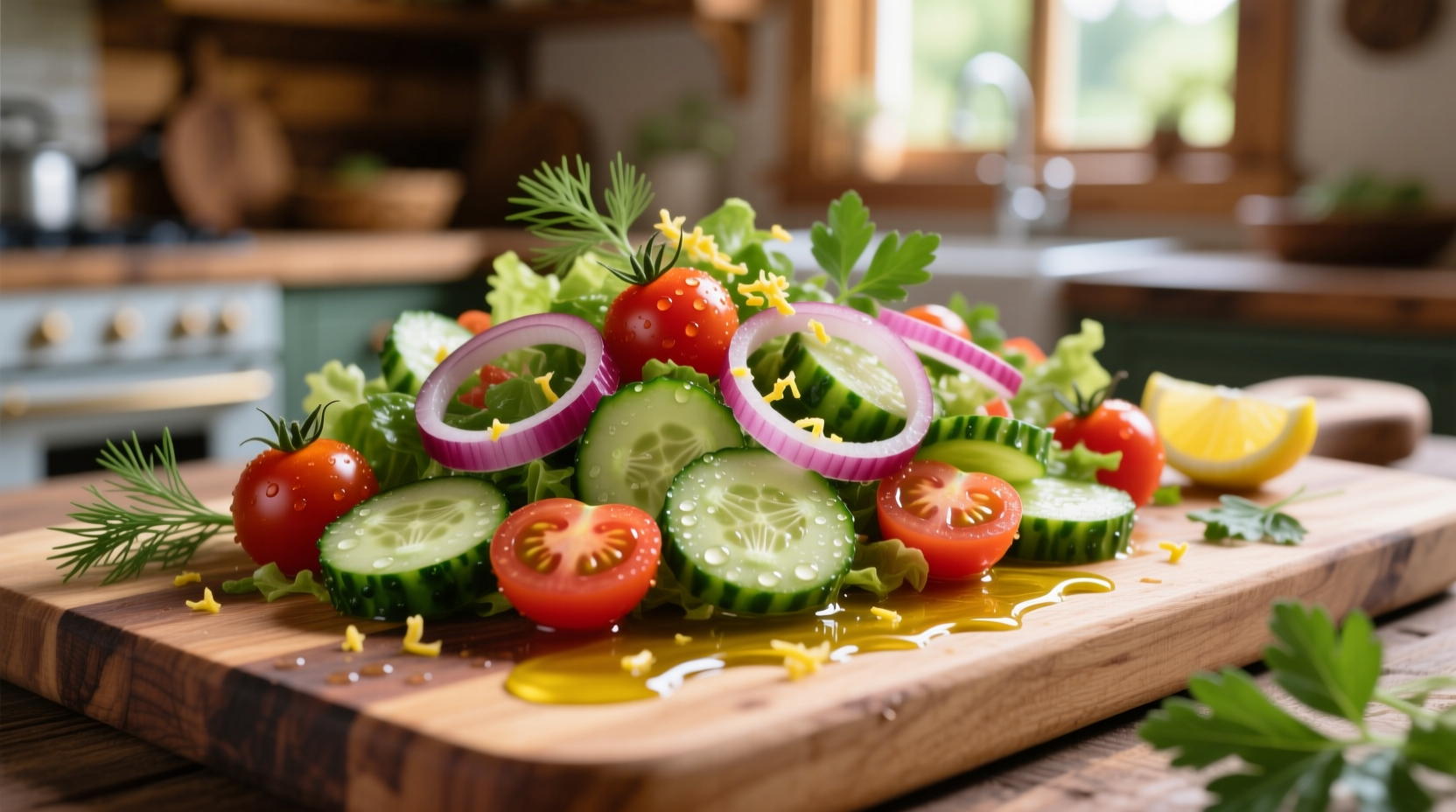
The refreshing salad made from cucumbers, tomatoes, and onions is a classic example of a raw vegetable preparation rooted in agrarian food traditions. Its foundation lies in three primary ingredients: firm cucumbers for crunch, juicy ripe tomatoes for acidity and sweetness, and sharp red onions for bite. Often dressed with extra virgin olive oil, acid (lemon juice or vinegar), salt, and herbs like parsley or mint, it exemplifies the principle that great flavor arises not from complexity, but from quality and balance.
This type of salad belongs to the broader category of chopped salads or relishes known globally as salsas, ensaladas, or mezes. Unlike composed salads such as Niçoise or Cobb, which are arranged artistically, this version is tossed—allowing flavors to mingle while maintaining textural contrast. It thrives in warm climates where fresh produce is abundant, particularly during late spring through early autumn. The absence of leafy greens makes it less perishable than typical green salads, allowing it to hold up well at picnics, barbecues, and outdoor gatherings.
Culinary historians trace similar preparations back centuries. Ancient Greeks consumed raw vegetables dipped in oil and vinegar, a practice noted by Hippocrates for digestive benefits. Persian cuisine has long featured tomato-cucumber combinations spiced with sumac and dried mint. Ottoman influences spread variations throughout Southeastern Europe and Western Asia, where they remain daily staples. Today, modern nutrition science validates what traditional diets already knew: consuming raw vegetables maximizes retention of heat-sensitive vitamins like vitamin C and folate, while the addition of healthy fats from olive oil enhances absorption of fat-soluble nutrients such as lycopene from tomatoes.
Key Characteristics
| Attribute | Description |
|---|---|
| Flavor Profile | Bright, acidic, slightly sweet, with herbal notes and mild pungency from onion |
| Aroma | Fresh-cut garden scent; enhanced by crushed garlic or bruised herbs |
| Color | Vibrant red (tomatoes), pale green (cucumbers), purple-pink (onions) |
| Texture | Crisp-tender; retains bite when properly cut and not overdressed |
| Heat Level | None unless spicy elements (e.g., chili flakes) are added |
| Culinary Function | Side dish, condiment, sandwich filler, palate cleanser |
| Shelf Life | Best consumed within 4–6 hours; can last up to 2 days refrigerated (texture degrades) |
Practical Usage
Creating an exceptional version of this salad hinges on technique, timing, and ingredient selection—not elaborate recipes. Begin by choosing peak-season produce. Ripe but firm tomatoes offer juiciness without turning the salad soggy. English or Persian cucumbers are preferable due to their thin skin and fewer seeds; if using standard slicing cucumbers, peel partially and scoop out the central seed cavity. Red onions should be thinly sliced and rinsed briefly under cold water to mellow their sharpness—a step critical for achieving balanced flavor.
Cut all components into uniform pieces—approximately ½-inch dice—to ensure even distribution and consistent bites. Combine gently in a non-reactive bowl (glass, ceramic, or stainless steel). Season only when ready to serve: first sprinkle with flaky sea salt, then drizzle with high-quality extra virgin olive oil (about 1 tablespoon per serving), followed by freshly squeezed lemon juice or red wine vinegar (1 teaspoon to 1 tablespoon depending on acidity preference). Finish with chopped fresh herbs—flat-leaf parsley adds brightness, mint brings coolness, dill imparts a delicate anise note.
For professional-level results, consider layering flavors. A minced garlic clove rubbed into the bottom of the serving bowl before adding vegetables infuses subtle depth. Alternatively, toast cumin seeds lightly, crush them with a mortar and pestle, and fold into the dressing for a warm, earthy undertone common in Levantine versions. Some chefs add a pinch of sugar to counteract excessive tartness in underripe tomatoes, though this should be avoided when using fully ripened fruit.
Pro Tip: To prevent sogginess, keep dressing minimal and serve immediately. If preparing ahead, store cut vegetables dry in separate containers and combine only minutes before serving. Excess moisture released by tomatoes and cucumbers dilutes flavor and softens texture rapidly.
In restaurant kitchens, this salad often functions as a component rather than a standalone item. It may top grilled fish or lamb kebabs, act as a filling for gyro wraps, or accompany falafel plates. Upscale interpretations include adding crumbled feta cheese, Kalamata olives, or capers for brininess, transforming it into a Greek-style horiatiki without lettuce. In fusion contexts, it serves as a base for grain bowls when layered over quinoa or farro.
Variants & Types
While the core trio remains constant, cultural adaptations introduce meaningful variation. Understanding these types allows home cooks to tailor the salad to specific meals or flavor preferences.
- Classic Mediterranean: Cucumbers, tomatoes, red onions, parsley, olive oil, lemon juice, salt. Sometimes includes green bell peppers. No cheese or dairy.
- Shirazi Salad (Iranian): Finely diced vegetables marinated briefly in lime or lemon juice, olive oil, and dried mint. Often includes grated cucumber for extra moisture and a silkier mouthfeel.
- Israeli Salad: Very finely chopped (almost salsa-like), typically includes both yellow and red bell peppers, dressed with lemon and minimal oil. Commonly eaten for breakfast.
- Bulgarian Shopska: Includes grated white brine cheese (sirene) sprinkled generously on top. Served in large platters at communal meals.
- Tzatziki-Style Hybrid: Grated cucumber is drained and mixed with yogurt, garlic, and dill—but when combined with diced tomatoes and onions, creates a creamy-textured salad variant ideal for dipping.
| Variant | Key Distinguishing Feature | Best Used For |
|---|---|---|
| Mediterranean | Balanced chop, herb-forward | Grilled meats, mezze platters |
| Shirazi | Dried mint, citrus marinade | Accompanying rice dishes, stews |
| Israeli | Ultra-fine dice, pepper inclusion | Breakfast spreads, pita stuffing |
| Shopska | Cheese topping (sirene/feta) | Cold appetizers, festive tables |
| Tzatziki Hybrid | Yogurt-based, creamy texture | Dipping, sauce replacement |
Comparison with Similar Ingredients
This salad is sometimes confused with other raw vegetable mixtures, but key distinctions exist in composition, function, and origin.
- Pico de Gallo (Mexican): While also featuring tomatoes and onions, pico de gallo includes jalapeños, cilantro, and lime juice, resulting in a spicier, more assertive profile. It’s used primarily as a condiment for tacos or eggs, whereas the cucumber-tomato-onion salad emphasizes refreshment over heat.
- Greek Horiatiki: Often considered identical, true horiatiki excludes lettuce but traditionally includes olives, capers, and oregano. The simpler version discussed here omits these for purity of flavor.
- Arab Fattoush: Though part of the same culinary family, fattoush includes toasted or fried pieces of pita bread, making it a grain-inclusive, crunchy salad. It’s dressed with sumac-heavy vinaigrette, giving it a tangy, tannic edge absent in the basic triad salad.
- Tomato-Cucumber Salad (Japanese Sunomono Style): Uses rice vinegar, sugar, and sometimes sesame oil, yielding a sweeter, more syrupy consistency. Often includes wakame seaweed and is served chilled as a palate refresher between courses.
“Simplicity in cooking isn’t about doing less—it’s about focusing more. When you have three perfect ingredients, your job is to honor them, not mask them.”
— Chef Yotam Ottolenghi, on raw vegetable preparations
Practical Tips & FAQs
Should I peel the cucumbers?
Peeling is optional. English or Persian cucumbers have tender skins and do not require peeling. Standard waxed supermarket cucumbers should be peeled partially or entirely to avoid bitterness and waxy texture. Organic cucumbers can be left unpeeled for added color and fiber.
How do I reduce the sharpness of raw onions?
Slice red onions thinly and soak in ice water for 5–10 minutes. This leaches out sulfonic compounds responsible for harshness while preserving crunch. Drain thoroughly before use. Alternatively, quick-pickle them in lemon juice for 15 minutes to add complexity.
Can I make this salad ahead of time?
Yes, but with caveats. Cut vegetables can be prepped and stored separately in airtight containers for up to 24 hours. Do not dress until serving. Once dressed, the salad begins releasing liquid and loses crispness within hours.
What herbs work best?
Parsley provides clean freshness; mint cools and complements spicy dishes; dill adds aromatic lift, especially with fish. Avoid basil unless pairing with mozzarella (caprese-style). Use one herb at a time unless combining mint and parsley, which blend harmoniously.
Is this salad healthy?
Extremely. Low in calories and rich in antioxidants, fiber, and hydration, it supports cardiovascular health and digestion. Lycopene in tomatoes becomes more bioavailable when paired with olive oil. Onions contribute quercetin, a flavonoid with anti-inflammatory properties.
How much salt should I use?
Start with ¼ teaspoon per serving. Salt draws out moisture and enhances natural sweetness. Add incrementally and taste after five minutes—the flavor will deepen as the salad macerates slightly.
Can I add protein to make it a main course?
Absolutely. Top with grilled chicken, chickpeas, hard-boiled eggs, or canned tuna. For plant-based protein, add lentils or white beans. The salad’s acidity cuts through richness, balancing heavier additions.
Storage Checklist:
- Store undressed salad in a covered container.
- Line the container with paper towel to absorb excess moisture.
- Keep refrigerated at 40°F (4°C) or below.
- Consume within 48 hours for optimal quality.
- Revive wilted herbs by rinsing in cold water and patting dry.
Summary & Key Takeaways
The refreshing salad with cucumbers, tomatoes, and onions stands as a model of culinary efficiency and nutritional wisdom. Built on three humble vegetables, it achieves remarkable flavor through careful selection, precise cutting, and restrained seasoning. Its global variations reflect deep cultural roots, yet its preparation remains accessible to cooks of all levels.
Success depends on several core principles: use ripe, in-season produce; cut uniformly; season just before serving; and respect the integrity of each ingredient. Whether served alongside grilled lamb in Lebanon, scooped onto flatbread in Greece, or enjoyed solo on a hot afternoon, this salad delivers hydration, brightness, and satisfaction without complexity.
Its adaptability makes it a strategic tool in meal planning—suitable for vegetarians, vegans, gluten-free diets, and low-carb regimens alike. With minor tweaks, it transforms from breakfast accompaniment to dinner centerpiece. And because it requires no cooking, it reduces kitchen heat during summer months while maximizing nutrient retention.
Final Thought: Master this salad not by memorizing ratios, but by learning how each element behaves. Taste your tomatoes first—adjust acidity accordingly. Smell your herbs—bruise them lightly to release aroma. Touch your cucumbers—know when they’re crisp enough. This is the essence of intuitive cooking: observing, adjusting, and honoring the raw truth of good ingredients.




 浙公网安备
33010002000092号
浙公网安备
33010002000092号 浙B2-20120091-4
Comments
No comments yet. Why don't you start the discussion?