
Choosing a smartphone that delivers the most for your money is more complicated than ever. On one side, you have refurbished iPhones—premium devices at discounted prices. On the other, brand new mid-range Android phones offering modern features, customization, and fresh warranties. The decision isn't just about specs or brand loyalty; it's about long-term value, reliability, software support, and how you use your phone every day.
This comparison dives deep into both options, weighing their strengths and weaknesses across key categories: cost, performance, longevity, software experience, camera quality, and resale value. Whether you're budget-conscious or future-focused, understanding these trade-offs helps you make a smarter purchase.
Cost Comparison: Upfront Savings vs Long-Term Investment
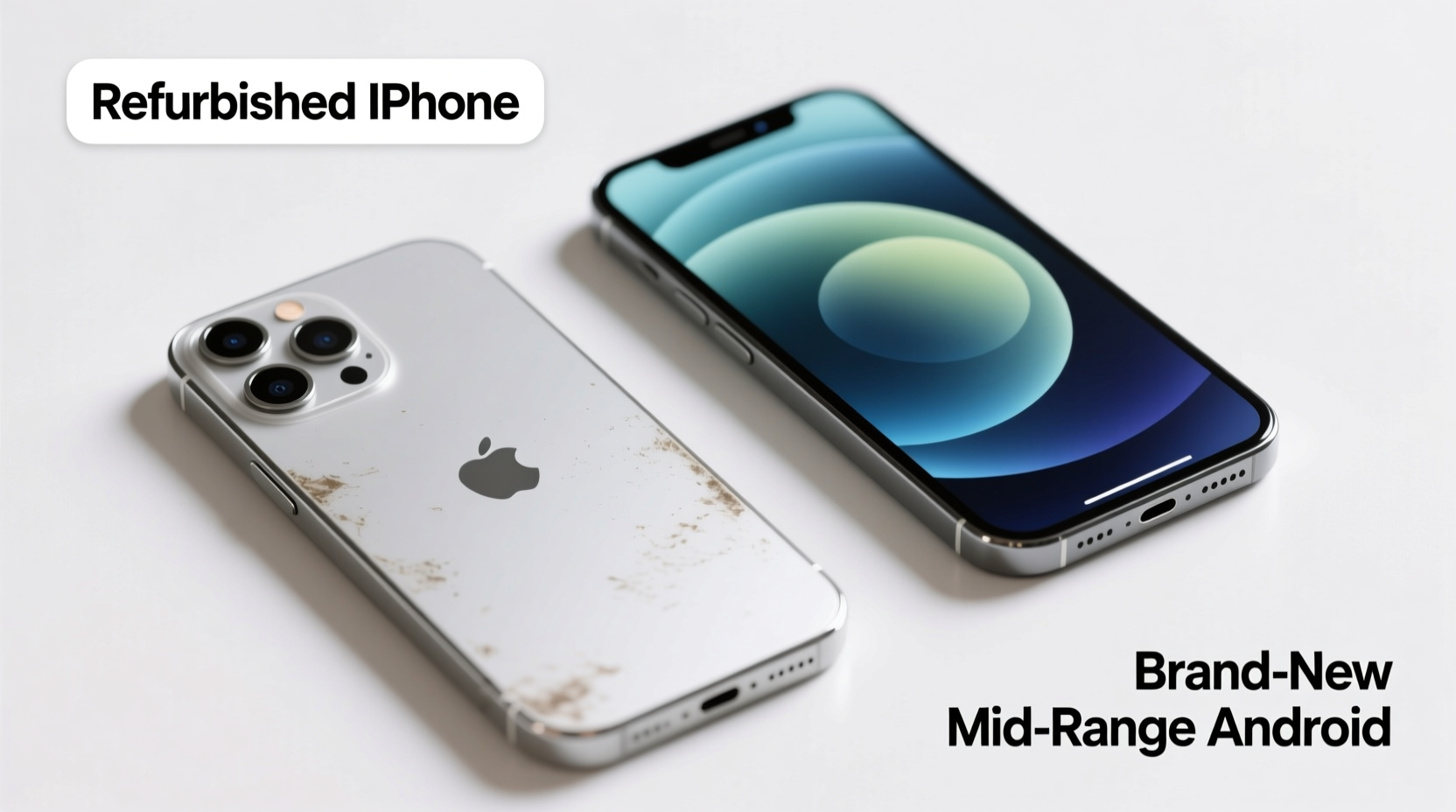
The most immediate difference lies in price. A refurbished iPhone—typically a model from one to two generations back—can cost 30% to 50% less than its original retail price. For example, a certified refurbished iPhone 14 might sell for around $550, while a brand new mid-range Android like the Google Pixel 7a or Samsung Galaxy A54 starts between $450 and $500.
At first glance, the prices seem close. But here’s where context matters. The iPhone 14 runs Apple’s latest iOS updates, supports apps longer, and benefits from superior component quality. Meanwhile, the Android device is brand new but built with cost-saving materials and components. You’re paying slightly less for something newer, but potentially less durable.
Refurbished doesn’t mean broken. Certified refurbished iPhones from Apple or reputable retailers come with new batteries, outer shells, full testing, and a standard one-year warranty—matching what many mid-tier Androids offer out of the box.
“Refurbished premium phones now offer near-new experiences at accessible prices. For users prioritizing longevity over novelty, they represent some of the best value in mobile tech.” — Mark Rivera, Senior Analyst at TechInsight Group
Performance and Real-World Speed
Performance isn't just about benchmark scores—it's about how smoothly your phone handles daily tasks over time. Here, iPhones maintain a consistent edge due to hardware-software integration.
Even a two-year-old iPhone powered by an A-series chip (like the A15 Bionic in the iPhone 14) outperforms many current mid-range Android phones equipped with Snapdragon 6 or 7 series chips or MediaTek processors. Apps launch faster, multitasking is smoother, and animations remain fluid even after months of use.
Mid-range Androids often rely on aggressive memory management to compensate for weaker hardware. This can result in frequent app reloads, slower background processing, and stuttering during video playback or gaming. While manufacturers improve optimization yearly, the gap in sustained performance remains noticeable.
iOS also benefits from fewer fragmentation issues. Every iPhone receives the same OS updates simultaneously, ensuring consistent performance tuning. In contrast, Android updates trickle down slowly—if at all—for mid-tier models, especially from non-Pixel brands.
Real-World Example: Sarah’s Upgrade Dilemma
Sarah, a freelance photographer, needed a reliable phone under $600. She considered the newly released OnePlus Nord 3 ($499) and a refurbished iPhone 13 ($529). Both had strong cameras and good reviews.
After six months, her friend using the Nord 3 reported sluggishness when editing photos and delays in app switching. Sarah’s iPhone 13, despite being three years old at purchase, handled Lightroom edits smoothly, launched apps instantly, and received timely iOS updates. Her choice paid off in workflow efficiency—even if the hardware wasn’t “new.”
Software Support and Longevity
One of the biggest advantages of choosing an iPhone—refurbished or not—is long-term software support. Apple typically provides five to six years of iOS updates. An iPhone 13, released in 2021, will likely receive updates until 2027. That means continued security patches, feature upgrades, and compatibility with future apps.
In contrast, most mid-range Android phones get only three years of OS updates and four years of security patches—if you're lucky. Brands like Google (Pixel), Samsung (Galaxy A series), and OnePlus are improving, but budget models still lag behind flagships.
This has real consequences. After three years, many Android devices stop receiving major updates, making them vulnerable to security flaws and incompatible with newer versions of popular apps. An aging Android may continue working, but its functionality erodes faster than an older iPhone.
If you plan to keep your phone beyond two years, the refurbished iPhone becomes increasingly compelling. It offers extended usability without compromising on future-proofing.
Longevity Comparison Table
| Factor | Refurbished iPhone (e.g., iPhone 13–14) | Mid-Range Android (e.g., Pixel 7a, Galaxy A54) |
|---|---|---|
| Average Price | $500–$650 | $400–$550 |
| Expected OS Updates | 5–6 years total | 3 years (OS), 4 years (security) |
| Battery Replacement Guarantee | Yes (certified refurb) | No (unless defective) |
| Resale Value After 2 Years | ~60% of purchase price | ~30–40% of purchase price |
| App Optimization Priority | High (iOS-first development) | Moderate (varies by device) |
Camera Quality and User Experience
Cameras are a major selling point for both sides. Mid-range Androids have made impressive strides, often boasting multiple lenses, high megapixel counts, and AI-enhanced photography. However, hardware specs don’t always translate to better images.
iPhones, even older models, excel in consistency. Their computational photography—powered by Apple’s Neural Engine and advanced image signal processing—delivers natural color reproduction, excellent dynamic range, and reliable low-light performance. Video recording is unmatched in stabilization and audio clarity, making iPhones favorites among content creators.
Many mid-range Androids struggle with inconsistent results. One photo may look stunning; the next, taken seconds later, appears oversharpened or poorly exposed. Night mode algorithms vary widely, and ultra-wide lenses often lack detail.
That said, some mid-tier Androids stand out. The Google Pixel 7a, for instance, leverages Google’s superior HDR+ processing to rival even flagship cameras. If photography is your priority and you prefer manual control, certain Androids offer RAW capture, pro modes, and astrophotography features absent on iPhones.
Battery Life and Charging Ecosystem
Battery degradation is a critical factor when buying a refurbished phone. However, certified refurbishment usually includes a new battery, bringing capacity back to 100%. That means your refurbished iPhone should perform like new in terms of endurance.
Mid-range Androids generally offer larger batteries (5,000 mAh is common), translating to solid all-day usage. Some even support fast charging up to 65W. But fast charging accelerates battery wear over time unless managed carefully.
iPhones tend to have smaller batteries but exceptional power efficiency thanks to iOS optimization and A-series chips. Even with a 3,200 mAh battery, an iPhone 14 can last a full day for most users. And because iOS manages background activity tightly, standby drain is minimal.
Charging speed remains a weak point for iPhones. Most still max out at 20W wired charging, meaning a full charge takes over an hour. Androids win here for convenience—but only if long-term battery health isn’t your top concern.
Actionable Checklist: How to Choose Between the Two
- Evaluate your usage patterns: Do you multitask heavily, edit media, or play games? Prioritize performance and longevity → consider refurbished iPhone.
- Check update policy: Look up how many OS updates the Android model guarantees. Fewer than three? Lean toward iPhone.
- Verify refurbisher credibility: Only buy refurbished iPhones from Apple, Best Buy, or Amazon Renewed Premium with warranty.
- Assess camera needs: Prefer automatic, consistent shots? iPhone. Want pro controls and night sky photography? Consider Pixel or mid-tier Samsung.
- Think long-term: Planning to keep the phone for 3+ years? iPhone’s update cycle gives better return on investment.
- Consider accessories: Already own AirPods, Apple Watch, or Mac? Seamless ecosystem integration favors iPhone.
Frequently Asked Questions
Is a refurbished iPhone as good as new?
Certified refurbished iPhones from official sources are tested, cleaned, repaired (if needed), fitted with new batteries, and repackaged. They function identically to new units and come with a full one-year warranty—same as new iPhones. Cosmetic marks may exist but are disclosed. For most users, the experience is indistinguishable from new.
Do mid-range Androids become slow after a year?
Some do. Lower RAM (6GB or less), slower storage (UFS 2.2), and aggressive background app killing can lead to declining responsiveness over time. Phones with cleaner software (like Google Pixel) hold up better than those with heavy manufacturer skins (e.g., older Samsung or Xiaomi models).
Which holds value better over time?
Refurbished iPhones retain significantly higher resale value. Due to longer software support and strong demand, used iPhones command higher prices in the secondhand market. After two years, you could recoup 60% or more of your initial cost, compared to 30–40% for most mid-range Androids.
Final Verdict: Where True Value Lies
The answer depends on your priorities. If you want the lowest upfront cost and enjoy experimenting with new tech every two years, a brand new mid-range Android makes sense. You’ll get modern design, fast charging, expandable storage (on some models), and access to Google’s latest features.
But if you value long-term reliability, consistent performance, seamless updates, and higher resale value, the refurbished iPhone is the smarter investment. You’re not just buying a phone—you’re buying into Apple’s ecosystem, five years of software support, and proven durability.
For most users seeking maximum value over time—not just today—the refurbished iPhone wins. It combines premium build, elite processor efficiency, and unmatched longevity at a competitive price. Yes, you sacrifice the “new phone” excitement and fastest charging speeds. But you gain peace of mind, smoother daily operation, and a device that ages gracefully.
Technology shouldn’t be disposable. Choosing a high-quality refurbished iPhone aligns with sustainable consumption: reducing e-waste, extending product lifecycles, and getting more utility per dollar spent.




 浙公网安备
33010002000092号
浙公网安备
33010002000092号 浙B2-20120091-4
Comments
No comments yet. Why don't you start the discussion?