
Celery is a staple in kitchens around the world—crisp, refreshing, and essential in everything from soups and stews to salads and snacks. Yet, its cost adds up over time, and store-bought bunches often come wrapped in plastic, contributing to environmental waste. The good news? You don’t need to buy celery every week. With just a leftover base from a grocery-store stalk, you can regrow your own celery at home using nothing more than water, sunlight, and patience. This method not only reduces food waste but also gives you access to a continuous supply of fresh, homegrown produce—even if you live in an apartment with no garden. Regrowing celery from a stalk base is surprisingly effective, scientifically grounded in plant regeneration, and accessible to anyone, regardless of gardening experience.
Understanding Plant Regeneration in Vegetables
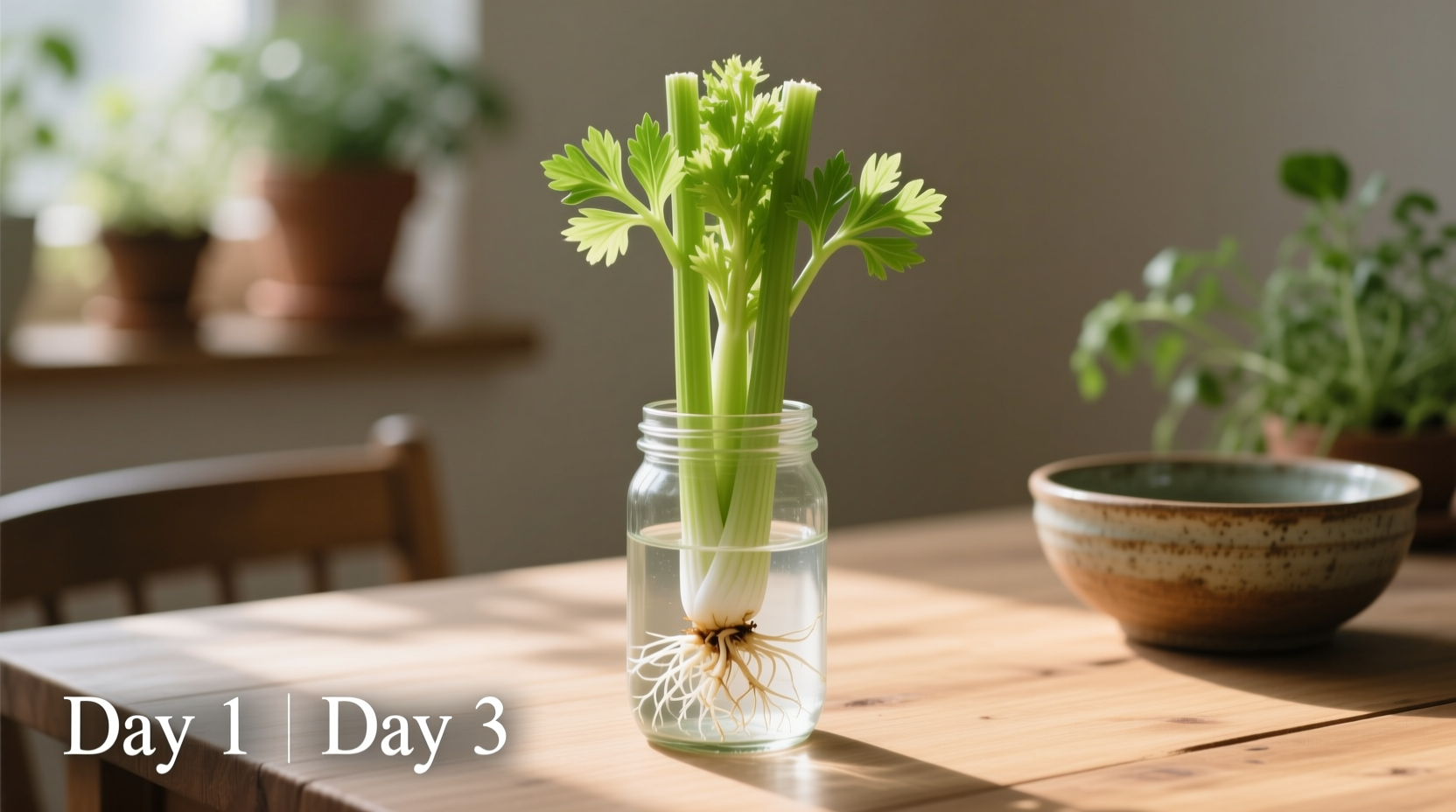
Many vegetables possess the biological ability to regenerate from cuttings or root bases—a process known as vegetative propagation. Unlike growing plants from seeds, which involves sexual reproduction, vegetative propagation relies on the plant’s meristematic tissue, found in regions like stem nodes and root crowns. These tissues contain undifferentiated cells capable of developing into new roots, stems, and leaves when exposed to favorable conditions such as moisture and light.
Celery (Apium graveolens), a member of the Apiaceae family, responds particularly well to this method because it grows as a rosette of leafy stalks emerging from a central crown. When the base of a celery stalk is placed in water, the dormant buds within the crown reactivate, producing new leaf shoots and adventitious roots. While the regrown plant won’t reach the full size or density of commercially grown celery, it will yield tender inner stalks and fragrant leaves suitable for culinary use within weeks.
This technique is not merely a kitchen experiment—it reflects broader sustainable food practices gaining traction among urban growers and environmentally conscious consumers. By repurposing what would otherwise be composted, home cooks can engage directly with the lifecycle of their food while reducing reliance on industrial agriculture.
Key Characteristics of Regrown Celery
- Growth Speed: Visible new growth typically appears in 3–7 days; harvestable in 2–4 weeks depending on conditions.
- Flavor Profile: Milder and slightly sweeter than store-bought celery, especially when harvested young.
- Texture: Tender and crisp, though outer stalks may be less fibrous than commercial varieties.
- Aroma: Fresh, green, with subtle anise-like notes characteristic of the Apiaceae family.
- Yield: Modest—best used as a supplement rather than complete replacement for store-bought celery.
- Lifespan: Can be maintained for several months with proper care, though productivity declines over time.
Pro Tip: For best flavor and texture, harvest inner stalks early and frequently. Allowing the plant to grow too large increases stringiness and bitterness.
Step-by-Step Guide to Regrowing Celery from a Stalk Base
The process of regrowing celery requires minimal tools and space. It begins with selecting the right starting material and progresses through two distinct phases: hydroponic initiation and soil transplantation.
- Select a Healthy Celery Base
Choose a fresh bunch of celery with a firm, pale base free of mold or soft spots. Cut off the stalks about 1–2 inches above the base, ensuring the core remains intact. Avoid using bases that have begun to dry out or discolor. - Place in Shallow Water
Fill a small bowl or jar with ½ inch of clean water. Place the celery base cut-side up, root-side down, into the water. Ensure the bottom touches the water but the center bud is not submerged, as this can cause rot. - Position in Indirect Sunlight
Set the container on a bright windowsill facing east or west. Direct afternoon sun can scorch new growth, so filtered or indirect light is ideal. Rotate the base every day to ensure even exposure. - Change Water Daily
Replace the water every 24 hours to prevent bacterial buildup and maintain oxygen levels. Within 3–5 days, you should see tiny green shoots emerging from the center and small white root filaments forming at the base. - Transplant to Soil (Optional but Recommended)
Once roots are approximately 1 inch long and new leaf growth is evident, transfer the base to a pot filled with well-draining potting mix. Bury the base just deep enough to cover the original root zone, leaving the shoot crown exposed. Water thoroughly after planting. - Maintain Consistent Moisture
Celery thrives in consistently moist soil. Water every 2–3 days or whenever the top inch of soil feels dry. Use a saucer under the pot to retain moisture, but avoid standing water to prevent root rot. - Fertilize Lightly Every Two Weeks
Apply a balanced liquid fertilizer (e.g., 10-10-10 NPK) diluted to half strength. Over-fertilizing can lead to excessive leaf growth at the expense of stalk development. - Harvest Gradually
Begin harvesting individual stalks once they reach 6–8 inches in height. Use a sharp knife or scissors to cut outer stalks at the base, allowing the inner core to continue growing. This \"cut-and-come-again\" method extends productivity.
Optimizing Growth Conditions for Maximum Yield
While celery regeneration is straightforward, achieving robust, flavorful growth depends on managing environmental factors carefully. Temperature, humidity, light quality, and nutrient availability all influence success rates.
| Factor | Ideal Range | Tips for Home Growers |
|---|---|---|
| Temperature | 60–70°F (15–21°C) | Avoid placing near heat vents or drafty windows. Celery is sensitive to extreme temperatures. |
| Light | 6–8 hours of bright, indirect light | Supplement with a grow light during winter months if natural light is limited. |
| Humidity | 40–60% | Group plants together or place a tray of pebbles with water nearby to increase ambient humidity. |
| Soil pH | 6.0–6.8 (slightly acidic) | Use a pH testing kit and amend soil with lime (to raise) or sulfur (to lower) if necessary. |
| Watering Frequency | Every 2–3 days (keep soil moist) | Check daily by touch—celery cannot tolerate drying out. |
Variants and Cultivation Methods
While standard grocery-store celery (Apium graveolens var. dulce) is the most common candidate for regrowth, other cultivars and related plants respond similarly. Understanding these variants helps tailor expectations and techniques.
- Pascal Celery: The tall, thick-stalked variety most commonly sold in supermarkets. Produces reliable regrowth with crisp texture and strong flavor.
- Golden Self-Blanching Celery: Grown without tying, this heirloom type has a milder taste and yellowish interior. Responds well to indoor regrowth and is prized for its tenderness.
- Celeriac (Celery Root): A different cultivar (Apium graveolens var. rapaceum) grown for its swollen root. While the base can sprout greens, it won't produce edible stalks like true celery.
- Leaf Celery (Smallage): Common in Asian cuisine, this variety has thinner stalks and more aromatic leaves. Excellent for regrowing primarily for seasoning purposes.
For those interested in long-term cultivation, consider saving seeds from mature regrown plants. Though cross-pollination risks exist due to the plant’s biennial nature, seed-saving allows for greater control over future crops.
Expert Insight: “Regrowing celery isn’t about replicating farm-scale yields—it’s about reconnecting with food sources and minimizing waste. Even modest harvests contribute meaningfully to kitchen sustainability.” — Dr. Elena Torres, Urban Horticulture Specialist, Cornell Cooperative Extension.
Comparison with Similar Regrowable Vegetables
Celery is part of a broader category of vegetables capable of regrowth from kitchen scraps. However, outcomes vary significantly based on species biology and culinary utility.
| Vegetable | Regrowth Success | Edible Output | Time to Harvest | Best Use Case |
|---|---|---|---|---|
| Celery | High (with transplant) | Stalks and leaves | 2–4 weeks | Salads, soups, stir-fries |
| Green Onions | Very High | Edible bulbs and greens | 1–2 weeks | Garnishes, omelets, sauces |
| Lettuce | Moderate | Outer leaves only | 1–3 weeks | Salads (limited yield) |
| Carrots | Low (greens only) | Non-root foliage | 1–2 weeks | Herb garnish (no root regrowth) |
| Bok Choy | High | New mini heads | 3–4 weeks | Stir-fries, steamed dishes |
Unlike carrots or onions, which either fail to regenerate edible parts or require full replanting from seed, celery occupies a middle ground: it produces usable stalks without needing pollination or seed production. This makes it uniquely practical for continuous indoor cultivation.
Practical Tips & Frequently Asked Questions
Can I grow celery entirely in water?
Yes, but with limitations. Celery can remain in water indefinitely, producing tender leaves and slim stalks. However, without soil nutrients, growth eventually plateaus, and the plant becomes weak. For sustained production, transplanting to soil is strongly recommended after the first two weeks.
Why is my celery turning brown or slimy?
Browning or mushiness indicates rot, usually caused by stagnant water or submerging the crown too deeply. Always change water daily and ensure the central bud stays dry. If decay begins, trim affected areas immediately and rinse the base before returning to fresh water.
How much celery can I realistically harvest?
A single regrown base typically yields 3–5 usable stalks per harvest cycle. With careful maintenance, you can achieve 2–3 harvests before productivity declines. Pair multiple plants to increase overall yield.
Can I regrow celery from supermarket organic vs. conventional?
Organic bases generally perform better due to fewer chemical treatments and higher vitality. However, conventional celery can still regenerate successfully. Avoid bases treated with growth inhibitors or irradiation, though these are rare in fresh produce.
Is regrown celery as nutritious as store-bought?
Nutritional content depends on growing conditions. Homegrown celery often contains comparable levels of vitamin K, potassium, and antioxidants—especially when grown in nutrient-rich soil and harvested young. Exposure to sunlight enhances chlorophyll and phytonutrient development.
Can I grow celery outdoors after regrowing indoors?
Absolutely. Once nighttime temperatures remain above 50°F (10°C), harden off the plant by gradually exposing it to outdoor conditions over 7–10 days. Transplant into a shaded garden bed or container with rich, moisture-retentive soil. Space plants 8–12 inches apart.
Does regrown celery flower?
Under long daylight conditions and warm temperatures, mature plants may bolt and produce small white flowers. This signals the end of the vegetative phase. While flowering reduces stalk quality, the blossoms attract pollinators and the seeds can be collected for future planting.
Common Challenges and Troubleshooting
Even with diligent care, issues may arise. Recognizing early warning signs improves outcomes.
- Yellowing Leaves: Often due to overwatering or nitrogen deficiency. Reduce watering frequency and apply a diluted liquid fertilizer.
- Leggy or Pale Growth: Indicates insufficient light. Move closer to a window or introduce a full-spectrum LED grow light.
- Slow Root Development: Cold temperatures inhibit root formation. Keep the base in a warm room (above 60°F).
- Pests: Aphids or spider mites occasionally infest indoor plants. Rinse leaves with water or apply insecticidal soap safely.
Actionable Checklist:
✔ Start with a fresh, firm celery base
✔ Use shallow water—never submerge the crown
✔ Change water daily
✔ Provide 6+ hours of bright, indirect light
✔ Transplant to soil after root emergence
✔ Maintain consistent moisture and mild fertilization
✔ Harvest outer stalks first, sparing the center
Summary & Key Takeaways
Regrowing celery from a stalk base is a practical, low-cost method to extend the life of a common kitchen ingredient while embracing sustainable living. Rooted in the science of plant regeneration, the process transforms food waste into a source of fresh, edible produce. Though yields are modest compared to field-grown celery, the regrown stalks offer superior flavor and texture when harvested young, making them ideal for everyday cooking.
Success hinges on attention to detail: maintaining clean water, providing adequate light, and transitioning to soil at the right moment. While challenges like rot or slow growth may occur, they are easily corrected with basic troubleshooting. Compared to other regrowable vegetables, celery strikes a balance between ease of care and culinary usefulness.
This technique empowers home cooks to take control of their food chain—one celery base at a time. Whether you're a novice gardener or a seasoned chef, integrating regrowth into your routine fosters mindfulness, reduces environmental impact, and deepens appreciation for the origins of your meals.
Start today: Save your next celery base, place it in water, and observe the first signs of renewal within days. Share your progress with others and inspire a culture of kitchen sustainability.




 浙公网安备
33010002000092号
浙公网安备
33010002000092号 浙B2-20120091-4
Comments
No comments yet. Why don't you start the discussion?