
When it comes to holiday decorating, the details define the mood. A beautifully styled tree tray can elevate your entire Christmas display, transforming an ordinary potted tree into a curated centerpiece. Two of the most popular naturalistic finishes—reindeer moss and faux snow base—offer distinct aesthetics, textures, and care needs. But which one truly makes your tree tray look more refined, luxurious, and intentional?
The answer isn’t just about personal taste. It’s about understanding how each material interacts with light, color, and surrounding décor. Whether you're aiming for a Nordic minimalist vibe or a cozy winter wonderland scene, choosing the right ground cover impacts the overall elegance of your setup.
Aesthetic Impact: Texture, Color, and Visual Depth
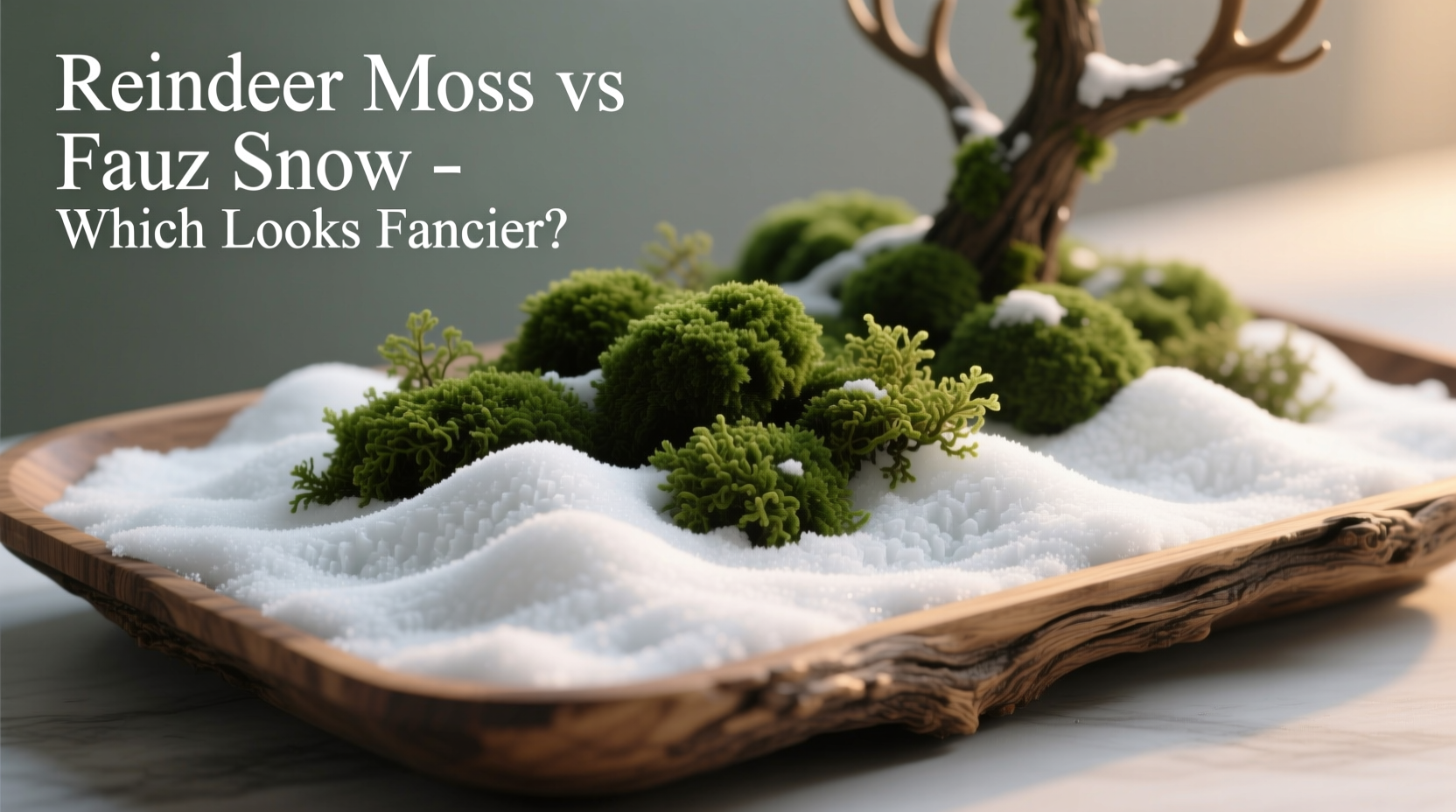
Visual appeal is the first factor in determining what “looks fancier.” Fanciness isn’t just opulence—it’s harmony, intentionality, and attention to detail.
Reindeer moss, despite its name, is not a true moss but a type of lichen (Cladonia stellaris). It grows naturally in northern forests and tundras, and when preserved, it retains a delicate, feathery structure. Available in natural greens, silvers, blush pinks, and even deep charcoals, reindeer moss brings organic texture and subtle variation. Its irregular growth pattern mimics real forest floors, offering depth and dimension that feels both wild and artfully arranged.
In contrast, faux snow base—typically made from polyester fiberfill, shredded paper, or synthetic foam—is designed to replicate freshly fallen snow. When applied properly, it creates a soft, uniform blanket that evokes stillness and purity. High-quality versions include glittering mica flakes or iridescent fibers to catch the light, adding a touch of glamour.
Where reindeer moss offers earthy sophistication, faux snow leans into fantasy and festivity. The former whispers “Scandinavian design studio,” while the latter says “enchanted village at midnight.”
Maintenance and Longevity: What Holds Up Over Time?
No matter how beautiful a material looks on day one, if it sags, clumps, or fades by New Year’s, it won’t maintain that “fancy” impression.
Preserved reindeer moss requires minimal upkeep. It doesn’t need water, sunlight, or trimming. However, it is sensitive to prolonged exposure to humidity and direct moisture. In dry indoor environments, it can last for years without shedding or discoloration. Avoid placing it near humidifiers or in bathrooms, as dampness causes compaction and mold risk.
Faux snow bases vary significantly in quality. Low-density fiberfill flattens quickly under the weight of ornaments or pets. Higher-end versions use structured foam granules or static-charged fibers that resist compression and cling together like real snow. These premium options maintain their fluffiness throughout the season and can be gently reshaped with fingers or a fine comb.
Cleaning is another consideration. Reindeer moss can be lightly dusted with a soft brush or compressed air. Faux snow may require spot-cleaning with a damp cloth, though submerging it ruins the texture. Neither should be vacuumed aggressively.
“Texture longevity separates a temporary decoration from a statement piece. Materials that keep their form over weeks signal craftsmanship.” — Lena Petrov, Interior Stylist & Seasonal Display Consultant
Comparison Table: Reindeer Moss vs Faux Snow Base
| Feature | Reindeer Moss | Faux Snow Base |
|---|---|---|
| Visual Style | Natural, textured, woodland-inspired | Whimsical, clean, wintery |
| Color Range | Natural greens, greys, pastels, dyed hues | Pure white, frosted blue, iridescent blends |
| Durability | High (if kept dry) | Medium to high (depends on material quality) |
| Maintenance | Dusting only; avoid moisture | Reshape regularly; spot-clean stains |
| Pet & Child Safety | Non-toxic but not edible; may shed small pieces | Generally safe; avoid ingestion of synthetic fibers |
| Reusability | 3–5 seasons with proper storage | 1–3 seasons depending on compression |
| Eco-Friendliness | Biodegradable (preserved lichen) | Mostly synthetic; low recyclability |
Design Pairings: Which Material Complements Your Theme?
The fanciest tree tray isn’t defined by a single material—it’s defined by cohesion. Both reindeer moss and faux snow serve as canvases for broader design narratives.
Reindeer moss excels in modern rustic, Japandi, and forest-themed displays. It pairs beautifully with:
- Wooden animals or geometric sculptures
- Muted ceramic pots in matte glazes
- Natural fiber garlands or dried citrus slices
- Warm copper or blackened steel accents
Its irregular texture absorbs light softly, reducing glare and creating a grounded, serene effect. Designers often use dyed reindeer moss in monochromatic schemes—such as all-white or charcoal-gray trays—for a contemporary twist.
Faux snow shines in traditional, romantic, or whimsical setups. Think:
- Glowing LED deer or miniature villages
- Glitter-dipped pinecones or frosted berries
- Vintage-style nutcrackers or glass sleds
- Twinkling fairy lights embedded in the base
When lit from within or above, faux snow reflects light dramatically, amplifying sparkle and drawing the eye. This luminosity enhances perceived luxury, especially in dimly lit rooms.
Real-World Example: A Designer’s Holiday Makeover
Interior stylist Mara Chen was commissioned to refresh a downtown boutique’s lobby tree for the holidays. The space featured marble floors, black metal fixtures, and a large skylight—modern but cold.
Her initial concept used a thick faux snow base with silver ornaments and mirrored balls. While festive, the result felt generic—like a department store display. “It sparkled,” she said, “but didn’t belong.”
She pivoted. She replaced the snow with preserved grey-green reindeer moss, added rough-hewn birch logs around the base, and nestled in hand-blown glass icicles. The moss absorbed the overhead light rather than reflecting it, creating a calmer, more sophisticated atmosphere. A few scattered clear crystals mimicked frost without overwhelming the scene.
Guests described the new display as “luxurious,” “calming,” and “unexpected.” The moss didn’t scream holiday—it whispered elegance. Sales in the adjacent gift section rose 18% during the season, which the manager attributed to the more inviting ambiance.
This case illustrates a key principle: fanciness often lies in restraint. Reindeer moss, by virtue of its subtlety, allowed other elements to shine without competing.
Step-by-Step: Creating a High-End Tree Tray with Either Material
Regardless of your choice, execution determines elegance. Follow these steps to ensure a polished, professional result.
- Prep the tray: Clean the surface and line it with black landscape fabric or dark felt. This prevents lighter materials from revealing the base color and adds contrast.
- Build volume: For faux snow, start with a base layer of crumpled tissue paper or foam netting to create lift. For reindeer moss, mound it slightly toward the center to mimic natural growth.
- Apply material evenly: Spread faux snow in thin layers, fluffing between applications. Place reindeer moss in small clusters, overlapping tips to avoid bare spots.
- Anchor decorative elements: Use floral wire or hidden adhesive putty to secure figurines so they don’t tip. Avoid overcrowding—negative space enhances luxury.
- Add lighting subtly: Weave battery-operated fairy lights beneath the top layer. Warm white enhances moss; cool white complements snow.
- Final shaping: Step back and adjust asymmetries. Gently separate clumps of moss or redistribute snow for a lived-in, intentional look.
Checklist: Choosing the Right Option for Your Space
Use this checklist to decide which material will make your tree tray look its finest:
- ✅ Do you prefer a natural, organic aesthetic? → Lean toward reindeer moss
- ✅ Are you going for a magical, storybook feel? → Faux snow base may be better
- ✅ Is the tree in a high-humidity area (e.g., near a kitchen or entryway)? → Avoid reindeer moss
- ✅ Do you have pets or toddlers who might touch or taste the base? → Choose non-toxic, securely anchored options
- ✅ Will you reuse the material next year? → Invest in high-density snow or premium moss
- ✅ Is lighting a key feature? → Faux snow reflects more; moss diffuses
- ✅ Are you pairing with metallics or bright colors? → Snow enhances contrast; moss tones down intensity
Frequently Asked Questions
Can I mix reindeer moss and faux snow in the same tray?
Yes—and many designers do. Use faux snow as the primary base and place small tufts of reindeer moss near the trunk or around accessories to suggest natural growth emerging from snow. This layered approach combines elegance with narrative depth.
Is preserved reindeer moss eco-friendly?
It depends. Naturally harvested reindeer moss is biodegradable and sustainable when sourced responsibly. However, some suppliers harvest it faster than it regenerates. Look for vendors who certify sustainable collection practices. Avoid synthetic imitations marketed as “moss” that are actually plastic.
How do I fix flattened faux snow after storage?
Place the material in a clean salad spinner and give it a few gentle spins to fluff. Alternatively, tease it apart with your fingers over a bowl. Adding a sprinkle of cornstarch and shaking lightly can restore volume and reduce static.
Conclusion: Elegance Is in the Details
So, which makes your tree tray look fancier—reindeer moss or faux snow base? The truth is nuanced. Reindeer moss conveys understated refinement, ideal for spaces where quiet luxury matters more than spectacle. Faux snow delivers immediate drama and seasonal charm, perfect for joyful, immersive displays.
Fanciness isn’t inherent in the material—it’s achieved through thoughtful application. A haphazard pile of moss looks messy; an overpacked snow drift appears cartoonish. Precision, proportion, and harmony elevate either option.
Consider your environment, theme, and long-term vision. Test small samples before committing. And remember: the most impressive tree trays aren’t the busiest—they’re the ones that make you pause, breathe, and feel something.




 浙公网安备
33010002000092号
浙公网安备
33010002000092号 浙B2-20120091-4
Comments
No comments yet. Why don't you start the discussion?