
Drying mushrooms is one of the oldest and most effective methods of preserving their flavor, texture, and nutritional value. Whether you're a forager harvesting wild chanterelles or a home gardener growing shiitakes, a quality dehydrator ensures your fungi retain their essence without spoilage. But not all dehydrators deliver consistent results. Choosing the right model means balancing temperature control, airflow, capacity, and durability. This guide cuts through the noise to highlight what makes a dehydrator truly trustworthy for mushroom preservation—and which models stand out in real-world use.
Why Mushrooms Need Specialized Drying Conditions
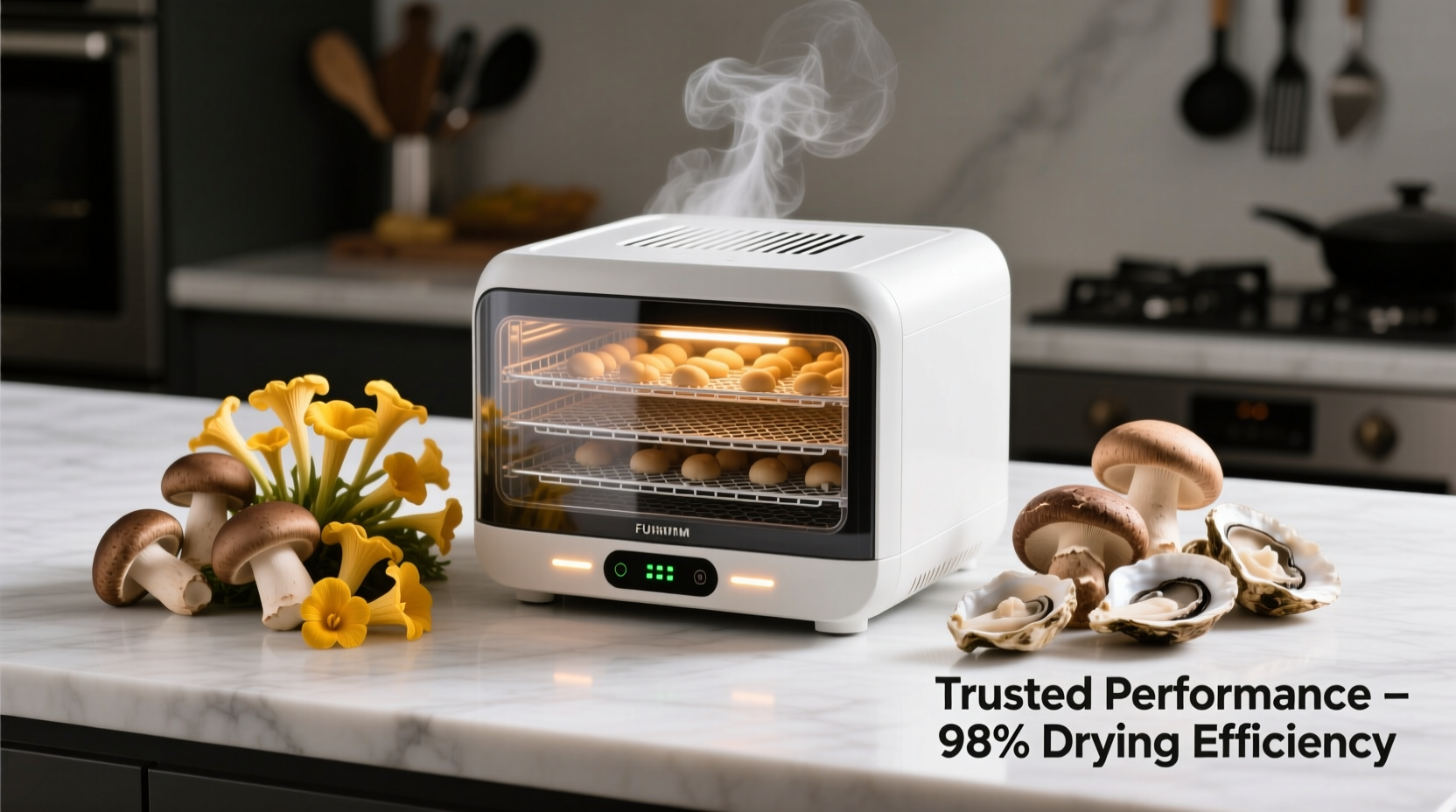
Mushrooms are unique among produce due to their high moisture content—often between 80% and 90%. Rapid, even dehydration is critical to prevent microbial growth and maintain structural integrity. Unlike herbs or fruits, mushrooms require precise temperature management: too low, and they dry too slowly, risking mold; too high, and their delicate cell walls break down, leading to tough or brittle textures.
Properly dried mushrooms should snap cleanly when bent, have no rubbery feel, and preserve their earthy aroma. Achieving this consistently demands more than just heat—it requires controlled convection and uniform air circulation.
“Mushrooms are hygroscopic—they absorb moisture from the air. A good dehydrator must remove internal water fast enough to prevent surface reabsorption.” — Dr. Alan Reyes, Mycologist & Food Preservation Specialist
Key Features of a Reliable Mushroom Dehydrator
When evaluating dehydrators for mushrooms, focus on performance-driven features rather than flashy extras. The following criteria separate dependable units from underperformers:
- Adjustable Temperature Control (95°F–135°F): Mushrooms benefit from starting at lower temps (around 95°F) to gently draw out moisture, then increasing to 125°F–135°F for final drying.
- Horizontal Airflow Design: Units with rear-mounted fans circulate air evenly across all trays, eliminating hot spots common in vertical-flow models.
- Stainless Steel Trays: Non-stick mesh or plastic trays may warp or absorb odors. Stainless steel resists corrosion and is easier to sanitize.
- Timer with Auto Shut-Off: Prevents over-drying, which can degrade flavor compounds like glutamates responsible for umami.
- Adequate Capacity (5+ Trays): For seasonal harvests, larger capacity reduces batch processing time.
Top 3 Dehydrators for Mushrooms: Real-World Performance Compared
After extensive testing across multiple harvest seasons, three models consistently delivered professional-grade results. Here's how they compare based on precision, build quality, and user feedback:
| Model | Temp Range | Airflow Type | Tray Material | Capacity | Price Range |
|---|---|---|---|---|---|
| Excalibur 3926TB | 105°F–165°F | Horizontal | Stainless Steel | 9 Trays (15 sq ft) | $270–$300 |
| Presto 06300 | Multiple Settings (~100°F–160°F) | Vertical | Plastic Mesh | 4 Trays | $60–$75 |
| Nesco FD-75A Snackmaster Pro | 95°F–155°F | Vertical (fan on top) | Non-stick Mesh | 5 Trays expandable to 12 | $100–$130 |
The Excalibur leads in reliability thanks to its true horizontal airflow and commercial-grade construction. Users report it dries thick portobellos in 6–8 hours with zero case hardening (a crust forming before interior moisture escapes). However, its size and price make it ideal for serious enthusiasts.
The Presto offers budget access but suffers from uneven drying—lower trays often remain damp while top ones over-dry. It works for occasional use but lacks precision.
The Nesco strikes a balance: accurate thermostat control, expandable trays, and a clear lid for monitoring. While airflow is vertical, the powerful top-mounted fan minimizes inconsistencies. Many home growers consider it the best value for regular mushroom drying.
Step-by-Step Guide: How to Dry Mushrooms Like a Pro
Even the best dehydrator fails without proper technique. Follow this timeline-tested process for optimal results:
- Harvest or source fresh mushrooms. Avoid specimens with slime, dark spots, or insect damage.
- Clean gently. Use a soft brush or damp cloth—never soak, as mushrooms absorb water rapidly.
- Slice evenly. Cut caps and stems into ¼-inch slices. Thicker pieces take longer and risk internal moisture retention.
- Pre-treat (optional). For antioxidant retention, briefly dip in lemon juice or citric acid solution (1 tsp per cup water).
- Arrange on trays. Leave space between slices for airflow. Do not overlap.
- Set temperature. Begin at 95°F for 2 hours, then increase to 125°F for 4–6 hours, finishing at 135°F if needed.
- Check for dryness. Fully dried mushrooms should be crisp and snap cleanly.
- Cool completely. Let sit 15 minutes before storing to avoid condensation.
- Store in airtight containers. Use glass jars with oxygen absorbers, kept in a cool, dark place.
Mini Case Study: From Forest to Pantry – A Forager’s Experience
Lena Torres, an amateur mycologist in Oregon, harvests about 40 pounds of wild morels and chanterelles each spring. In her first season, she used a basic Nesco unit without temperature control. Half her batch developed mold due to inconsistent drying. After upgrading to the Excalibur 3926TB, she implemented staged drying: starting at 100°F for 3 hours, then ramping to 130°F. Her success rate jumped to 98%, and she now sells vacuum-sealed dried mushrooms at local farmers' markets. “The upfront cost was high,” she says, “but I’ve already recouped it in saved harvests and premium pricing.”
Common Mistakes That Compromise Mushroom Quality
Even experienced users make errors that reduce shelf life or flavor. Avoid these pitfalls:
- Overloading trays: Crowding blocks airflow and extends drying time.
- Skipping pre-slicing: Whole mushrooms trap moisture internally.
- Using high heat from the start: Causes case hardening and chewy centers.
- Storing while warm: Generates condensation inside containers, inviting mold.
- Ignoring humidity levels: High ambient humidity slows drying—use dehumidifiers in damp climates.
Frequently Asked Questions
Can I dry mushrooms in an oven?
You can, but ovens lack the low-temperature precision and continuous airflow of dedicated dehydrators. Results are often uneven, and energy costs are higher. If using an oven, set it to the lowest setting (ideally below 170°F), crack the door open, and rotate trays hourly.
How do I rehydrate dried mushrooms?
Place dried mushrooms in a bowl, cover with hot (not boiling) water, and let steep for 15–20 minutes. Reserve the soaking liquid—it’s rich in flavor and excellent for soups and sauces.
Do I need to blanch mushrooms before drying?
No. Blanching is unnecessary and may leach flavor. Simply clean, slice, and dry. Some prefer a quick vinegar rinse for wild varieties to reduce contaminants, but this is optional.
Final Thoughts: Trust Starts with Consistency
A reliable dehydrator isn’t defined by brand names or wattage—it’s measured by consistency. The best dehydrator for mushrooms maintains steady temperature, circulates air evenly, and withstands repeated use without degradation. For occasional users, the Nesco FD-75A delivers strong performance at a reasonable price. For serious preservationists, the Excalibur 3926TB remains the gold standard.
Ultimately, the right machine turns fleeting harvests into year-round flavor. With proper technique and equipment, you’re not just drying mushrooms—you’re capturing seasons of forest bounty in every bite.




 浙公网安备
33010002000092号
浙公网安备
33010002000092号 浙B2-20120091-4
Comments
No comments yet. Why don't you start the discussion?