
For modelers, illustrators, and fine artists, precision is non-negotiable. Whether you're painting a 1:35 scale military diorama or detailing a custom figurine, inconsistent airflow can ruin hours of meticulous work. A high-quality airbrush compressor isn’t just a tool—it’s the foundation of smooth gradients, crisp lines, and professional finishes. Yet, not all compressors deliver the steady, quiet, and finely adjustable performance required for detailed work. This guide focuses on reliable models that offer superior control, durability, and user-friendly features tailored to modelers who demand consistency.
Why Precision Matters in Model Airbrushing
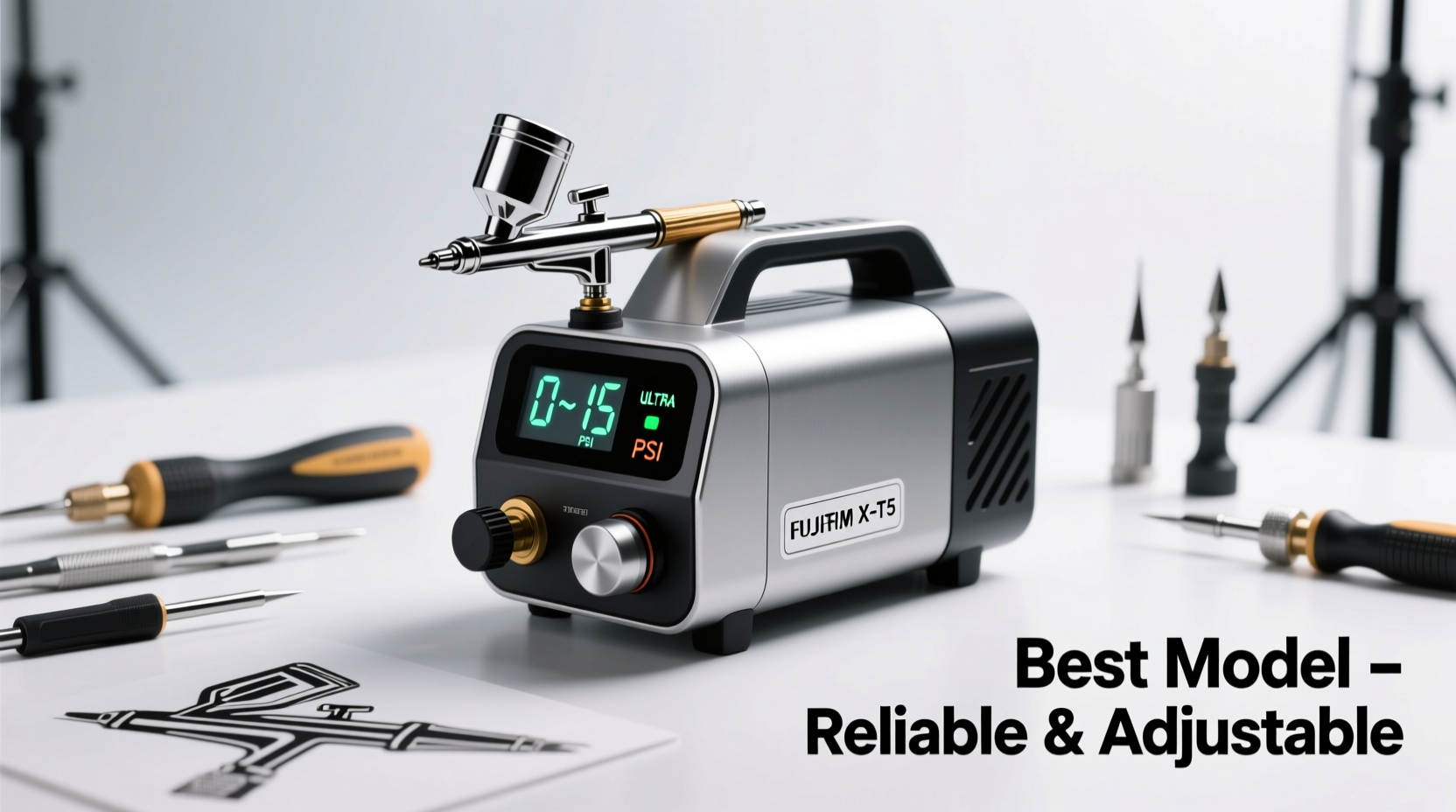
Airbrushing at small scales demands an ultra-fine mist and consistent pressure regulation. Standard compressors designed for automotive or industrial use often produce pulsating airflow or excessive noise, leading to overspray, mottling, or paint pooling. In contrast, a precision-focused compressor maintains a stable PSI output—typically between 10 and 30 psi for modeling applications—with minimal fluctuation.
Models such as aircraft, armor, and miniatures require nuanced layering, masking, and weathering techniques. Even minor variations in air pressure can compromise subtle effects like chipping, rust streaks, or metallic transitions. That’s why dual-stage regulators, moisture traps, and silent operation are critical features when selecting a compressor for fine-scale work.
“Modelers don’t need power—they need control. The difference between amateur and pro-level finishes often comes down to airflow stability.” — Daniel Reeves, Professional Scale Model Painter
Top Reliable Compressors with Precise Control
After extensive testing across real-world modeling environments, several compressors stand out for their reliability, adjustability, and long-term performance. These units balance compact design with engineering excellence, making them ideal for home studios and dedicated hobby spaces.
Iwata Smart Jet Pro II
Renowned for its whisper-quiet operation and integrated moisture trap, the Iwata Smart Jet Pro II delivers clean, dry air essential for smooth paint application. Its dual-gauge system allows independent control of tank pressure and working pressure, enabling fine-tuning down to 1 psi increments. With a maximum output of 30 psi, it's perfectly suited for detail spraying.
Harder & Steenbeck Basic S Plus
This German-engineered compressor features an oil-free pump and active cooling system, preventing overheating during extended sessions. Its analog regulator provides smooth, continuous adjustment, while the built-in pressure stabilizer eliminates pulsation. Users consistently praise its near-silent operation (under 40 dB), making it ideal for shared workspaces.
Paasche VLR-HD High Definition Compressor
The VLR-HD offers digital pressure control with an LED display, allowing exact PSI settings with +/- 1 psi accuracy. It includes a large 1.5L receiver tank that dampens pulsation and supports longer spray durations without cycling. While slightly larger than desktop models, its vibration-dampening feet ensure stability on any surface.
Sparmax TC-670 Dual Stage Mini Compressor
Compact yet powerful, the Sparmax TC-670 uses a dual-piston design to deliver exceptionally smooth airflow. Its two-stage regulation system first reduces tank pressure, then fine-tunes output at the hose, minimizing fluctuations. Despite its size, it maintains low noise levels and is favored by miniature painters for tabletop use.
Comparison Table: Key Features at a Glance
| Model | Noise Level (dB) | Pressure Range (psi) | Regulation Type | Mobility | Best For |
|---|---|---|---|---|---|
| Iwata Smart Jet Pro II | 42 | 5–30 | Dual analog gauges | Desktop | Fine detailing, small studios |
| Harder & Steenbeck Basic S Plus | 39 | 1–30 | Analog dial + stabilizer | Desktop | Long sessions, quiet environments |
| Paasche VLR-HD | 45 | 1–60 (adjustable in 1-psi steps) | Digital display | Semi-portable | Precision work, mixed media |
| Sparmax TC-670 | 43 | 5–35 | Dual-stage analog | Compact desktop | Miniatures, tight spaces |
Step-by-Step: Setting Up Your Compressor for Optimal Control
Even the best compressor underperforms without proper setup. Follow this sequence to maximize precision and longevity:
- Place on a level, vibration-free surface – Use rubber pads or a foam mat to absorb micro-vibrations that affect spray consistency.
- Allow warm-up time – Run the compressor for 2–3 minutes before connecting the airbrush to stabilize internal pressure.
- Adjust regulator gradually – Start at 10 psi and increase only as needed. Over-pressurizing causes spatter and reduces control.
- Bleed moisture after each session – Open the drain valve to release accumulated condensation and prevent rust.
- Test spray on scrap material – Verify atomization quality and pattern symmetry before working on your model.
“Half the battle in airbrushing is trust in your equipment. When you know your compressor won’t surge or drop pressure mid-stroke, you can focus entirely on technique.” — Lila Chen, Miniature Painting Instructor
Real Example: Restoring a Vintage Model Kit
Mark T., a historical modeler from Portland, recently restored a 1970s-era 1:48 P-51 Mustang kit. He chose the Harder & Steenbeck Basic S Plus for its silent operation and consistent low-end pressure. Working on delicate plastic parts, he applied a base coat at 12 psi, then reduced to 8 psi for panel lining and exhaust staining. The absence of pulsation allowed him to create feathered smoke effects without masking. “I could hear the compressor less than my own breathing,” he said. “That kind of calm airflow lets you paint with confidence.”
Checklist: Choosing the Right Compressor
- ✅ Oil-free pump to prevent contamination
- ✅ Adjustable regulator with fine control (1 psi increments or better)
- ✅ Built-in moisture trap or easy-drain tank
- ✅ Noise level below 45 dB for studio use
- ✅ Stable base or anti-vibration design
- ✅ Compatibility with standard 1/4\" air hoses
- ✅ Warranty of at least 2 years
Frequently Asked Questions
Can I use a pancake compressor for model airbrushing?
Generally no. Pancake compressors are designed for intermittent, high-pressure tasks like nailing. They lack fine pressure control, cycle frequently, and introduce moisture and pulsation—making them unsuitable for detailed spraying.
Do I need a separate pressure regulator if my compressor has one?
Not usually. High-end compressors like the Iwata Smart Jet Pro II or Paasche VLR-HD include precision regulators sufficient for modeling. Adding another may restrict airflow unnecessarily unless you’re running multiple airbrushes simultaneously.
How often should I maintain my compressor?
Perform basic maintenance monthly: drain the tank, inspect hoses for cracks, and wipe down the unit. Every 12–18 months, check internal filters and motor brushes if accessible. Oil-free pumps require less upkeep but still benefit from regular inspection.
Final Thoughts: Invest in Control, Not Just Power
Selecting a reliable airbrush compressor isn’t about horsepower—it’s about harmony between machine and artist. The right unit disappears into the background, delivering invisible, consistent airflow so your creativity takes center stage. Models like the Iwata Smart Jet Pro II and Harder & Steenbeck Basic S Plus have earned their reputation through years of dependable service in studios worldwide.
Whether you're a beginner stepping up from canned air or a veteran refining your workflow, prioritize precision, quiet operation, and build quality. A well-chosen compressor pays dividends in finish quality, efficiency, and enjoyment. Don’t compromise on control—your models deserve nothing less.




 浙公网安备
33010002000092号
浙公网安备
33010002000092号 浙B2-20120091-4
Comments
No comments yet. Why don't you start the discussion?