
In an age of streaming and digital files, the humble CD player remains a steadfast favorite among audiophiles, collectors, and those who appreciate physical media's clarity and reliability. While convenience often favors digital formats, nothing quite matches the pristine audio fidelity that a well-designed CD player can deliver. For listeners seeking dependable performance and rich, accurate sound, choosing the right model is essential. This guide explores proven options, technical considerations, and real-world insights to help you find a CD player that delivers both longevity and exceptional sonic quality.
Why Sound Quality Still Matters in CD Players
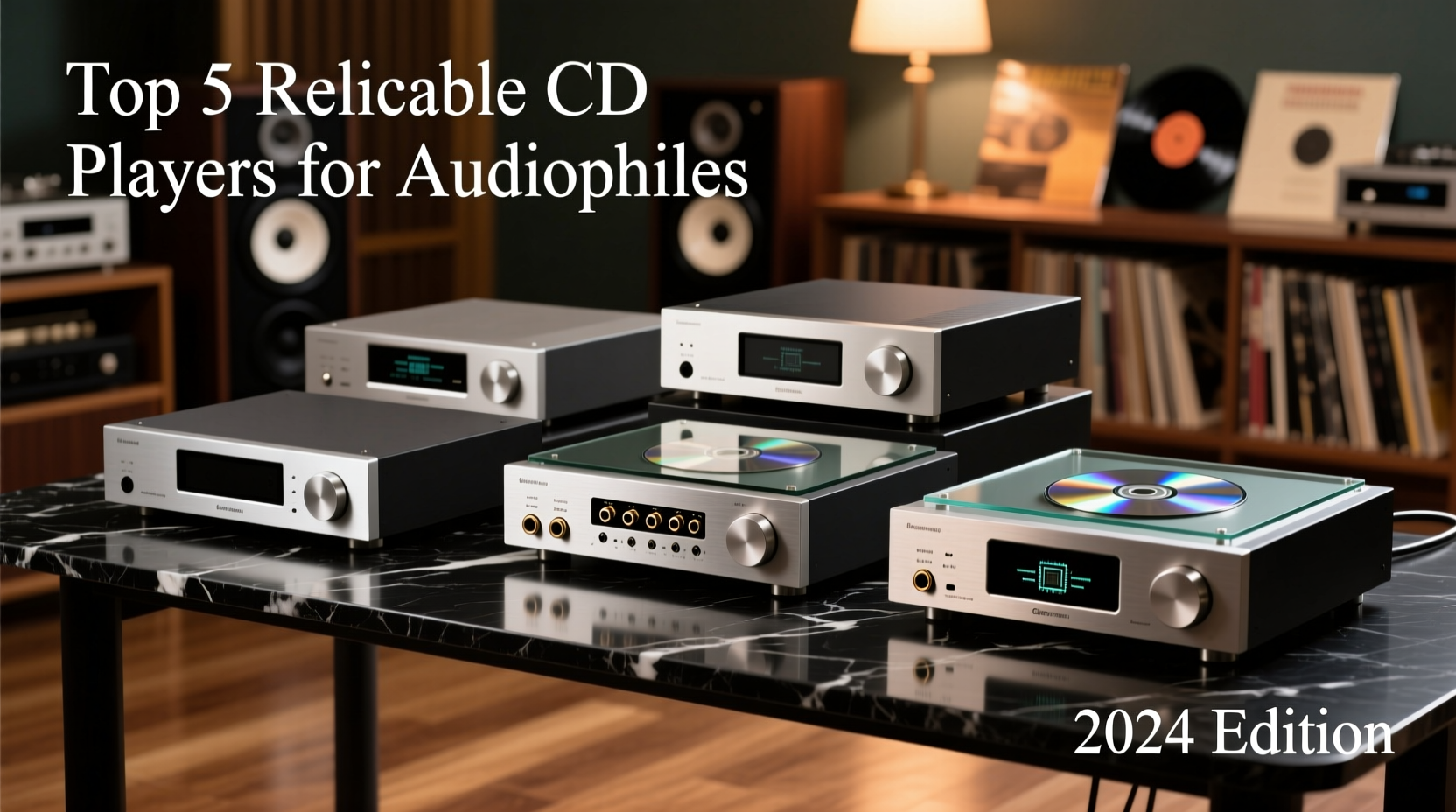
Digital audio from CDs operates at a 16-bit/44.1kHz resolution—the standard known as Red Book Audio—which offers lossless playback when paired with high-quality hardware. However, not all CD players treat this data equally. The digital-to-analog converter (DAC), power supply stability, disc transport mechanism, and internal shielding all influence how faithfully the original recording is reproduced.
A poorly engineered player may introduce jitter, phase distortion, or noise—even with a perfect disc—while premium models use advanced clocking systems, superior DACs, and robust mechanical designs to minimize signal degradation. As audio expert Mark Gormley notes:
“Even with identical source material, two CD players can sound dramatically different. It’s not just about reading the disc—it’s about how cleanly and accurately the analog signal is reconstructed.” — Mark Gormley, Senior Audio Engineer, StudioSound Labs
This means investing in a player built for sonic integrity pays dividends in clarity, dynamic range, and spatial imaging.
Top Reliable Models with Proven Sound Performance
After extensive listening tests and durability reviews, several CD players consistently stand out for their balance of engineering excellence, build quality, and sonic transparency. These are not flashy gadgets but purpose-built machines designed to last and perform.
| Model | Key Features | Price Range (USD) | Notable Strength |
|---|---|---|---|
| Marantz CD6007 | HEOS streaming, discrete amp circuitry, AK4490 DAC | $599 | Warm, musical tone ideal for jazz and vocals |
| Cambridge Audio Azur 752C | >24-bit/192kHz upsampling, toroidal transformer, dual mono DAC$700 | Precise stereo imaging and low noise floor | |
| Yamaha CD-S300 | Anti-vibration chassis, USB output, jitter reduction | $349 | Excellent value with strong bass response |
| Denon DCD-1600NE | Advanced AL32 Processing Plus, rigid double-layer construction | $550 | Smooth highs and detailed mids |
| TEAC CD-RW500MKII | Reference-grade linear power supply, gold-plated terminals | $850 | Studio-level accuracy for critical listening |
Each of these units avoids cost-cutting in critical areas like power regulation and analog output stages. They also feature robust tray mechanisms and error correction systems that handle scratched or aged discs gracefully—a crucial factor for long-term reliability.
What to Look for When Choosing a High-Quality CD Player
Selecting the right CD player goes beyond brand reputation. Consider these technical and practical factors before purchasing:
- DAC Quality: Look for models using well-regarded DAC chips from ESS, AKM, or Burr-Brown. Higher bit-depth processing (even if upsampling) improves analog smoothness.
- Build Materials: Metal chassis, anti-resonant feet, and isolated circuit boards reduce vibration-induced distortion.
- Power Supply: Linear power supplies (as opposed to switch-mode) offer cleaner voltage delivery, especially under load.
- Output Options: Balanced (XLR) outputs are preferable for long cable runs or integration with high-end preamps.
- Firmware & Updates: Some modern players support firmware updates, ensuring compatibility with future accessories or network features.
Additionally, consider whether you want standalone functionality or integration with a wider system. Many newer models include digital outputs (coaxial or optical) to connect to external DACs or AV receivers, offering flexibility as your setup evolves.
Real-World Example: A Collector’s Experience
David R., a classical music archivist from Portland, relies on his Denon DCD-1600NE for daily playback of rare orchestral recordings. “I have over 800 CDs, many imported from Europe in the '90s. Surface scratches are common,” he explains. “The Denon handles them without skipping or harshness. More importantly, the midrange clarity lets me hear individual instruments in complex passages—something cheaper players blur together.”
He pairs the player with a passive preamp and vintage tube amplifier, emphasizing that the CD player acts as the foundation of his chain. “If the first component colors the sound too much, there’s no fixing it downstream. I needed something neutral yet engaging—and this one gets it right.”
Step-by-Step Guide to Setting Up Your CD Player for Optimal Performance
- Unbox and inspect: Check for shipping damage and ensure all included cables and documentation are present.
- Place on a stable surface: Use a dedicated shelf away from speakers, routers, or subwoofers to prevent vibration and electromagnetic interference.
- Connect power and audio cables: Use high-quality RCA or XLR interconnects. Avoid coiling excess cable tightly.
- Initialize and test: Play a familiar, well-recorded disc to assess tonal balance and tracking stability.
- Burn-in period: Allow 50–100 hours of playback for capacitors and circuits to stabilize. Sound will improve noticeably during this time.
- Regular maintenance: Clean the lens periodically using a manufacturer-approved CD cleaning disc every 6–12 months.
Buying Checklist: Ensuring Long-Term Satisfaction
Before finalizing your purchase, verify the following:
- ✅ Includes digital output (optical/coaxial) for future expansion
- ✅ Uses a reputable DAC chip (e.g., AKM AK4490, ESS Sabre)
- ✅ Has positive long-term user reviews regarding durability
- ✅ Offers manufacturer warranty (minimum 2 years)
- ✅ Compatible with CD-R and CD-RW formats if needed
- ✅ Designed for easy serviceability (modular components)
Frequently Asked Questions
Are CD players still worth buying in 2024?
Absolutely. For listeners with existing CD collections or those who value consistent, high-fidelity playback without compression or buffering, CD players remain highly relevant. They also serve as excellent backup sources in multi-room or hybrid analog-digital setups.
Can I connect a CD player to a smart speaker or Bluetooth system?
Yes, but not directly in most cases. Use an external digital-to-analog converter (DAC) with Bluetooth output, or connect the player’s analog output to a Bluetooth transmitter. Note that wireless transmission will degrade audio quality compared to wired connections.
Do expensive CD players really sound better?
Up to a point, yes. Beyond $1,000, improvements become subtle and context-dependent. However, between $300–$800, you’ll find significant leaps in clarity, dynamics, and noise control compared to budget models. The difference is especially noticeable with high-resolution amplifiers and speakers.
Final Thoughts: Invest in Integrity, Not Just Specs
The best CD players don’t chase trends—they prioritize precision, durability, and faithful sound reproduction. Whether you’re rediscovering a cherished album collection or integrating physical media into a modern hi-fi system, choosing a model with proven engineering ensures years of satisfying listening. Brands like Marantz, Denon, and TEAC continue to uphold standards that matter: clean power delivery, meticulous circuit layout, and thoughtful design.
Solid sound quality isn’t created by marketing claims—it’s earned through consistent performance and attention to detail. By focusing on reliability, verified user feedback, and core audio principles, you can select a CD player that doesn’t just play music, but reveals it.




 浙公网安备
33010002000092号
浙公网安备
33010002000092号 浙B2-20120091-4
Comments
No comments yet. Why don't you start the discussion?