
As the holiday season approaches, homeowners face a familiar decision: how to make their yard stand out. For years, traditional light-wrapped wreaths, figurines, and nativity scenes dominated driveways and lawns. Today, however, remote-controlled Christmas inflatables have surged in popularity, offering bold movement, sound, and larger-than-life presence. But do they truly capture more attention than classic static displays? The answer depends on several factors — including visual dynamics, audience psychology, maintenance effort, and community context.
This comparison isn’t just about brightness or size; it’s about engagement. What makes neighbors stop, take photos, or even drive across town to see a display? By examining both options through the lens of visibility, emotional impact, cost, and long-term appeal, we can determine which style holds the upper hand when it comes to drawing eyes — and keeping them.
Movement Matters: Why Motion Captures Attention
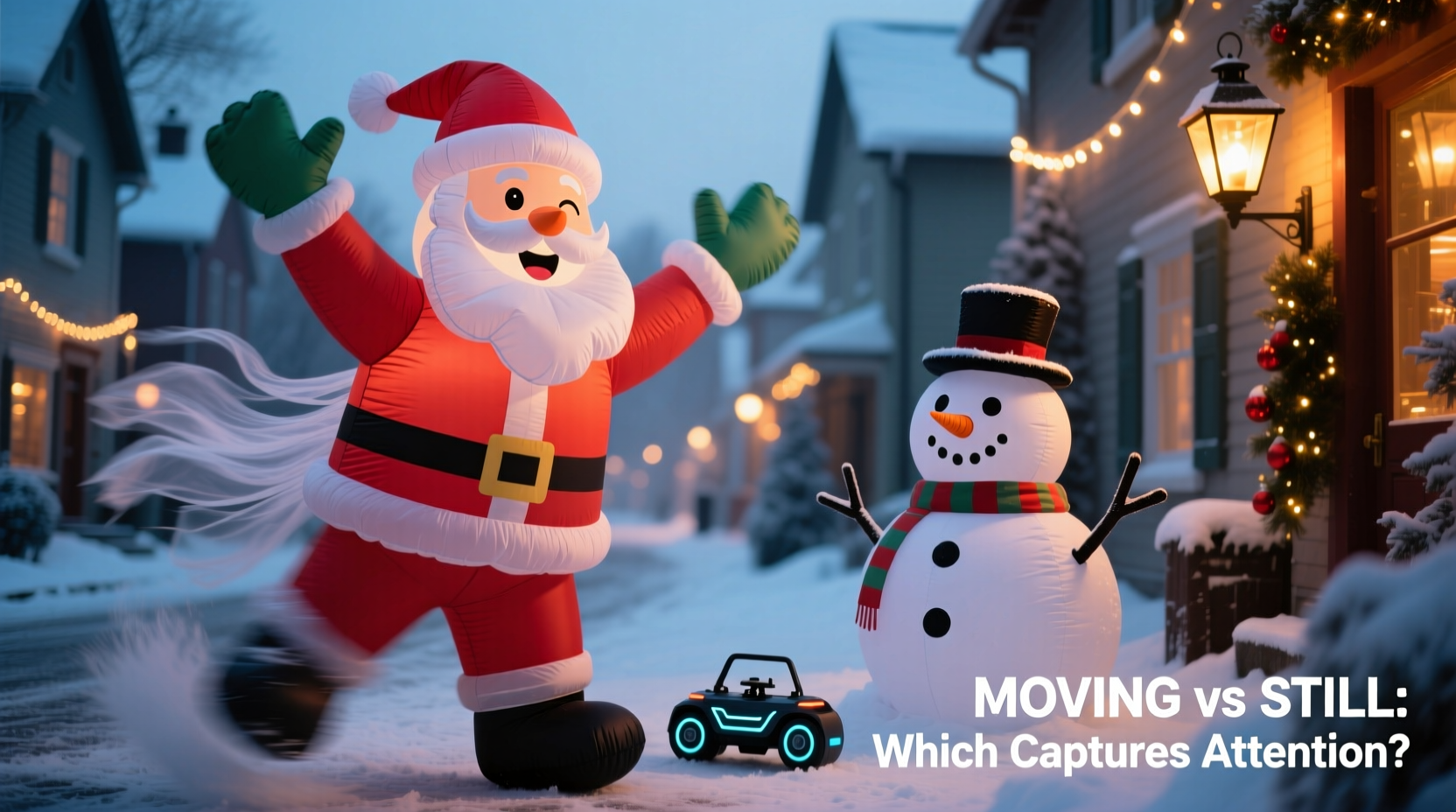
The human eye is biologically wired to detect motion. In evolutionary terms, movement signaled potential danger or opportunity — a trait still active today. This instinct explains why animated billboards outperform static ones and why video ads generate higher click-through rates online.
Remote-controlled inflatables leverage this principle. Whether it's a dancing Santa bobbing to music, a reindeer flapping its wings, or a snowman spinning with synchronized lights, these displays use motion, sound, and sometimes interactivity (via app control) to create dynamic focal points. Unlike static setups that remain visually unchanged, inflatables introduce rhythm and surprise.
A 2022 consumer behavior study by the National Retail Federation found that homes featuring animated holiday displays received an average of 37% more visitor stops during evening hours compared to those with only static decorations. Drivers were more likely to slow down, and social media tags increased significantly when movement was involved.
Static Displays: Tradition, Craftsmanship, and Subtlety
While inflatables dominate in novelty, static displays maintain a loyal following due to their craftsmanship, longevity, and nostalgic value. These include hand-strung icicle lights, ceramic nativity sets, vintage aluminum trees, and custom-built wooden sleighs. Many families pass down pieces across generations, adding sentimental weight to their arrangements.
Static displays excel in neighborhoods where elegance and restraint are valued. They offer greater flexibility in design complexity — think multi-tiered village scenes with miniature trains, glowing tunnels, and detailed landscaping. Because they don’t rely on internal fans or motors, they’re also quieter and less prone to sudden failure.
However, their visual consistency works against them in high-decibel environments. On streets packed with competing lights and animations, a well-lit but unmoving nativity may blend into the background. Without contrast or change, even intricate designs risk being overlooked after initial viewing.
“People remember what moves. A blinking light gets noticed once. A dancing elf gets shared.” — Marcus Reed, Urban Lighting Designer and Holiday Display Consultant
Comparative Breakdown: Inflatables vs Static Displays
| Feature | Remote-Controlled Inflatables | Static Displays |
|---|---|---|
| Attention Draw | High – motion, sound, size, and interactivity increase visibility | Moderate – relies on design quality and lighting contrast |
| Setup Time | Fast (usually under 15 minutes) | Slow (can take hours or days for complex arrangements) |
| Lifespan | 3–5 seasons (subject to fabric wear, fan failure) | 5–15+ years (with proper storage) |
| Energy Use | Moderate to high (fans and LED combinations) | Low to moderate (LED-only strings efficient) |
| Weather Resistance | Fair – strong winds can destabilize; rain may affect electronics | Good – durable materials like metal, plastic, resin hold up better |
| Customization | Limited to pre-designed shapes; some app-based light syncing | High – unlimited arrangement possibilities |
| Social Media Shareability | Very high – videos of moving inflatables go viral frequently | Low to moderate – unless exceptionally artistic or large-scale |
Real-World Example: Two Neighbors, Two Strategies
In suburban Columbus, Ohio, two adjacent households took opposing approaches to their 2023 holiday display. One installed a full-motion, app-controlled \"Santa’s Workshop\" inflatable set: a 12-foot-tall Santa rocking in a chair, elves dancing on command, and a rotating sleigh with built-in speakers playing holiday jingles. The other spent weeks assembling a meticulously lit static scene — a Dickensian village with over 200 mini lights, handmade buildings, and a working model train.
Both looked impressive. But data from local observation and social tracking told a different story. The inflatable yard saw:
- Over 400 recorded visits during peak weekends (Dec 15–23)
- More than 80 tagged Instagram posts using #ColumbusLightsTour
- Three local news features highlighting the “dancing Santa”
The static display attracted admiration from close neighbors and older visitors who appreciated the detail, but generated only 12 social media mentions and no press coverage. While both earned compliments, only one became a destination.
This doesn’t mean static displays lack value. For many, the joy lies in creation, not spectacle. But if the goal is widespread attention — especially among younger audiences and digital communities — motion wins.
Step-by-Step: Choosing the Right Option for Maximum Impact
Selecting between inflatables and static decor shouldn’t be arbitrary. Follow this timeline to make a strategic choice based on your goals, resources, and environment.
- Week 1: Assess Your Location
Walk around your neighborhood at night. Note which displays attract crowds. Are most homes minimalist? Is there a tradition of elaborate lighting? High competition favors bold inflatables. - Week 2: Define Your Goal
Are you decorating for family enjoyment, community goodwill, or social media reach? If sharing online is important, prioritize movement and photo-friendly features. - Week 3: Budget & Buy
Inflatables range from $30 (small snowmen) to $300+ (large interactive sets). Static components can accumulate cost quickly — consider total investment over time. Look for inflatables with remote or app control, weather-resistant coatings, and easy takedown systems. - Week 4: Install & Test
Set up your display early enough to troubleshoot. For inflatables, ensure the fan operates quietly and the anchor stakes are secure. For static displays, check light continuity and wire concealment. - Week 5: Monitor & Adjust
Observe reactions. Do people pause? Take pictures? Share online? If not, consider adding motion elements next year — even a single rotating spotlight or motorized figure can shift perception.
Hybrid Approach: Best of Both Worlds
Many top-rated holiday displays combine both styles strategically. Use static elements as a foundation — light-framed trees, pathway markers, window outlines — then place one or two high-impact inflatables as centerpieces. This creates visual hierarchy: stillness frames the motion, making the moving parts stand out even more.
For example, a homeowner might line their walkway with classic white net lights and place a remote-controlled singing Rudolph at the entrance. When activated via smartphone, the reindeer nods its head and plays “Jingle Bell Rock,” creating a memorable moment without overwhelming the overall aesthetic.
Expert Insight: The Psychology of Holiday Engagement
Dr. Lena Torres, an environmental psychologist specializing in seasonal behavior, explains why motion triggers stronger responses during holidays:
“During the winter months, our surroundings become darker and more monotonous. Any break from that pattern — especially rhythmic movement paired with familiar music — activates the brain’s reward system. It’s not just visual; it’s emotional. That’s why a simple inflatable Santa can feel more ‘festive’ than a technically perfect but static scene.” — Dr. Lena Torres, PhD, Environmental Psychology Lab, University of Michigan
This emotional resonance translates directly into attention. People don’t just see moving inflatables — they react to them. Children point. Adults smile. Passersby comment. These micro-interactions compound into broader visibility, word-of-mouth promotion, and repeat visits.
Checklist: Maximizing Attention from Your Holiday Display
- ✅ Choose at least one moving element (inflatable, rotating light, motorized figure)
- ✅ Place key items within 10 feet of the street or sidewalk
- ✅ Use warm-white or multicolor LEDs to enhance contrast
- ✅ Include sound if allowed by local ordinances (holiday music increases engagement)
- ✅ Test all electronics before public viewing begins
- ✅ Add signage: “Scan QR code to play music” or “Control Santa’s dance!” for interactivity
- ✅ Share your address on Nextdoor or Facebook Events to invite visitors
Frequently Asked Questions
Do remote-controlled inflatables last longer than regular ones?
Not necessarily. The remote function itself doesn’t extend lifespan, but higher-end models with better fabrics and sealed electronics often do. However, any inflatable exposed to wind, UV rays, and moisture will degrade faster than well-stored static decorations.
Can I mix inflatables with traditional lights?
Absolutely — and you should. Combining both styles creates depth and balance. Use static lighting to define spaces and guide the eye toward your animated centerpiece.
Are inflatables worth the extra electricity cost?
Most modern inflatables use LED lighting and energy-efficient fans. Running a medium-sized unit for six hours nightly over 30 days typically adds $3–$7 to your electric bill. Given their attention-grabbing power, many find this a worthwhile return on investment.
Conclusion: Motion Wins — But Meaning Endures
If raw attention is your goal, remote-controlled Christmas inflatables have a clear advantage. Their movement, sound, and interactive features tap into deep-seated human responses, making them more likely to stop drivers, spark conversations, and spread online. In a crowded seasonal landscape, standing still is the greatest risk.
That said, static displays retain unmatched value for tradition, artistry, and long-term use. They speak to patience, care, and personal history — qualities that resonate deeply, even if quietly.
The smartest approach embraces both: use static elements to build atmosphere and inflatables to create moments of delight. Whether you're aiming for viral fame or heartfelt smiles, the most memorable displays aren’t defined by type — but by intention.




 浙公网安备
33010002000092号
浙公网安备
33010002000092号 浙B2-20120091-4
Comments
No comments yet. Why don't you start the discussion?