
As the holiday season approaches, families across the country begin planning their outdoor Christmas displays. One of the most popular choices in recent years has been inflatable decorations—ranging from towering Santa Clauses to dancing reindeer and glowing snowmen. But a growing trend is adding motion and interactivity through remote-controlled models. With so many options available, parents often wonder: Do kids actually prefer remote-controlled inflatables over traditional static ones? The answer isn’t as simple as “more movement equals more fun.” Preferences vary by age, attention span, novelty factor, and even neighborhood culture.
This article dives into the differences between remote-controlled and static inflatables, explores what research and anecdotal evidence say about children’s preferences, and provides actionable guidance for families deciding how to decorate for the holidays.
Understanding the Key Differences
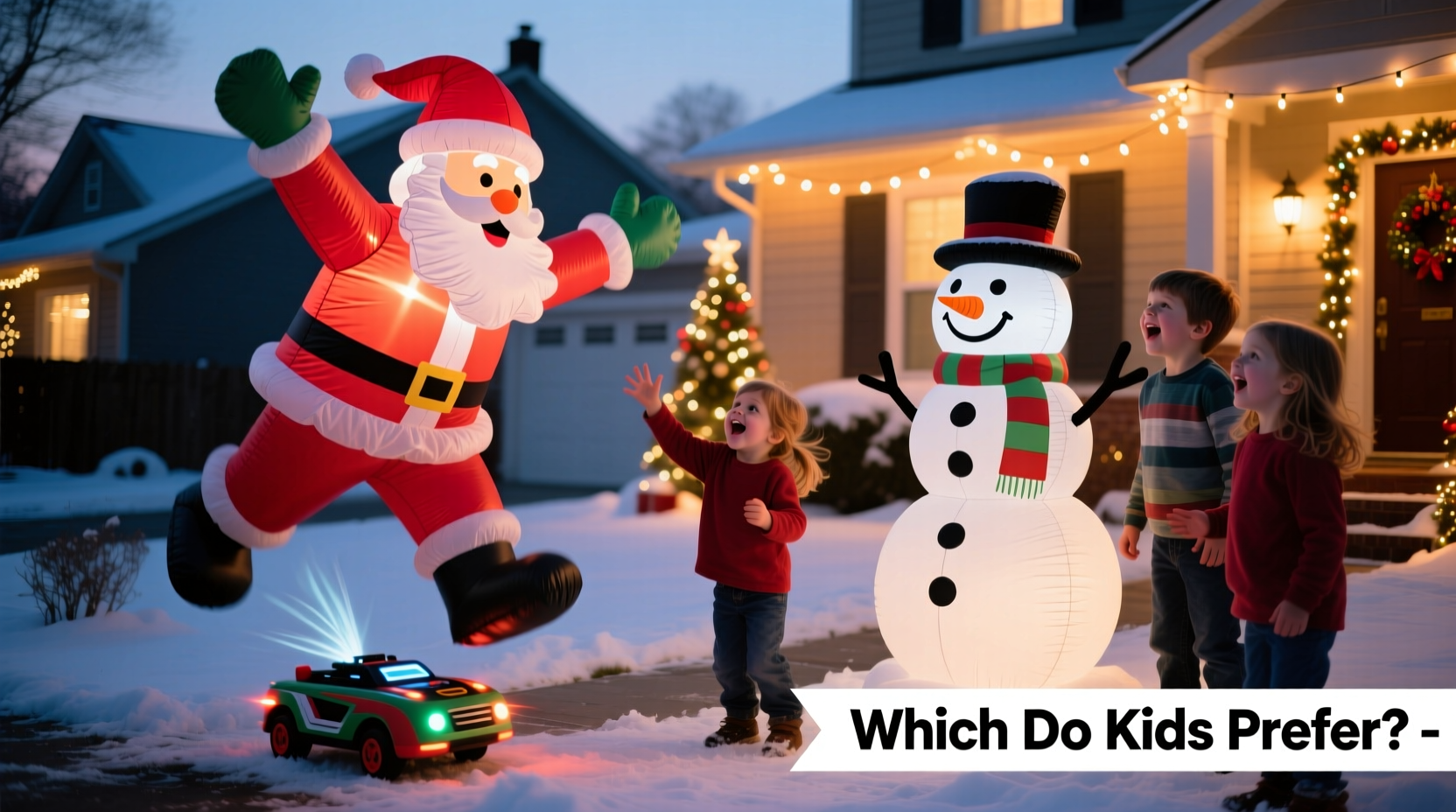
The primary distinction between remote-controlled and static inflatables lies in functionality. Static inflatables are powered solely by an electric fan that keeps them inflated. Once turned on, they remain in a fixed position and pose. Remote-controlled versions, however, include motors, articulated joints, or internal mechanisms that allow movement—such as waving arms, nodding heads, spinning bodies, or walking motions—all operated via a handheld remote or smartphone app.
While both types require an electrical outlet and similar setup procedures (staking, anchoring, weatherproofing), remote-controlled inflatables introduce complexity in operation, maintenance, and cost.
“Children are naturally drawn to motion and sound. Inflatables that move break the visual monotony of seasonal decor and trigger curiosity, especially in younger kids.” — Dr. Lila Monroe, Child Development Specialist at Boston Family Institute
Visual Appeal and Engagement
Static inflatables rely heavily on size, color, and character recognition to capture attention. A 12-foot Grinch looming over the lawn can be impressive, but after the initial surprise wears off, it becomes background scenery. Remote-controlled models, by contrast, offer dynamic engagement. A child might watch a motorized Santa “walk” across the yard or wave at passersby, creating moments of delight each time the feature is activated.
However, not all motion is equally appealing. Overly repetitive or jerky movements can appear comical—or even unsettling—to some children, particularly those under six. Smooth, lifelike animations tend to receive more positive reactions than exaggerated or mechanical gestures.
Kids’ Preferences by Age Group
Children’s responses to holiday inflatables vary significantly by developmental stage. Understanding these differences helps explain why some families swear by remote-controlled models while others stick with static displays.
Toddlers and Preschoolers (Ages 2–5)
Young children are highly responsive to movement, music, and bright colors. A study conducted by the Early Childhood Media Lab at Northwestern University found that animated outdoor decorations held toddlers’ attention nearly three times longer than static ones when observed during evening walks. Remote-controlled inflatables with synchronized music and gentle motion—like a swaying snowman or a bobbing elf—often elicit squeals of joy and requests to “do it again!”
That said, sudden loud sounds or fast motions can startle sensitive children. Parents should preview features before exposing young kids and avoid inflatables with flashing strobe lights or aggressive sound effects.
Elementary School Kids (Ages 6–10)
This age group tends to favor interactive elements. They enjoy operating the remote themselves, showing off the moving parts to friends, and pretending the inflatables are alive. Many children in this range appreciate the novelty and technical aspect of controlling a giant inflatable figure. Some even create imaginative stories around them—“Santa’s robot reindeer patrols our yard every night.”
Remote-controlled units become part of play, not just decoration. However, once the novelty fades—usually after a few weeks—interest may decline unless new routines or games are introduced.
Preteens and Teens (Ages 11+)
Older children are less enchanted by sheer size or motion. Their preferences lean toward aesthetics, humor, or social media appeal. A static inflatable with a clever design—like a “Naughty List Only” sign or a pop-culture-themed character—might resonate more than a moving Santa. That said, tech-savvy teens may appreciate advanced remote-controlled models with app integration, scheduling, or voice activation.
For this group, the fun often comes from pranking neighbors or filming viral-worthy clips, rather than pure visual enjoyment.
Comparative Analysis: Remote-Controlled vs Static Inflatables
| Feature | Remote-Controlled Inflatables | Static Inflatables |
|---|---|---|
| Engagement Level | High (especially for ages 3–10) | Moderate (initial wow factor) |
| Setup Complexity | Higher (motors, alignment, remote pairing) | Low (plug in and stake down) |
| Durability | Moderate (moving parts prone to wear) | High (fewer failure points) |
| Maintenance Needs | Frequent (check motors, lubricate joints) | Minimal (clean surface, check seams) |
| Lifespan | 2–4 seasons (with care) | 5+ seasons |
| Cost | $80–$250+ | $30–$120 |
| Kid Interaction | Active (remote operation, storytelling) | Passive (viewing only) |
| Neighbor Impact | Potentially disruptive (noise, light) | Generally neutral |
Real-World Example: The Peterson Family’s Holiday Experiment
In suburban Minneapolis, the Petersons decided to test kid preferences firsthand. For three consecutive Decembers, they rotated their main yard display: one year a 9-foot static Rudolph, the next a remote-controlled dancing Santa, and finally a hybrid setup featuring both.
Their two children, aged 5 and 8 at the time, were asked weekly to rate their excitement level on a simple emoji scale (😊 to 😞). They also kept a family journal noting spontaneous comments like “Can we make Santa dance now?” or “Rudolph’s boring—he doesn’t do anything.”
Results showed clear patterns:
- The first week of the remote-controlled Santa saw daily requests to activate him—averaging 7 uses per day.
- By mid-December, usage dropped to 2–3 times per week.
- When both inflatables were up together, the kids preferred starting with the static Rudolph lit up, then activating Santa for special occasions (e.g., when guests arrived).
The takeaway? Novelty drives short-term preference, but long-term enjoyment benefits from variety and control. The ability to choose when the action happens gave the children a sense of agency, increasing overall satisfaction.
Step-by-Step Guide: Choosing the Right Inflatable for Your Kids
Selecting between remote-controlled and static inflatables doesn’t have to be overwhelming. Follow this timeline-based approach to make an informed decision aligned with your children’s interests and your household’s holiday goals.
- Week 1 (Early November): Assess Your Kids’ Interests
Observe what excites them—do they love action figures, animated movies, or building robots? This hints at whether motion-based decor will appeal. - Week 2: Research Models & Features
Browse online reviews focusing on durability, ease of use, and child feedback. Look for phrases like “my kids love controlling it” or “stopped working after two weeks.” Prioritize brands with strong warranties. - Week 3: Consider Practical Constraints
Check your outdoor outlet access, wind exposure, and storage space. Remote-controlled units often require sturdier anchoring due to shifting weight during movement. - Week 4: Involve the Kids in a Mock Decision
Show them videos of both types in action. Ask: “Would you rather have a big Santa that waves when you press a button, or a reindeer that always stands still but glows really bright?” Their answers reveal priorities. - Final Week: Make the Purchase & Plan Placement
Buy early to avoid holiday shortages. Choose a location visible from the street and your living room. If using remote-controlled models, ensure line-of-sight or Bluetooth range allows easy operation.
Actionable Tips for Maximizing Kid Enjoyment
No matter which type you choose, small adjustments can significantly boost your children’s holiday experience.
- Let children help with setup—even if it’s just holding stakes or naming the inflatable. Ownership increases attachment.
- Pair inflatables with storytelling. “This snowman guards our house from grumpy squirrels” adds narrative depth.
- Use timers or smart plugs to automate lighting, reducing late-night disruptions while preserving magic.
- Rotate decorations annually if budget allows. Reintroducing a favorite inflatable after a year off can renew excitement.
Frequently Asked Questions
Do remote-controlled inflatables last as long as static ones?
Generally, no. The added mechanical components—motors, gears, wiring—are more vulnerable to moisture, temperature shifts, and physical stress. With careful storage and seasonal maintenance, a remote-controlled unit may last 3–4 years, compared to 5–7 for well-kept static models.
Are remote-controlled inflatables safe for young kids to operate?
Yes, but supervision is recommended. Most remotes are simple (one-button activation), but children may overuse features or leave the inflatable running overnight. Teach basic rules: “Only use it when Mom or Dad says it’s okay,” or “Turn it off after 10 minutes.”
Can I upgrade a static inflatable to be remote-controlled?
Not practically. Aftermarket kits are rare and often unreliable. The internal structure of static inflatables isn’t designed to support motors or jointed limbs. It’s better to purchase a purpose-built remote-controlled model if interactivity is desired.
Expert Insight: Balancing Fun and Function
“The best holiday decorations aren’t the biggest or most expensive—they’re the ones that spark interaction. Whether it’s a child begging to press the button or a family laughing at a wobbly reindeer, shared moments matter more than specs.” — Mark Tran, Seasonal Design Consultant and Author of *Joyful Outdoors: Creating Meaningful Holiday Displays*
Tran emphasizes that while remote-controlled inflatables offer unique engagement opportunities, they shouldn’t replace simpler traditions. A mix of static and dynamic pieces often creates the most balanced, joyful environment—one where kids feel involved without being overwhelmed by constant stimulation.
Conclusion: Let Kids Lead, But Guide with Wisdom
So, which do kids prefer—remote-controlled or static Christmas inflatables? The evidence suggests that younger children generally favor the movement and interactivity of remote-controlled models, at least initially. Older kids may prefer either, depending on design, humor, or personal taste. But preference is not static; it evolves with exposure, context, and emotional connection.
The most successful holiday displays don’t rely on technology alone. They combine visual impact with family participation, storytelling, and moments of shared wonder. Whether you choose a silent, glowing angel or a jiving Santa with a remote, the goal remains the same: to create memories that outlast the season.
Start by observing your children’s reactions, involve them in decisions, and don’t hesitate to blend both types. You might discover that the real magic isn’t in the wires or the remote—it’s in the way their eyes light up when the music starts and the inflatable comes to life, even if just for a minute.




 浙公网安备
33010002000092号
浙公网安备
33010002000092号 浙B2-20120091-4
Comments
No comments yet. Why don't you start the discussion?