
When choosing a chain—whether for jewelry, industrial use, or decorative purposes—two common materials stand out: resin and metal. While both serve functional and aesthetic roles, their long-term reliability hinges on resistance to breakage and tarnishing. Understanding the differences between resin and metal chains in these areas can help you make an informed decision based on your needs, environment, and usage patterns.
Durability: How Resin and Metal Respond to Stress
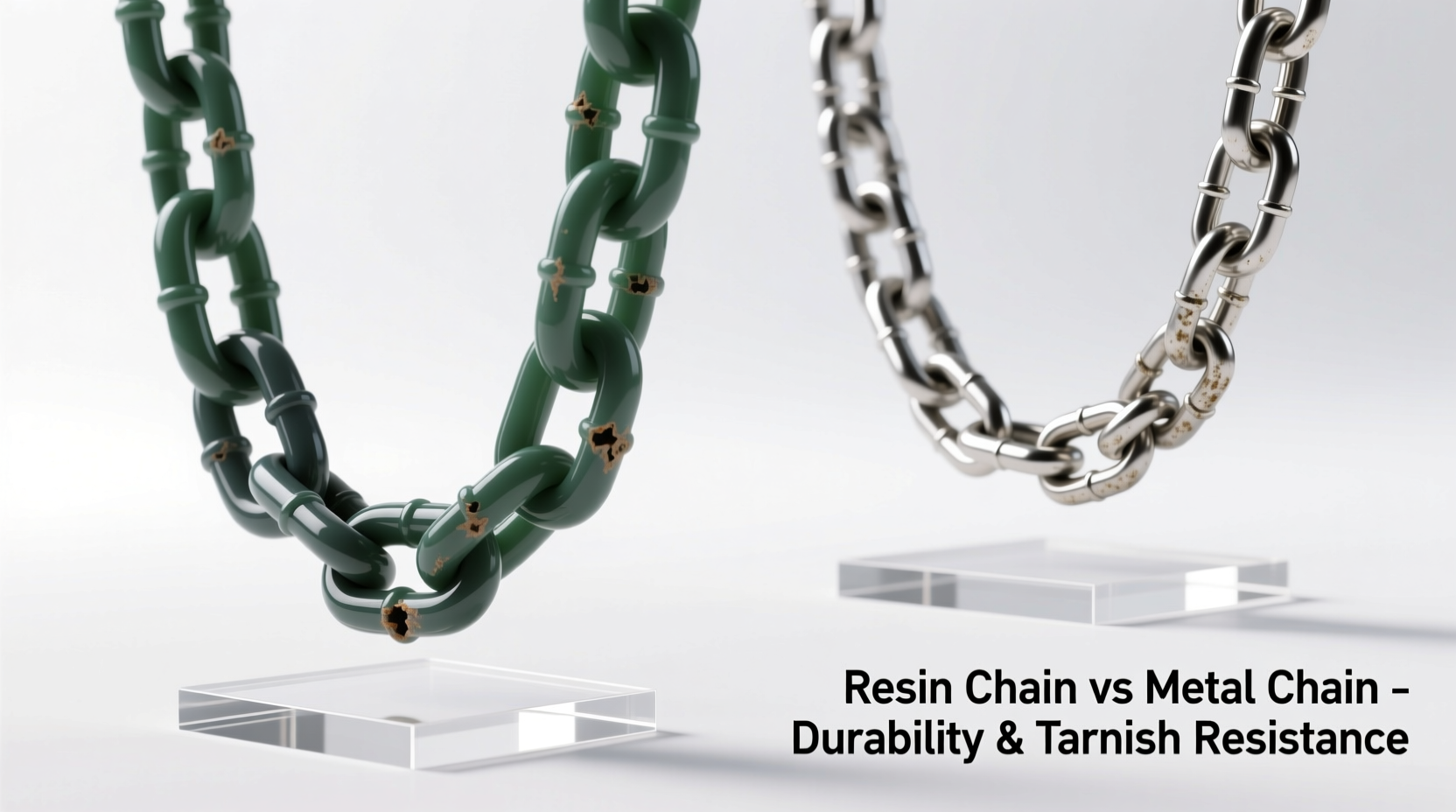
Durability refers to a material’s ability to withstand physical stress without breaking or deforming. Metal chains, typically made from stainless steel, brass, silver, or gold, are known for their tensile strength. They can endure significant pulling force and are commonly used in heavy-duty applications such as marine hardware, automotive systems, and load-bearing accessories.
In contrast, resin chains are made from synthetic polymers like epoxy or polyurethane. These materials are lightweight and flexible but inherently weaker under tension. Resin lacks the molecular density of metals, making it more prone to snapping under pressure. For example, a resin necklace may break if caught on a door handle, while a comparable metal chain would likely hold.
However, resin excels in impact resistance. Unlike brittle metals that can crack or shatter upon sudden impact, resin tends to absorb shock due to its elastic nature. This makes it suitable for applications where dropping or bumping is frequent, such as children’s jewelry or costume pieces worn during active events.
Resistance to Tarnishing: Environmental Exposure Matters
Tarnishing is a chemical reaction, primarily affecting metals, caused by exposure to moisture, sulfur, and oxygen. Silver chains, for instance, develop a blackish layer over time when exposed to air. Brass and copper also oxidize, leading to discoloration. Even stainless steel, though highly resistant, can corrode in extreme conditions such as saltwater immersion.
Resin, being a non-metallic polymer, does not tarnish. It remains chemically inert in most environments. This means it won’t react with sweat, perfumes, lotions, or humidity—common culprits behind metal discoloration. As a result, resin chains maintain their original color and shine with minimal maintenance.
That said, prolonged exposure to UV light can degrade some resins, causing them to yellow or become brittle. High-quality UV-stabilized resins mitigate this issue, but cheaper variants may deteriorate faster when left in direct sunlight, such as on a windowsill or during outdoor wear.
“Tarnish is inevitable with reactive metals unless protected. Resin avoids this entirely—but only if formulated correctly for environmental stability.” — Dr. Lena Torres, Materials Scientist at Advanced Polymer Labs
Comparative Analysis: Resin vs Metal Chains
| Feature | Resin Chain | Metal Chain |
|---|---|---|
| Tensile Strength | Low to moderate | High to very high |
| Impact Resistance | High (flexible) | Varies (brittle if thin) |
| Tarnish Resistance | Excellent (non-reactive) | Poor to good (depends on alloy) |
| UV Resistance | Moderate (can yellow) | Excellent (unless coated) |
| Weight | Very light | Heavy to moderate |
| Lifespan (with care) | 3–7 years | 10+ years |
| Maintenance Needs | Low | Moderate to high |
Real-World Example: Jewelry Use Case
Sophia, a yoga instructor, wanted a delicate pendant necklace she could wear daily during classes. She initially chose a sterling silver chain, but within three months, it had darkened due to constant exposure to sweat and chlorine from post-class showers. The clasp also weakened and snapped during a stretch session.
She switched to a resin chain with a similar aesthetic. Over the next year, the resin piece showed no signs of discoloration, even after daily wear and washing. While slightly less sturdy than metal, it survived regular movement and occasional snags without breaking. The trade-off in strength was acceptable given her low-risk lifestyle and preference for consistent appearance.
This case illustrates how environment and usage dictate material suitability. For active individuals avoiding tarnish, resin offers compelling advantages despite lower mechanical strength.
Care and Maintenance Guidelines
Proper care extends the life of any chain, regardless of material. However, the required routines differ significantly.
For Metal Chains:
- Polish regularly with a soft cloth to prevent oxidation buildup.
- Store in anti-tarnish pouches or with silica gel packets.
- Avoid contact with chemicals like chlorine, perfume, and cleaning agents.
- Remove before swimming, showering, or exercising.
For Resin Chains:
- Clean with mild soap and water; avoid abrasive cleaners.
- Keep away from prolonged direct sunlight to prevent yellowing.
- Do not expose to high heat (e.g., near radiators or ovens).
- Inspect links periodically for micro-cracks, especially at stress points.
Checklist: Choosing the Right Chain for Your Needs
- Assess your environment: Will the chain be exposed to moisture, sweat, or chemicals?
- Evaluate load requirements: Does it need to support weight or resist pulling?
- Prioritize appearance longevity: Is maintaining original color critical?
- Consider activity level: Will it be worn during sports or manual work?
- Budget for maintenance: Are you willing to polish and store carefully?
- Test sensitivity: Do you have skin reactions to certain metals?
Frequently Asked Questions
Can resin chains look like metal?
Yes. Modern resin chains often feature metallic coatings or pigments that mimic the appearance of gold, silver, or gunmetal. These finishes provide the visual appeal of metal without the tarnish risk, though they may scratch over time.
Are there metal chains that don’t tarnish?
Yes. Stainless steel, titanium, platinum, and palladium are highly resistant to tarnishing. These alloys are ideal for people seeking durable, low-maintenance metal options. Pure silver and copper, however, will tarnish naturally.
Which lasts longer overall: resin or metal?
In most cases, metal lasts longer. High-quality metal chains can endure decades with proper care. Resin chains typically last several years but may degrade due to UV exposure or repeated stress. Longevity depends heavily on usage context.
Final Recommendation: Match Material to Purpose
The choice between resin and metal chains isn't about which is universally better—it's about alignment with purpose. If resistance to tarnishing is your top priority and mechanical stress is minimal, resin is an excellent, low-maintenance option. It shines in fashion jewelry, casual accessories, and humid environments where metal would quickly discolor.
On the other hand, if strength, longevity, and structural integrity are essential—such as in functional hardware, heirloom jewelry, or professional gear—metal remains the superior choice. Advances in alloy technology have produced metals that resist corrosion and require minimal upkeep.
Ultimately, the least likely to “break” depends on the type of stress involved. Resin resists chemical degradation and won’t tarnish, but metal wins in physical durability. Evaluate your priorities: appearance consistency or structural resilience?




 浙公网安备
33010002000092号
浙公网安备
33010002000092号 浙B2-20120091-4
Comments
No comments yet. Why don't you start the discussion?