
Carrying accessories in your bag means subjecting them to constant jostling, pressure, and unpredictable movement. Whether you're attaching a sentimental resin rose keychain or proudly displaying an enamel pin on your tote, durability under daily stress matters. But when it comes to surviving the chaos of purse life, which holds up better? Resin rose keychains have gained popularity for their delicate floral beauty, while enamel pins remain staples in self-expression. This comparison dives into material science, structural integrity, and practical wear patterns to answer one crucial question: which is less likely to break when tossed into your everyday carry?
Material Composition: What Are You Actually Carrying?
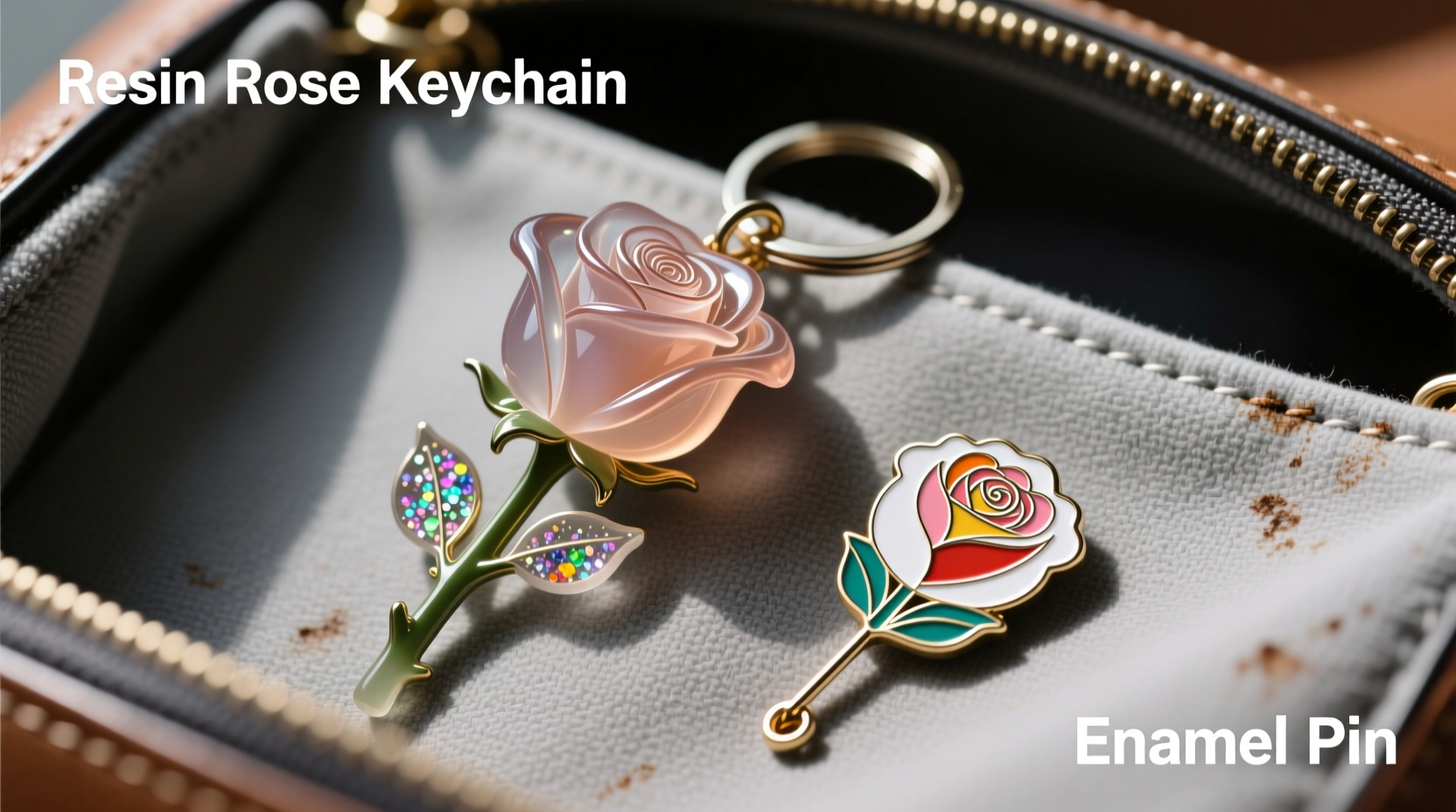
The foundation of durability lies in what something is made of. Understanding the core materials helps predict how each item will respond to impact, friction, and compression inside a crowded bag.
Resin Rose Keychains: These are typically crafted from epoxy or polyurethane resin poured over preserved or artificial miniature roses. The result is a glossy, glass-like finish that encapsulates the flower entirely. While visually stunning, resin is inherently brittle—especially in thin layers. It can crack under sharp impact or prolonged pressure. However, high-quality two-part resins with proper curing times offer improved flexibility and scratch resistance.
Enamel Pins: Made primarily from metal (often zinc alloy or brass) with colored enamel filled into stamped designs, these pins are baked at high temperatures to set the surface. Hard enamel pins are sanded flush with the metal border, making them smoother and more resistant to chipping. Soft enamel has recessed color areas protected by raised metal ridges. Both types are mounted with butterfly clutch backs or rubber caps for security.
Durability Showdown: Impact, Pressure, and Friction Resistance
To assess real-world resilience, consider three primary stressors your accessories face in a bag: impact (dropping), pressure (being crushed under books or laptops), and friction (rubbing against keys, zippers, or electronics).
- Resin rose keychains tend to fail under concentrated pressure. If your bag gets squashed or something heavy lands on the keychain, the resin dome can fracture, especially around the stem or base where thickness varies. Once cracked, moisture may seep in, damaging the enclosed rose.
- Enamel pins, being metal-based, resist crushing far better. Even if dropped, the rigid structure absorbs shock without shattering. However, soft enamel can chip if scraped sharply against rough surfaces like concrete or coarse fabric. Hard enamel fares better but isn’t immune to deep scratches.
“Metal components generally outperform polymer-based items in uncontrolled environments like handbags. It’s not just about strength—it’s about consistency of form.” — Dr. Lena Torres, Materials Scientist at Urban Wearables Lab
Structural Design and Weak Points
Design plays a major role in failure points. Even strong materials can be compromised by poor construction.
| Feature | Resin Rose Keychain | Enamel Pin |
|---|---|---|
| Main Material | Epoxy/polyurethane resin | Zinc alloy/brass + enamel |
| Vulnerable Areas | Thin edges, attachment loop, air bubbles | Pin back mechanism, enamel fill lines |
| Typical Failure Mode | Cracking, clouding, delamination | Bent pin, lost clutch, chipped enamel |
| Average Lifespan (with regular use) | 1–3 years* | 3+ years |
| *Assumes no direct drops or extreme heat exposure |
Resin pieces often suffer from internal flaws—microbubbles or uneven curing—that create weak zones. Over time, thermal expansion (from leaving your bag in a hot car) can cause cracks even without physical trauma. Enamel pins, meanwhile, rely on small metal parts: the clutch back can loosen or break, and the pin itself may bend. But unlike resin, metal damage is usually repairable or replaceable.
Mini Case Study: The Commuter’s Dilemma
Sophie, a graphic designer in Chicago, carried her favorite lavender resin rose keychain clipped to her work bag for months. After a particularly packed week involving train commutes and tight overhead bins, she noticed a hairline crack radiating from the base. Within days, the crack widened, and the rose began to discolor due to humidity ingress. She replaced it with a hard enamel bee-shaped pin affixed to the same strap. Six months later, despite frequent tossing into luggage and occasional drops, the pin shows only minor scuffing on its edge—no structural compromise.
This mirrors broader user trends reported in accessory forums and retail feedback: resin decor excels in display cases or gentle use, while enamel pins prove more resilient in active lifestyles.
Practical Tips for Maximizing Longevity
You don’t have to abandon resin entirely—but smart habits make a difference. Here’s how to protect both types based on their vulnerabilities.
Checklist: Protecting Your Accessories in Daily Carry
- Store resin keychains in a soft-lined pocket or detach them when not needed.
- For enamel pins, reinforce the clutch back with a silicone stopper to prevent loss.
- Avoid placing either near sharp objects like pens, keys, or scissors.
- Inspect regularly for early signs of damage—catching a loose pin back is easier than replacing a shattered resin cap.
- Keep bags organized; overcrowding increases collision risks.
When Environment Matters: Heat, Moisture, and Light Exposure
Your bag isn't just a container—it's a micro-environment. Temperature swings, humidity, and UV exposure all degrade materials differently.
- Resin yellows over time when exposed to sunlight (even through windows). Leaving your bag on a sunlit seat accelerates this.
- Moisture trapped in a damp bag can fog or cloud resin, especially if there’s a tiny fissure.
- Enamel pins resist UV and humidity well, though saltwater or sweat can corrode metal over time if not wiped down.
If you live in a humid climate or frequently leave your bag in a hot car, enamel wins again for environmental stability.
Frequently Asked Questions
Can I fix a cracked resin rose keychain?
Patch repairs are possible using clear epoxy resin, but they rarely restore original clarity or strength. The repaired area often remains a weak point. Prevention is far more effective than repair.
Are soft enamel pins less durable than hard enamel?
Yes, slightly. Soft enamel has recessed colors, so the surface isn’t flush. This makes the colored sections more prone to scratching or chipping if rubbed aggressively. Hard enamel is polished flat and better protected by surrounding metal borders.
Is there a hybrid option that combines beauty and durability?
Some brands now offer “resin-coated” metal charms with a thin protective layer over detailed artwork. These balance visual depth with stronger underlying structure. They’re not as fragile as full resin domes and resist cracking better under pressure.
Final Verdict: Which Should You Choose?
If your priority is **durability in a busy bag**, the enamel pin is the clear winner. Its metal construction withstands drops, pressure, and abrasion far better than resin. While neither is indestructible, enamel fails more gracefully—bent pins can be straightened, lost clutches replaced—whereas a cracked resin dome compromises both aesthetics and integrity permanently.
That said, resin rose keychains offer unmatched sentimental and artistic value. Their fragility isn’t a flaw—it’s a trade-off for preserving something organic and delicate. If you cherish the look and meaning, treat it like a keepsake: remove it when not in use, store it safely, and enjoy it intentionally.
Step-by-Step Guide: Choosing & Caring for Bag Accessories
- Evaluate usage: Will this item stay clipped daily, or only for special occasions?
- Assess your bag environment: Is it cluttered, frequently dropped, or exposed to heat?
- Select material accordingly: Opt for enamel for daily durability; reserve resin for low-risk carry.
- Use protective storage: Add a zippered trinket pouch for fragile items.
- Maintain monthly: Inspect clasps, clean gently with a microfiber cloth, and replace worn fasteners.
“The most durable accessory isn’t always the strongest material—it’s the one best matched to how you actually live.” — Mariko Tanaka, Sustainable Fashion Consultant




 浙公网安备
33010002000092号
浙公网安备
33010002000092号 浙B2-20120091-4
Comments
No comments yet. Why don't you start the discussion?