
Keychains are more than just functional accessories—they’re personal statements. From minimalist designs to intricate artwork, they reflect individuality. Two of the most popular materials in this space are resin and enamel. While both deliver vibrant colors and lasting appeal, they differ significantly in production, durability, and price. Many consumers wonder: with enamel keychains often costing two or three times as much as resin versions, is the upgrade truly justified?
The answer isn’t a simple yes or no. It depends on how you use your keychain, your aesthetic preferences, and what you value—long-term resilience or artistic flexibility.
Understanding the Basics: What Are Resin and Enamel Keychains?
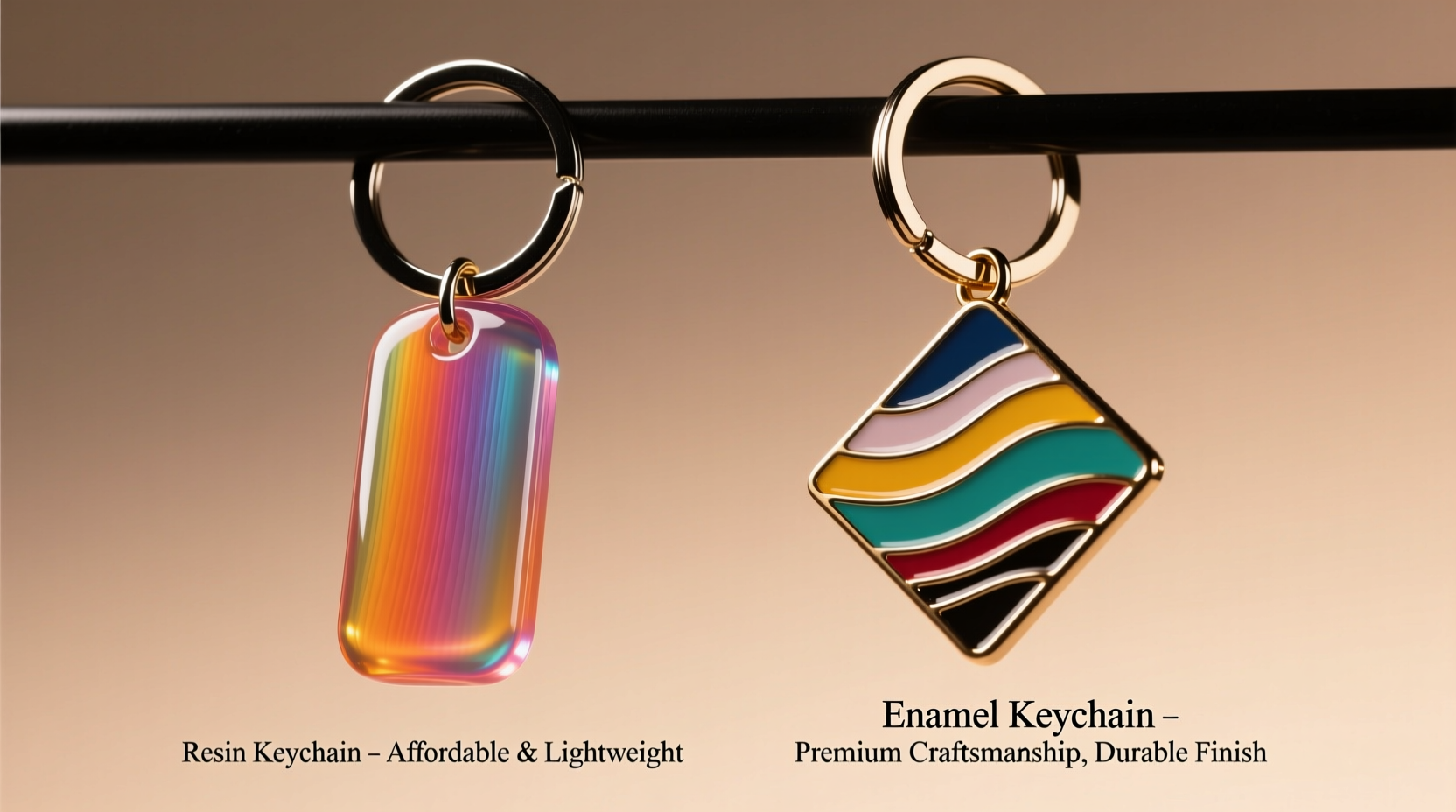
Before comparing them, it’s essential to understand how each type is made.
Resin keychains are created using liquid epoxy resin poured into silicone molds. Pigments and additives are mixed in to achieve color and effects like glitter, swirls, or depth. Once cured, the resin hardens into a glossy, glass-like surface. This method allows for high customization and 3D effects, making it ideal for unique, handcrafted designs.
Enamel keychains, by contrast, are typically made from metal (often iron or zinc alloy) bases with recessed areas filled with colored enamel—a powdered glass fused at high temperatures. After firing, the surface is polished smooth and sealed. This process yields a clean, professional finish commonly seen in luxury pins and badges.
“Enamel offers unmatched precision and longevity when done right. But resin opens doors to creativity that traditional methods can’t match.” — Lena Torres, Industrial Jewelry Designer
Durability Showdown: Longevity Under Real-World Conditions
If you carry keys daily, your keychain will face friction, impact, moisture, and UV exposure. How do these materials hold up?
Resin: High-quality epoxy resin is scratch-resistant and waterproof once fully cured. However, cheaper resins may yellow over time when exposed to sunlight. Thin edges can chip if dropped frequently. While resistant to water and mild chemicals, prolonged exposure to solvents or extreme heat can degrade the surface.
Enamel: Hard-fired enamel is extremely durable. It resists scratching, fading, and corrosion far better than most resins. Because it’s embedded in metal and fused at high heat, it won’t peel or crack under normal conditions. The surrounding metal casing also adds structural protection.
Design Flexibility and Aesthetic Appeal
This is where resin shines. While enamel excels in crisp lines and uniform fills, resin allows for layered depth, transparency, suspended elements (like dried flowers or glitter), and organic textures. Artists use resin to create miniature artworks—each piece slightly unique.
Enamel, while precise, is limited by its production method. Complex gradients or translucent layers are difficult and costly to achieve. Most enamel pieces rely on flat color fields within metal boundaries, giving them a classic, badge-like appearance.
Consider this: a resin keychain might mimic stained glass with shimmering blue waves and floating silver flakes. An enamel version would render a similar wave motif with solid blue fill and sharp metallic outlines—clean, but less dynamic.
| Feature | Resin Keychains | Enamel Keychains |
|---|---|---|
| Color Depth & Transparency | High – supports gradients, translucency, layering | Limited – mostly opaque, flat fills |
| Surface Texture | Glossy, glassy; can be textured or domed | Smooth, polished; always flat or slightly curved |
| Customization Potential | Very high – ideal for handmade, one-off designs | Moderate – best for standardized, repeatable art |
| Detail Precision | Good, but dependent on mold quality | Excellent – sharp lines due to metal borders |
Cost Analysis: Why Enamel Is More Expensive
Enamel keychains typically start at $8–$15, while resin versions range from $3–$8. The price gap stems from several factors:
- Production complexity: Enamel requires multiple stages—metal stamping, enamel filling, kiln-firing, polishing, plating, and coating. Each step adds labor and equipment costs.
- Tooling investment: Custom metal molds for enamel runs are expensive and only cost-effective in bulk (usually 100+ units).
- Material integrity: Fused glass enamel and metal bases are inherently more durable, justifying premium pricing.
In contrast, resin keychains can be produced in small batches—or even one at a time—with minimal startup cost. Silicone molds are reusable and inexpensive. This makes resin ideal for indie artists and limited-run collaborations.
However, high-end resin pieces using premium pigments, UV stabilizers, and hand-finishing can approach enamel prices. These are exceptions rather than the norm.
Real-World Example: A Collector’s Dilemma
Jamie, a pin collector from Portland, faced a decision when choosing a keychain for her favorite anime series. She found two options: a $7 resin keychain with a glowing effect mimicking magical energy, and a $14 enamel version with bold colors and metallic outlines.
She bought both. After six months of daily use, the resin piece showed minor edge wear and slight cloudiness from sun exposure. The enamel version remained flawless. But Jamie still preferred the resin one for its artistic uniqueness—even framing it after retiring it from key duty.
Her takeaway? “The enamel lasted longer, but the resin told a better story.”
When to Choose Resin vs. When to Invest in Enamel
The decision ultimately hinges on your priorities.
Choose resin if:
- You value artistic originality and visual depth.
- You're supporting independent creators or limited editions.
- Budget is a concern, or you like rotating designs frequently.
- The keychain will be displayed occasionally, not used daily.
Invest in enamel if:
- You want a long-lasting, scratch-resistant accessory.
- You prefer a polished, professional look (e.g., for branding or gifts).
- You carry keys aggressively or expose them to harsh environments.
- You plan to keep the item for years as part of a curated collection.
Frequently Asked Questions
Can resin keychains last as long as enamel ones?
Possibly, but only under ideal conditions. High-quality, UV-stabilized resin stored away from direct sunlight and physical stress can last several years. However, enamel remains superior in long-term durability and resistance to environmental damage.
Are all enamel keychains more expensive?
Generally, yes—especially for small orders. Mass-produced enamel items can lower per-unit costs, but minimum order quantities make them less accessible for small sellers. Resin remains more affordable across the board for custom, low-volume production.
Do enamel keychains tarnish?
The enamel itself does not tarnish, but the base metal (especially iron or copper alloys) can corrode if the protective plating wears down. Nickel or gold plating helps prevent this. Always check whether the product specifies anti-tarnish coatings.
Final Verdict: Is the Extra Cost Worth It?
Enamel keychains are worth the extra cost—if longevity and polish matter most to you. They offer industrial-grade resilience, timeless aesthetics, and a sense of permanence. For professionals, collectors, or those seeking rugged elegance, enamel is the smarter long-term investment.
But resin has its own irreplaceable value. It democratizes design, enabling creativity that enamel simply can’t replicate. For fans, artists, and trend-driven users, resin delivers emotional and visual richness at an accessible price.
Instead of asking which is “better,” consider which aligns with your lifestyle. You don’t have to choose one forever. Many people maintain both: enamel for everyday reliability, resin for seasonal flair.




 浙公网安备
33010002000092号
浙公网安备
33010002000092号 浙B2-20120091-4
Comments
No comments yet. Why don't you start the discussion?