
For many gamers, revisiting classic titles from the NES, SNES, Sega Genesis, or PlayStation 1 era is more than nostalgia—it’s a cultural experience. Emulation offers a convenient way to relive these moments on modern devices. However, while the technology itself is neutral, its application often treads through legal ambiguity. The legality of retro game console emulation isn’t black and white; it exists in a complex web of copyright law, fair use doctrine, and evolving digital rights. Understanding where the boundaries lie—and how to stay within them—is essential for responsible enthusiasts.
The Legal Status of Emulators: Are They Illegal?
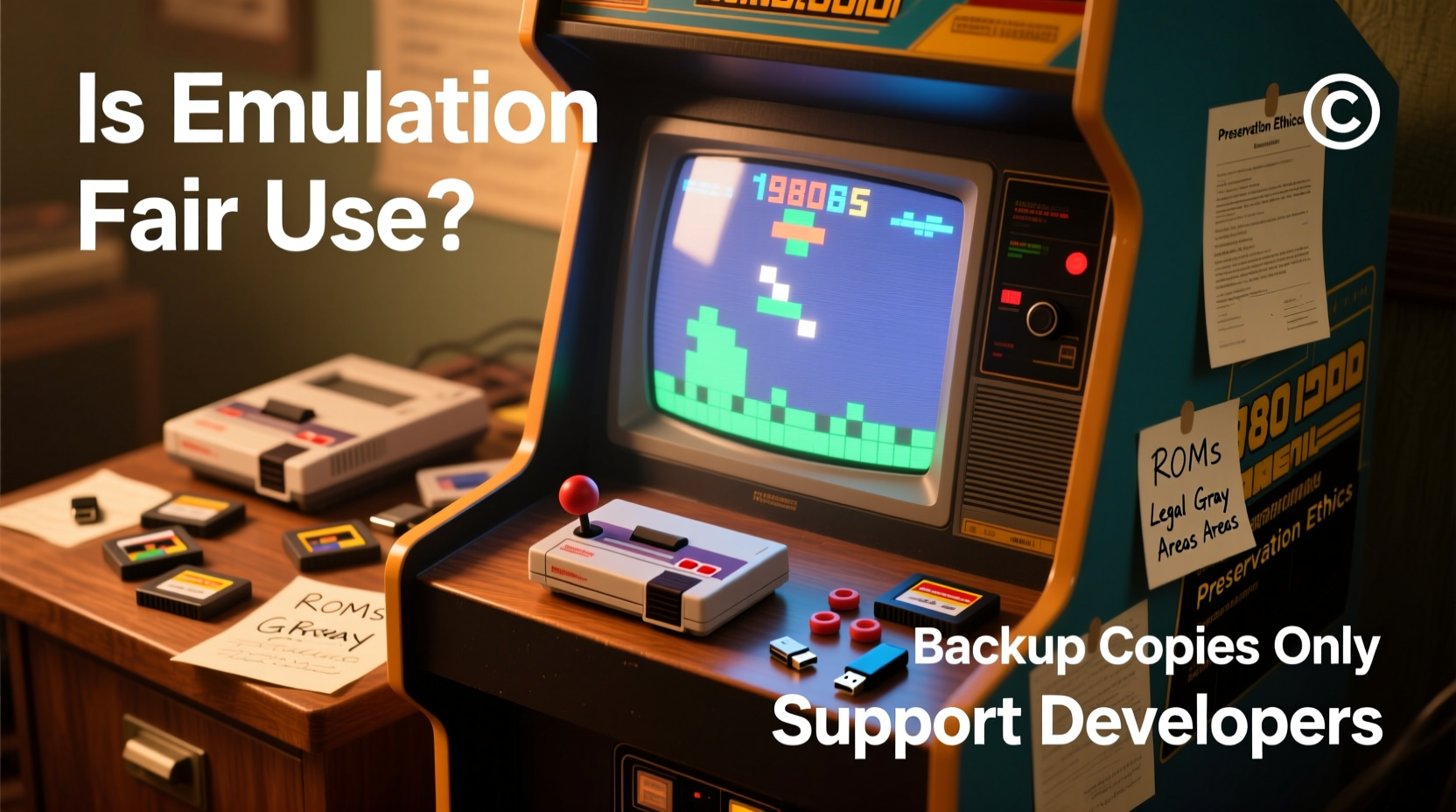
At their core, emulators are software programs that mimic the hardware of vintage gaming systems, allowing games designed for those platforms to run on modern computers or mobile devices. On their own, emulators are generally considered legal. Courts have ruled that creating software to replicate hardware functionality—without copying proprietary code—is permissible under principles of reverse engineering for interoperability.
In the landmark case Sega v. Accolade (1992), the Ninth Circuit Court of Appeals held that disassembling copyrighted software to understand its functional elements for compatibility purposes falls under fair use. This precedent supports the argument that developing an emulator by analyzing how a console works—through clean-room reverse engineering—is lawful.
“Reverse engineering to achieve interoperability is a well-established exception to copyright protection.” — Electronic Frontier Foundation (EFF)
However, legality shifts when emulators come bundled with unauthorized BIOS files or built-in access to pirated ROMs. Distributing copyrighted system firmware—even if it's just a few kilobytes—can expose developers and users to liability. Similarly, downloading or sharing commercial game ROMs without owning the original cartridge or disc typically violates copyright law.
ROMs and Copyright: Where Most Users Cross the Line
The most contentious aspect of retro emulation isn’t the emulator itself—it’s the source of the game files, commonly known as ROMs (Read-Only Memory images). A ROM is a digital copy of a physical game cartridge or disc. While possessing a ROM of a game you legally own may seem like a reasonable backup, U.S. copyright law does not explicitly grant consumers the right to create such copies for personal use, unlike with music or movies under certain conditions.
The U.S. Copyright Office has acknowledged interest in personal archiving, but no court has definitively ruled that ripping your own ROMs constitutes fair use. Meanwhile, companies like Nintendo have consistently enforced their intellectual property rights, issuing takedown notices to websites hosting even out-of-print games.
Downloading ROMs from public sites—especially those offering thousands of titles, including unreleased prototypes or region-exclusive games—almost always infringes on copyright. Even if a game is no longer sold or supported, copyright persists for decades after publication (typically life of author + 70 years, or 95 years for corporate works).
Best Practices for Ethical and Low-Risk Emulation
While perfect legal compliance remains challenging due to lack of clear consumer rights around digital backups, there are responsible ways to engage with emulation that minimize risk and respect creators’ rights.
1. Use Open-Source, Independently Developed Emulators
Stick to reputable emulators developed through clean-room reverse engineering, such as RetroArch, bsnes, or Dolphin. These projects avoid using proprietary code and prioritize transparency and compliance.
2. Obtain BIOS Files Legally
Some consoles require BIOS (Basic Input/Output System) files to function properly in emulators. These are copyrighted by the manufacturer. The only legal way to obtain them is by extracting them from hardware you own. Never download BIOS dumps from third-party sites.
3. Prioritize Homebrew and Public Domain Games
A growing library of homebrew games—fan-made titles designed for retro systems—are freely distributed with permission. Additionally, some older games have entered the public domain or been released under open licenses. These can be used without restriction.
4. Support Preservation Initiatives
Organizations like the Video Game History Foundation work to preserve obsolete games through legal archival methods. Supporting such efforts promotes long-term access without violating copyright.
5. Avoid Online Distribution Platforms Offering Free ROMs
Sites like “Emuparadise” or “LoveROMs” may appear convenient, but they operate in violation of copyright law. Using them increases legal exposure and undermines legitimate re-releases and remasters.
Do’s and Don’ts of Retro Emulation
| Do | Don't |
|---|---|
| Use emulators for testing homebrew games | Distribute copyrighted BIOS files |
| Extract BIOS from your own console | Download ROMs of games you don’t own |
| Play public domain or freeware titles | Use emulators to pirate newly released retro compilations |
| Support official re-releases (e.g., Nintendo Switch Online) | Assume abandonment equals public domain |
| Contribute to open-source emulator development | Modify emulators to bypass DRM on current-gen systems |
Case Study: The Legal Crackdown on LoveROMs
In 2018, Nintendo filed a lawsuit against LoveROMs and its sister site LoveRETRO, alleging massive copyright infringement involving over 500 of its games. The case culminated in a $12 million judgment in Nintendo’s favor. What made this case notable was not just the scale of damages, but the precedent it set: website operators could be held liable not only for hosting infringing content but also for facilitating access through search tools and categorization.
The operator, Christian May, eventually handed over domain names and agreed to a permanent injunction. In a public statement, he acknowledged the educational value of emulation but admitted his platform had gone too far by enabling widespread piracy. This case serves as a cautionary tale: while individual use may rarely result in prosecution, large-scale distribution—even with nostalgic intent—is legally indefensible.
“We’re all fans at heart, but fandom doesn’t override copyright.” — Nintendo of America Spokesperson, post-settlement statement
This outcome reinforced the idea that convenience and sentimentality do not excuse mass infringement. It also signaled to other ROM-hosting platforms that major publishers remain vigilant in protecting their catalogs.
Step-by-Step Guide to Setting Up Emulation Responsibly
Follow this sequence to enjoy retro gaming while minimizing legal and ethical risks:
- Acquire Original Hardware (Optional but Recommended): Purchase a used console like an NES or Game Boy. This gives you legal grounds to extract BIOS files and creates a basis for personal backups.
- Choose a Trusted Emulator: Download RetroArch, DuckStation, or another community-vetted emulator from official sources.
- Extract BIOS Yourself: Use tools like
FluxEngineor specialized flash readers to dump BIOS from your own device. Do not download these files. - Focus on Permissible Content: Start with homebrew games (e.g., from itch.io or fan communities) or titles confirmed as public domain.
- Explore Official Alternatives: Subscribe to services like Nintendo Switch Online + Expansion Pack, which includes legal access to hundreds of retro titles.
- Preserve, Don’t Pirate: If you own cartridges, consider professional digitization services that comply with archival ethics.
- Stay Updated on Laws: Follow digital rights organizations like the EFF for changes in fair use and preservation policy.
Frequently Asked Questions
Is it legal to back up my own game cartridges?
There is no clear legal answer. While some argue it falls under fair use for personal backup, no U.S. court has ruled definitively in favor of this practice. Manufacturers like Nintendo prohibit it in their terms of service. Technically possible? Yes. Legally protected? Not yet.
Can I get in trouble for downloading one ROM?
Possibility of enforcement is low for individual users, but risk isn’t zero. Civil penalties can reach $150,000 per infringed work. Most action targets distributors, not end-users—but internet service providers may forward DMCA notices.
Are emulators safe from malware?
Official emulators from trusted sources are generally safe. However, third-party websites bundling emulators with adware or keygens pose significant security risks. Always verify checksums and download from GitHub or project-maintained domains.
Conclusion: Navigating the Gray Zone with Integrity
Retro game console emulation sits at the intersection of technological innovation, cultural preservation, and intellectual property rights. While the law hasn’t fully caught up with consumer behavior, that gap doesn’t eliminate responsibility. Enthusiasts who care about gaming history should aim to support—not undermine—its longevity.
By choosing open-source tools, avoiding illicit ROMs, supporting official re-releases, and advocating for clearer digital ownership rights, users can help shape a future where retro gaming thrives ethically. The goal shouldn’t be to exploit loopholes, but to honor the creativity of past developers while ensuring these experiences remain accessible for generations to come.




 浙公网安备
33010002000092号
浙公网安备
33010002000092号 浙B2-20120091-4
Comments
No comments yet. Why don't you start the discussion?